
Izračunajte točne volumene rekonstitucije, inzulinske jedinice i doze po bočici za svaki peptid.
Bočica, voda i doza su poznati
Crtice mjere volumen, ne djelatnu tvar. 50 IU = 0.50 ml. Koliko je mg unutra ovisi o pripremi. To je kalkulator za Vas izračunao.
Gotovo sve inzulinske štrcaljke su U-100. U-40 odaberite samo ako na štrcaljki piše U-40.
Povezani izvori vode na PubMed i otvaraju se u novoj kartici.
Tirzepatide is a dual agonist that simultaneously activates two incretin receptors: the glucagon-like peptide-1 receptor (GLP-1R) and the glucose-dependent insulinotropic polypeptide receptor (GIPR). This dual receptor engagement distinguishes tirzepatide fundamentally from pure GLP-1 agonists such as semaglutide and places it in a distinct pharmacological class — one that has demonstrated superior weight loss and glycemic outcomes in large-scale clinical trials.
Developed by Eli Lilly, tirzepatide is approved under two brand names: Mounjaro for the treatment of type 2 diabetes mellitus and Zepbound for chronic weight management in adults with obesity. The FDA approved Mounjaro in May 2022, making tirzepatide the first approved medication in the dual GIP/GLP-1 agonist class. Zepbound received FDA approval for obesity in November 2023. European Medicines Agency (EMA) approval followed for both indications.
The mechanism of action operates through two convergent pathways. The GLP-1 component stimulates glucose-dependent insulin secretion from pancreatic beta cells, suppresses glucagon release, slows gastric emptying, and reduces postprandial glucose excursions. GLP-1 receptor activation in the hypothalamus and brainstem also directly suppresses appetite through central satiety signaling. The GIP component enhances insulin sensitivity in peripheral tissues, improves lipid metabolism, and acts additively with GLP-1 on appetite suppression and body weight. This synergy between two incretin axes is the mechanistic basis for tirzepatide's superior efficacy compared to GLP-1 monotherapy.
The clinical evidence is substantial. In the SURMOUNT-1 trial — the pivotal Phase III study for obesity — participants without diabetes receiving 15 mg tirzepatide weekly achieved a mean body weight reduction of 22.5% over 72 weeks, corresponding to approximately 23.6 kg of mean absolute weight loss. This compares to 14.9% with semaglutide 2.4 mg (Wegovy) over 68 weeks in the STEP-1 trial. SURMOUNT-4 further demonstrated that discontinuing tirzepatide after an initial treatment period results in significant weight regain, reinforcing the requirement for sustained therapy in most individuals.
For researchers working with tirzepatide in lyophilized research peptide form, the Peptide Calculator on this page provides accurate injection volume and reconstitution calculations. Related peptides include the Semaglutide Calculator (pure GLP-1 agonist) and Retatrutide (next-generation triple agonist with an additional glucagon receptor component).
Dosing calculations for tirzepatide follow the standard reconstituted peptide formula. The key variable is concentration, which is determined by the peptide mass in the vial divided by the volume of bacteriostatic water added.
Injection volume (mL) = Target dose (mg) ÷ Concentration (mg/mL)
Concentration (mg/mL) = Peptide mass (mg) ÷ BAC water added (mL)
Standard example using a 10 mg vial reconstituted with 2 mL bacteriostatic water (concentration: 5 mg/mL):
At doses above 5 mg, the injection volume at 5 mg/mL concentration exceeds the capacity of a standard 0.5 mL syringe. Options include using a 1 mL syringe, increasing the concentration by reconstituting with less water (e.g., 1.5 mL BAC water in a 10 mg vial gives 6.67 mg/mL), or splitting the volume across two injection sites.
The recommended syringe for tirzepatide is a 0.5 mL U100 insulin syringe for lower dose tiers (2.5 to 5 mg). A 1 mL U100 syringe is more practical for doses of 7.5 mg and above. All injections are administered subcutaneously into the abdomen, thigh, or upper arm.
Tirzepatide uses a six-step titration protocol derived from the SURPASS and SURMOUNT clinical trial programs. Dose escalation occurs every four weeks. This pacing is not arbitrary — the 2.5 mg starting dose is pharmacologically sub-therapeutic and exists solely to condition the gastrointestinal tract and central nervous system to incremental GLP-1R and GIPR activation before reaching effective doses.
| Weeks | Dose | Volume (at 5 mg/mL) |
|---|---|---|
| Weeks 1–4 | 2.5 mg | 0.50 mL / 50 units |
| Weeks 5–8 | 5 mg | 1.00 mL / 100 units |
| Weeks 9–12 | 7.5 mg | 1.50 mL / 150 units |
| Weeks 13–16 | 10 mg | 2.00 mL / 200 units |
| Weeks 17–20 | 12.5 mg | 2.50 mL / 250 units |
| Week 21+ | 15 mg | 3.00 mL / 300 units |
Premature dose escalation is one of the most common errors with GLP-1/GIP agonists and is strongly associated with pronounced gastrointestinal side effects and early discontinuation. If side effects emerge at any tier, that dose should be maintained for an additional four-week period before proceeding. In some cases, extending each step to six or eight weeks is a valid strategy for improving tolerability without sacrificing long-term efficacy.
Not every individual requires or tolerates the maximum 15 mg dose. Many achieve satisfactory weight loss at 5 mg or 7.5 mg, and the appropriate maintenance dose is the lowest dose that achieves the individual's therapeutic goals. The terminal half-life of approximately 5 days supports once-weekly dosing; the injection day should remain consistent each week, with shifts of up to two days generally acceptable.
Tirzepatide is supplied as a research peptide in lyophilized (freeze-dried) powder form. Reconstitution requires sterile technique to preserve the solution's integrity and prevent contamination. Aggressive mechanical handling can disrupt the peptide's tertiary structure and reduce potency.
Materials required:
Step-by-step procedure:
Proper storage is critical for maintaining tirzepatide's bioactivity. As a structured peptide, tirzepatide is sensitive to heat, light, and mechanical agitation — all of which can accelerate degradation.
Lyophilized powder (unopened, sealed vial):
Reconstituted solution (after dissolving with BAC water):
Always store vials away from direct sunlight and UV sources — light exposure can degrade peptide bonds within hours. The refrigerator door is a suboptimal location because temperature fluctuations caused by frequent opening are greater there. The inner rear shelf provides the most stable, consistent cold environment.
Discard the solution immediately if it becomes turbid, develops visible particulates, or changes color from clear/pale yellow to distinctly yellow or brown. These are signs of protein aggregation or microbial contamination.
Tirzepatide's safety profile is well-characterized from the extensive SURPASS (diabetes) and SURMOUNT (obesity) trial programs, which collectively enrolled tens of thousands of participants. The dominant adverse effect class is gastrointestinal, predictably concentrated in the early weeks and at each dose escalation.
Very common adverse effects (reported in more than 10% of participants in SURMOUNT-1):
Rare but serious risks:
Absolute contraindications: personal or family history of medullary thyroid carcinoma (MTC), Multiple Endocrine Neoplasia type 2 (MEN 2), active pancreatitis, and known serious hypersensitivity to tirzepatide or any excipient.
Use with caution in: impaired renal function (especially if gastrointestinal symptoms lead to dehydration), diabetic retinopathy (rapid glucose-lowering may transiently worsen retinopathy), pregnancy, and breastfeeding (tirzepatide is not recommended during these periods).
The three most prominent peptides in the incretin agonist class differ meaningfully in mechanism, clinical efficacy, regulatory status, and research application. Understanding these distinctions is fundamental for anyone working with this peptide class.
Tirzepatide vs. Semaglutide (dual GLP-1/GIP vs. GLP-1 mono):
The Semaglutide Calculator addresses pure GLP-1 receptor agonism. Semaglutide activates GLP-1R exclusively. Tirzepatide adds GIPR co-activation, which — based on direct head-to-head data from the SURPASS-2 and SURPASS-3 trials — translates into significantly greater weight loss and HbA1c reduction. In SURPASS-2, tirzepatide 15 mg produced a mean weight loss of 11.5 kg versus 5.8 kg with semaglutide 1 mg over 40 weeks. Tirzepatide also demonstrates a somewhat more favorable GI tolerability profile with respect to vomiting frequency. For researchers selecting between the two, tirzepatide represents the more potent option with an established head-to-head advantage.
Tirzepatide vs. Retatrutide (dual vs. triple agonism):
Retatrutide is the next-generation triple agonist (GLP-1 + GIP + glucagon receptor). The additional glucagon receptor component raises resting energy expenditure through hepatic lipolysis stimulation and thermogenic mechanisms, producing weight loss data that exceed tirzepatide in Phase II comparisons: up to 24.2% body weight reduction at 48 weeks with retatrutide versus 22.5% at 72 weeks with tirzepatide. However, retatrutide remains investigational as of 2026 and has not received regulatory approval. Its broader receptor activation also introduces a higher incidence of heart rate elevation. Tirzepatide holds a significant advantage in long-term safety data, given its status as an approved medication with multi-year trial follow-up.
For researchers using tirzepatide as a primary agent, combination with peptides that operate outside the GLP-1/GIP axis may be considered theoretically:
Mounjaro and Zepbound contain the same active ingredient, tirzepatide, at identical doses (2.5 mg through 15 mg weekly). The distinction is solely the approved indication: Mounjaro is approved for type 2 diabetes mellitus; Zepbound is approved for chronic weight management in adults with a BMI of 30 kg/m² or greater, or 27 kg/m² or greater with at least one weight-related comorbidity. The pharmaceutical formulation is identical.
The 2.5 mg starting dose serves exclusively as a tolerability induction step. Clinical trial data demonstrate that initiating directly at 5 mg or higher produces a substantially higher rate of nausea, vomiting, and early discontinuation. The four weeks at 2.5 mg condition the GI tract and hypothalamic satiety circuits to incremental GLP-1R and GIPR stimulation before reaching pharmacologically active dose levels.
With a terminal half-life of approximately 5 days, tirzepatide achieves steady-state plasma concentrations after approximately 4 to 5 weekly injections. The appetite-suppressing and metabolic effects are present throughout the entire week, with a pharmacokinetic peak in the first 24–72 hours after injection. The consistent once-weekly schedule maintains stable receptor engagement across the dosing interval.
Yes. In cases of significant gastrointestinal side effects, each dose tier can be maintained for 6–8 weeks before escalating. Slower titration substantially reduces GI adverse effects with minimal impact on long-term efficacy. Participants with prolonged titration have been included in clinical trial analyses without diminished outcomes at maintenance doses.
Recommended injection sites are the abdomen (excluding a 5 cm radius around the navel), the lateral thigh, and the upper arm. Rotate the precise injection site within the same body region each week to prevent lipodystrophy — either lipoatrophy (tissue depression) or lipohypertrophy (localized fat accumulation) — which can impair absorption consistency.
If the missed injection is within 4 days of the scheduled dose, administer it as soon as possible and then resume the regular weekly schedule. If more than 4 days have elapsed, skip the missed dose entirely and continue with the next scheduled injection. Never inject a double dose to compensate for a missed one.
Rodent studies with GLP-1 agonists have demonstrated C-cell hyperplasia and medullary thyroid carcinoma (MTC), which prompted a black-box warning on tirzepatide labeling. However, C-cells in rodents express GLP-1 receptors at far higher density than in humans, and no causal link between GLP-1 receptor agonism and MTC in humans has been established in epidemiological data. As a precautionary measure, tirzepatide is contraindicated in individuals with a personal or family history of MTC or MEN 2. The absolute risk in the broader population appears very low based on current evidence.
In direct head-to-head comparisons (SURPASS-2) and in cross-study analyses of the SURMOUNT and STEP trial programs, tirzepatide consistently shows greater mean weight reduction than semaglutide at the approved doses. The degree of advantage depends on the specific doses compared and individual response variability. Some individuals may find semaglutide better tolerated or may respond comparably. The choice between the two should be individualized based on tolerability, comorbidities, prior medication history, and therapeutic goals.
Pharmaceutical tirzepatide (Mounjaro/Zepbound) is manufactured under strict Good Manufacturing Practice (GMP) standards with extensive analytical verification, sterile pre-filled autoinjector pens, and regulatory oversight at every production stage. Research peptide tirzepatide is lyophilized powder requiring reconstitution, with purity and sterility that vary by supplier and batch. Researchers should demand certificates of analysis (COA) with HPLC purity data and mass spectrometry identity confirmation when selecting a supplier.
Medical Disclaimer: All content on this page is provided for informational and research purposes only. The information presented here does not constitute medical advice, diagnosis, or treatment recommendation and is not a substitute for consultation with a qualified physician or healthcare professional. Tirzepatide as a pharmaceutical product (Mounjaro / Zepbound) is a prescription medication available only with a valid prescription. Research peptide use outside clinical trials is the sole responsibility of the individual. BergdorfBio accepts no liability for any harm resulting from the improper use of research peptides.
Od praha do gotove štrcaljke u pet koraka. Količine Vam kalkulator iznad daje automatski.
Dovedite bočicu i vodu na sobnu temperaturu. Oba gumena čepa obrišite tupferom s alkoholom.
Količinu BAC vode koju preporučuje kalkulator navucite većom štrcaljkom.
Pustite da voda klizi niz staklenu stijenku u bočicu s peptidom, ne prskajte je izravno na prah.
Bočicu nježno valjajte, ne tresite. Prah se bistro otopi za 1-2 minute.
Inzulinskom štrcaljkom navucite točno do izračunate crtice. Gotovo.
Tipične početne vrijednosti za orijentaciju. Svaki redak otvara kalkulator za odgovarajući peptid.
| Peptid | Kategorija | Uobičajena doza | Veličine bočica | BAC (početak) | Dostupno | Izračunaj |
|---|---|---|---|---|---|---|
| Retatrutide | GLP-1/GIP/GCG | 0,5-12 mg | 2 / 5 / 10 / 15 mg | 2 ml | Samo kalkulator | Izračunaj |
| Semaglutide | GLP-1 | 0,25-2,4 mg | 2 / 5 / 10 mg | 2 ml | Samo kalkulator | Izračunaj |
| Tirzepatide | GLP-1/GIP | 2,5-15 mg | 5 / 10 / 15 mg | 2 ml | Samo kalkulator | Izračunaj |
| GHK-Cu | Bakreni peptid | 1-4 mg | 10 / 20 / 50 mg | 5 ml | Samo kalkulator | Izračunaj |
| BPC-157 | Obnova tkiva | 200-500 mcg | 2 / 5 / 10 mg | 2 ml | Samo kalkulator | Izračunaj |
| TB-500 | Thymosin Beta-4 | 2-5 mg | 2 / 5 / 10 mg | 2 ml | Samo kalkulator | Izračunaj |
| CJC-1295 (bez DAC) | GHRH analog | 100-200 mcg | 2 / 5 / 10 mg | 2 ml | Samo kalkulator | Izračunaj |
| Ipamorelin | GHRP | 200-300 mcg | 2 / 5 mg | 2 ml | Samo kalkulator | Izračunaj |
| AOD-9604 | Gubitak masti | 250-500 mcg | 2 / 5 mg | 2 ml | Samo kalkulator | Izračunaj |
| PT-141 | Bremelanotide | 0,5-2 mg | 2 / 5 / 10 mg | 2 ml | Samo kalkulator | Izračunaj |
| MOTS-c | Mitohondrijski | 5-10 mg | 5 / 10 mg | 2 ml | Samo kalkulator | Izračunaj |
| Selank | Anksiolitik | 150-500 mcg | 2 / 5 mg | 2 ml | Samo kalkulator | Izračunaj |
| SS-31 | Elamipretide | 0,1-1 mg | 5 / 10 mg | 2 ml | Samo kalkulator | Izračunaj |
| Glow Stack | Stack | 0,5-2 mg | 70 mg | 3 ml | Samo kalkulator | Izračunaj |
| Klow Stack | Stack | 0,5-2 mg | 55 mg | 3 ml | Samo kalkulator | Izračunaj |
| Melanotan II | Melanocortin | 100-1000 mcg | 5 / 10 mg | 2 ml | Samo kalkulator | Izračunaj |
| Melanotan I | Melanocortin | 100-1000 mcg | 5 / 10 mg | 2 ml | Samo kalkulator | Izračunaj |
| Sermorelin | GHRH analog | 50-300 mcg | 2 / 5 mg | 2 ml | Samo kalkulator | Izračunaj |
| Tesamorelin | GHRH analog | 1-2 mg | 10 / 20 mg | 2 ml | Samo kalkulator | Izračunaj |
| Thymosin Alpha-1 | Timički peptid | 0,8-3,2 mg | 1.6 / 5 / 10 mg | 1 ml | Samo kalkulator | Izračunaj |
| Epithalon | Dugovječnost | 2-10 mg | 10 / 20 / 50 mg | 2 ml | Samo kalkulator | Izračunaj |
| KPV | Imuno / Barijera | 100-1000 mcg | 5 / 10 mg | 2 ml | Samo kalkulator | Izračunaj |
| HGH Fragment 176-191 | Metabolički fragment | 100-500 mcg | 2 / 5 / 10 mg | 2 ml | Samo kalkulator | Izračunaj |
| Semax | Kognitivno | 100-1000 mcg | 10 / 30 mg | 2 ml | Samo kalkulator | Izračunaj |
| N-Acetyl Semax | Kognitivno | 100-1000 mcg | 5 / 10 mg | 2 ml | Samo kalkulator | Izračunaj |
| Hexarelin | GHRP | 50-200 mcg | 2 / 5 mg | 2 ml | Samo kalkulator | Izračunaj |
| GHRP-6 | GHRP | 50-300 mcg | 2 / 5 mg | 2 ml | Samo kalkulator | Izračunaj |
| GHRP-2 | GHRP | 50-250 mcg | 2 / 5 mg | 2 ml | Samo kalkulator | Izračunaj |
| DSIP | San | 50-500 mcg | 2 / 5 mg | 2 ml | Samo kalkulator | Izračunaj |
| 5-Amino-1MQ | Metabolički | 2,5-10 mg | 5 / 10 mg | 2 ml | Samo kalkulator | Izračunaj |
| HGH 191AA | Hormon rasta | 1-5 mg | 10 mg | 1 ml | Samo kalkulator | Izračunaj |
| NAD+ | Dugovječnost / Kofaktor | 100-500 mg | 1000 mg | 10 ml | Samo kalkulator | Izračunaj |
Vrijednosti služe za orijentaciju u istraživačkom kontekstu i ne zamjenjuju stručni savjet.
Pravilan izračun koncentracije i volumena injekcije djeluje trivijalno, no najčešći je izvor pogrešaka. Već pogreška u izračunu od 10 % pri rekonstituciji znači da ćete dobiti premalo djelatne tvari ili nenamjerno predozirati.
Liofilizirani peptidi isporučuju se u miligramima i otapaju u bakteriostatskoj vodi (BAC vodi). Omjer peptida i vode određuje koncentraciju, a iz toga proizlazi koliko crtica navlačite na inzulinskoj štrcaljki. Inzulinske štrcaljke skalirane su u jedinicama, ne u miligramima. Tu pretvorbu obavlja kalkulator, uključujući provjeru vjerodostojnosti protiv najopasnije pogreške: zamjene mg i mcg.
Miligram (mg) jedinica je u kojoj se liofilizirani peptidi prodaju, primjerice „5 mg BPC-157“. Mikrogram (mcg) mjeri pojedinačnu dozu, primjerice „250 mcg po injekciji“. 1 mg = 1.000 mcg. Kalkulator automatski pretvara i upozorava kada unos izgleda kao zamjena.
U-100 znači da je štrcaljka kalibrirana za 100 jedinica po mililitru. 100 IU = 1 ml, dakle 10 IU = 0,10 ml, neovisno o tome što je u štrcaljki. Upravo se na tom odnosu temelji izračun IU.
Uz mnogo peptida i malo vode otopina postaje vrlo koncentrirana, pa je volumen po dozi sićušan i teško ga je očitati. Upotrijebite pomoć pri pripremi: pronalazi količinu vode koja daje čistu, lako čitljivu crticu.
U hladnjaku na 2-8 °C obično 21-30 dana. Označite bočicu datumom rekonstitucije. Zamućene otopine ili čestice razlog su za isključenje.
Blendovi sadrže više djelatnih tvari u jednoj bočici. Jednostavno odaberite blend kao peptid: kalkulator dodatno prikazuje koliko je svake komponente u Vašoj injekciji. Za kombinacije iz više zasebnih bočica upotrijebite Stack Builder.
Ne. Vaše posljednje postavke spremaju se lokalno u pregledniku i vraćaju pri sljedećem posjetu. Osim toga, izračune možete ponovno pozvati iz povijesti, spremiti kao protokol ili podijeliti kao poveznicu.
Odaberite peptid da biste otvorili njegovu stranicu kalkulatora s unaprijed ispunjenim vrijednostima.
Pogledajte proizvod
Tirzepatide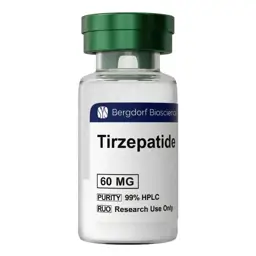
Jedna bočica od 10 mg pokriva otprilike 4 doza uz dozu koju ste odabrali.
Tipične početne vrijednosti za orijentaciju. Svaki redak otvara kalkulator za odgovarajući peptid.
Odaberite peptid da biste otvorili njegovu stranicu kalkulatora s unaprijed ispunjenim vrijednostima.
| 1-4 mg |
| 10 / 20 / 50 mg |
| 5 ml |
| Na zalihi |
| Izračunaj |
| BPC-157 | Obnova tkiva | 200-500 mcg | 2 / 5 / 10 mg | 2 ml | Na zalihi | Izračunaj |
| TB-500 | Thymosin Beta-4 | 2-5 mg | 2 / 5 / 10 mg | 2 ml | Na zalihi | Izračunaj |
| CJC-1295 (bez DAC) | GHRH analog | 100-200 mcg | 2 / 5 / 10 mg | 2 ml | Na zalihi | Izračunaj |
| MOTS-c | Mitohondrijski | 5-10 mg | 5 / 10 mg | 2 ml | Na zalihi | Izračunaj |
| Glow Stack | Stack | 0,5-2 mg | 70 mg | 3 ml | Na zalihi | Izračunaj |
| Klow Stack | Stack | 0,5-2 mg | 55 mg | 3 ml | Na zalihi | Izračunaj |
| Melanotan II | Melanocortin | 100-1000 mcg | 5 / 10 mg | 2 ml | Na zalihi | Izračunaj |
| Tesamorelin | GHRH analog | 1-2 mg | 10 / 20 mg | 2 ml | Na zalihi | Izračunaj |
| Thymosin Alpha-1 | Timički peptid | 0,8-3,2 mg | 1.6 / 5 / 10 mg | 1 ml | Na zalihi | Izračunaj |
| KPV | Imuno / Barijera | 100-1000 mcg | 5 / 10 mg | 2 ml | Na zalihi | Izračunaj |
| Semax | Kognitivno | 100-1000 mcg | 10 / 30 mg | 2 ml | Na zalihi | Izračunaj |
| NAD+ | Dugovječnost / Kofaktor | 100-500 mg | 1000 mg | 10 ml | Na zalihi | Izračunaj |
| Semaglutide | GLP-1 | 0,25-2,4 mg | 2 / 5 / 10 mg | 2 ml | Samo kalkulator | Izračunaj |
| Ipamorelin | GHRP | 200-300 mcg | 2 / 5 mg | 2 ml | Samo kalkulator | Izračunaj |
| AOD-9604 | Gubitak masti | 250-500 mcg | 2 / 5 mg | 2 ml | Samo kalkulator | Izračunaj |
| PT-141 | Bremelanotide | 0,5-2 mg | 2 / 5 / 10 mg | 2 ml | Samo kalkulator | Izračunaj |
| Selank | Anksiolitik | 150-500 mcg | 2 / 5 mg | 2 ml | Samo kalkulator | Izračunaj |
| SS-31 | Elamipretide | 0,1-1 mg | 5 / 10 mg | 2 ml | Samo kalkulator | Izračunaj |
| Melanotan I | Melanocortin | 100-1000 mcg | 5 / 10 mg | 2 ml | Samo kalkulator | Izračunaj |
| Sermorelin | GHRH analog | 50-300 mcg | 2 / 5 mg | 2 ml | Samo kalkulator | Izračunaj |
| Epithalon | Dugovječnost | 2-10 mg | 10 / 20 / 50 mg | 2 ml | Samo kalkulator | Izračunaj |
| HGH Fragment 176-191 | Metabolički fragment | 100-500 mcg | 2 / 5 / 10 mg | 2 ml | Samo kalkulator | Izračunaj |
| N-Acetyl Semax | Kognitivno | 100-1000 mcg | 5 / 10 mg | 2 ml | Samo kalkulator | Izračunaj |
| Hexarelin | GHRP | 50-200 mcg | 2 / 5 mg | 2 ml | Samo kalkulator | Izračunaj |
| GHRP-6 | GHRP | 50-300 mcg | 2 / 5 mg | 2 ml | Samo kalkulator | Izračunaj |
| GHRP-2 | GHRP | 50-250 mcg | 2 / 5 mg | 2 ml | Samo kalkulator | Izračunaj |
| DSIP | San | 50-500 mcg | 2 / 5 mg | 2 ml | Samo kalkulator | Izračunaj |
| 5-Amino-1MQ | Metabolički | 2,5-10 mg | 5 / 10 mg | 2 ml | Samo kalkulator | Izračunaj |
| HGH 191AA | Hormon rasta | 1-5 mg | 10 mg | 1 ml | Samo kalkulator | Izračunaj |
Vrijednosti služe za orijentaciju u istraživačkom kontekstu i ne zamjenjuju stručni savjet.