
Изчислете точни обеми за реконституция, инсулинови единици и дози на флакон за всеки пептид.
Флаконът, водата и дозата са известни
Деленията измерват обем, не активно вещество. 10 IU = 0.10 ml. Колко mg има в тях зависи от разтварянето. Калкулаторът го е изчислил вместо Вас.
Почти всички инсулинови спринцовки са U-100. Изберете U-40 само ако на спринцовката пише U-40.
Бюлетин
Абонирайте се и получавайте ексклузивни оферти и съвети за пептиди.
Партньорска програма
Стартирайте канал в социалните мрежи или използвайте съществуващия си и печелете от всяка препоръка.
Кандидатствайте сегаPeptide research demands accuracy at every step, and nowhere is this more critical than at the point of reconstitution and dose measurement. A seemingly minor miscalculation — say, adding twice the intended BAC water volume — halves your peptide concentration and means every subsequent injection delivers half the intended dose. You may spend weeks running a protocol with no results, never realizing the issue was in the math before the first injection.
The challenge is compounded by the unit systems involved. Lyophilized peptides are sold by weight in milligrams. Doses are measured in micrograms. Injection volumes are measured in milliliters. And insulin syringes — the standard tool for subcutaneous peptide injections — are scaled in Units (IU), not milliliters. Each conversion introduces another opportunity for error.
Our peptide calculator collapses all of these conversions into a single workflow. Enter your peptide amount, BAC water volume, target dose, and syringe size — and receive the exact concentration, injection volume in milliliters, and the corresponding IU marking on your syringe. The entire calculation chain happens in one place, with no manual steps to introduce error.
Beyond accuracy, a calculator enforces consistency. When you run the same protocol over 30 or 60 days, consistency matters as much as precision. Storing your settings as a saved protocol means every injection uses the same parameters, regardless of how much time has passed since you set things up.
The calculator takes four inputs and produces three outputs. Here is what each input controls and why it matters:
Specific peptide calculators — like the TB-500 calculator and the Hexarelin calculator — come with pre-filled standard values and peptide-specific context. They are a good starting point when you are working with a peptide for the first time.
Bacteriostatic water — abbreviated BAC water — is sterile water containing 0.9% benzyl alcohol. The benzyl alcohol acts as a preservative, inhibiting the growth of bacteria, yeast, and mold. This preservative property is the entire reason BAC water is the standard solvent for reconstituting peptides intended for multi-use vials.
Every time you insert a needle through a rubber septum to draw a dose, you introduce a small risk of contamination. With plain sterile water, that risk accumulates rapidly over repeated draws. Benzyl alcohol dramatically reduces this risk, making it safe to use a single vial for multiple injections over several weeks.
Plain sterile water is sometimes listed as an alternative to BAC water, but it is only appropriate for single-use preparations where the entire vial is used in one injection session. For the extended protocols typical in peptide research — where a single vial might supply 20 to 30 daily injections — BAC water is the correct choice.
One important caveat: the 0.9% benzyl alcohol content makes BAC water inappropriate for intravenous use. For subcutaneous injections, which are standard for peptides, it is well tolerated. If you experience any localized irritation at the injection site that does not resolve, the solvent is one variable worth examining.
Storage for BAC water is straightforward — unopened vials are stable at room temperature for years. Once opened, store at room temperature away from direct light and use within the manufacturer's recommended window, typically 28 days. Do not refrigerate opened BAC water vials, as condensation can compromise the septum seal.
Insulin syringes are the standard tool for subcutaneous peptide injections. They are sterile, precisely calibrated, and the fine gauge needles minimize injection discomfort and tissue trauma. The most widely used are BD MICRO-FINE+ syringes, available in three sizes that cover essentially every peptide dosing scenario:
All three are U-100 syringes. This means 100 units fills exactly 1 ml. The math is constant: 1 IU always equals 0.01 ml, regardless of which peptide or concentration you are working with. The IU marking on the syringe is a volume marker — it tells you how much liquid is in the syringe, not how much peptide. How much peptide is in that volume depends on your concentration, which is exactly what the calculator determines.
For protocols like CJC-1295, where doses typically fall in the 100–300 mcg range, the 0.5 ml syringe is almost always the right choice. For peptides with larger per-dose weights — like TB-500 at 2–5 mg per injection — a 1.0 ml syringe may be necessary depending on your reconstitution volume.
Lyophilized peptides are more stable than most people expect. The freeze-drying process removes virtually all moisture, which is the primary driver of peptide degradation. Unopened vials stored at refrigerator temperatures (2–8°C) typically remain stable for 12–24 months. Many manufacturers rate their products for even longer periods under ideal conditions.
For long-term storage beyond several months, -20°C is the recommended temperature. A standard freezer compartment works well. The critical rule when freezing: avoid repeated freeze-thaw cycles. Each cycle stresses the peptide molecular structure. If you are freezing a vial for long-term storage, plan to use it completely once thawed. Do not refreeze.
After reconstitution with BAC water, the clock starts. Reconstituted peptide solutions should be stored at 2–8°C (refrigerator, not freezer) and used within 21–30 days. The exact window varies by peptide — BPC-157 tends to be more stable in solution than peptides with disulfide bonds or other reactive features. When in doubt, err toward the shorter end of the range.
Do not freeze reconstituted peptide solutions. The water in the solution forms ice crystals that can physically disrupt peptide structure and cause aggregation. Once a peptide is in solution, refrigerate and use within the recommended window.
Practical storage habits that make a real difference:
Used insulin needles are sharps waste — they cannot go in regular household trash. A needle puncture through a garbage bag is a genuine injury risk to anyone handling the waste downstream. Proper disposal is both a practical and, in most jurisdictions, a legal requirement.
Sharps containers are the solution. These rigid, puncture-resistant plastic containers are specifically designed for used needles, lancets, and other sharps. They are available at pharmacies — often inexpensively or free as part of diabetic supply programs. Fill to the indicated maximum line (usually three-quarters full), then seal.
For disposal, most pharmacies accept sealed sharps containers at no charge. Some municipalities have medical waste drop-off points at health centers or waste management facilities. Check your local pharmacy first — it is typically the most convenient option.
Empty glass vials — both peptide vials and BAC water vials — can generally be rinsed and disposed of in glass recycling. If you are uncertain about local requirements, your pharmacy can advise, and many will accept empty pharmaceutical vials directly.
One non-negotiable rule: never recap a used needle by pointing the cap with your other hand. If you need to cap before disposal, use the one-handed scoop method. Better yet, move the syringe directly from injection to sharps container without recapping at all.
Milligrams (mg) is the unit used for the total peptide amount in a vial — for example, "5 mg BPC-157." Micrograms (mcg or µg) is the unit used for individual doses — for example, "250 mcg per injection." One milligram equals 1,000 micrograms. The calculator accepts peptide amounts in mg and target doses in mcg, handling the conversion automatically.
The right amount depends on your dose. With 1 ml of BAC water in a 5 mg vial, your concentration is 5,000 mcg/ml. At a 250 mcg dose, you would draw 0.05 ml (5 IU on a U-100 syringe). With 2 ml of BAC water, concentration drops to 2,500 mcg/ml — the same 250 mcg dose now requires 0.1 ml (10 IU), which is easier to measure accurately. Use the peptide calculator to model different BAC water volumes instantly.
In many cases, yes. Compatible peptides — such as BPC-157 and TB-500, which are frequently combined — can be drawn into the same syringe and injected together. The key requirements are pH compatibility and that neither peptide precipitates in the presence of the other. Draw each peptide from its vial separately, combine in the syringe, and inject immediately. Do not prepare mixed syringes in advance for later use.
U-100 indicates the syringe is calibrated for insulin with a concentration of 100 units per milliliter. The unit scale on the barrel reflects this: 100 IU fills exactly 1 ml, meaning each 1 IU graduation represents 0.01 ml. This relationship is fixed regardless of what you are drawing into the syringe. When the calculator tells you to draw "12 IU," that always means 0.12 ml of your peptide solution.
Most reconstituted peptides stored at 2–8°C remain usable for 21–30 days. Some are more stable than others. Always label vials with the reconstitution date so you know when the window closes. If the solution has developed any turbidity, changed color, or shows particulate matter, discard it regardless of how recently it was reconstituted.
A very small calculated volume — say, 0.02 ml or 2 IU — means your solution concentration is high relative to your dose. This typically happens when you use a small volume of BAC water. Volumes below 0.05 ml (5 IU) can be difficult to measure accurately with a standard insulin syringe. The fix is to increase your BAC water volume, which lowers the concentration and produces a larger, more manageable injection volume for the same dose.
Yes. In addition to the general peptide calculator, there are dedicated calculators for individual peptides with pre-filled typical values and peptide-specific context:
The index also includes Sermorelin, Tesamorelin, Melanotan II, Melanotan I, Thymosin Alpha-1, Epithalon, KPV, HGH Fragment 176-191, Semax, N-Acetyl Semax— each with its own article and calculator presets.
Not if you save your protocol. The calculator includes a Protocols tab where you can save your current settings — peptide, BAC water volume, dose, and syringe — as a named protocol. Load it any time to restore all values instantly. This is particularly useful when running multiple peptides simultaneously or when you want to compare different dosing approaches for the same peptide.
Discard it. A cloudy or turbid peptide solution indicates either bacterial contamination or peptide aggregation — both of which render the solution unsuitable for use. This can happen if BAC water is added too aggressively (always add it slowly down the side of the vial, never directly onto the lyophilized cake), if the vial was temperature-shocked, or if the solution has aged past its usable window. Reconstitute a fresh vial.
От прах до готова спринцовка в пет стъпки. Количествата Ви предоставя калкулаторът по-горе автоматично.
Доведете флакона и водата до стайна температура. Избършете и двете гумени запушалки с тампон със спирт.
Изтеглете препоръчаното от калкулатора количество BAC вода с по-голяма спринцовка.
Оставете водата да се стича по стъклената стена във флакона с пептида, не я впръсквайте директно върху праха.
Завъртете флакона внимателно, не разклащайте. Прахът се разтваря до бистро за 1-2 минути.
С инсулиновата спринцовка изтеглете точно до изчисленото деление. Готово.
Типични начални стойности за ориентир. Всеки ред отваря калкулатора за съответния пептид.
| Пептид | Категория | Обичайна доза | Размери на флакони | BAC (начало) | Наличност | Изчисли |
|---|---|---|---|---|---|---|
| Retatrutide | GLP-1/GIP/GCG | 0,5-12 mg | 2 / 5 / 10 / 15 mg | 2 ml | Само калкулатор | Изчисли |
| Semaglutide | GLP-1 | 0,25-2,4 mg | 2 / 5 / 10 mg | 2 ml | Само калкулатор | Изчисли |
| Tirzepatide | GLP-1/GIP | 2,5-15 mg | 5 / 10 / 15 mg | 2 ml | Само калкулатор | Изчисли |
| GHK-Cu | Меден пептид | 1-4 mg | 10 / 20 / 50 mg | 5 ml | Само калкулатор | Изчисли |
| BPC-157 | Възстановяване на тъкани | 200-500 mcg | 2 / 5 / 10 mg | 2 ml | Само калкулатор | Изчисли |
| TB-500 | Thymosin Beta-4 | 2-5 mg | 2 / 5 / 10 mg | 2 ml | Само калкулатор | Изчисли |
| CJC-1295 (без DAC) | GHRH аналог | 100-200 mcg | 2 / 5 / 10 mg | 2 ml | Само калкулатор | Изчисли |
| Ipamorelin | GHRP | 200-300 mcg | 2 / 5 mg | 2 ml | Само калкулатор | Изчисли |
| AOD-9604 | Изгаряне на мазнини | 250-500 mcg | 2 / 5 mg | 2 ml | Само калкулатор | Изчисли |
| PT-141 | Bremelanotide | 0,5-2 mg | 2 / 5 / 10 mg | 2 ml | Само калкулатор | Изчисли |
| MOTS-c | Митохондриален | 5-10 mg | 5 / 10 mg | 2 ml | Само калкулатор | Изчисли |
| Selank | Анксиолитик | 150-500 mcg | 2 / 5 mg | 2 ml | Само калкулатор | Изчисли |
| SS-31 | Elamipretide | 0,1-1 mg | 5 / 10 mg | 2 ml | Само калкулатор | Изчисли |
| Glow Stack | Stack | 0,5-2 mg | 70 mg | 3 ml | Само калкулатор | Изчисли |
| Klow Stack | Stack | 0,5-2 mg | 55 mg | 3 ml | Само калкулатор | Изчисли |
| Melanotan II | Melanocortin | 100-1000 mcg | 5 / 10 mg | 2 ml | Само калкулатор | Изчисли |
| Melanotan I | Melanocortin | 100-1000 mcg | 5 / 10 mg | 2 ml | Само калкулатор | Изчисли |
| Sermorelin | GHRH аналог | 50-300 mcg | 2 / 5 mg | 2 ml | Само калкулатор | Изчисли |
| Tesamorelin | GHRH аналог | 1-2 mg | 10 / 20 mg | 2 ml | Само калкулатор | Изчисли |
| Thymosin Alpha-1 | Тимусен пептид | 0,8-3,2 mg | 1.6 / 5 / 10 mg | 1 ml | Само калкулатор | Изчисли |
| Epithalon | Дълголетие | 2-10 mg | 10 / 20 / 50 mg | 2 ml | Само калкулатор | Изчисли |
| KPV | Имунна / Бариера | 100-1000 mcg | 5 / 10 mg | 2 ml | Само калкулатор | Изчисли |
| HGH Fragment 176-191 | Метаболитен фрагмент | 100-500 mcg | 2 / 5 / 10 mg | 2 ml | Само калкулатор | Изчисли |
| Semax | Когнитивен | 100-1000 mcg | 10 / 30 mg | 2 ml | Само калкулатор | Изчисли |
| N-Acetyl Semax | Когнитивен | 100-1000 mcg | 5 / 10 mg | 2 ml | Само калкулатор | Изчисли |
| Hexarelin | GHRP | 50-200 mcg | 2 / 5 mg | 2 ml | Само калкулатор | Изчисли |
| GHRP-6 | GHRP | 50-300 mcg | 2 / 5 mg | 2 ml | Само калкулатор | Изчисли |
| GHRP-2 | GHRP | 50-250 mcg | 2 / 5 mg | 2 ml | Само калкулатор | Изчисли |
| DSIP | Сън | 50-500 mcg | 2 / 5 mg | 2 ml | Само калкулатор | Изчисли |
| 5-Amino-1MQ | Метаболитен | 2,5-10 mg | 5 / 10 mg | 2 ml | Само калкулатор | Изчисли |
| HGH 191AA | Хормон на растежа | 1-5 mg | 10 mg | 1 ml | Само калкулатор | Изчисли |
| NAD+ | Дълголетие / Кофактор | 100-500 mg | 1000 mg | 10 ml | Само калкулатор | Изчисли |
Стойностите служат за ориентир в изследователски контекст и не заместват професионална консултация.
Правилното изчисляване на концентрацията и обема на инжекцията изглежда тривиално, но е най-честият източник на грешки. Дори грешка от 10 % при разтварянето означава, че получавате или твърде малко активно вещество, или непреднамерено предозирате.
Лиофилизираните пептиди се доставят в милиграми и се разтварят в бактериостатична вода (BAC вода). Съотношението на пептида към водата определя концентрацията, а от нея следва колко деления изтегляте на инсулиновата спринцовка. Инсулиновите спринцовки са скалирани в единици, не в милиграми. Това преобразуване извършва калкулаторът, включително проверката за достоверност срещу най-опасната грешка: бъркането на mg и mcg.
Милиграмът (mg) е единицата, в която се продават лиофилизираните пептиди, например „5 mg BPC-157“. Микрограмът (mcg) измерва единичната доза, например „250 mcg на инжекция“. 1 mg = 1000 mcg. Калкулаторът преобразува автоматично и предупреждава, когато въведена стойност изглежда като объркване.
U-100 означава, че спринцовката е калибрирана за 100 единици на милилитър. 100 IU = 1 ml, тоест 10 IU = 0,10 ml, независимо от това какво има в спринцовката. Именно на тази зависимост се основава изчислението на IU.
При много пептид и малко вода разтворът става много концентриран, тоест обемът на доза е минимален и труден за отчитане. Използвайте помощника за разтваряне: той намира количеството вода, което дава чисто, лесно за отчитане деление.
В хладилник при 2-8 °C обикновено 21-30 дни. Обозначете флакона с датата на разтваряне. Мътни разтвори или частици са причина за изхвърляне.
Смесите съдържат няколко активни вещества в един флакон. Просто изберете сместа като пептид: калкулаторът показва допълнително колко от всеки компонент се съдържа във Вашата инжекция. За комбинации от няколко отделни флакона използвайте Stack Builder.
Не. Последните Ви настройки се запазват локално в браузъра и се възстановяват при следващото посещение. Освен това можете да извиквате изчисления от историята, да ги запазвате като протокол или да ги споделяте като връзка.
Допълнителен инструмент
Визуализирайте клирънсът на пептида и steady-state - Калкулатор на полуживот
Изберете пептид, за да отворите страницата му на калкулатора с предварително попълнени стойности.
Бюлетин
Абонирайте се и получавайте ексклузивни оферти и съвети за пептиди.
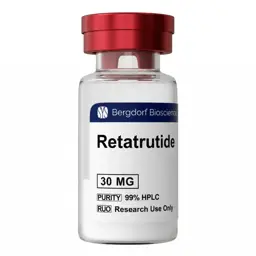
Един флакон от 10 мг стига за около 20 дози при избраната от вас доза.
Типични начални стойности за ориентир. Всеки ред отваря калкулатора за съответния пептид.
| Пептид | Категория | Обичайна доза | Размери на флакони | BAC (начало) | Наличност | Изчисли |
|---|---|---|---|---|---|---|
| Retatrutide | GLP-1/GIP/GCG | 0,5-12 mg | 2 / 5 / 10 / 15 mg | 2 ml | В наличност | Изчисли |
| Tirzepatide | GLP-1/GIP | 2,5-15 mg | 5 / 10 / 15 mg | 2 ml | В наличност | Изчисли |
| GHK-Cu | Меден пептид | 1-4 mg | 10 / 20 / 50 mg | 5 ml | В наличност | Изчисли |
| BPC-157 | Възстановяване на тъкани | 200-500 mcg | 2 / 5 / 10 mg | 2 ml | В наличност | Изчисли |
| TB-500 | Thymosin Beta-4 | 2-5 mg | 2 / 5 / 10 mg | 2 ml | В наличност | Изчисли |
| CJC-1295 (без DAC) | GHRH аналог | 100-200 mcg | 2 / 5 / 10 mg | 2 ml | В наличност | Изчисли |
| MOTS-c | Митохондриален | 5-10 mg | 5 / 10 mg | 2 ml | В наличност | Изчисли |
| Glow Stack | Stack | 0,5-2 mg | 70 mg | 3 ml | В наличност | Изчисли |
| Klow Stack | Stack | 0,5-2 mg | 55 mg | 3 ml | В наличност | Изчисли |
| Melanotan II | Melanocortin | 100-1000 mcg | 5 / 10 mg | 2 ml | В наличност | Изчисли |
| Tesamorelin | GHRH аналог | 1-2 mg | 10 / 20 mg | 2 ml | В наличност | Изчисли |
| Thymosin Alpha-1 | Тимусен пептид | 0,8-3,2 mg | 1.6 / 5 / 10 mg | 1 ml | В наличност | Изчисли |
| KPV | Имунна / Бариера | 100-1000 mcg | 5 / 10 mg | 2 ml | В наличност | Изчисли |
| Semax | Когнитивен | 100-1000 mcg | 10 / 30 mg | 2 ml | В наличност | Изчисли |
| NAD+ | Дълголетие / Кофактор | 100-500 mg | 1000 mg | 10 ml | В наличност | Изчисли |
| Semaglutide | GLP-1 | 0,25-2,4 mg | 2 / 5 / 10 mg | 2 ml | Само калкулатор | Изчисли |
| Ipamorelin | GHRP | 200-300 mcg | 2 / 5 mg | 2 ml | Само калкулатор | Изчисли |
| AOD-9604 | Изгаряне на мазнини | 250-500 mcg | 2 / 5 mg | 2 ml | Само калкулатор | Изчисли |
| PT-141 | Bremelanotide | 0,5-2 mg | 2 / 5 / 10 mg | 2 ml | Само калкулатор | Изчисли |
| Selank | Анксиолитик | 150-500 mcg | 2 / 5 mg | 2 ml | Само калкулатор | Изчисли |
| SS-31 | Elamipretide | 0,1-1 mg | 5 / 10 mg | 2 ml | Само калкулатор | Изчисли |
| Melanotan I | Melanocortin | 100-1000 mcg | 5 / 10 mg | 2 ml | Само калкулатор | Изчисли |
| Sermorelin | GHRH аналог | 50-300 mcg | 2 / 5 mg | 2 ml | Само калкулатор | Изчисли |
| Epithalon | Дълголетие | 2-10 mg | 10 / 20 / 50 mg | 2 ml | Само калкулатор | Изчисли |
| HGH Fragment 176-191 | Метаболитен фрагмент | 100-500 mcg | 2 / 5 / 10 mg | 2 ml | Само калкулатор | Изчисли |
| N-Acetyl Semax | Когнитивен | 100-1000 mcg | 5 / 10 mg | 2 ml | Само калкулатор | Изчисли |
| Hexarelin | GHRP | 50-200 mcg | 2 / 5 mg | 2 ml | Само калкулатор | Изчисли |
| GHRP-6 | GHRP | 50-300 mcg | 2 / 5 mg | 2 ml | Само калкулатор | Изчисли |
| GHRP-2 | GHRP | 50-250 mcg | 2 / 5 mg | 2 ml | Само калкулатор | Изчисли |
| DSIP | Сън | 50-500 mcg | 2 / 5 mg | 2 ml | Само калкулатор | Изчисли |
| 5-Amino-1MQ | Метаболитен | 2,5-10 mg | 5 / 10 mg | 2 ml | Само калкулатор | Изчисли |
| HGH 191AA | Хормон на растежа | 1-5 mg | 10 mg | 1 ml | Само калкулатор | Изчисли |
Стойностите служат за ориентир в изследователски контекст и не заместват професионална консултация.
Изберете пептид, за да отворите страницата му на калкулатора с предварително попълнени стойности.