
Изчислете точни обеми за реконституция, инсулинови единици и дози на флакон за всеки пептид.
Флаконът, водата и дозата са известни
Деленията измерват обем, не активно вещество. 250 IU = 2.50 ml. Колко mg има в тях зависи от разтварянето. Калкулаторът го е изчислил вместо Вас.
Почти всички инсулинови спринцовки са U-100. Изберете U-40 само ако на спринцовката пише U-40.
Свързаните източници водят към PubMed и се отварят в нов раздел.
NAD+ (nicotinamide adenine dinucleotide) is an essential coenzyme present in every nucleated cell of the body. Strictly speaking, NAD+ is not a peptide but a dinucleotide, built from two linked nucleotides: one carrying nicotinamide (derived from vitamin B3) and one carrying adenine. It is handled in the same research context as injectable peptides because it ships as a lyophilized powder, is reconstituted with bacteriostatic water, and is administered subcutaneously for research purposes. Within this calculator, NAD+ is therefore presented as a research compound that follows the same dosing and reconstitution rules as a peptide.
The central biological role of NAD+ is that of an electron carrier. In metabolism, the molecule shuttles back and forth between its oxidized form (NAD+) and its reduced form (NADH), transporting reducing equivalents between the reactions that break down nutrients and those that build ATP, the universal energy currency of the cell. Without sufficient NAD+, glycolysis, the citric acid cycle, and oxidative phosphorylation cannot run efficiently. Beyond its role as a cofactor, NAD+ is also a consumed substrate: enzymes such as the sirtuins, PARPs, and CD38 cleave NAD+ and use its building blocks, which means the intracellular pool must be continuously replenished.
The interest of longevity research in NAD+ rests on the repeatedly reported observation that NAD+ levels decline in many tissues with advancing age. This decline has been linked to diminished mitochondrial performance, reduced sirtuin activity, and a constrained capacity for DNA repair. Strategies to restore the NAD+ pool, whether through precursors such as NMN and NR or through NAD+ itself, are therefore among the most intensively studied approaches in aging research. NAD+ is not a hormone, does not bind to hormone receptors, and does not act on the hypothalamic-pituitary axis.
NAD+ does not act through a single receptor but functions as a hub connecting numerous cellular pathways. The following mechanisms explain why it occupies such a prominent place in research on energy metabolism and aging:
NAD+ is used in research in the milligram range, not the microgram range that applies to many classic peptides. Subcutaneous administration is considered sensitive to injection speed, which is why many protocols ramp in gradually from the lower end of the range and increase the dose over several days until tolerability can be assessed.
The common vial size is 1000 mg. Adding 10 mL of bacteriostatic water gives a concentration of 100 mg/mL.
At a dose of 250 mg, a 1000 mg vial provides 4 administrations. Because the required volumes are relatively large, some research protocols split a single dose or use a smaller reconstitution volume to raise the concentration. Use the NAD+ calculator above to compute exact volumes for any vial size, reconstitution volume, and target dose.
NAD+ is well known for producing intense but short-lived sensations when administered too quickly. Research protocols therefore consistently recommend a slow injection. The large half-life discrepancy between NAD+ and its precursors is also relevant: with a systemic half-life of only about 1 to 2 hours, NAD+ is metabolized rapidly, which is why administration frequency is a deliberate part of protocol design.
NAD+ is supplied as a lyophilized (freeze-dried) powder in sealed vials. It must be reconstituted with bacteriostatic water (BAC water) before use. Do not use sterile water for injection for multi-dose vials. BAC water contains 0.9% benzyl alcohol, which inhibits microbial growth and extends the usable window of the reconstituted solution. Note that NAD+ requires larger reconstitution volumes than most peptides because of its milligram-scale dosing.
A slight yellow tint is not unusual for NAD+ solutions. However, if the solution appears cloudy, strongly discolored, or contains visible particulate matter, discard the vial and do not inject it.
NAD+ is an endogenous compound, and its safety profile in the research context is generally regarded as favorable. The most common observations relate less to the molecule itself than to the speed of administration. Because controlled clinical data on subcutaneous NAD+ are limited, all use explicitly remains in the research domain.
With slow administration and standard research doses, NAD+ is generally regarded as well tolerated. Given the absence of large-scale clinical trials on injectable use, caution is warranted, and consultation with a qualified healthcare provider is strongly recommended.
NAD+ is frequently considered alongside MOTS-c in longevity research, a mitochondrially encoded peptide that acts on metabolic stress. NAD+ provides the coenzyme that drives the respiratory chain, while MOTS-c acts as a signaling peptide that modulates metabolic adaptation. From a research perspective, both address the mitochondrion from different angles, which is why they are often studied together in protocols focused on mitochondrial function.
A conceptually interesting combination is NAD+ with 5-Amino-1MQ. 5-Amino-1MQ is an inhibitor of nicotinamide N-methyltransferase (NNMT), an enzyme that breaks down nicotinamide. By inhibiting this degradation pathway, it can theoretically keep more nicotinamide available for the NAD+ salvage pathway. Research therefore examines how supplying NAD+ and preserving its precursors complement one another.
NAD+ can also be considered alongside SS-31, a peptide that binds to cardiolipin in the inner mitochondrial membrane and supports the efficiency of the electron transport chain. While NAD+ supplies the fuel for the respiratory chain, SS-31 targets the structural integrity of the membrane on which those reactions take place. This combination is a common theme in research on mitochondrial bioenergetics.
Research-grade NAD+ is available directly from BergdorfBio: NAD+ at BergdorfBio.
No. NAD+ is a dinucleotide, not a peptide. It is not made of amino acids but of two linked nucleotides. It is listed in this calculator because it is handled like an injectable peptide in research: it ships as a lyophilized powder, is reconstituted with bacteriostatic water, and follows the same dosing and storage principles.
NMN (nicotinamide mononucleotide) and NR (nicotinamide riboside) are precursors that the cell must convert into NAD+. NAD+ is the finished coenzyme itself. Precursors are frequently studied orally and pass through several metabolic steps, whereas NAD+ is directly the active molecule. Research compares both approaches to understand how the cellular NAD+ pool can be maintained most effectively.
NAD+ is known for producing intense but short-lived sensations such as warmth, chest pressure, or nausea when administered too quickly. A markedly slower injection substantially reduces these reactions. For this reason, research protocols consistently recommend slow administration.
NAD+ has a half-life of only about 1 to 2 hours in the systemic circulation because it is rapidly metabolized by NAD+-consuming enzymes such as CD38 and through salvage pathways. This short half-life is the reason why administration frequency is a deliberately chosen element of protocol design in the research context.
No. NAD+ is a metabolic coenzyme, not a hormone. It does not bind to hormone receptors and has no direct effect on the hypothalamic-pituitary-gonadal axis, the thyroid, or the adrenal glands. No post-cycle therapy is required.
In research, NAD+ is frequently considered alongside mitochondrially oriented compounds such as MOTS-c or SS-31, as well as the NNMT inhibitor 5-Amino-1MQ. Each compound should, however, be reconstituted separately and administered in its own syringe, as their combined stability in solution is not sufficiently characterized.
Because NAD+ is dosed in the milligram range, the required volumes are considerably larger than for microgram-dosed peptides. At a concentration of 100 mg/mL, a 250 mg dose already requires 2.5 mL. A 1 mL insulin syringe is therefore standard, and larger doses are split as needed.
BergdorfBio offers research-grade NAD+ with verified purity and concentration. View the product page: Buy NAD+ at BergdorfBio. All products are sold strictly for research purposes.
Medical Disclaimer: The information on this page is provided for educational and research purposes only. NAD+ is not an approved drug or medical treatment and is sold strictly for research use. Nothing on this page constitutes medical advice, diagnosis, or a recommendation to use any specific compound. Always consult a qualified healthcare professional before beginning any research protocol. BergdorfBio assumes no liability for the use or misuse of the information presented here.
От прах до готова спринцовка в пет стъпки. Количествата Ви предоставя калкулаторът по-горе автоматично.
Доведете флакона и водата до стайна температура. Избършете и двете гумени запушалки с тампон със спирт.
Изтеглете препоръчаното от калкулатора количество BAC вода с по-голяма спринцовка.
Оставете водата да се стича по стъклената стена във флакона с пептида, не я впръсквайте директно върху праха.
Завъртете флакона внимателно, не разклащайте. Прахът се разтваря до бистро за 1-2 минути.
С инсулиновата спринцовка изтеглете точно до изчисленото деление. Готово.
Типични начални стойности за ориентир. Всеки ред отваря калкулатора за съответния пептид.
| Пептид | Категория | Обичайна доза | Размери на флакони | BAC (начало) | Наличност | Изчисли |
|---|---|---|---|---|---|---|
| Retatrutide | GLP-1/GIP/GCG | 0,5-12 mg | 2 / 5 / 10 / 15 mg | 2 ml | Само калкулатор | Изчисли |
| Semaglutide | GLP-1 | 0,25-2,4 mg | 2 / 5 / 10 mg | 2 ml | Само калкулатор | Изчисли |
| Tirzepatide | GLP-1/GIP | 2,5-15 mg | 5 / 10 / 15 mg | 2 ml | Само калкулатор | Изчисли |
| GHK-Cu | Меден пептид | 1-4 mg | 10 / 20 / 50 mg | 5 ml | Само калкулатор | Изчисли |
| BPC-157 | Възстановяване на тъкани | 200-500 mcg | 2 / 5 / 10 mg | 2 ml | Само калкулатор | Изчисли |
| TB-500 | Thymosin Beta-4 | 2-5 mg | 2 / 5 / 10 mg | 2 ml | Само калкулатор | Изчисли |
| CJC-1295 (без DAC) | GHRH аналог | 100-200 mcg | 2 / 5 / 10 mg | 2 ml | Само калкулатор | Изчисли |
| Ipamorelin | GHRP | 200-300 mcg | 2 / 5 mg | 2 ml | Само калкулатор | Изчисли |
| AOD-9604 | Изгаряне на мазнини | 250-500 mcg | 2 / 5 mg | 2 ml | Само калкулатор | Изчисли |
| PT-141 | Bremelanotide | 0,5-2 mg | 2 / 5 / 10 mg | 2 ml | Само калкулатор | Изчисли |
| MOTS-c | Митохондриален | 5-10 mg | 5 / 10 mg | 2 ml | Само калкулатор | Изчисли |
| Selank | Анксиолитик | 150-500 mcg | 2 / 5 mg | 2 ml | Само калкулатор | Изчисли |
| SS-31 | Elamipretide | 0,1-1 mg | 5 / 10 mg | 2 ml | Само калкулатор | Изчисли |
| Glow Stack | Stack | 0,5-2 mg | 70 mg | 3 ml | Само калкулатор | Изчисли |
| Klow Stack | Stack | 0,5-2 mg | 55 mg | 3 ml | Само калкулатор | Изчисли |
| Melanotan II | Melanocortin | 100-1000 mcg | 5 / 10 mg | 2 ml | Само калкулатор | Изчисли |
| Melanotan I | Melanocortin | 100-1000 mcg | 5 / 10 mg | 2 ml | Само калкулатор | Изчисли |
| Sermorelin | GHRH аналог | 50-300 mcg | 2 / 5 mg | 2 ml | Само калкулатор | Изчисли |
| Tesamorelin | GHRH аналог | 1-2 mg | 10 / 20 mg | 2 ml | Само калкулатор | Изчисли |
| Thymosin Alpha-1 | Тимусен пептид | 0,8-3,2 mg | 1.6 / 5 / 10 mg | 1 ml | Само калкулатор | Изчисли |
| Epithalon | Дълголетие | 2-10 mg | 10 / 20 / 50 mg | 2 ml | Само калкулатор | Изчисли |
| KPV | Имунна / Бариера | 100-1000 mcg | 5 / 10 mg | 2 ml | Само калкулатор | Изчисли |
| HGH Fragment 176-191 | Метаболитен фрагмент | 100-500 mcg | 2 / 5 / 10 mg | 2 ml | Само калкулатор | Изчисли |
| Semax | Когнитивен | 100-1000 mcg | 10 / 30 mg | 2 ml | Само калкулатор | Изчисли |
| N-Acetyl Semax | Когнитивен | 100-1000 mcg | 5 / 10 mg | 2 ml | Само калкулатор | Изчисли |
| Hexarelin | GHRP | 50-200 mcg | 2 / 5 mg | 2 ml | Само калкулатор | Изчисли |
| GHRP-6 | GHRP | 50-300 mcg | 2 / 5 mg | 2 ml | Само калкулатор | Изчисли |
| GHRP-2 | GHRP | 50-250 mcg | 2 / 5 mg | 2 ml | Само калкулатор | Изчисли |
| DSIP | Сън | 50-500 mcg | 2 / 5 mg | 2 ml | Само калкулатор | Изчисли |
| 5-Amino-1MQ | Метаболитен | 2,5-10 mg | 5 / 10 mg | 2 ml | Само калкулатор | Изчисли |
| HGH 191AA | Хормон на растежа | 1-5 mg | 10 mg | 1 ml | Само калкулатор | Изчисли |
| NAD+ | Дълголетие / Кофактор | 100-500 mg | 1000 mg | 10 ml | Само калкулатор | Изчисли |
Стойностите служат за ориентир в изследователски контекст и не заместват професионална консултация.
Правилното изчисляване на концентрацията и обема на инжекцията изглежда тривиално, но е най-честият източник на грешки. Дори грешка от 10 % при разтварянето означава, че получавате или твърде малко активно вещество, или непреднамерено предозирате.
Лиофилизираните пептиди се доставят в милиграми и се разтварят в бактериостатична вода (BAC вода). Съотношението на пептида към водата определя концентрацията, а от нея следва колко деления изтегляте на инсулиновата спринцовка. Инсулиновите спринцовки са скалирани в единици, не в милиграми. Това преобразуване извършва калкулаторът, включително проверката за достоверност срещу най-опасната грешка: бъркането на mg и mcg.
Милиграмът (mg) е единицата, в която се продават лиофилизираните пептиди, например „5 mg BPC-157“. Микрограмът (mcg) измерва единичната доза, например „250 mcg на инжекция“. 1 mg = 1000 mcg. Калкулаторът преобразува автоматично и предупреждава, когато въведена стойност изглежда като объркване.
U-100 означава, че спринцовката е калибрирана за 100 единици на милилитър. 100 IU = 1 ml, тоест 10 IU = 0,10 ml, независимо от това какво има в спринцовката. Именно на тази зависимост се основава изчислението на IU.
При много пептид и малко вода разтворът става много концентриран, тоест обемът на доза е минимален и труден за отчитане. Използвайте помощника за разтваряне: той намира количеството вода, което дава чисто, лесно за отчитане деление.
В хладилник при 2-8 °C обикновено 21-30 дни. Обозначете флакона с датата на разтваряне. Мътни разтвори или частици са причина за изхвърляне.
Смесите съдържат няколко активни вещества в един флакон. Просто изберете сместа като пептид: калкулаторът показва допълнително колко от всеки компонент се съдържа във Вашата инжекция. За комбинации от няколко отделни флакона използвайте Stack Builder.
Не. Последните Ви настройки се запазват локално в браузъра и се възстановяват при следващото посещение. Освен това можете да извиквате изчисления от историята, да ги запазвате като протокол или да ги споделяте като връзка.
Изберете пептид, за да отворите страницата му на калкулатора с предварително попълнени стойности.
Вижте продукта
NAD+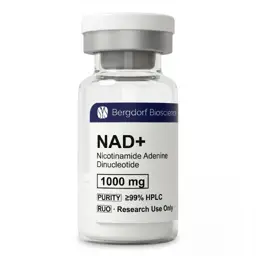
Един флакон от 1000 мг стига за около 4 дози при избраната от вас доза.
Типични начални стойности за ориентир. Всеки ред отваря калкулатора за съответния пептид.
| Пептид | Категория | Обичайна доза | Размери на флакони | BAC (начало) | Наличност | Изчисли |
|---|---|---|---|---|---|---|
| Retatrutide | GLP-1/GIP/GCG | 0,5-12 mg | 2 / 5 / 10 / 15 mg | 2 ml | В наличност | Изчисли |
| Tirzepatide | GLP-1/GIP | 2,5-15 mg | 5 / 10 / 15 mg | 2 ml | В наличност | Изчисли |
| GHK-Cu | Меден пептид | 1-4 mg | 10 / 20 / 50 mg | 5 ml | В наличност | Изчисли |
| BPC-157 | Възстановяване на тъкани | 200-500 mcg | 2 / 5 / 10 mg | 2 ml | В наличност | Изчисли |
| TB-500 | Thymosin Beta-4 | 2-5 mg | 2 / 5 / 10 mg | 2 ml | В наличност | Изчисли |
| CJC-1295 (без DAC) | GHRH аналог | 100-200 mcg | 2 / 5 / 10 mg | 2 ml | В наличност | Изчисли |
| MOTS-c | Митохондриален | 5-10 mg | 5 / 10 mg | 2 ml | В наличност | Изчисли |
| Glow Stack | Stack | 0,5-2 mg | 70 mg | 3 ml | В наличност | Изчисли |
| Klow Stack | Stack | 0,5-2 mg | 55 mg | 3 ml | В наличност | Изчисли |
| Melanotan II | Melanocortin | 100-1000 mcg | 5 / 10 mg | 2 ml | В наличност | Изчисли |
| Tesamorelin | GHRH аналог | 1-2 mg | 10 / 20 mg | 2 ml | В наличност | Изчисли |
| Thymosin Alpha-1 | Тимусен пептид | 0,8-3,2 mg | 1.6 / 5 / 10 mg | 1 ml | В наличност | Изчисли |
| KPV | Имунна / Бариера | 100-1000 mcg | 5 / 10 mg | 2 ml | В наличност | Изчисли |
| Semax | Когнитивен | 100-1000 mcg | 10 / 30 mg | 2 ml | В наличност | Изчисли |
| NAD+ | Дълголетие / Кофактор | 100-500 mg | 1000 mg | 10 ml | В наличност | Изчисли |
| Semaglutide | GLP-1 | 0,25-2,4 mg | 2 / 5 / 10 mg | 2 ml | Само калкулатор | Изчисли |
| Ipamorelin | GHRP | 200-300 mcg | 2 / 5 mg | 2 ml | Само калкулатор | Изчисли |
| AOD-9604 | Изгаряне на мазнини | 250-500 mcg | 2 / 5 mg | 2 ml | Само калкулатор | Изчисли |
| PT-141 | Bremelanotide | 0,5-2 mg | 2 / 5 / 10 mg | 2 ml | Само калкулатор | Изчисли |
| Selank | Анксиолитик | 150-500 mcg | 2 / 5 mg | 2 ml | Само калкулатор | Изчисли |
| SS-31 | Elamipretide | 0,1-1 mg | 5 / 10 mg | 2 ml | Само калкулатор | Изчисли |
| Melanotan I | Melanocortin | 100-1000 mcg | 5 / 10 mg | 2 ml | Само калкулатор | Изчисли |
| Sermorelin | GHRH аналог | 50-300 mcg | 2 / 5 mg | 2 ml | Само калкулатор | Изчисли |
| Epithalon | Дълголетие | 2-10 mg | 10 / 20 / 50 mg | 2 ml | Само калкулатор | Изчисли |
| HGH Fragment 176-191 | Метаболитен фрагмент | 100-500 mcg | 2 / 5 / 10 mg | 2 ml | Само калкулатор | Изчисли |
| N-Acetyl Semax | Когнитивен | 100-1000 mcg | 5 / 10 mg | 2 ml | Само калкулатор | Изчисли |
| Hexarelin | GHRP | 50-200 mcg | 2 / 5 mg | 2 ml | Само калкулатор | Изчисли |
| GHRP-6 | GHRP | 50-300 mcg | 2 / 5 mg | 2 ml | Само калкулатор | Изчисли |
| GHRP-2 | GHRP | 50-250 mcg | 2 / 5 mg | 2 ml | Само калкулатор | Изчисли |
| DSIP | Сън | 50-500 mcg | 2 / 5 mg | 2 ml | Само калкулатор | Изчисли |
| 5-Amino-1MQ | Метаболитен | 2,5-10 mg | 5 / 10 mg | 2 ml | Само калкулатор | Изчисли |
| HGH 191AA | Хормон на растежа | 1-5 mg | 10 mg | 1 ml | Само калкулатор | Изчисли |
Стойностите служат за ориентир в изследователски контекст и не заместват професионална консултация.
Изберете пептид, за да отворите страницата му на калкулатора с предварително попълнени стойности.