
Cagrilintide: Weight-Loss Action and the Amylin Analogue in Obesity Research
Dr. Sieglinde Klaus
Scientific Editorial Team · Bergdorf Bioscience
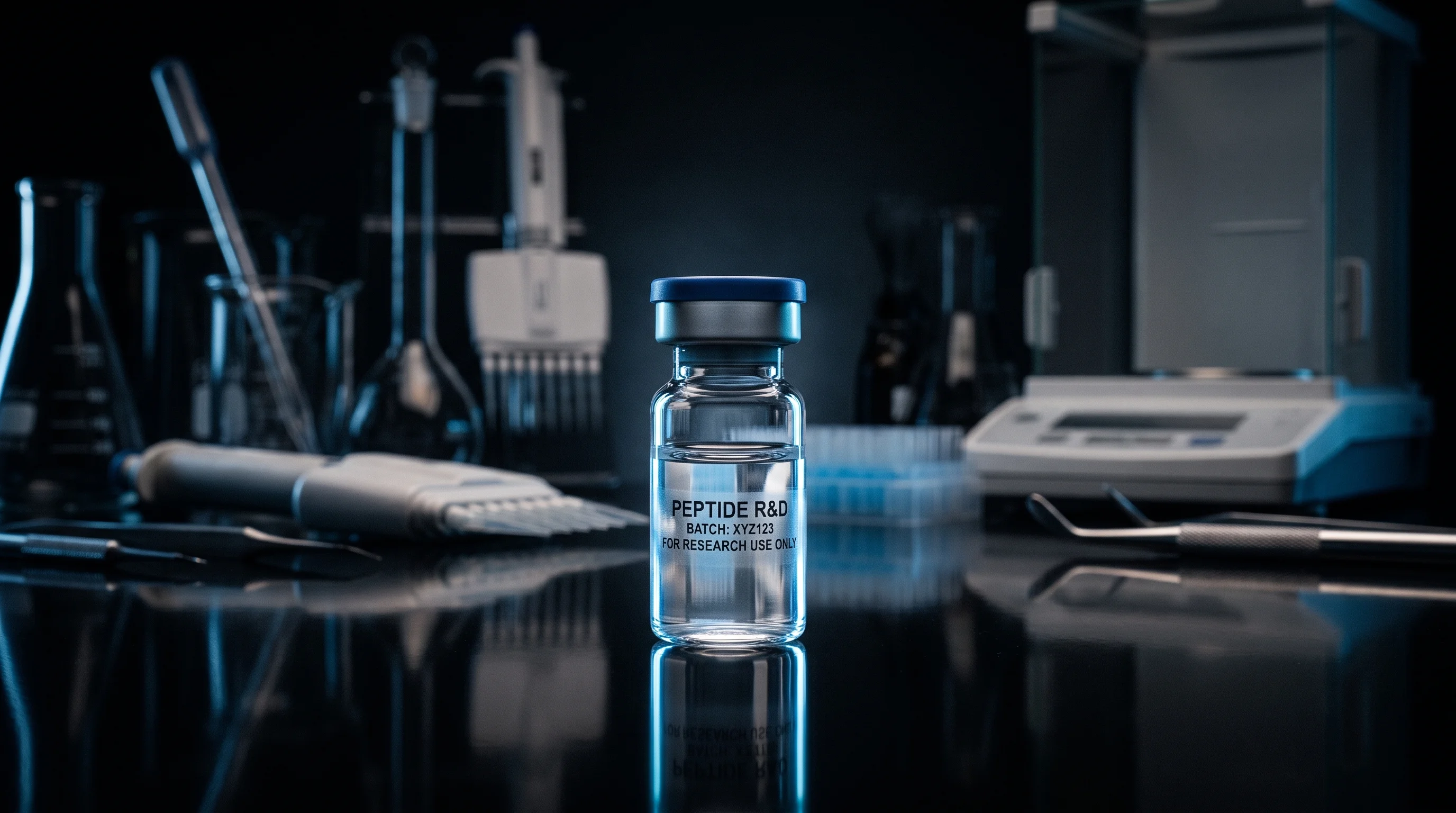
Table of Contents
- 01What is cagrilintide and how does the amylin analogue work?
- 02How does cagrilintide exert its weight-loss action in studies?
- 03What did the phase 2 monotherapy study show?
- 04What is CagriSema and why combine it with semaglutide?
- 05What did the REDEFINE study show about the cagrilintide effect on weight loss?
- 06How does cagrilintide differ mechanistically from GLP-1 agonists?
- 07What adverse events were reported in the studies?
- 08Why is dose titration so important with cagrilintide?
- 09Where does cagrilintide fit in the landscape of obesity research?
- 10What should be considered when handling cagrilintide as a research substance?
- 11Frequently asked questions
- Is cagrilintide available as a product at BergdorfBio?
- What is the difference between cagrilintide and CagriSema?
- What half-life does cagrilintide have?
- Why do so many gastrointestinal adverse events occur in the studies?
- Are the weight-reduction percentages transferable to me?
The cagrilintide effect on weight loss is described in clinical trials as a dose-dependent reduction in food intake. Cagrilintide is a long-acting, synthetic amylin analogue from Novo Nordisk that acts centrally via brain amylin receptors to strengthen satiety. In REDEFINE and CagriSema research, the drug candidate as monotherapy reached roughly 11.8 percent body-weight reduction. This guide summarises the trial evidence, strictly for research purposes.
What is cagrilintide and how does the amylin analogue work?
Cagrilintide is a cagrilintide amylin analogue, a chemically stabilised mimic of the body's own hormone amylin. Amylin is co-secreted with insulin by the beta cells of the pancreas and slows gastric emptying while promoting satiety. The native peptide has a very short half-life of only a few minutes, which is why Novo Nordisk redesigned the molecular structure to enable once-weekly dosing. The development of this long-acting analogue is extensively documented in the medicinal-chemistry literature Kruse et al., 2021.
The prolonged duration of action arises from a fatty-acid side chain that binds to albumin, delaying enzymatic breakdown. This construction resembles the principle used for GLP-1 analogues such as semaglutide. In preclinical and clinical studies, cagrilintide thereby showed a stable plasma concentration over seven days. A comprehensive review classifies cagrilintide as a distinct drug class for obesity research D'Ascanio et al., 2024. In research, the peptide serves primarily to study the contribution of amylin signalling pathways to appetite regulation in isolation, independent of the established incretin axes.
How does cagrilintide exert its weight-loss action in studies?
The cagrilintide effect on weight loss is based, in the reported studies, on a centrally mediated reduction of food intake. Rather than intervening peripherally in fat metabolism, the amylin analogue acts on nuclei in the brainstem and hypothalamus that integrate hunger and satiety signals. Animal models show that the substance brings on the subjective sense of fullness earlier and reduces portion sizes.
Mechanistic work demonstrates that cagrilintide conveys its weight-lowering signal via the brain amylin receptors AMY1 and AMY3 amylin receptor study, 2025. These receptors consist of the calcitonin receptor combined with the accessory proteins RAMP1 and RAMP3 respectively. When activated, the amount of calories consumed drops measurably. In the phase 2 dose-finding trial, the highest dose of 4.5 mg weekly produced a dose-dependent weight reduction that, in the reported analysis, exceeded both placebo and the comparator liraglutide 3.0 mg Lau et al., 202101751-7/abstract). Important for context: these data describe only the drug candidate in a study setting and are not an indication of any use outside controlled research. The effects appeared gradually over the multi-week treatment period.
What did the phase 2 monotherapy study show?
The core monotherapy evidence comes from a phase 2 dose-finding trial with 706 adult participants with overweight or obesity over 26 weeks Lau et al., 202101751-7/abstract). The doses studied were 0.3 mg, 0.6 mg, 1.2 mg, 2.4 mg and 4.5 mg against placebo and against liraglutide 3.0 mg as an active comparator.
The result was a clear dose-response relationship: as the dose increased, the reported weight reduction rose. The 4.5 mg group achieved the strongest effect and exceeded the established GLP-1 analogue liraglutide. In later phase 3 analyses within the REDEFINE programme, a body-weight reduction of roughly 11.8 percent was reported for monotherapy at 68 weeks; participants lost an average of 12.5 kg versus 2.5 kg (2.3 percent) on placebo. These figures are to be understood exclusively as trial reporting on the drug candidate. Those wishing to follow the pure kinetics of long-acting peptides can use the peptide calculator to model half-life and accumulation. A broader overview of this substance class can be found in the guide to peptides for weight loss.
What is CagriSema and why combine it with semaglutide?
CagriSema denotes the fixed combination of cagrilintide 2.4 mg and semaglutide 2.4 mg. The scientific rationale: amylin and GLP-1 act on appetite regulation via distinct, complementary pathways. While semaglutide as a GLP-1 analogue primarily engages the incretin axis, cagrilintide addresses the amylin receptors. This additivity makes the combination particularly interesting for research.
A phase 1b study over 20 weeks already reported the strongest weight reduction of minus 17.1 percent from baseline for the combination of 2.4 mg cagrilintide and semaglutide; all tested cagrilintide arms (1.2 mg, 2.4 mg and 4.5 mg) exceeded semaglutide alone. In a phase 2 study in adults with overweight or obesity and type 2 diabetes, CagriSema showed significantly greater weight reduction than semaglutide or cagrilintide as single agents and was well tolerated Lancet, 202301163-7/abstract). A further phase 3a analysis in the same population confirmed the efficacy and safety profile Davies et al., 2025 (REDEFINE 2). The combination is thus a prime example of the strategy of combining two complementary satiety signals rather than simply stimulating a single receptor pathway more strongly. All the data cited refer exclusively to the clinical study context.
What did the REDEFINE study show about the cagrilintide effect on weight loss?
REDEFINE 1 is the largest phase 3a investigation to date on the cagrilintide effect on weight loss in combination with semaglutide, published in the New England Journal of Medicine NEJM, 2025. It studied CagriSema in adults with overweight or obesity and provides the most compelling efficacy data of the cagrilintide REDEFINE trial.
The reported results were pronounced: 60 percent of participants treated with CagriSema achieved a weight reduction of at least 20 percent, and 23 percent lost at least 30 percent of their baseline weight. These proportions lie well above what monotherapies reported in comparable studies and support the thesis of the additive action of amylin and GLP-1 pathways. It is crucial to stress at this point: these percentages are pure trial reporting on the drug candidate in a strictly controlled clinical setting. They do not represent any promise of effect for end users and justify no use outside research. BergdorfBio separately supplies a Cagrilintide 5 mg research vial; that catalog material is not represented as equivalent to the investigational product used in clinical trials. Comparable compounds can be found in the retatrutide guide.
How does cagrilintide differ mechanistically from GLP-1 agonists?
The central difference lies in the receptor family addressed. GLP-1 agonists such as semaglutide bind to the GLP-1 receptor and enhance glucose-dependent insulin secretion as well as the satiety signal via the incretin axis. Cagrilintide, by contrast, activates as an amylin analogue the receptors AMY1 and AMY3, which consist of the calcitonin receptor plus RAMP accessory proteins amylin receptor study, 2025.
This separation is more than academic. Because both pathways act in parallel and additively, research can generate a stronger overall signal without over-driving any single receptor. This is precisely the logic behind CagriSema. A further difference concerns physiology: amylin slows gastric emptying and modulates glucagon signalling, while GLP-1 targets the insulin response more strongly. In practice across the substance classes, this means the combination covers a broader spectrum of satiety mechanisms. Those wishing to explore the differences between the leading incretin and multi-receptor candidates will find a detailed comparison in retatrutide vs. tirzepatide. Cagrilintide extends this picture with the amylin pathway and complements the classical incretin approaches with a mechanistically distinct component that is gaining increasing attention in obesity research.
What adverse events were reported in the studies?
The adverse-event profile of cagrilintide reported in the studies is predominantly gastrointestinal. The most frequently documented events were nausea, vomiting, constipation and diarrhoea. These events follow a pattern also known from GLP-1 analogues such as semaglutide and tirzepatide.
In the phase 2 monotherapy, gastrointestinal events occurred in 41 to 63 percent of participants in the cagrilintide groups (0.3 to 4.5 mg), compared with 32 percent on placebo; nausea was 20 to 47 percent versus 18 percent Lau et al., 202101751-7/abstract). In the phase 3 combination with semaglutide, gastrointestinal events were reported in 79.6 percent of the CagriSema group, compared with 39.9 percent on placebo NEJM, 2025. Crucial for context is that the events were predominantly mild to moderate and transient and concentrated in the dose-escalation phase. Nausea peaked during titration and subsided at a stable maintenance dose. These figures serve solely to document the drug candidate scientifically and do not constitute medical advice. Handling of the substance is strictly limited to research purposes.
Why is dose titration so important with cagrilintide?
Dose titration is the key to tolerability, as the study designs consistently show. Because the gastrointestinal events peak during the dose-escalation phase, investigators relied on a gradual approach to the target dose. In phase 3 research, a gradual escalation over roughly 16 weeks to the maintenance dose of 2.4 mg was chosen to optimise tolerability NEJM, 2025.
This slow ramp-up has a physiological background: the body adapts to the delayed gastric emptying and the strengthened satiety signal, so that nausea and vomiting subside at a stable dose. This is precisely why examining the half-life and accumulation of long-acting peptides is relevant for research. Cagrilintide is designed for once-weekly dosing, whereby the substance accumulates in plasma over several weeks until a steady state is reached. Those wishing to follow this dynamic in a model can use the peptide calculator to simulate curve profiles and steady-state concentrations for various half-lives. The titration schemes cited here describe only the study protocols and are not instructions for action. Cagrilintide remains a research substance without approval for human use outside controlled clinical trials.
Where does cagrilintide fit in the landscape of obesity research?
Cagrilintide occupies a special position in current obesity research because, as the first long-acting amylin analogue, it opens up a distinct receptor axis. While the past decade was shaped by GLP-1 mono-agonists and most recently by dual GIP/GLP-1 agonists such as tirzepatide, cagrilintide expands the repertoire with the amylin pathway. The review classifies the substance explicitly as a long-acting amylin analogue for obesity research D'Ascanio et al., 2024.
The strategic appeal lies in its combinability. Unlike simply increasing the dose of a single agonist, combining two complementary signalling pathways allows research to model a stronger overall effect with a controllable adverse-event profile. This very logic makes CagriSema one of the most closely watched combination candidates. For comparative context, a look at related multi-receptor approaches described in the retatrutide guide is worthwhile. Cagrilintide 5 mg is available from BergdorfBio strictly as a laboratory research material. The study data presented classify the drug candidate scientifically and do not establish clinical equivalence, suitability for administration, or any use outside controlled research.
The comparison of cagrilintide and retatrutide examines mechanisms and the evidence base; no direct head-to-head trial is available, and cross-trial comparisons are limited by differences in study populations and designs.
What should be considered when handling cagrilintide as a research substance?
Cagrilintide is available at BergdorfBio as a 5 mg lyophilised research vial. The stated vial mass identifies the supplied laboratory format and is not a recommended dose. Keep the unopened vial sealed, dry and protected from light, and follow the storage information printed on the product label and accompanying documentation. Preparation and post-preparation stability must be established by the receiving laboratory for its validated method.
These notes concern laboratory material handling and are not instructions for human use. Cagrilintide is supplied for research purposes only and is not intended for human or veterinary use or consumption. All efficacy data cited in this guide concern clinical-study drug candidates and must not be transferred to the separately supplied BergdorfBio research vial. Further background is available in the guide to peptides for weight loss and the retatrutide guide. Responsible interpretation requires a strict separation between documented research and any consumption or treatment recommendation.
Frequently asked questions
Is cagrilintide available as a product at BergdorfBio?
Yes. Cagrilintide 5 mg is available as a lyophilised laboratory research material. It is not represented as the clinical-study product and is not intended for human or veterinary use or consumption.
What is the difference between cagrilintide and CagriSema?
Cagrilintide is the single amylin analogue. CagriSema denotes the combination of cagrilintide 2.4 mg and semaglutide 2.4 mg. In studies such as REDEFINE 1, the combination showed stronger effects than either single agent.
What half-life does cagrilintide have?
Cagrilintide is designed as a long-acting analogue for once-weekly dosing. The precise kinetics of long-acting peptides can be modelled with the peptide calculator, which depicts half-life and accumulation over time.
Why do so many gastrointestinal adverse events occur in the studies?
Nausea, vomiting and digestive complaints arise from the slowed gastric emptying and the strengthened satiety signal. In the studies they were predominantly mild to moderate, transient and concentrated in the titration phase.
Are the weight-reduction percentages transferable to me?
No. All percentages cited, such as the 23 percent with at least 30 percent weight loss in REDEFINE 1, are pure trial reporting on the drug candidate in a controlled clinical setting and no promise for individuals.
For research purposes only. Not intended for human consumption. Scientific editing: Dr. Sieglinde Klaus
References
- D'Ascanio AM, Mullally JA, Frishman WH. Cagrilintide: A Long-Acting Amylin Analog for the Treatment of Obesity. Cardiology in review. 2024.PMID
- https://www.ncbi.nlm.nih.gov/pmc/articles/PMC12270663/
- https://www.thelancet.com/journals/lancet/article/PIIS0140-6736(21
- https://www.thelancet.com/journals/lancet/article/PIIS0140-6736(23
- Davies MJ, et al. Cagrilintide-Semaglutide in Adults with Overweight or Obesity and Type 2 Diabetes. The New England journal of medicine. 2025.PMID
- https://www.nejm.org/doi/full/10.1056/NEJMoa2502081
