
Calculate exact reconstitution volumes, insulin units, and doses per vial for any peptide.
Vial, water and dose are known
Units measure volume, not active substance. 100 IU = 1.00 ml. How many mg are in there depends on the mix. The calculator has worked that out for you.
Almost all insulin syringes are U-100. Only choose U-40 if the syringe is marked U-40.
5-Amino-1MQ (5-amino-1-methylquinolinium) is a small, orally active molecule studied in metabolic research as a selective inhibitor of the enzyme nicotinamide N-methyltransferase (NNMT). Unlike most compounds discussed across this calculator, 5-Amino-1MQ is not a peptide or a chain of amino acids — it is a low-molecular-weight chemical compound belonging to the quinolinium class. The name describes the structure directly: a methylquinolinium scaffold carrying an amino group at the 5 position. This small molecular size is the reason 5-Amino-1MQ is orally bioavailable in research models and does not need to be injected.
Interest in 5-Amino-1MQ grew out of the observation that NNMT becomes overactive in adipose tissue and the liver when metabolism is disrupted, such as in diet-induced obesity in rodent models. NNMT consumes two important cellular molecules by transferring a methyl group from S-adenosylmethionine (SAM) onto nicotinamide. Nicotinamide is a precursor of NAD+, the central cofactor of energy metabolism. When NNMT is inhibited, nicotinamide remains available for NAD+ regeneration and SAM is preserved for methylation reactions. It is precisely this dual effect that makes 5-Amino-1MQ interesting for research into adipocyte biology, energy expenditure, and aging.
5-Amino-1MQ was first described in a widely cited 2018 study that linked NNMT inhibition to a reduction in fat mass in obese mice without any change in food intake. Since then, the compound has been a recurring topic in preclinical metabolic and longevity research. To date, however, there are no completed large-scale human clinical trials. 5-Amino-1MQ is not an approved drug and is traded strictly for research purposes.
5-Amino-1MQ does not act through hormone receptors and is not a stimulant. Its entire activity profile derives from a single primary target — NNMT inhibition — which triggers a cascade of downstream metabolic effects:
An important distinction: 5-Amino-1MQ does not raise NAD+ by supplying an external NAD+ precursor, as NMN or NR do. Instead, it raises NAD+ by closing a leak in the existing recycling pathway. These two approaches — substrate supplementation and enzyme inhibition — can be considered conceptually complementary, but they are mechanistically distinct.
Because 5-Amino-1MQ is administered orally, dose calculation centers on the amount of active compound per dose rather than on injection volumes. Research protocols typically use a fixed daily dose without an elaborate titration ramp, although starting at the lower end of the range is a reasonable precaution.
5-Amino-1MQ is often supplied as loose powder or in 5 mg or 10 mg vials. Anyone preparing a capsule form divides the total amount of a vial across the desired daily dose. A 5 mg vial yields exactly one daily portion at a standard dose of 5 mg per day, or two portions at a conservative dose of 2.5 mg.
If the powder is dissolved in water or another suitable solvent, the 5-Amino-1MQ calculator above can determine the exact volume per dose: enter the vial size in mg, the added volume, and the target dose, and the calculator returns the volume to draw per administration. A precise milligram scale (0.001 g resolution) is the most reliable way to measure powder amounts accurately in a research setting.
5-Amino-1MQ is not an injectable compound. The entire reconstitution-with-bacteriostatic-water step common to peptides therefore does not apply. Instead, the task is to measure the powder precisely and bring it into an ingestible form. Two approaches are common in research practice: filling empty capsules, or dissolving a measured amount in liquid.
If the powder changes color, clumps heavily, or smells unusual, it should not be used further. High-quality 5-Amino-1MQ is a fine, uniform powder.
The safety profile of 5-Amino-1MQ rests largely on preclinical rodent models, in which the compound was well tolerated and did not produce obvious organ toxicity. Robust safety data from controlled human trials, however, is lacking. All use therefore remains explicitly within the research domain, and the tolerability profile is not fully characterized.
No serious adverse events have been described in the published preclinical literature at standard research doses. However, because robust human data is lacking, caution is warranted. Consultation with a qualified healthcare professional is strongly recommended before beginning any protocol.
5-Amino-1MQ can be conceptually paired with NAD+ precursors such as NMN or NR: the precursor supplies additional substrate, while 5-Amino-1MQ protects the recycling of nicotinamide that is already present. Both approaches aim at greater NAD+ availability but act at different points in metabolism. This combination is discussed in longevity research but is not clinically validated.
In mitochondrial research, 5-Amino-1MQ is often mentioned alongside peptides such as MOTS-c and SS-31. MOTS-c is a mitochondrially encoded peptide linked to AMPK signaling and glucose utilization, while SS-31 targets the inner mitochondrial membrane and cardiolipin stability. With NAD+ availability, 5-Amino-1MQ addresses a third, independent lever of energy metabolism.
For research questions around fat metabolism and body composition, 5-Amino-1MQ is occasionally considered alongside AOD-9604, a fragment of growth hormone associated with lipolysis. The two compounds act through entirely different mechanisms, which is why research discussions treat them as complementary tools rather than interchangeable alternatives. For a complete overview of available tools, see the peptide calculator hub.
No. 5-Amino-1MQ is a low-molecular-weight chemical molecule from the quinolinium class, not a chain of amino acids. It is covered on this platform alongside peptides because it is grouped into similar metabolic and longevity research contexts. Mechanistically and structurally, however, it differs fundamentally from true peptides.
No. 5-Amino-1MQ is orally active and is swallowed in research protocols, typically as a filled capsule or dissolved in water. Reconstitution with bacteriostatic water and injection are not part of its use. It is precisely this oral availability that sets it apart from many injectable peptides.
NNMT, or nicotinamide N-methyltransferase, is an enzyme that attaches a methyl group to nicotinamide and thereby removes it from the NAD+ recycling loop. 5-Amino-1MQ blocks this enzyme. As a result, nicotinamide remains available for NAD+ resynthesis, and at the same time less S-adenosylmethionine is consumed. NNMT inhibition is the only known primary mechanism of the compound.
NMN and NR are direct NAD+ precursors: they supply the body with additional building material for NAD+. 5-Amino-1MQ supplies no building material; instead, it prevents existing nicotinamide from being intercepted by NNMT. Figuratively speaking, NMN and NR fill the tank, while 5-Amino-1MQ seals a leak in the tank. Both approaches aim at higher NAD+ levels, but they are mechanistically distinct.
In research protocols, 5-Amino-1MQ is typically taken once daily in the morning, since the metabolic focus is on the active part of the day. Above all, consistency matters: the same time and the same relationship to meals every day keep absorption comparable across the cycle.
Preclinical models often run for several weeks, roughly six to twelve, followed by a break. There are no established human protocols, since controlled human trials are lacking. Cyclical use with defined breaks is preferred as a precaution as long as the long-term consequences of sustained NNMT inhibition remain unstudied.
5-Amino-1MQ does not act through hormone receptors and is not a growth hormone secretagogue. It does not suppress the hypothalamic-pituitary axis, and no post-cycle therapy is required. Its effect runs exclusively through the metabolic level — specifically through the NAD+ and methylation balance.
5-Amino-1MQ is not currently listed in the BergdorfBio catalog. Related metabolic and research tools can be found through the peptide calculator hub. All products listed there are sold strictly for research purposes.
Medical Disclaimer: The information on this page is provided for educational and research purposes only. 5-Amino-1MQ is not an approved drug or medical treatment and is traded strictly for research use. Nothing on this page constitutes medical advice, diagnosis, or a recommendation to use any specific compound. Always consult a qualified healthcare professional before beginning any research protocol. BergdorfBio assumes no liability for the use or misuse of the information presented here.
From powder to a ready syringe in five steps. The calculator above gives you the amounts automatically.
Bring vial and water to room temperature. Wipe both rubber stoppers with an alcohol swab.
Draw up the amount of BAC water recommended by the calculator using a larger syringe.
Let the water run down the inside wall of the peptide vial, do not spray it directly onto the powder.
Roll the vial gently, do not shake. The powder dissolves clear within 1-2 minutes.
Draw up to exactly the calculated mark with the insulin syringe. Done.
Typical starting values for orientation. Each row opens the calculator for that peptide.
| Peptide | Category | Typical dose | Vial sizes | BAC (start) | Available | Calculate |
|---|---|---|---|---|---|---|
| VIP | Neuropeptide Research | - | 10 mg | 2 ml | Calculator only | Calculate |
| Retatrutide | GLP-1/GIP/GCG | 0,5-12 mg | 2 / 5 / 10 / 15 mg | 2 ml | Calculator only | Calculate |
| Cagrilintide | Amylin Analogue | - | 5 mg | 2 ml | Calculator only | Calculate |
| Semaglutide | GLP-1 | 0,25-2,4 mg | 2 / 5 / 10 mg | 2 ml | Calculator only | Calculate |
| Tirzepatide | GLP-1/GIP | 2,5-15 mg | 10 / 15 / 20 / 30 / 60 / 90 mg | 2 ml | Calculator only | Calculate |
| GHK-Cu | Copper Peptide | 1-4 mg | 10 / 20 / 50 mg | 5 ml | Calculator only | Calculate |
| AHK-Cu | Copper Peptide | - | 100 mg | 5 ml | Calculator only | Calculate |
| BPC-157 | Tissue Repair | 0,2-0,5 mg | 2 / 5 / 10 mg | 2 ml | Calculator only | Calculate |
| TB-500 | Thymosin Beta-4 | 2-5 mg | 2 / 5 / 10 mg | 2 ml | Calculator only | Calculate |
| CJC-1295 (no DAC) | GHRH Analog | 100-200 mcg | 2 / 5 / 10 mg | 2 ml | Calculator only | Calculate |
| Ipamorelin | GHRP | 200-300 mcg | 2 / 5 mg | 2 ml | Calculator only | Calculate |
| AOD-9604 | Fat Loss | 250-500 mcg | 2 / 5 mg | 2 ml | Calculator only | Calculate |
| PT-141 | Bremelanotide | - | 2 / 5 / 10 mg | 2 ml | Calculator only | Calculate |
| MOTS-c | Mitochondrial | 5-10 mg | 5 / 10 mg | 2 ml | Calculator only | Calculate |
| Selank | Anxiolytic | 150-500 mcg | 2 / 5 / 10 mg | 2 ml | Calculator only | Calculate |
| SS-31 | Elamipretide | 0,1-1 mg | 5 / 10 mg | 2 ml | Calculator only | Calculate |
| Glow Stack | Stack | 0,5-2 mg | 70 mg | 3 ml | Calculator only | Calculate |
| Klow Stack | Stack | 0,5-2 mg | 55 mg | 3 ml | Calculator only | Calculate |
| Melanotan II | Melanocortin | 100-1000 mcg | 5 / 10 mg | 2 ml | Calculator only | Calculate |
| Melanotan I | Melanocortin | - | 5 / 10 mg | 2 ml | Calculator only | Calculate |
| Sermorelin | GHRH Analog | 50-300 mcg | 5 mg | 2 ml | Calculator only | Calculate |
| Tesamorelin | GHRH Analog | 1-2 mg | 10 / 20 mg | 2 ml | Calculator only | Calculate |
| Thymosin Alpha-1 | Thymic Peptide | 0,8-3,2 mg | 1.6 / 5 / 10 mg | 1 ml | Calculator only | Calculate |
| Epithalon | Longevity | 2-10 mg | 10 / 20 / 50 mg | 2 ml | Calculator only | Calculate |
| KPV | Immune / Barrier | 100-1000 mcg | 5 / 10 mg | 2 ml | Calculator only | Calculate |
| HGH Fragment 176-191 | Metabolic Fragment | 100-500 mcg | 2 / 5 / 10 mg | 2 ml | Calculator only | Calculate |
| Semax | Cognitive | 100-1000 mcg | 10 / 30 mg | 2 ml | Calculator only | Calculate |
| N-Acetyl Semax | Cognitive | 100-1000 mcg | 5 / 10 mg | 2 ml | Calculator only | Calculate |
| Hexarelin | GHRP | 50-200 mcg | 2 / 5 mg | 2 ml | Calculator only | Calculate |
| GHRP-6 | GHRP | 50-300 mcg | 2 / 5 mg | 2 ml | Calculator only | Calculate |
| GHRP-2 | GHRP | 50-250 mcg | 2 / 5 mg | 2 ml | Calculator only | Calculate |
| DSIP | Sleep | 50-500 mcg | 10 mg | 2 ml | Calculator only | Calculate |
| 5-Amino-1MQ | Metabolic | 2,5-10 mg | 10 mg | 2 ml | Calculator only | Calculate |
| Pinealon | Research peptide | - | 10 mg | 2 ml | Calculator only | Calculate |
| Survodutide | GLP-1/Glucagon | - | 10 mg | 2 ml | Calculator only | Calculate |
| Kisspeptin-10 | KISS1R / GPR54 | - | 10 mg | 2 ml | Calculator only | Calculate |
| HGH 191AA | Growth Hormone | 1-5 mg | 10 mg | 1 ml | Calculator only | Calculate |
| NAD+ | Longevity / Cofactor | 100-500 mg | 1000 mg | 10 ml | Calculator only | Calculate |
Values are for orientation in a research context and do not replace professional advice.
Calculating concentration and injection volume correctly seems trivial, but it is the most common source of error. Even a 10 % miscalculation during reconstitution means you either get too little active substance or unintentionally overdose.
Lyophilized peptides are supplied in milligrams and dissolved in bacteriostatic water (BAC water). The ratio of peptide to water determines the concentration, and from that follows how many units you draw up on the insulin syringe. Insulin syringes are scaled in units, not milligrams. The calculator handles this conversion, including the plausibility check against the most dangerous error: confusing mg and mcg.
Milligrams (mg) is the unit lyophilized peptides are sold in, for example “5 mg BPC-157”. Micrograms (mcg) measure the single dose, for example “250 mcg per injection”. 1 mg = 1,000 mcg. The calculator converts automatically and warns when an entry looks like a mix-up.
U-100 means the syringe is calibrated for 100 units per milliliter. 100 IU = 1 ml, so 10 IU = 0.10 ml, regardless of what is in the syringe. The IU calculation is based on exactly this relationship.
With a lot of peptide and little water the solution becomes very concentrated, so the volume per dose is tiny and hard to read. Use the mixing helper: it finds the water volume that produces a clean, easily readable mark.
In the fridge at 2-8 °C usually 21-30 days. Label the vial with the reconstitution date. Cloudy solutions or particles are a no-go.
Blends contain several active substances in one vial. Just select the blend as your peptide: the calculator additionally shows how much of each component is in your injection. For combinations of several separate vials, use the Stack Builder.
No. Your last settings are stored locally in the browser and restored on your next visit. You can also recall calculations from the history, save them as a protocol or share them as a link.
Choose a peptide to open its dedicated calculator page with pre-filled values.
Calculate exact reconstitution volumes, insulin units, and doses per vial for any peptide.
Vial, water and dose are known
Units measure volume, not active substance. 100 IU = 1.00 ml. How many mg are in there depends on the mix. The calculator has worked that out for you.
Almost all insulin syringes are U-100. Only choose U-40 if the syringe is marked U-40.
5-Amino-1MQ (5-amino-1-methylquinolinium) is a small, orally active molecule studied in metabolic research as a selective inhibitor of the enzyme nicotinamide N-methyltransferase (NNMT). Unlike most compounds discussed across this calculator, 5-Amino-1MQ is not a peptide or a chain of amino acids — it is a low-molecular-weight chemical compound belonging to the quinolinium class. The name describes the structure directly: a methylquinolinium scaffold carrying an amino group at the 5 position. This small molecular size is the reason 5-Amino-1MQ is orally bioavailable in research models and does not need to be injected.
Interest in 5-Amino-1MQ grew out of the observation that NNMT becomes overactive in adipose tissue and the liver when metabolism is disrupted, such as in diet-induced obesity in rodent models. NNMT consumes two important cellular molecules by transferring a methyl group from S-adenosylmethionine (SAM) onto nicotinamide. Nicotinamide is a precursor of NAD+, the central cofactor of energy metabolism. When NNMT is inhibited, nicotinamide remains available for NAD+ regeneration and SAM is preserved for methylation reactions. It is precisely this dual effect that makes 5-Amino-1MQ interesting for research into adipocyte biology, energy expenditure, and aging.
5-Amino-1MQ was first described in a widely cited 2018 study that linked NNMT inhibition to a reduction in fat mass in obese mice without any change in food intake. Since then, the compound has been a recurring topic in preclinical metabolic and longevity research. To date, however, there are no completed large-scale human clinical trials. 5-Amino-1MQ is not an approved drug and is traded strictly for research purposes.
5-Amino-1MQ does not act through hormone receptors and is not a stimulant. Its entire activity profile derives from a single primary target — NNMT inhibition — which triggers a cascade of downstream metabolic effects:
An important distinction: 5-Amino-1MQ does not raise NAD+ by supplying an external NAD+ precursor, as NMN or NR do. Instead, it raises NAD+ by closing a leak in the existing recycling pathway. These two approaches — substrate supplementation and enzyme inhibition — can be considered conceptually complementary, but they are mechanistically distinct.
Because 5-Amino-1MQ is administered orally, dose calculation centers on the amount of active compound per dose rather than on injection volumes. Research protocols typically use a fixed daily dose without an elaborate titration ramp, although starting at the lower end of the range is a reasonable precaution.
5-Amino-1MQ is often supplied as loose powder or in 5 mg or 10 mg vials. Anyone preparing a capsule form divides the total amount of a vial across the desired daily dose. A 5 mg vial yields exactly one daily portion at a standard dose of 5 mg per day, or two portions at a conservative dose of 2.5 mg.
If the powder is dissolved in water or another suitable solvent, the 5-Amino-1MQ calculator above can determine the exact volume per dose: enter the vial size in mg, the added volume, and the target dose, and the calculator returns the volume to draw per administration. A precise milligram scale (0.001 g resolution) is the most reliable way to measure powder amounts accurately in a research setting.
5-Amino-1MQ is not an injectable compound. The entire reconstitution-with-bacteriostatic-water step common to peptides therefore does not apply. Instead, the task is to measure the powder precisely and bring it into an ingestible form. Two approaches are common in research practice: filling empty capsules, or dissolving a measured amount in liquid.
If the powder changes color, clumps heavily, or smells unusual, it should not be used further. High-quality 5-Amino-1MQ is a fine, uniform powder.
The safety profile of 5-Amino-1MQ rests largely on preclinical rodent models, in which the compound was well tolerated and did not produce obvious organ toxicity. Robust safety data from controlled human trials, however, is lacking. All use therefore remains explicitly within the research domain, and the tolerability profile is not fully characterized.
No serious adverse events have been described in the published preclinical literature at standard research doses. However, because robust human data is lacking, caution is warranted. Consultation with a qualified healthcare professional is strongly recommended before beginning any protocol.
5-Amino-1MQ can be conceptually paired with NAD+ precursors such as NMN or NR: the precursor supplies additional substrate, while 5-Amino-1MQ protects the recycling of nicotinamide that is already present. Both approaches aim at greater NAD+ availability but act at different points in metabolism. This combination is discussed in longevity research but is not clinically validated.
In mitochondrial research, 5-Amino-1MQ is often mentioned alongside peptides such as MOTS-c and SS-31. MOTS-c is a mitochondrially encoded peptide linked to AMPK signaling and glucose utilization, while SS-31 targets the inner mitochondrial membrane and cardiolipin stability. With NAD+ availability, 5-Amino-1MQ addresses a third, independent lever of energy metabolism.
For research questions around fat metabolism and body composition, 5-Amino-1MQ is occasionally considered alongside AOD-9604, a fragment of growth hormone associated with lipolysis. The two compounds act through entirely different mechanisms, which is why research discussions treat them as complementary tools rather than interchangeable alternatives. For a complete overview of available tools, see the peptide calculator hub.
No. 5-Amino-1MQ is a low-molecular-weight chemical molecule from the quinolinium class, not a chain of amino acids. It is covered on this platform alongside peptides because it is grouped into similar metabolic and longevity research contexts. Mechanistically and structurally, however, it differs fundamentally from true peptides.
No. 5-Amino-1MQ is orally active and is swallowed in research protocols, typically as a filled capsule or dissolved in water. Reconstitution with bacteriostatic water and injection are not part of its use. It is precisely this oral availability that sets it apart from many injectable peptides.
NNMT, or nicotinamide N-methyltransferase, is an enzyme that attaches a methyl group to nicotinamide and thereby removes it from the NAD+ recycling loop. 5-Amino-1MQ blocks this enzyme. As a result, nicotinamide remains available for NAD+ resynthesis, and at the same time less S-adenosylmethionine is consumed. NNMT inhibition is the only known primary mechanism of the compound.
NMN and NR are direct NAD+ precursors: they supply the body with additional building material for NAD+. 5-Amino-1MQ supplies no building material; instead, it prevents existing nicotinamide from being intercepted by NNMT. Figuratively speaking, NMN and NR fill the tank, while 5-Amino-1MQ seals a leak in the tank. Both approaches aim at higher NAD+ levels, but they are mechanistically distinct.
In research protocols, 5-Amino-1MQ is typically taken once daily in the morning, since the metabolic focus is on the active part of the day. Above all, consistency matters: the same time and the same relationship to meals every day keep absorption comparable across the cycle.
Preclinical models often run for several weeks, roughly six to twelve, followed by a break. There are no established human protocols, since controlled human trials are lacking. Cyclical use with defined breaks is preferred as a precaution as long as the long-term consequences of sustained NNMT inhibition remain unstudied.
5-Amino-1MQ does not act through hormone receptors and is not a growth hormone secretagogue. It does not suppress the hypothalamic-pituitary axis, and no post-cycle therapy is required. Its effect runs exclusively through the metabolic level — specifically through the NAD+ and methylation balance.
5-Amino-1MQ is not currently listed in the BergdorfBio catalog. Related metabolic and research tools can be found through the peptide calculator hub. All products listed there are sold strictly for research purposes.
Medical Disclaimer: The information on this page is provided for educational and research purposes only. 5-Amino-1MQ is not an approved drug or medical treatment and is traded strictly for research use. Nothing on this page constitutes medical advice, diagnosis, or a recommendation to use any specific compound. Always consult a qualified healthcare professional before beginning any research protocol. BergdorfBio assumes no liability for the use or misuse of the information presented here.
From powder to a ready syringe in five steps. The calculator above gives you the amounts automatically.
Bring vial and water to room temperature. Wipe both rubber stoppers with an alcohol swab.
Draw up the amount of BAC water recommended by the calculator using a larger syringe.
Let the water run down the inside wall of the peptide vial, do not spray it directly onto the powder.
Roll the vial gently, do not shake. The powder dissolves clear within 1-2 minutes.
Draw up to exactly the calculated mark with the insulin syringe. Done.
Typical starting values for orientation. Each row opens the calculator for that peptide.
| Peptide | Category | Typical dose | Vial sizes | BAC (start) | Available | Calculate |
|---|---|---|---|---|---|---|
| VIP | Neuropeptide Research | - | 10 mg | 2 ml | Calculator only | Calculate |
| Retatrutide | GLP-1/GIP/GCG | 0,5-12 mg | 2 / 5 / 10 / 15 mg | 2 ml | Calculator only | Calculate |
| Cagrilintide | Amylin Analogue | - | 5 mg | 2 ml | Calculator only | Calculate |
| Semaglutide | GLP-1 | 0,25-2,4 mg | 2 / 5 / 10 mg | 2 ml | Calculator only | Calculate |
| Tirzepatide | GLP-1/GIP | 2,5-15 mg | 10 / 15 / 20 / 30 / 60 / 90 mg | 2 ml | Calculator only | Calculate |
| GHK-Cu | Copper Peptide | 1-4 mg | 10 / 20 / 50 mg | 5 ml | Calculator only | Calculate |
| AHK-Cu | Copper Peptide | - | 100 mg | 5 ml | Calculator only | Calculate |
| BPC-157 | Tissue Repair | 0,2-0,5 mg | 2 / 5 / 10 mg | 2 ml | Calculator only | Calculate |
| TB-500 | Thymosin Beta-4 | 2-5 mg | 2 / 5 / 10 mg | 2 ml | Calculator only | Calculate |
| CJC-1295 (no DAC) | GHRH Analog | 100-200 mcg | 2 / 5 / 10 mg | 2 ml | Calculator only | Calculate |
| Ipamorelin | GHRP | 200-300 mcg | 2 / 5 mg | 2 ml | Calculator only | Calculate |
| AOD-9604 | Fat Loss | 250-500 mcg | 2 / 5 mg | 2 ml | Calculator only | Calculate |
| PT-141 | Bremelanotide | - | 2 / 5 / 10 mg | 2 ml | Calculator only | Calculate |
| MOTS-c | Mitochondrial | 5-10 mg | 5 / 10 mg | 2 ml | Calculator only | Calculate |
| Selank | Anxiolytic | 150-500 mcg | 2 / 5 / 10 mg | 2 ml | Calculator only | Calculate |
| SS-31 | Elamipretide | 0,1-1 mg | 5 / 10 mg | 2 ml | Calculator only | Calculate |
| Glow Stack | Stack | 0,5-2 mg | 70 mg | 3 ml | Calculator only | Calculate |
| Klow Stack | Stack | 0,5-2 mg | 55 mg | 3 ml | Calculator only | Calculate |
| Melanotan II | Melanocortin | 100-1000 mcg | 5 / 10 mg | 2 ml | Calculator only | Calculate |
| Melanotan I | Melanocortin | - | 5 / 10 mg | 2 ml | Calculator only | Calculate |
| Sermorelin | GHRH Analog | 50-300 mcg | 5 mg | 2 ml | Calculator only | Calculate |
| Tesamorelin | GHRH Analog | 1-2 mg | 10 / 20 mg | 2 ml | Calculator only | Calculate |
| Thymosin Alpha-1 | Thymic Peptide | 0,8-3,2 mg | 1.6 / 5 / 10 mg | 1 ml | Calculator only | Calculate |
| Epithalon | Longevity | 2-10 mg | 10 / 20 / 50 mg | 2 ml | Calculator only | Calculate |
| KPV | Immune / Barrier | 100-1000 mcg | 5 / 10 mg | 2 ml | Calculator only | Calculate |
| HGH Fragment 176-191 | Metabolic Fragment | 100-500 mcg | 2 / 5 / 10 mg | 2 ml | Calculator only | Calculate |
| Semax | Cognitive | 100-1000 mcg | 10 / 30 mg | 2 ml | Calculator only | Calculate |
| N-Acetyl Semax | Cognitive | 100-1000 mcg | 5 / 10 mg | 2 ml | Calculator only | Calculate |
| Hexarelin | GHRP | 50-200 mcg | 2 / 5 mg | 2 ml | Calculator only | Calculate |
| GHRP-6 | GHRP | 50-300 mcg | 2 / 5 mg | 2 ml | Calculator only | Calculate |
| GHRP-2 | GHRP | 50-250 mcg | 2 / 5 mg | 2 ml | Calculator only | Calculate |
| DSIP | Sleep | 50-500 mcg | 10 mg | 2 ml | Calculator only | Calculate |
| 5-Amino-1MQ | Metabolic | 2,5-10 mg | 10 mg | 2 ml | Calculator only | Calculate |
| Pinealon | Research peptide | - | 10 mg | 2 ml | Calculator only | Calculate |
| Survodutide | GLP-1/Glucagon | - | 10 mg | 2 ml | Calculator only | Calculate |
| Kisspeptin-10 | KISS1R / GPR54 | - | 10 mg | 2 ml | Calculator only | Calculate |
| HGH 191AA | Growth Hormone | 1-5 mg | 10 mg | 1 ml | Calculator only | Calculate |
| NAD+ | Longevity / Cofactor | 100-500 mg | 1000 mg | 10 ml | Calculator only | Calculate |
Values are for orientation in a research context and do not replace professional advice.
Calculating concentration and injection volume correctly seems trivial, but it is the most common source of error. Even a 10 % miscalculation during reconstitution means you either get too little active substance or unintentionally overdose.
Lyophilized peptides are supplied in milligrams and dissolved in bacteriostatic water (BAC water). The ratio of peptide to water determines the concentration, and from that follows how many units you draw up on the insulin syringe. Insulin syringes are scaled in units, not milligrams. The calculator handles this conversion, including the plausibility check against the most dangerous error: confusing mg and mcg.
Milligrams (mg) is the unit lyophilized peptides are sold in, for example “5 mg BPC-157”. Micrograms (mcg) measure the single dose, for example “250 mcg per injection”. 1 mg = 1,000 mcg. The calculator converts automatically and warns when an entry looks like a mix-up.
U-100 means the syringe is calibrated for 100 units per milliliter. 100 IU = 1 ml, so 10 IU = 0.10 ml, regardless of what is in the syringe. The IU calculation is based on exactly this relationship.
With a lot of peptide and little water the solution becomes very concentrated, so the volume per dose is tiny and hard to read. Use the mixing helper: it finds the water volume that produces a clean, easily readable mark.
In the fridge at 2-8 °C usually 21-30 days. Label the vial with the reconstitution date. Cloudy solutions or particles are a no-go.
Blends contain several active substances in one vial. Just select the blend as your peptide: the calculator additionally shows how much of each component is in your injection. For combinations of several separate vials, use the Stack Builder.
No. Your last settings are stored locally in the browser and restored on your next visit. You can also recall calculations from the history, save them as a protocol or share them as a link.
Choose a peptide to open its dedicated calculator page with pre-filled values.
In stock
In stock
View Product
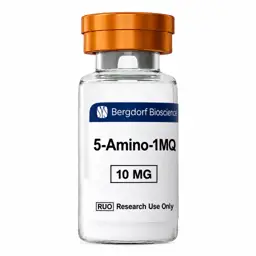
5-Amino-1MQView Product
5-Amino-1MQTypical starting values for orientation. Each row opens the calculator for that peptide.
| Peptide | Category | Typical dose | Vial sizes | BAC (start) | Available | Calculate |
|---|---|---|---|---|---|---|
| VIP | Neuropeptide Research | - | 10 mg | 2 ml | In stock | Calculate |
| Retatrutide | GLP-1/GIP/GCG | 0,5-12 mg | 2 / 5 / 10 / 15 mg | 2 ml | In stock | Calculate |
| Cagrilintide | Amylin Analogue | - | 5 mg | 2 ml | In stock | Calculate |
| Tirzepatide | GLP-1/GIP | 2,5-15 mg | 10 / 15 / 20 / 30 / 60 / 90 mg | 2 ml | In stock | Calculate |
| GHK-Cu | Copper Peptide | 1-4 mg | 10 / 20 / 50 mg | 5 ml | In stock | Calculate |
| AHK-Cu | Copper Peptide | - | 100 mg | 5 ml | In stock | Calculate |
| BPC-157 | Tissue Repair | 0,2-0,5 mg | 2 / 5 / 10 mg | 2 ml | In stock | Calculate |
| TB-500 | Thymosin Beta-4 | 2-5 mg | 2 / 5 / 10 mg | 2 ml | In stock | Calculate |
| CJC-1295 (no DAC) | GHRH Analog | 100-200 mcg | 2 / 5 / 10 mg | 2 ml | In stock | Calculate |
| Ipamorelin | GHRP | 200-300 mcg | 2 / 5 mg | 2 ml | In stock | Calculate |
| PT-141 | Bremelanotide | - | 2 / 5 / 10 mg | 2 ml | In stock | Calculate |
| MOTS-c | Mitochondrial | 5-10 mg | 5 / 10 mg | 2 ml | In stock | Calculate |
| Selank | Anxiolytic | 150-500 mcg | 2 / 5 / 10 mg | 2 ml | In stock | Calculate |
| SS-31 | Elamipretide | 0,1-1 mg | 5 / 10 mg | 2 ml | In stock | Calculate |
| Glow Stack | Stack | 0,5-2 mg | 70 mg | 3 ml | In stock | Calculate |
| Klow Stack | Stack | 0,5-2 mg | 55 mg | 3 ml | In stock | Calculate |
| Melanotan II | Melanocortin | 100-1000 mcg | 5 / 10 mg | 2 ml | In stock | Calculate |
| Melanotan I | Melanocortin | - | 5 / 10 mg | 2 ml | In stock | Calculate |
| Sermorelin | GHRH Analog | 50-300 mcg | 5 mg | 2 ml | In stock | Calculate |
| Tesamorelin | GHRH Analog | 1-2 mg | 10 / 20 mg | 2 ml | In stock | Calculate |
| Thymosin Alpha-1 | Thymic Peptide | 0,8-3,2 mg | 1.6 / 5 / 10 mg | 1 ml | In stock | Calculate |
| Epithalon | Longevity | 2-10 mg | 10 / 20 / 50 mg | 2 ml | In stock | Calculate |
| KPV | Immune / Barrier | 100-1000 mcg | 5 / 10 mg | 2 ml | In stock | Calculate |
| Semax | Cognitive | 100-1000 mcg | 10 / 30 mg | 2 ml | In stock | Calculate |
| DSIP | Sleep | 50-500 mcg | 10 mg | 2 ml | In stock | Calculate |
| 5-Amino-1MQ | Metabolic | 2,5-10 mg | 10 mg | 2 ml | In stock | Calculate |
| Pinealon | Research peptide | - | 10 mg | 2 ml | In stock | Calculate |
| Survodutide | GLP-1/Glucagon | - | 10 mg | 2 ml | In stock | Calculate |
| Kisspeptin-10 | KISS1R / GPR54 | - | 10 mg | 2 ml | In stock | Calculate |
| NAD+ | Longevity / Cofactor | 100-500 mg | 1000 mg | 10 ml | In stock | Calculate |
| Semaglutide | GLP-1 | 0,25-2,4 mg | 2 / 5 / 10 mg | 2 ml | Calculator only | Calculate |
| AOD-9604 | Fat Loss | 250-500 mcg | 2 / 5 mg | 2 ml | Calculator only | Calculate |
| HGH Fragment 176-191 | Metabolic Fragment | 100-500 mcg | 2 / 5 / 10 mg | 2 ml | Calculator only | Calculate |
| N-Acetyl Semax | Cognitive | 100-1000 mcg | 5 / 10 mg | 2 ml | Calculator only | Calculate |
| Hexarelin | GHRP | 50-200 mcg | 2 / 5 mg | 2 ml | Calculator only | Calculate |
| GHRP-6 | GHRP | 50-300 mcg | 2 / 5 mg | 2 ml | Calculator only | Calculate |
| GHRP-2 | GHRP | 50-250 mcg | 2 / 5 mg | 2 ml | Calculator only | Calculate |
| HGH 191AA | Growth Hormone | 1-5 mg | 10 mg | 1 ml | Calculator only | Calculate |
Values are for orientation in a research context and do not replace professional advice.
Typical starting values for orientation. Each row opens the calculator for that peptide.
| Peptide | Category | Typical dose | Vial sizes | BAC (start) | Available | Calculate |
|---|---|---|---|---|---|---|
| VIP | Neuropeptide Research | - | 10 mg | 2 ml | In stock | Calculate |
| Retatrutide | GLP-1/GIP/GCG | 0,5-12 mg | 2 / 5 / 10 / 15 mg | 2 ml | In stock | Calculate |
| Cagrilintide | Amylin Analogue | - | 5 mg | 2 ml | In stock | Calculate |
| Tirzepatide | GLP-1/GIP | 2,5-15 mg | 10 / 15 / 20 / 30 / 60 / 90 mg | 2 ml | In stock | Calculate |
| GHK-Cu | Copper Peptide | 1-4 mg | 10 / 20 / 50 mg | 5 ml | In stock | Calculate |
| AHK-Cu | Copper Peptide | - | 100 mg | 5 ml | In stock | Calculate |
| BPC-157 | Tissue Repair | 0,2-0,5 mg | 2 / 5 / 10 mg | 2 ml | In stock | Calculate |
| TB-500 | Thymosin Beta-4 | 2-5 mg | 2 / 5 / 10 mg | 2 ml | In stock | Calculate |
| CJC-1295 (no DAC) | GHRH Analog | 100-200 mcg | 2 / 5 / 10 mg | 2 ml | In stock | Calculate |
| Ipamorelin | GHRP | 200-300 mcg | 2 / 5 mg | 2 ml | In stock | Calculate |
| PT-141 | Bremelanotide | - | 2 / 5 / 10 mg | 2 ml | In stock | Calculate |
| MOTS-c | Mitochondrial | 5-10 mg | 5 / 10 mg | 2 ml | In stock | Calculate |
| Selank | Anxiolytic | 150-500 mcg | 2 / 5 / 10 mg | 2 ml | In stock | Calculate |
| SS-31 | Elamipretide | 0,1-1 mg | 5 / 10 mg | 2 ml | In stock | Calculate |
| Glow Stack | Stack | 0,5-2 mg | 70 mg | 3 ml | In stock | Calculate |
| Klow Stack | Stack | 0,5-2 mg | 55 mg | 3 ml | In stock | Calculate |
| Melanotan II | Melanocortin | 100-1000 mcg | 5 / 10 mg | 2 ml | In stock | Calculate |
| Melanotan I | Melanocortin | - | 5 / 10 mg | 2 ml | In stock | Calculate |
| Sermorelin | GHRH Analog | 50-300 mcg | 5 mg | 2 ml | In stock | Calculate |
| Tesamorelin | GHRH Analog | 1-2 mg | 10 / 20 mg | 2 ml | In stock | Calculate |
| Thymosin Alpha-1 | Thymic Peptide | 0,8-3,2 mg | 1.6 / 5 / 10 mg | 1 ml | In stock | Calculate |
| Epithalon | Longevity | 2-10 mg | 10 / 20 / 50 mg | 2 ml | In stock | Calculate |
| KPV | Immune / Barrier | 100-1000 mcg | 5 / 10 mg | 2 ml | In stock | Calculate |
| Semax | Cognitive | 100-1000 mcg | 10 / 30 mg | 2 ml | In stock | Calculate |
| DSIP | Sleep | 50-500 mcg | 10 mg | 2 ml | In stock | Calculate |
| 5-Amino-1MQ | Metabolic | 2,5-10 mg | 10 mg | 2 ml | In stock | Calculate |
| Pinealon | Research peptide | - | 10 mg | 2 ml | In stock | Calculate |
| Survodutide | GLP-1/Glucagon | - | 10 mg | 2 ml | In stock | Calculate |
| Kisspeptin-10 | KISS1R / GPR54 | - | 10 mg | 2 ml | In stock | Calculate |
| NAD+ | Longevity / Cofactor | 100-500 mg | 1000 mg | 10 ml | In stock | Calculate |
| Semaglutide | GLP-1 | 0,25-2,4 mg | 2 / 5 / 10 mg | 2 ml | Calculator only | Calculate |
| AOD-9604 | Fat Loss | 250-500 mcg | 2 / 5 mg | 2 ml | Calculator only | Calculate |
| HGH Fragment 176-191 | Metabolic Fragment | 100-500 mcg | 2 / 5 / 10 mg | 2 ml | Calculator only | Calculate |
| N-Acetyl Semax | Cognitive | 100-1000 mcg | 5 / 10 mg | 2 ml | Calculator only | Calculate |
| Hexarelin | GHRP | 50-200 mcg | 2 / 5 mg | 2 ml | Calculator only | Calculate |
| GHRP-6 | GHRP | 50-300 mcg | 2 / 5 mg | 2 ml | Calculator only | Calculate |
| GHRP-2 | GHRP | 50-250 mcg | 2 / 5 mg | 2 ml | Calculator only | Calculate |
| HGH 191AA | Growth Hormone | 1-5 mg | 10 mg | 1 ml | Calculator only | Calculate |
Values are for orientation in a research context and do not replace professional advice.
Choose a peptide to open its dedicated calculator page with pre-filled values.
Choose a peptide to open its dedicated calculator page with pre-filled values.