Glow Stack Peptide: Comprehensive Research Guide on Dosage, Effects and Application
Dr. Sieglinde Klaus
Scientific Editorial Team · Bergdorf Bioscience


Dr. Sieglinde Klaus
Scientific Editorial Team · Bergdorf Bioscience
Dr. Sieglinde Klaus
Scientific Editorial Team · Bergdorf Bioscience
The Glow Stack Peptide combines three of the most intensively researched peptides in regenerative biomedicine into a single lyophilized preparation: GHK-Cu (50 mg), TB-500 (10 mg), and BPC-157 (10 mg). This triple combination addresses complementary biological signaling pathways, from collagen synthesis through cell migration to angiogenesis, enabling researchers to study synergistic interactions in a controlled experimental setting. The following guide summarizes the current state of research on Glow Stack dosage, mechanisms of action of the individual components, and practical handling in the laboratory context.
The Glow Stack is a combination specifically developed for research purposes, containing three peptides with complementary mechanisms of action. The first component, GHK-Cu (Glycyl-L-Histidyl-L-Lysine-Copper(II)), is a naturally occurring tripeptide first isolated from human blood plasma by Loren Pickart in 1973. With a molecular weight of 403.9 Da (as a copper complex), it binds copper(II) ions in a 1:1 ratio and modulates the expression of over 4,000 genes in human fibroblasts (Pickart et al., 2014). The plasma concentration of GHK is approximately 200 ng/ml at age 20 and decreases to 80 ng/ml by age 60. The second component, TB-500, is a synthetic fragment of the endogenous protein Thymosin Beta-4, a highly conserved 4.9 kDa peptide found in virtually all nucleated cells. The active segment LKKTETQ (amino acids 17-23) is responsible for actin binding, cell migration, and wound healing (Goldstein et al., 2012). The third component, BPC-157 (Body Protection Compound-157), is a synthetic pentadecapeptide of 15 amino acids derived from a protective protein in human gastric juice. In the Glow Stack formulation, each component is present as lyophilized powder with an HPLC-confirmed purity of at least 99%.
GHK-Cu exerts its effects primarily through modulation of the extracellular matrix and gene expression in dermal fibroblasts. In a landmark study, the copper peptide complex at concentrations of 0.01, 1, and 100 nM significantly stimulated the production of collagen and elastin in human adult fibroblasts (Pickart et al., 2015). The mechanism of action encompasses multiple levels: GHK-Cu activates the TGF-beta signaling pathway, thereby stimulating the synthesis of collagen types I, III, and IV as well as glycosaminoglycans. In wound chamber experiments in rats, a concentration-dependent increase in dry weight, DNA, total protein, collagen, and glycosaminoglycan content was observed, with collagen synthesis stimulation being twice that of non-collagen proteins (Maquart et al., 1988). Furthermore, GHK-Cu at a concentration of 1 nM increases the expression of bFGF (basic Fibroblast Growth Factor) and VEGF (Vascular Endothelial Growth Factor), promoting neovascularization and blood supply in damaged tissue (Pickart et al., 2018). Recent studies also demonstrate synergy between GHK-Cu and hyaluronic acid in upregulating collagen IV in fibroblast cultures (Zhou et al., 2023). The antioxidant properties of the copper peptide complement the matrix effects: GHK-Cu upregulates superoxide dismutase and other antioxidant enzymes, reducing oxidative stress in aging tissue.
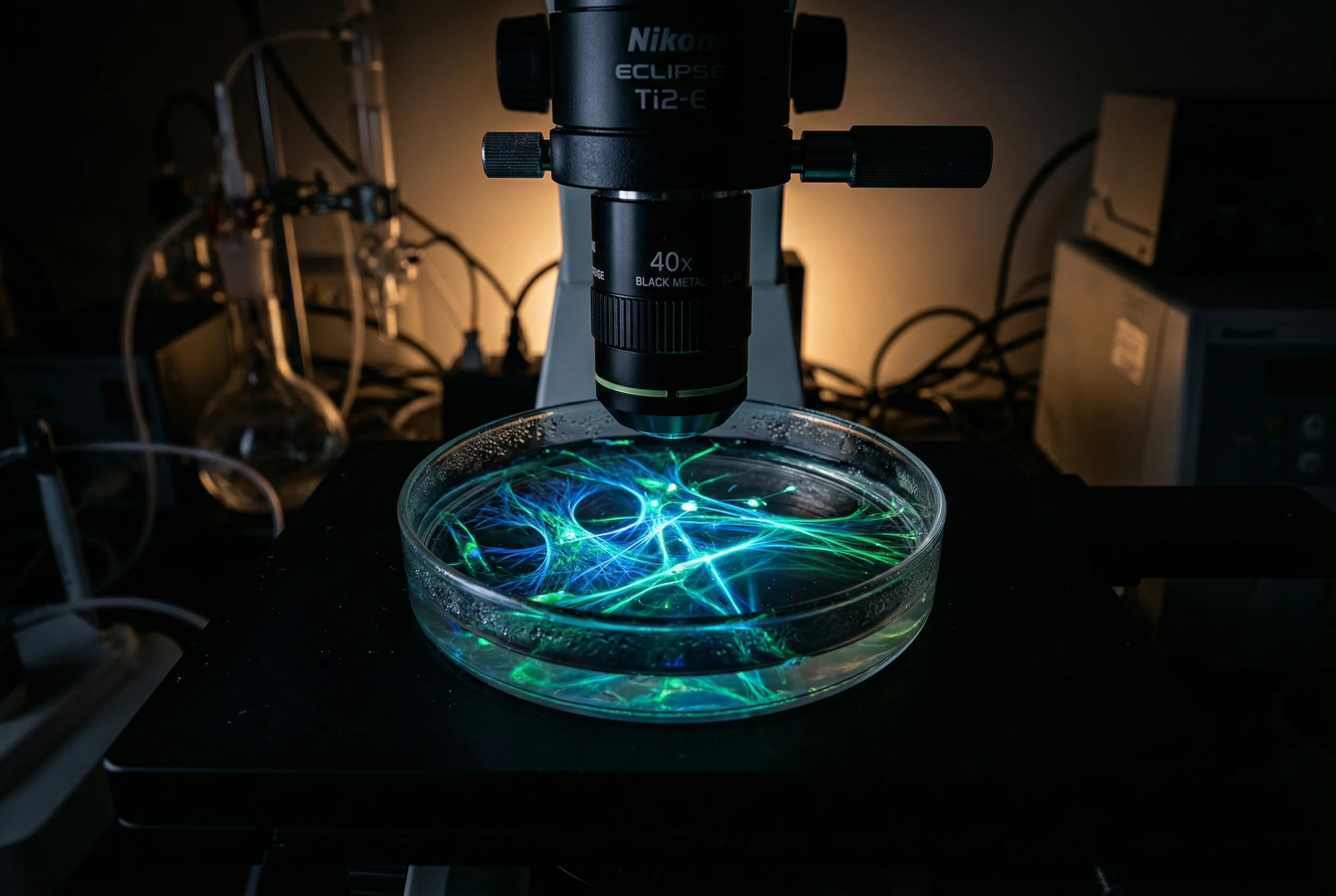
TB-500, the synthetic analogue of the active region of Thymosin Beta-4, acts primarily on actin polymerization and cell migration. The central biological function consists of sequestering G-actin (monomeric actin), thereby regulating the equilibrium between G-actin and F-actin (filamentous actin). This mechanism is fundamental for cell motility, cell structure, and ultimately tissue regeneration. In wound healing studies in rats, topical or intraperitoneal administration of Thymosin Beta-4 accelerated re-epithelialization by 42% at four days and up to 61% at seven days compared to saline controls (Malinda et al., 1999). The peptide fragment LKKTETQ, which represents the active site for actin binding and cell migration, also promotes angiogenesis: the actin binding site of Thymosin Beta-4 stimulates the formation of new blood vessels and the differentiation of endothelial cells (Philp et al., 2003). In cardiac ischemia models in mice, Thymosin Beta-4 improved cardiomyocyte survival and cardiac function after coronary artery ligation. Additionally, TB-500 acts anti-inflammatory by downregulating pro-inflammatory chemokines and cytokines (Sosne et al., 2010). The half-life of TB-500 is approximately 7 hours, allowing flexible dosing schedules in research protocols. In Phase I studies in healthy volunteers, a dose-linear pharmacokinetic profile was demonstrated with no dose-limiting toxicities (Shah et al., 2010).
BPC-157, the stable gastric pentadecapeptide, acts through a unique mechanism that modulates angiogenesis and the nitric oxide system. The pro-angiogenic effect is associated with the activation and upregulation of VEGFR2: BPC-157 activates the VEGFR2-Akt-eNOS signaling pathway and promotes both VEGF-dependent and VEGF-independent pathways to NO production (Hsieh et al., 2017). In wound healing models, BPC-157 was shown to upgrade the combined triad of collagen, inflammatory cells, and angiogenesis: these processes occurred earlier, progressed faster, and were more advanced than in control groups (Sikiric et al., 2021). A distinctive feature of BPC-157 is its bidirectional effect on NO levels: depending on the baseline state, it either increases or decreases NO concentration while consistently counteracting the formation of free radicals (Sikiric et al., 2025). Pharmacokinetic studies in rats and beagles showed linear pharmacokinetics at intramuscular doses of 20, 100, and 500 mcg/kg (rats) and 6, 30, and 150 mcg/kg (beagles), with plasma concentrations peaking within 9 minutes after injection (Wang et al., 2022). The elimination half-life is less than 30 minutes, which is frequently addressed by adapted administration intervals.
The rationale for combining the three peptides in the Glow Stack is based on the mechanistic complementarity of their effects at different but interconnected biological levels. GHK-Cu primarily addresses the extracellular matrix: it stimulates collagen and elastin synthesis, regulates metalloproteinases and their inhibitors, and promotes the production of growth factors such as bFGF and VEGF. TB-500 operates at the cytoskeletal level: by regulating actin polymerization, it promotes the migration of endothelial cells and keratinocytes, creating the prerequisites for re-epithelialization and tissue formation. BPC-157 complements these two mechanisms through its effects on vascular and inflammation-related signaling pathways: the activation of the VEGFR2-Akt-eNOS signaling pathway and the modulation of the NO system promote angiogenesis, thereby creating the blood supply essential for collagen formation (GHK-Cu) and cell migration (TB-500). In the research literature, this type of mechanistic complementarity is considered particularly promising, as the individual peptides target different levels of tissue regeneration: GHK-Cu at the matrix level, TB-500 at the cellular level, and BPC-157 at the vascular level. While a formal clinical study of the triple combination is still pending, the preclinical evidence for the individual components supports the hypothesis of an additive or synergistic effect.
The Glow Stack dosage depends on the research model and the individual components. For GHK-Cu, preclinical studies in rats show an effective dosage of approximately 2.2 mcg/kg, which scaled to the human body corresponds to about 140 mcg per injection; in cell culture experiments, concentrations of 0.01 to 100 nM are established (Pickart et al., 2015). For TB-500, a dose-response study in rats achieved optimal results at 3.75 mg/kg, while Phase I human studies investigated intravenous doses of 42 to 1,260 mg (Shah et al., 2010). For BPC-157, preclinical protocols typically use 10 mcg/kg to 10 ng/kg subcutaneously or intraperitoneally (Wang et al., 2022). The different half-lives of the three components (GHK-Cu approx. 12 hours, TB-500 approx. 7 hours, BPC-157 under 30 minutes) require careful protocol planning. The Glow Stack Peptide from Bergdorf Bioscience contains GHK-Cu (50 mg), TB-500 (10 mg), and BPC-157 (10 mg) as lyophilized powder in one vial, enabling simultaneous reconstitution of all three components for combined experimental setups. For in vitro receptor binding studies, significantly lower concentrations in the nanomolar range are typically used.
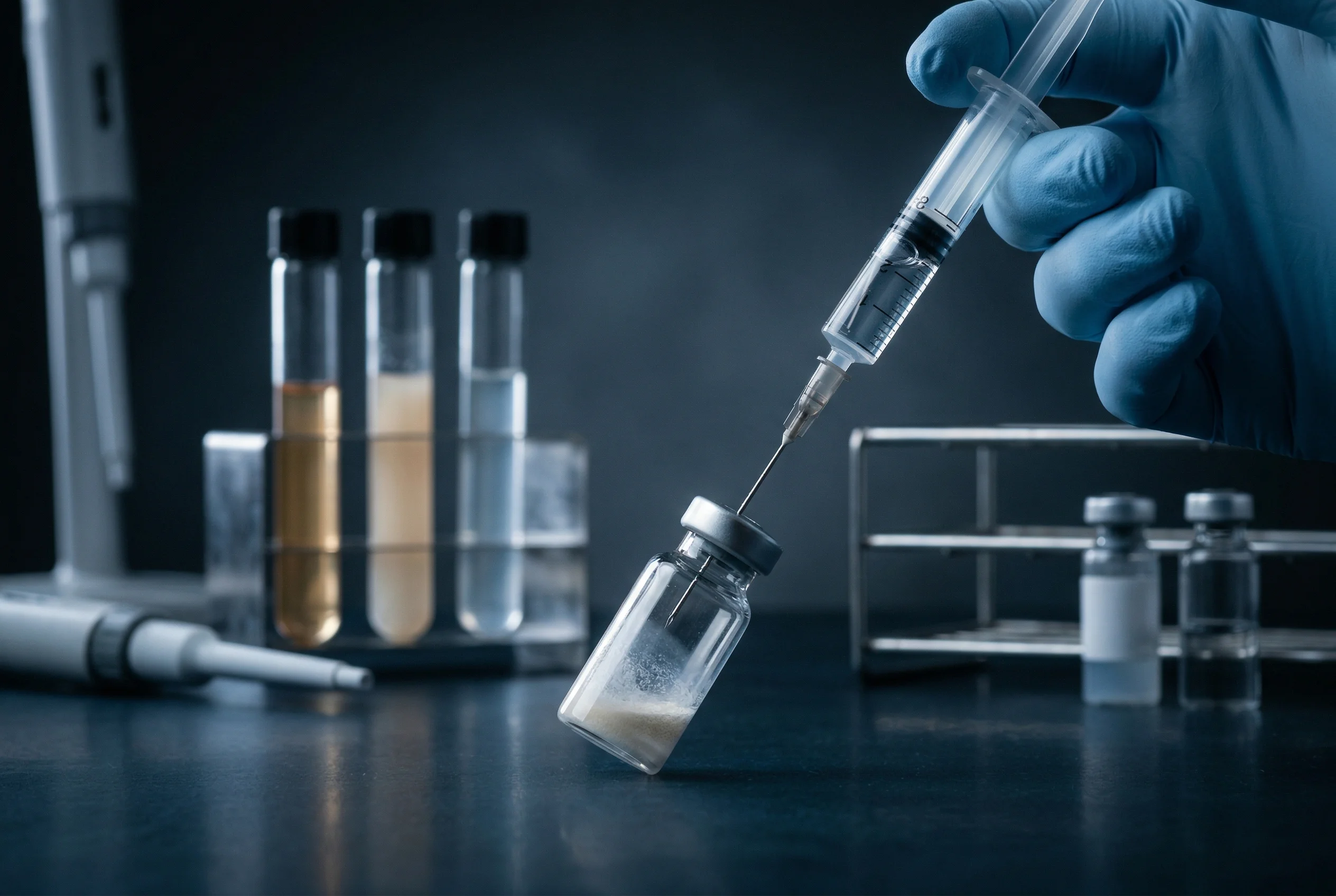
Reconstitution of the Glow Stack requires particular care, as three peptides with different physicochemical properties are combined in one solution. Before reconstitution, bring the vial to room temperature to prevent condensation. Bacteriostatic water (BAC water, containing 0.9% benzyl alcohol) is recommended as the solvent: the antimicrobial additive prevents bacterial growth in the reconstituted solution and extends shelf life to approximately 28 to 30 days at 2 to 8 degrees Celsius. Sterile saline solution is only suitable for immediate use. The procedure: draw the desired amount of BAC water with a sterile syringe, insert the needle through the rubber stopper of the vial and slowly inject the water along the inner wall; never spray directly onto the lyophilisate. Then gently swirl the vial or roll it between your palms. Shaking creates foaming and can cause peptide denaturation, irreversibly impairing biological activity. The solution should be clear and colorless; turbidity or particle formation indicates aggregation. In lyophilized form, the Glow Stack is stable at -20 to -80 degrees Celsius for one to three years, at 2 to 8 degrees Celsius for six to twelve months, and at room temperature for three to six months. Critical for long-term stability is the integrity of the vial seal: moisture ingress reactivates hydrolytic degradation processes. Reconstituted material must never be frozen, as uncontrolled ice crystal formation damages the peptide structure.
The safety profile of the individual Glow Stack components is well documented in preclinical literature, although a formal safety study of the triple combination has not yet been conducted. For GHK-Cu, in vitro and animal studies demonstrate a favorable safety profile: the peptide is a natural component of human blood plasma and shows no relevant cytotoxicity at physiological concentrations (Pickart et al., 2018). For TB-500, a randomized, placebo-controlled Phase I study in healthy volunteers with single intravenous doses of 42 to 1,260 mg showed no dose-limiting toxicities or serious adverse events (Shah et al., 2010). For BPC-157, a systematic review of 36 studies (35 preclinical, 1 clinical) documented no serious adverse effects in the dosage ranges studied; the most commonly reported adverse effects in preclinical models were mild and transient. It is important to emphasize, however, that human data for BPC-157 are extremely limited: only three pilot studies have examined the peptide in humans, including applications for intraarticular knee pain, interstitial cystitis, and an intravenous safety/pharmacokinetics study. The combination of all three peptides could theoretically produce interactions not observed in individual studies. Researchers should therefore incorporate appropriate safety controls and dose escalation schemes in their protocols.
For meaningful research results, peptide quality is a decisive factor that carries particular weight in a triple combination like the Glow Stack. Research-grade substances should have a purity of at least 95%, ideally at least 99%, verified by high-performance liquid chromatography (HPLC). The Glow Stack Peptide from Bergdorf Bioscience meets this standard with HPLC-verified purity of at least 99% for each of the three components. Each batch is delivered with a Certificate of Analysis (CoA) documenting identity by mass spectrometry and purity. Impurities, even in small amounts below 1%, can distort receptor binding affinity and produce undesired effects in cell culture experiments that are falsely attributed to the target substance. In a multi-peptide stack like the Glow Stack, purity is particularly critical, as impurities in one component can affect the results across all three signaling pathways. Correct attribution of observed effects to individual components requires defined control conditions with high-purity reference substances. Pricing includes volume discounts: single vial at EUR 129.99, 2-pack at EUR 246.99 (EUR 123.50 per vial), or 3-pack at EUR 349.99 (EUR 116.66 per vial). Order Glow Stack now
When looking to buy a Glow Stack, several quality criteria should be considered when selecting a supplier. First and foremost is documented purity: a reputable supplier delivers a Certificate of Analysis (CoA) with every batch, documenting the HPLC purity and mass spectrometric identification of each individual component. For a multi-peptide product like the Glow Stack, this is particularly important as quality control must be performed for three separate peptides. The second criterion concerns shipping conditions: lyophilized peptides require temperature-controlled cold-chain transport to ensure product integrity during transit. The third criterion is batch documentation: batch traceability enables experiment reproducibility and is indispensable in good laboratory practice. Bergdorf Bioscience meets all three criteria: GMP-compliant manufacturing, HPLC-verified purity of at least 99%, temperature-controlled shipping within the EU (free from EUR 250, delivery in 5 to 9 business days), and complete batch documentation. The product is intended exclusively for research purposes and is not approved for human consumption. EU and US shipping are available, subject to respective national regulations.
The spectrum of potential research applications for the Glow Stack extends far beyond skin regeneration. In wound healing research, the combination enables investigation of the interaction between matrix formation (GHK-Cu), cell migration (TB-500), and vascularization (BPC-157) in an integrated model. Cardiovascular research benefits from TB-500, which demonstrated cardioprotective properties in preclinical studies, while BPC-157 exerts pronounced effects on the NO system and neovascularization. Neurobiological studies investigate the role of Thymosin Beta-4 in traumatic brain injuries, where neuroprotective and neurorestorative effects have been documented (Xiong et al., 2013). GHK-Cu in turn influences the expression of genes relevant to nervous system function and cognitive decline (Pickart et al., 2017). In musculoskeletal research, preclinical data show that BPC-157 improves functional, structural, and biomechanical outcomes in muscle, tendon, ligament, and bone injuries. Hepatological research could benefit from the anti-inflammatory effects of all three components. For all these applications, a high-purity multi-peptide formulation with documented batch quality is required, as offered by the Glow Stack Peptide from Bergdorf Bioscience.
After reconstitution in bacteriostatic water, the solution is stable at refrigerator temperature (2 to 8 degrees Celsius) for approximately 28 to 30 days. The solution should be protected from light and stored in a sterile, sealed vial. When using sterile saline without preservatives, shelf life is reduced to a few days. Turbidity or particle formation indicates denaturation; in such cases, the solution should be discarded.
For in vitro receptor binding studies, concentrations in the nanomolar range are typically used: GHK-Cu at 0.01 to 100 nM, TB-500 and BPC-157 in comparable ranges. The specific dosage depends on the cell type, research question, and experimental design. For combination experiments, the use of a dose matrix is recommended to systematically differentiate individual effects from combination effects.
Yes, for control experiments it is often useful to use the individual peptides separately. Bergdorf Bioscience also offers GHK-Cu, TB-500, and BPC-157 as individual products. This enables comparative studies in which the Glow Stack is tested against the individual components to quantify synergistic effects.
Bergdorf Bioscience ships all peptides in temperature-controlled cold-chain transport with cold-chain packaging to ensure integrity during transit. Free shipping from EUR 250, delivery within 5 to 9 business days within the EU. Each vial is delivered with a Certificate of Analysis (CoA) and complete batch documentation.
For research purposes only. Not intended for human consumption.
Scientific editing: Dr. Sieglinde Klaus
The Glow Stack Peptide combines three of the most intensively researched peptides in regenerative biomedicine into a single lyophilized preparation: GHK-Cu (50 mg), TB-500 (10 mg), and BPC-157 (10 mg). This triple combination addresses complementary biological signaling pathways, from collagen synthesis through cell migration to angiogenesis, enabling researchers to study synergistic interactions in a controlled experimental setting. The following guide summarizes the current state of research on Glow Stack dosage, mechanisms of action of the individual components, and practical handling in the laboratory context.
The Glow Stack is a combination specifically developed for research purposes, containing three peptides with complementary mechanisms of action. The first component, GHK-Cu (Glycyl-L-Histidyl-L-Lysine-Copper(II)), is a naturally occurring tripeptide first isolated from human blood plasma by Loren Pickart in 1973. With a molecular weight of 403.9 Da (as a copper complex), it binds copper(II) ions in a 1:1 ratio and modulates the expression of over 4,000 genes in human fibroblasts (Pickart et al., 2014). The plasma concentration of GHK is approximately 200 ng/ml at age 20 and decreases to 80 ng/ml by age 60. The second component, TB-500, is a synthetic fragment of the endogenous protein Thymosin Beta-4, a highly conserved 4.9 kDa peptide found in virtually all nucleated cells. The active segment LKKTETQ (amino acids 17-23) is responsible for actin binding, cell migration, and wound healing (Goldstein et al., 2012). The third component, BPC-157 (Body Protection Compound-157), is a synthetic pentadecapeptide of 15 amino acids derived from a protective protein in human gastric juice. In the Glow Stack formulation, each component is present as lyophilized powder with an HPLC-confirmed purity of at least 99%.
GHK-Cu exerts its effects primarily through modulation of the extracellular matrix and gene expression in dermal fibroblasts. In a landmark study, the copper peptide complex at concentrations of 0.01, 1, and 100 nM significantly stimulated the production of collagen and elastin in human adult fibroblasts (Pickart et al., 2015). The mechanism of action encompasses multiple levels: GHK-Cu activates the TGF-beta signaling pathway, thereby stimulating the synthesis of collagen types I, III, and IV as well as glycosaminoglycans. In wound chamber experiments in rats, a concentration-dependent increase in dry weight, DNA, total protein, collagen, and glycosaminoglycan content was observed, with collagen synthesis stimulation being twice that of non-collagen proteins (Maquart et al., 1988). Furthermore, GHK-Cu at a concentration of 1 nM increases the expression of bFGF (basic Fibroblast Growth Factor) and VEGF (Vascular Endothelial Growth Factor), promoting neovascularization and blood supply in damaged tissue (Pickart et al., 2018). Recent studies also demonstrate synergy between GHK-Cu and hyaluronic acid in upregulating collagen IV in fibroblast cultures (Zhou et al., 2023). The antioxidant properties of the copper peptide complement the matrix effects: GHK-Cu upregulates superoxide dismutase and other antioxidant enzymes, reducing oxidative stress in aging tissue.
TB-500, the synthetic analogue of the active region of Thymosin Beta-4, acts primarily on actin polymerization and cell migration. The central biological function consists of sequestering G-actin (monomeric actin), thereby regulating the equilibrium between G-actin and F-actin (filamentous actin). This mechanism is fundamental for cell motility, cell structure, and ultimately tissue regeneration. In wound healing studies in rats, topical or intraperitoneal administration of Thymosin Beta-4 accelerated re-epithelialization by 42% at four days and up to 61% at seven days compared to saline controls (Malinda et al., 1999). The peptide fragment LKKTETQ, which represents the active site for actin binding and cell migration, also promotes angiogenesis: the actin binding site of Thymosin Beta-4 stimulates the formation of new blood vessels and the differentiation of endothelial cells (Philp et al., 2003). In cardiac ischemia models in mice, Thymosin Beta-4 improved cardiomyocyte survival and cardiac function after coronary artery ligation. Additionally, TB-500 acts anti-inflammatory by downregulating pro-inflammatory chemokines and cytokines (Sosne et al., 2010). The half-life of TB-500 is approximately 7 hours, allowing flexible dosing schedules in research protocols. In Phase I studies in healthy volunteers, a dose-linear pharmacokinetic profile was demonstrated with no dose-limiting toxicities (Shah et al., 2010).
BPC-157, the stable gastric pentadecapeptide, acts through a unique mechanism that modulates angiogenesis and the nitric oxide system. The pro-angiogenic effect is associated with the activation and upregulation of VEGFR2: BPC-157 activates the VEGFR2-Akt-eNOS signaling pathway and promotes both VEGF-dependent and VEGF-independent pathways to NO production (Hsieh et al., 2017). In wound healing models, BPC-157 was shown to upgrade the combined triad of collagen, inflammatory cells, and angiogenesis: these processes occurred earlier, progressed faster, and were more advanced than in control groups (Sikiric et al., 2021). A distinctive feature of BPC-157 is its bidirectional effect on NO levels: depending on the baseline state, it either increases or decreases NO concentration while consistently counteracting the formation of free radicals (Sikiric et al., 2025). Pharmacokinetic studies in rats and beagles showed linear pharmacokinetics at intramuscular doses of 20, 100, and 500 mcg/kg (rats) and 6, 30, and 150 mcg/kg (beagles), with plasma concentrations peaking within 9 minutes after injection (Wang et al., 2022). The elimination half-life is less than 30 minutes, which is frequently addressed by adapted administration intervals.
The rationale for combining the three peptides in the Glow Stack is based on the mechanistic complementarity of their effects at different but interconnected biological levels. GHK-Cu primarily addresses the extracellular matrix: it stimulates collagen and elastin synthesis, regulates metalloproteinases and their inhibitors, and promotes the production of growth factors such as bFGF and VEGF. TB-500 operates at the cytoskeletal level: by regulating actin polymerization, it promotes the migration of endothelial cells and keratinocytes, creating the prerequisites for re-epithelialization and tissue formation. BPC-157 complements these two mechanisms through its effects on vascular and inflammation-related signaling pathways: the activation of the VEGFR2-Akt-eNOS signaling pathway and the modulation of the NO system promote angiogenesis, thereby creating the blood supply essential for collagen formation (GHK-Cu) and cell migration (TB-500). In the research literature, this type of mechanistic complementarity is considered particularly promising, as the individual peptides target different levels of tissue regeneration: GHK-Cu at the matrix level, TB-500 at the cellular level, and BPC-157 at the vascular level. While a formal clinical study of the triple combination is still pending, the preclinical evidence for the individual components supports the hypothesis of an additive or synergistic effect.
The Glow Stack dosage depends on the research model and the individual components. For GHK-Cu, preclinical studies in rats show an effective dosage of approximately 2.2 mcg/kg, which scaled to the human body corresponds to about 140 mcg per injection; in cell culture experiments, concentrations of 0.01 to 100 nM are established (Pickart et al., 2015). For TB-500, a dose-response study in rats achieved optimal results at 3.75 mg/kg, while Phase I human studies investigated intravenous doses of 42 to 1,260 mg (Shah et al., 2010). For BPC-157, preclinical protocols typically use 10 mcg/kg to 10 ng/kg subcutaneously or intraperitoneally (Wang et al., 2022). The different half-lives of the three components (GHK-Cu approx. 12 hours, TB-500 approx. 7 hours, BPC-157 under 30 minutes) require careful protocol planning. The Glow Stack Peptide from Bergdorf Bioscience contains GHK-Cu (50 mg), TB-500 (10 mg), and BPC-157 (10 mg) as lyophilized powder in one vial, enabling simultaneous reconstitution of all three components for combined experimental setups. For in vitro receptor binding studies, significantly lower concentrations in the nanomolar range are typically used.
Reconstitution of the Glow Stack requires particular care, as three peptides with different physicochemical properties are combined in one solution. Before reconstitution, bring the vial to room temperature to prevent condensation. Bacteriostatic water (BAC water, containing 0.9% benzyl alcohol) is recommended as the solvent: the antimicrobial additive prevents bacterial growth in the reconstituted solution and extends shelf life to approximately 28 to 30 days at 2 to 8 degrees Celsius. Sterile saline solution is only suitable for immediate use. The procedure: draw the desired amount of BAC water with a sterile syringe, insert the needle through the rubber stopper of the vial and slowly inject the water along the inner wall; never spray directly onto the lyophilisate. Then gently swirl the vial or roll it between your palms. Shaking creates foaming and can cause peptide denaturation, irreversibly impairing biological activity. The solution should be clear and colorless; turbidity or particle formation indicates aggregation. In lyophilized form, the Glow Stack is stable at -20 to -80 degrees Celsius for one to three years, at 2 to 8 degrees Celsius for six to twelve months, and at room temperature for three to six months. Critical for long-term stability is the integrity of the vial seal: moisture ingress reactivates hydrolytic degradation processes. Reconstituted material must never be frozen, as uncontrolled ice crystal formation damages the peptide structure.
The safety profile of the individual Glow Stack components is well documented in preclinical literature, although a formal safety study of the triple combination has not yet been conducted. For GHK-Cu, in vitro and animal studies demonstrate a favorable safety profile: the peptide is a natural component of human blood plasma and shows no relevant cytotoxicity at physiological concentrations (Pickart et al., 2018). For TB-500, a randomized, placebo-controlled Phase I study in healthy volunteers with single intravenous doses of 42 to 1,260 mg showed no dose-limiting toxicities or serious adverse events (Shah et al., 2010). For BPC-157, a systematic review of 36 studies (35 preclinical, 1 clinical) documented no serious adverse effects in the dosage ranges studied; the most commonly reported adverse effects in preclinical models were mild and transient. It is important to emphasize, however, that human data for BPC-157 are extremely limited: only three pilot studies have examined the peptide in humans, including applications for intraarticular knee pain, interstitial cystitis, and an intravenous safety/pharmacokinetics study. The combination of all three peptides could theoretically produce interactions not observed in individual studies. Researchers should therefore incorporate appropriate safety controls and dose escalation schemes in their protocols.
For meaningful research results, peptide quality is a decisive factor that carries particular weight in a triple combination like the Glow Stack. Research-grade substances should have a purity of at least 95%, ideally at least 99%, verified by high-performance liquid chromatography (HPLC). The Glow Stack Peptide from Bergdorf Bioscience meets this standard with HPLC-verified purity of at least 99% for each of the three components. Each batch is delivered with a Certificate of Analysis (CoA) documenting identity by mass spectrometry and purity. Impurities, even in small amounts below 1%, can distort receptor binding affinity and produce undesired effects in cell culture experiments that are falsely attributed to the target substance. In a multi-peptide stack like the Glow Stack, purity is particularly critical, as impurities in one component can affect the results across all three signaling pathways. Correct attribution of observed effects to individual components requires defined control conditions with high-purity reference substances. Pricing includes volume discounts: single vial at EUR 129.99, 2-pack at EUR 246.99 (EUR 123.50 per vial), or 3-pack at EUR 349.99 (EUR 116.66 per vial). Order Glow Stack now
When looking to buy a Glow Stack, several quality criteria should be considered when selecting a supplier. First and foremost is documented purity: a reputable supplier delivers a Certificate of Analysis (CoA) with every batch, documenting the HPLC purity and mass spectrometric identification of each individual component. For a multi-peptide product like the Glow Stack, this is particularly important as quality control must be performed for three separate peptides. The second criterion concerns shipping conditions: lyophilized peptides require temperature-controlled cold-chain transport to ensure product integrity during transit. The third criterion is batch documentation: batch traceability enables experiment reproducibility and is indispensable in good laboratory practice. Bergdorf Bioscience meets all three criteria: GMP-compliant manufacturing, HPLC-verified purity of at least 99%, temperature-controlled shipping within the EU (free from EUR 250, delivery in 5 to 9 business days), and complete batch documentation. The product is intended exclusively for research purposes and is not approved for human consumption. EU and US shipping are available, subject to respective national regulations.
The spectrum of potential research applications for the Glow Stack extends far beyond skin regeneration. In wound healing research, the combination enables investigation of the interaction between matrix formation (GHK-Cu), cell migration (TB-500), and vascularization (BPC-157) in an integrated model. Cardiovascular research benefits from TB-500, which demonstrated cardioprotective properties in preclinical studies, while BPC-157 exerts pronounced effects on the NO system and neovascularization. Neurobiological studies investigate the role of Thymosin Beta-4 in traumatic brain injuries, where neuroprotective and neurorestorative effects have been documented (Xiong et al., 2013). GHK-Cu in turn influences the expression of genes relevant to nervous system function and cognitive decline (Pickart et al., 2017). In musculoskeletal research, preclinical data show that BPC-157 improves functional, structural, and biomechanical outcomes in muscle, tendon, ligament, and bone injuries. Hepatological research could benefit from the anti-inflammatory effects of all three components. For all these applications, a high-purity multi-peptide formulation with documented batch quality is required, as offered by the Glow Stack Peptide from Bergdorf Bioscience.
After reconstitution in bacteriostatic water, the solution is stable at refrigerator temperature (2 to 8 degrees Celsius) for approximately 28 to 30 days. The solution should be protected from light and stored in a sterile, sealed vial. When using sterile saline without preservatives, shelf life is reduced to a few days. Turbidity or particle formation indicates denaturation; in such cases, the solution should be discarded.
For in vitro receptor binding studies, concentrations in the nanomolar range are typically used: GHK-Cu at 0.01 to 100 nM, TB-500 and BPC-157 in comparable ranges. The specific dosage depends on the cell type, research question, and experimental design. For combination experiments, the use of a dose matrix is recommended to systematically differentiate individual effects from combination effects.
Yes, for control experiments it is often useful to use the individual peptides separately. Bergdorf Bioscience also offers GHK-Cu, TB-500, and BPC-157 as individual products. This enables comparative studies in which the Glow Stack is tested against the individual components to quantify synergistic effects.
Bergdorf Bioscience ships all peptides in temperature-controlled cold-chain transport with cold-chain packaging to ensure integrity during transit. Free shipping from EUR 250, delivery within 5 to 9 business days within the EU. Each vial is delivered with a Certificate of Analysis (CoA) and complete batch documentation.
For research purposes only. Not intended for human consumption.
Scientific editing: Dr. Sieglinde Klaus