
Izračunajte točne volumene rekonstitucije, inzulinske jedinice i doze po bočici za svaki peptid.
Bočica, voda i doza su poznati
Crtice mjere volumen, ne djelatnu tvar. 20 IU = 0.20 ml. Koliko je mg unutra ovisi o pripremi. To je kalkulator za Vas izračunao.
Gotovo sve inzulinske štrcaljke su U-100. U-40 odaberite samo ako na štrcaljki piše U-40.
Povezani izvori vode na PubMed i otvaraju se u novoj kartici.
GHK-Cu (Glycyl-L-Histidyl-L-Lysine Copper) is a naturally occurring copper-binding tripeptide first isolated from human plasma in 1973 by Loren Pickart. The peptide consists of three amino acids — glycine, histidine, and lysine — chelated to a copper(II) ion. It is found in plasma, saliva, and urine and plays a central role in tissue remodeling, wound healing, and the regulation of gene expression.
Plasma concentrations of GHK-Cu are highest in youth (approximately 200 ng/mL at age 20) and decline steadily with age, dropping to around 80 ng/mL by age 60. This age-related decline correlates with slower wound healing, reduced skin elasticity, and diminished regenerative capacity across tissues. Supplementing with exogenous GHK-Cu is therefore aimed at restoring youthful signaling pathways that govern repair and antioxidant defense.
GHK-Cu has been studied extensively in dermatology, oncology, and regenerative medicine. Its mechanisms include stimulation of collagen, elastin, and glycosaminoglycan synthesis; upregulation of antioxidant enzymes; modulation of transforming growth factor beta (TGF-β); and broad anti-inflammatory activity via suppression of NF-κB signaling. In vitro and animal studies also suggest neuroprotective properties and positive effects on hair follicle proliferation.
The biological activity of GHK-Cu operates on several interconnected levels:
GHK-Cu does not follow a traditional titration ramp like some research peptides. Instead, users typically begin at a therapeutic dose and maintain it throughout the protocol.
Most protocols run for 4–8 weeks continuously. A common approach is:
Injection timing is flexible. Most users administer once daily, either in the morning or at night. There is no strong evidence favoring a specific time of day for GHK-Cu.
GHK-Cu is supplied as a lyophilized (freeze-dried) powder, typically in 50 mg vials. Before use it must be reconstituted with bacteriostatic water (BAC water). Standard reconstitution for a 50 mg vial:
At 10 mg/mL, a standard 2 mg dose equals 0.20 mL (200 µL) drawn into an insulin syringe. Use the BergdorfBio GHK-Cu Calculator to compute exact volumes for any dose and concentration.
Proper storage is critical to preserve GHK-Cu activity:
GHK-Cu has a well-established safety profile in both topical and subcutaneous use. It is endogenous to the human body, which reduces the likelihood of immune responses.
No serious adverse events have been attributed to GHK-Cu in the published literature at standard research doses. However, clinical safety data in humans is limited, and all use is considered research-only.
The combination of GHK-Cu and BPC-157 is one of the most popular repair-focused stacks — referred to at BergdorfBio as the Glow Stack. The two peptides complement each other through distinct and additive mechanisms:
Typical Glow Stack protocol: GHK-Cu 2 mg/day + BPC-157 250–500 mcg/day, both subcutaneous, for 6–8 weeks. View the GHK-Cu product page to purchase from BergdorfBio.
Adding TB-500 (Thymosin Beta-4) to GHK-Cu enhances systemic tissue repair and cell migration, making this stack a strong choice after surgery, injury, or intense training. TB-500 contributes actin-binding and anti-apoptotic effects that widen the therapeutic scope beyond what GHK-Cu alone provides.
GHK-Cu can also be used topically in serum form, often alongside retinoids or vitamin C. Topical GHK-Cu penetrates the dermis and has demonstrated clinically meaningful improvements in skin laxity, wrinkle depth, and overall photodamage scores in randomized trials. Subcutaneous injection delivers a higher systemic dose, but topical application is a complementary option for skin-specific goals.
Most users notice improved skin texture and hydration within 2–3 weeks of daily subcutaneous dosing. More structural changes — collagen density, fine lines, wound healing speed — typically manifest at the 4–6 week mark. Hair benefits, if any, often require a full 8-week cycle to assess.
While some users do combine them in one injection, it is generally not recommended. Each peptide is reconstituted separately and their stability in a combined solution is not well characterized. Use separate syringes injected at the same site or at adjacent sites.
No. GHK-Cu has no known interaction with the hypothalamic-pituitary-testicular axis, thyroid function, or other endocrine systems. It does not suppress endogenous hormone production and does not require post-cycle therapy (PCT).
Yes. GHK-Cu is equally suitable for men and women. Its mechanisms are not sex-hormone dependent, and it is one of the most commonly used peptides in female anti-aging and skin health protocols.
For systemic effects (collagen, inflammation, oxidative stress), abdominal subcutaneous injections are the most practical. For localized skin goals, some practitioners inject small amounts intradermally or subcutaneously close to the target area (e.g., scalp for hair, face perimeter for skin). This approach is more technique-sensitive and should be learned under proper guidance.
Yes, and this is one of its most clinically supported use cases. The combination of GHK-Cu's collagen-promoting and anti-inflammatory effects with structured physical rehabilitation has been used in athletic recovery protocols. It does not interact with NSAIDs, corticosteroids (though these may blunt its collagen effects), or physical therapy modalities.
Yes. GHK-Cu is available in cream and serum formulations. While topical delivery is less bioavailable than subcutaneous injection for systemic effects, it is effective for local skin applications and suitable for users who prefer to avoid injections.
Reconstituted GHK-Cu stored in a refrigerator (2–8°C) is stable for approximately 28–30 days. After this period, activity may decline even if the solution appears clear. Always note the reconstitution date on the vial.
Medical Disclaimer: The information on this page is provided for educational and research purposes only. GHK-Cu is not an approved drug or medical treatment. It is sold strictly for research use. Nothing on this page constitutes medical advice, diagnosis, or a recommendation to use any specific compound. Always consult a qualified healthcare professional before beginning any peptide protocol. BergdorfBio assumes no liability for the use or misuse of the information presented here.
Od praha do gotove štrcaljke u pet koraka. Količine Vam kalkulator iznad daje automatski.
Dovedite bočicu i vodu na sobnu temperaturu. Oba gumena čepa obrišite tupferom s alkoholom.
Količinu BAC vode koju preporučuje kalkulator navucite većom štrcaljkom.
Pustite da voda klizi niz staklenu stijenku u bočicu s peptidom, ne prskajte je izravno na prah.
Bočicu nježno valjajte, ne tresite. Prah se bistro otopi za 1-2 minute.
Inzulinskom štrcaljkom navucite točno do izračunate crtice. Gotovo.
Tipične početne vrijednosti za orijentaciju. Svaki redak otvara kalkulator za odgovarajući peptid.
| Peptid | Kategorija | Uobičajena doza | Veličine bočica | BAC (početak) | Dostupno | Izračunaj |
|---|---|---|---|---|---|---|
| Retatrutide | GLP-1/GIP/GCG | 0,5-12 mg | 2 / 5 / 10 / 15 mg | 2 ml | Samo kalkulator | Izračunaj |
| Semaglutide | GLP-1 | 0,25-2,4 mg | 2 / 5 / 10 mg | 2 ml | Samo kalkulator | Izračunaj |
| Tirzepatide | GLP-1/GIP | 2,5-15 mg | 5 / 10 / 15 mg | 2 ml | Samo kalkulator | Izračunaj |
| GHK-Cu | Bakreni peptid | 1-4 mg | 10 / 20 / 50 mg | 5 ml | Samo kalkulator | Izračunaj |
| BPC-157 | Obnova tkiva | 200-500 mcg | 2 / 5 / 10 mg | 2 ml | Samo kalkulator | Izračunaj |
| TB-500 | Thymosin Beta-4 | 2-5 mg | 2 / 5 / 10 mg | 2 ml | Samo kalkulator | Izračunaj |
| CJC-1295 (bez DAC) | GHRH analog | 100-200 mcg | 2 / 5 / 10 mg | 2 ml | Samo kalkulator | Izračunaj |
| Ipamorelin | GHRP | 200-300 mcg | 2 / 5 mg | 2 ml | Samo kalkulator | Izračunaj |
| AOD-9604 | Gubitak masti | 250-500 mcg | 2 / 5 mg | 2 ml | Samo kalkulator | Izračunaj |
| PT-141 | Bremelanotide | 0,5-2 mg | 2 / 5 / 10 mg | 2 ml | Samo kalkulator | Izračunaj |
| MOTS-c | Mitohondrijski | 5-10 mg | 5 / 10 mg | 2 ml | Samo kalkulator | Izračunaj |
| Selank | Anksiolitik | 150-500 mcg | 2 / 5 mg | 2 ml | Samo kalkulator | Izračunaj |
| SS-31 | Elamipretide | 0,1-1 mg | 5 / 10 mg | 2 ml | Samo kalkulator | Izračunaj |
| Glow Stack | Stack | 0,5-2 mg | 70 mg | 3 ml | Samo kalkulator | Izračunaj |
| Klow Stack | Stack | 0,5-2 mg | 55 mg | 3 ml | Samo kalkulator | Izračunaj |
| Melanotan II | Melanocortin | 100-1000 mcg | 5 / 10 mg | 2 ml | Samo kalkulator | Izračunaj |
| Melanotan I | Melanocortin | 100-1000 mcg | 5 / 10 mg | 2 ml | Samo kalkulator | Izračunaj |
| Sermorelin | GHRH analog | 50-300 mcg | 2 / 5 mg | 2 ml | Samo kalkulator | Izračunaj |
| Tesamorelin | GHRH analog | 1-2 mg | 10 / 20 mg | 2 ml | Samo kalkulator | Izračunaj |
| Thymosin Alpha-1 | Timički peptid | 0,8-3,2 mg | 1.6 / 5 / 10 mg | 1 ml | Samo kalkulator | Izračunaj |
| Epithalon | Dugovječnost | 2-10 mg | 10 / 20 / 50 mg | 2 ml | Samo kalkulator | Izračunaj |
| KPV | Imuno / Barijera | 100-1000 mcg | 5 / 10 mg | 2 ml | Samo kalkulator | Izračunaj |
| HGH Fragment 176-191 | Metabolički fragment | 100-500 mcg | 2 / 5 / 10 mg | 2 ml | Samo kalkulator | Izračunaj |
| Semax | Kognitivno | 100-1000 mcg | 10 / 30 mg | 2 ml | Samo kalkulator | Izračunaj |
| N-Acetyl Semax | Kognitivno | 100-1000 mcg | 5 / 10 mg | 2 ml | Samo kalkulator | Izračunaj |
| Hexarelin | GHRP | 50-200 mcg | 2 / 5 mg | 2 ml | Samo kalkulator | Izračunaj |
| GHRP-6 | GHRP | 50-300 mcg | 2 / 5 mg | 2 ml | Samo kalkulator | Izračunaj |
| GHRP-2 | GHRP | 50-250 mcg | 2 / 5 mg | 2 ml | Samo kalkulator | Izračunaj |
| DSIP | San | 50-500 mcg | 2 / 5 mg | 2 ml | Samo kalkulator | Izračunaj |
| 5-Amino-1MQ | Metabolički | 2,5-10 mg | 5 / 10 mg | 2 ml | Samo kalkulator | Izračunaj |
| HGH 191AA | Hormon rasta | 1-5 mg | 10 mg | 1 ml | Samo kalkulator | Izračunaj |
| NAD+ | Dugovječnost / Kofaktor | 100-500 mg | 1000 mg | 10 ml | Samo kalkulator | Izračunaj |
Vrijednosti služe za orijentaciju u istraživačkom kontekstu i ne zamjenjuju stručni savjet.
Pravilan izračun koncentracije i volumena injekcije djeluje trivijalno, no najčešći je izvor pogrešaka. Već pogreška u izračunu od 10 % pri rekonstituciji znači da ćete dobiti premalo djelatne tvari ili nenamjerno predozirati.
Liofilizirani peptidi isporučuju se u miligramima i otapaju u bakteriostatskoj vodi (BAC vodi). Omjer peptida i vode određuje koncentraciju, a iz toga proizlazi koliko crtica navlačite na inzulinskoj štrcaljki. Inzulinske štrcaljke skalirane su u jedinicama, ne u miligramima. Tu pretvorbu obavlja kalkulator, uključujući provjeru vjerodostojnosti protiv najopasnije pogreške: zamjene mg i mcg.
Miligram (mg) jedinica je u kojoj se liofilizirani peptidi prodaju, primjerice „5 mg BPC-157“. Mikrogram (mcg) mjeri pojedinačnu dozu, primjerice „250 mcg po injekciji“. 1 mg = 1.000 mcg. Kalkulator automatski pretvara i upozorava kada unos izgleda kao zamjena.
U-100 znači da je štrcaljka kalibrirana za 100 jedinica po mililitru. 100 IU = 1 ml, dakle 10 IU = 0,10 ml, neovisno o tome što je u štrcaljki. Upravo se na tom odnosu temelji izračun IU.
Uz mnogo peptida i malo vode otopina postaje vrlo koncentrirana, pa je volumen po dozi sićušan i teško ga je očitati. Upotrijebite pomoć pri pripremi: pronalazi količinu vode koja daje čistu, lako čitljivu crticu.
U hladnjaku na 2-8 °C obično 21-30 dana. Označite bočicu datumom rekonstitucije. Zamućene otopine ili čestice razlog su za isključenje.
Blendovi sadrže više djelatnih tvari u jednoj bočici. Jednostavno odaberite blend kao peptid: kalkulator dodatno prikazuje koliko je svake komponente u Vašoj injekciji. Za kombinacije iz više zasebnih bočica upotrijebite Stack Builder.
Ne. Vaše posljednje postavke spremaju se lokalno u pregledniku i vraćaju pri sljedećem posjetu. Osim toga, izračune možete ponovno pozvati iz povijesti, spremiti kao protokol ili podijeliti kao poveznicu.
Odaberite peptid da biste otvorili njegovu stranicu kalkulatora s unaprijed ispunjenim vrijednostima.
Pogledajte proizvod
GHK-Cu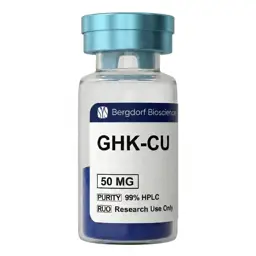
Jedna bočica od 50 mg pokriva otprilike 25 doza uz dozu koju ste odabrali.
Tipične početne vrijednosti za orijentaciju. Svaki redak otvara kalkulator za odgovarajući peptid.
Odaberite peptid da biste otvorili njegovu stranicu kalkulatora s unaprijed ispunjenim vrijednostima.
| 1-4 mg |
| 10 / 20 / 50 mg |
| 5 ml |
| Na zalihi |
| Izračunaj |
| BPC-157 | Obnova tkiva | 200-500 mcg | 2 / 5 / 10 mg | 2 ml | Na zalihi | Izračunaj |
| TB-500 | Thymosin Beta-4 | 2-5 mg | 2 / 5 / 10 mg | 2 ml | Na zalihi | Izračunaj |
| CJC-1295 (bez DAC) | GHRH analog | 100-200 mcg | 2 / 5 / 10 mg | 2 ml | Na zalihi | Izračunaj |
| MOTS-c | Mitohondrijski | 5-10 mg | 5 / 10 mg | 2 ml | Na zalihi | Izračunaj |
| Glow Stack | Stack | 0,5-2 mg | 70 mg | 3 ml | Na zalihi | Izračunaj |
| Klow Stack | Stack | 0,5-2 mg | 55 mg | 3 ml | Na zalihi | Izračunaj |
| Melanotan II | Melanocortin | 100-1000 mcg | 5 / 10 mg | 2 ml | Na zalihi | Izračunaj |
| Tesamorelin | GHRH analog | 1-2 mg | 10 / 20 mg | 2 ml | Na zalihi | Izračunaj |
| Thymosin Alpha-1 | Timički peptid | 0,8-3,2 mg | 1.6 / 5 / 10 mg | 1 ml | Na zalihi | Izračunaj |
| KPV | Imuno / Barijera | 100-1000 mcg | 5 / 10 mg | 2 ml | Na zalihi | Izračunaj |
| Semax | Kognitivno | 100-1000 mcg | 10 / 30 mg | 2 ml | Na zalihi | Izračunaj |
| NAD+ | Dugovječnost / Kofaktor | 100-500 mg | 1000 mg | 10 ml | Na zalihi | Izračunaj |
| Semaglutide | GLP-1 | 0,25-2,4 mg | 2 / 5 / 10 mg | 2 ml | Samo kalkulator | Izračunaj |
| Ipamorelin | GHRP | 200-300 mcg | 2 / 5 mg | 2 ml | Samo kalkulator | Izračunaj |
| AOD-9604 | Gubitak masti | 250-500 mcg | 2 / 5 mg | 2 ml | Samo kalkulator | Izračunaj |
| PT-141 | Bremelanotide | 0,5-2 mg | 2 / 5 / 10 mg | 2 ml | Samo kalkulator | Izračunaj |
| Selank | Anksiolitik | 150-500 mcg | 2 / 5 mg | 2 ml | Samo kalkulator | Izračunaj |
| SS-31 | Elamipretide | 0,1-1 mg | 5 / 10 mg | 2 ml | Samo kalkulator | Izračunaj |
| Melanotan I | Melanocortin | 100-1000 mcg | 5 / 10 mg | 2 ml | Samo kalkulator | Izračunaj |
| Sermorelin | GHRH analog | 50-300 mcg | 2 / 5 mg | 2 ml | Samo kalkulator | Izračunaj |
| Epithalon | Dugovječnost | 2-10 mg | 10 / 20 / 50 mg | 2 ml | Samo kalkulator | Izračunaj |
| HGH Fragment 176-191 | Metabolički fragment | 100-500 mcg | 2 / 5 / 10 mg | 2 ml | Samo kalkulator | Izračunaj |
| N-Acetyl Semax | Kognitivno | 100-1000 mcg | 5 / 10 mg | 2 ml | Samo kalkulator | Izračunaj |
| Hexarelin | GHRP | 50-200 mcg | 2 / 5 mg | 2 ml | Samo kalkulator | Izračunaj |
| GHRP-6 | GHRP | 50-300 mcg | 2 / 5 mg | 2 ml | Samo kalkulator | Izračunaj |
| GHRP-2 | GHRP | 50-250 mcg | 2 / 5 mg | 2 ml | Samo kalkulator | Izračunaj |
| DSIP | San | 50-500 mcg | 2 / 5 mg | 2 ml | Samo kalkulator | Izračunaj |
| 5-Amino-1MQ | Metabolički | 2,5-10 mg | 5 / 10 mg | 2 ml | Samo kalkulator | Izračunaj |
| HGH 191AA | Hormon rasta | 1-5 mg | 10 mg | 1 ml | Samo kalkulator | Izračunaj |
Vrijednosti služe za orijentaciju u istraživačkom kontekstu i ne zamjenjuju stručni savjet.