
Izračunajte točne volumene rekonstitucije, inzulinske jedinice i doze po bočici za svaki peptid.
Bočica, voda i doza su poznati
4,3 IU teško je očitati. Uz 3,5 ml vode pogađate točno 5 IU.
Crtice mjere volumen, ne djelatnu tvar. 4 IU = 0.04 ml. Koliko je mg unutra ovisi o pripremi. To je kalkulator za Vas izračunao.
Gotovo sve inzulinske štrcaljke su U-100. U-40 odaberite samo ako na štrcaljki piše U-40.
The Glow Stack is a carefully formulated peptide combination designed to support skin rejuvenation and accelerated tissue repair. It pairs two well-studied bioactive peptides — GHK-Cu (copper tripeptide-1) and BPC-157 (Body Protection Compound-157) — into a single daily protocol that addresses skin quality from two complementary angles: structural regeneration and anti-inflammatory repair.
GHK-Cu is one of the most extensively researched copper peptides in the field of dermatology and anti-aging science. It naturally occurs in human plasma, saliva, and urine, with levels declining significantly after the age of 60. Its primary role is to stimulate collagen and elastin production in the dermis, promote antioxidant defenses, and activate genes associated with tissue remodeling and wound repair. BPC-157, a synthetic peptide derived from a protective protein found in gastric juice, has demonstrated potent effects on wound healing, vascular growth, and the reduction of systemic inflammation — mechanisms that translate directly into improved skin quality when used as part of a topical or subcutaneous protocol.
Together, the Glow Stack is used by biohackers, longevity-focused practitioners, and individuals seeking visible improvements in skin texture, elasticity, and overall radiance — without relying solely on topical cosmetics that act only at the surface level.
You can find the Glow Stack at BergdorfBio, available as a pre-formulated combination for research purposes.
GHK-Cu is a tripeptide composed of glycine, histidine, and lysine, bound to a copper ion. This small molecule has an outsized biological effect: it upregulates genes involved in tissue repair while downregulating genes associated with inflammation and oxidative stress. In skin biology specifically, GHK-Cu:
Studies have shown that topical and subcutaneous GHK-Cu can visibly reduce wrinkle depth and improve skin laxity within 8–12 weeks of consistent use. Its half-life is approximately 2 hours, which supports once-daily subcutaneous administration for systemic effect.
Learn more on the dedicated GHK-Cu calculator page or view the GHK-Cu product at BergdorfBio.
BPC-157 is a pentadecapeptide (15 amino acids) derived from a naturally occurring protective protein in the gastric mucosa. Its stability and bioavailability make it one of the most studied tissue-repair peptides in preclinical research. In the context of the Glow Stack, BPC-157 contributes:
BPC-157 has a half-life of approximately 4 hours and is typically administered once or twice daily. Its anti-inflammatory properties make it particularly valuable in the Glow Stack for addressing inflammation-driven skin degradation. Explore the BPC-157 calculator or view the BPC-157 product.
The true power of the Glow Stack lies in the complementary action of these two peptides. GHK-Cu works primarily at the structural level — rebuilding extracellular matrix proteins and activating genetic programs for tissue renewal. BPC-157 operates through a different set of pathways, focusing on vascular growth, inflammation resolution, and cellular protection. When combined:
Users of the Glow Stack typically report improvements in skin radiance and texture within 4–6 weeks, with more significant results in elasticity and wrinkle reduction visible after 8–12 weeks of consistent use.
Calculating your dose for the Glow Stack requires knowing the concentration of your reconstituted vial. For a standard 10mg vial reconstituted with 2ml of bacteriostatic water (BAC water), the concentration is:
10mg / 2ml = 5mg/ml
This means every 1ml of solution contains 5mg of peptide. For the most common dose range of 0.5–2mg per day:
You can calculate your precise injection volume using the Glow Stack calculator above — simply enter your vial size, BAC water volume, and desired dose to get the exact amount to draw.
If you are using a different BAC water volume (e.g., 1ml instead of 2ml), the formula adjusts accordingly:
Injection volume (ml) = Desired dose (mg) / Concentration (mg/ml)
Concentration (mg/ml) = Vial size (mg) / BAC water added (ml)
The recommended starting approach for the Glow Stack is to begin at the lower end of the dose range and assess tolerance before titrating upward. A typical protocol for skin rejuvenation purposes follows:
Some users apply dissolved GHK-Cu topically to the face and neck while administering BPC-157 subcutaneously. If applying topically, a concentration of 1–2mg per ml in a carrier solution is typical. Topical application may be less effective for systemic anti-aging effects but can target specific areas more precisely.
Because both peptides work through receptor-mediated pathways, cycling helps prevent receptor desensitization and maintains responsiveness. A standard on/off cycle of 2 months on and 4 weeks off is a commonly used approach. During the off period, some users continue a lower maintenance dose of GHK-Cu alone (0.5mg every other day) to maintain baseline skin support without full receptor loading.
Reconstituting the Glow Stack peptide vial correctly is essential for accurate dosing and product stability. Follow these steps:
Proper storage is critical to maintaining peptide potency and extending shelf life:
Both GHK-Cu and BPC-157 have well-established safety profiles in preclinical and clinical research. The Glow Stack is generally well-tolerated, but you should be aware of potential considerations:
Medical disclaimer: The Glow Stack is sold for research purposes only. This content is educational and does not constitute medical advice. Always consult a qualified healthcare professional before beginning any peptide protocol.
If you are exploring the Glow Stack for skin health and anti-aging, the following related peptides and stacks may also be of interest:
Most users report initial improvements in skin hydration and overall radiance within the first 2–4 weeks. Structural changes such as improved elasticity, reduced fine lines, and better dermal density typically become visible between weeks 6–12. Maximum benefits are usually observed after a full 12-week cycle, with results continuing to improve during the off-period as newly synthesized collagen matures.
Yes, if they are reconstituted separately, you can draw both into the same syringe immediately before injection to combine them into a single daily shot. Some users prefer keeping them in separate vials to maintain individual dose flexibility. Do not pre-mix and store a combined solution, as stability data for combined storage is not available.
Yes. Both GHK-Cu and BPC-157 have no sex-specific mechanisms and have been studied across both sexes in preclinical models. The skin-rejuvenating benefits apply equally, though individual responses may vary. Some studies suggest women in the post-menopausal period may experience particularly pronounced benefits from GHK-Cu due to the accelerated collagen loss associated with estrogen decline.
GHK-Cu has well-documented topical bioavailability and is the basis of many cosmetic serums. BPC-157 has less evidence for topical absorption due to its larger molecular weight. For the full synergistic benefit of the Glow Stack, subcutaneous administration delivers both peptides systemically. However, some users combine topical GHK-Cu application (dissolved in serum or carrier) with subcutaneous BPC-157 for a dual-route approach.
A 0.3ml (30-unit) insulin syringe with a 29–31 gauge, 8mm needle is recommended for most doses in the 0.5–2mg range. For doses above 1.5mg (0.30ml at 5mg/ml concentration), a 0.5ml syringe may be more comfortable. Use the shortest needle available for subcutaneous administration — 6–8mm is ideal for most injection sites.
Yes. The Glow Stack is commonly combined with the Klow Stack for a more comprehensive anti-aging protocol. Some users also add SS-31 for mitochondrial support or TB-500 for enhanced tissue repair. When combining multiple peptide stacks, start one at a time to identify individual responses before adding additional compounds.
No clinically documented drug interactions with GHK-Cu or BPC-157 have been established in the available literature. However, because BPC-157 modulates the nitric oxide system and prostaglandin pathways, theoretical interactions with NSAIDs, blood pressure medications, and nitrate drugs may exist. Always disclose all peptide use to your physician, particularly if you are on prescription medications.
Used syringes and needles are sharps waste and must be disposed of in a puncture-resistant sharps container. Do not dispose of needles in regular household trash. Many pharmacies offer sharps disposal services, and some municipalities have sharps collection programs. Check local regulations for proper disposal methods in your area.
Od praha do gotove štrcaljke u pet koraka. Količine Vam kalkulator iznad daje automatski.
Dovedite bočicu i vodu na sobnu temperaturu. Oba gumena čepa obrišite tupferom s alkoholom.
Količinu BAC vode koju preporučuje kalkulator navucite većom štrcaljkom.
Pustite da voda klizi niz staklenu stijenku u bočicu s peptidom, ne prskajte je izravno na prah.
Bočicu nježno valjajte, ne tresite. Prah se bistro otopi za 1-2 minute.
Inzulinskom štrcaljkom navucite točno do izračunate crtice. Gotovo.
Tipične početne vrijednosti za orijentaciju. Svaki redak otvara kalkulator za odgovarajući peptid.
| Peptid | Kategorija | Uobičajena doza | Veličine bočica | BAC (početak) | Dostupno | Izračunaj |
|---|---|---|---|---|---|---|
| Retatrutide | GLP-1/GIP/GCG | 0,5-12 mg | 2 / 5 / 10 / 15 mg | 2 ml | Samo kalkulator | Izračunaj |
| Semaglutide | GLP-1 | 0,25-2,4 mg | 2 / 5 / 10 mg | 2 ml | Samo kalkulator | Izračunaj |
| Tirzepatide | GLP-1/GIP | 2,5-15 mg | 5 / 10 / 15 mg | 2 ml | Samo kalkulator | Izračunaj |
| GHK-Cu | Bakreni peptid | 1-4 mg | 10 / 20 / 50 mg | 5 ml | Samo kalkulator | Izračunaj |
| BPC-157 | Obnova tkiva | 200-500 mcg | 2 / 5 / 10 mg | 2 ml | Samo kalkulator | Izračunaj |
| TB-500 | Thymosin Beta-4 | 2-5 mg | 2 / 5 / 10 mg | 2 ml | Samo kalkulator | Izračunaj |
| CJC-1295 (bez DAC) | GHRH analog | 100-200 mcg | 2 / 5 / 10 mg | 2 ml | Samo kalkulator | Izračunaj |
| Ipamorelin | GHRP | 200-300 mcg | 2 / 5 mg | 2 ml | Samo kalkulator | Izračunaj |
| AOD-9604 | Gubitak masti | 250-500 mcg | 2 / 5 mg | 2 ml | Samo kalkulator | Izračunaj |
| PT-141 | Bremelanotide | 0,5-2 mg | 2 / 5 / 10 mg | 2 ml | Samo kalkulator | Izračunaj |
| MOTS-c | Mitohondrijski | 5-10 mg | 5 / 10 mg | 2 ml | Samo kalkulator | Izračunaj |
| Selank | Anksiolitik | 150-500 mcg | 2 / 5 mg | 2 ml | Samo kalkulator | Izračunaj |
| SS-31 | Elamipretide | 0,1-1 mg | 5 / 10 mg | 2 ml | Samo kalkulator | Izračunaj |
| Glow Stack | Stack | 0,5-2 mg | 70 mg | 3 ml | Samo kalkulator | Izračunaj |
| Klow Stack | Stack | 0,5-2 mg | 55 mg | 3 ml | Samo kalkulator | Izračunaj |
| Melanotan II | Melanocortin | 100-1000 mcg | 5 / 10 mg | 2 ml | Samo kalkulator | Izračunaj |
| Melanotan I | Melanocortin | 100-1000 mcg | 5 / 10 mg | 2 ml | Samo kalkulator | Izračunaj |
| Sermorelin | GHRH analog | 50-300 mcg | 2 / 5 mg | 2 ml | Samo kalkulator | Izračunaj |
| Tesamorelin | GHRH analog | 1-2 mg | 10 / 20 mg | 2 ml | Samo kalkulator | Izračunaj |
| Thymosin Alpha-1 | Timički peptid | 0,8-3,2 mg | 1.6 / 5 / 10 mg | 1 ml | Samo kalkulator | Izračunaj |
| Epithalon | Dugovječnost | 2-10 mg | 10 / 20 / 50 mg | 2 ml | Samo kalkulator | Izračunaj |
| KPV | Imuno / Barijera | 100-1000 mcg | 5 / 10 mg | 2 ml | Samo kalkulator | Izračunaj |
| HGH Fragment 176-191 | Metabolički fragment | 100-500 mcg | 2 / 5 / 10 mg | 2 ml | Samo kalkulator | Izračunaj |
| Semax | Kognitivno | 100-1000 mcg | 10 / 30 mg | 2 ml | Samo kalkulator | Izračunaj |
| N-Acetyl Semax | Kognitivno | 100-1000 mcg | 5 / 10 mg | 2 ml | Samo kalkulator | Izračunaj |
| Hexarelin | GHRP | 50-200 mcg | 2 / 5 mg | 2 ml | Samo kalkulator | Izračunaj |
| GHRP-6 | GHRP | 50-300 mcg | 2 / 5 mg | 2 ml | Samo kalkulator | Izračunaj |
| GHRP-2 | GHRP | 50-250 mcg | 2 / 5 mg | 2 ml | Samo kalkulator | Izračunaj |
| DSIP | San | 50-500 mcg | 2 / 5 mg | 2 ml | Samo kalkulator | Izračunaj |
| 5-Amino-1MQ | Metabolički | 2,5-10 mg | 5 / 10 mg | 2 ml | Samo kalkulator | Izračunaj |
| HGH 191AA | Hormon rasta | 1-5 mg | 10 mg | 1 ml | Samo kalkulator | Izračunaj |
| NAD+ | Dugovječnost / Kofaktor | 100-500 mg | 1000 mg | 10 ml | Samo kalkulator | Izračunaj |
Vrijednosti služe za orijentaciju u istraživačkom kontekstu i ne zamjenjuju stručni savjet.
Pravilan izračun koncentracije i volumena injekcije djeluje trivijalno, no najčešći je izvor pogrešaka. Već pogreška u izračunu od 10 % pri rekonstituciji znači da ćete dobiti premalo djelatne tvari ili nenamjerno predozirati.
Liofilizirani peptidi isporučuju se u miligramima i otapaju u bakteriostatskoj vodi (BAC vodi). Omjer peptida i vode određuje koncentraciju, a iz toga proizlazi koliko crtica navlačite na inzulinskoj štrcaljki. Inzulinske štrcaljke skalirane su u jedinicama, ne u miligramima. Tu pretvorbu obavlja kalkulator, uključujući provjeru vjerodostojnosti protiv najopasnije pogreške: zamjene mg i mcg.
Miligram (mg) jedinica je u kojoj se liofilizirani peptidi prodaju, primjerice „5 mg BPC-157“. Mikrogram (mcg) mjeri pojedinačnu dozu, primjerice „250 mcg po injekciji“. 1 mg = 1.000 mcg. Kalkulator automatski pretvara i upozorava kada unos izgleda kao zamjena.
U-100 znači da je štrcaljka kalibrirana za 100 jedinica po mililitru. 100 IU = 1 ml, dakle 10 IU = 0,10 ml, neovisno o tome što je u štrcaljki. Upravo se na tom odnosu temelji izračun IU.
Uz mnogo peptida i malo vode otopina postaje vrlo koncentrirana, pa je volumen po dozi sićušan i teško ga je očitati. Upotrijebite pomoć pri pripremi: pronalazi količinu vode koja daje čistu, lako čitljivu crticu.
U hladnjaku na 2-8 °C obično 21-30 dana. Označite bočicu datumom rekonstitucije. Zamućene otopine ili čestice razlog su za isključenje.
Blendovi sadrže više djelatnih tvari u jednoj bočici. Jednostavno odaberite blend kao peptid: kalkulator dodatno prikazuje koliko je svake komponente u Vašoj injekciji. Za kombinacije iz više zasebnih bočica upotrijebite Stack Builder.
Ne. Vaše posljednje postavke spremaju se lokalno u pregledniku i vraćaju pri sljedećem posjetu. Osim toga, izračune možete ponovno pozvati iz povijesti, spremiti kao protokol ili podijeliti kao poveznicu.
Odaberite peptid da biste otvorili njegovu stranicu kalkulatora s unaprijed ispunjenim vrijednostima.
Pogledajte proizvod
Glow Stack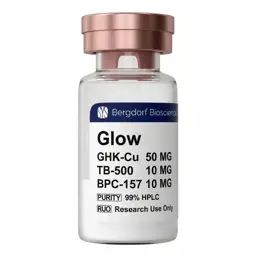
Tipične početne vrijednosti za orijentaciju. Svaki redak otvara kalkulator za odgovarajući peptid.
| Peptid | Kategorija | Uobičajena doza | Veličine bočica | BAC (početak) | Dostupno | Izračunaj |
|---|---|---|---|---|---|---|
| Retatrutide | GLP-1/GIP/GCG | 0,5-12 mg | 2 / 5 / 10 / 15 mg | 2 ml | Na zalihi | Izračunaj |
| Tirzepatide | GLP-1/GIP | 2,5-15 mg | 5 / 10 / 15 mg | 2 ml | Na zalihi | Izračunaj |
| GHK-Cu | Bakreni peptid | 1-4 mg | 10 / 20 / 50 mg | 5 ml | Na zalihi | Izračunaj |
| BPC-157 | Obnova tkiva | 200-500 mcg | 2 / 5 / 10 mg | 2 ml | Na zalihi | Izračunaj |
| TB-500 | Thymosin Beta-4 | 2-5 mg | 2 / 5 / 10 mg | 2 ml | Na zalihi | Izračunaj |
| CJC-1295 (bez DAC) | GHRH analog | 100-200 mcg | 2 / 5 / 10 mg | 2 ml | Na zalihi | Izračunaj |
| MOTS-c | Mitohondrijski | 5-10 mg | 5 / 10 mg | 2 ml | Na zalihi | Izračunaj |
| Glow Stack | Stack | 0,5-2 mg | 70 mg | 3 ml | Na zalihi | Izračunaj |
| Klow Stack | Stack | 0,5-2 mg | 55 mg | 3 ml | Na zalihi | Izračunaj |
| Melanotan II | Melanocortin | 100-1000 mcg | 5 / 10 mg | 2 ml | Na zalihi | Izračunaj |
| Tesamorelin | GHRH analog | 1-2 mg | 10 / 20 mg | 2 ml | Na zalihi | Izračunaj |
| Thymosin Alpha-1 | Timički peptid | 0,8-3,2 mg | 1.6 / 5 / 10 mg | 1 ml | Na zalihi | Izračunaj |
| KPV | Imuno / Barijera | 100-1000 mcg | 5 / 10 mg | 2 ml | Na zalihi | Izračunaj |
| Semax | Kognitivno | 100-1000 mcg | 10 / 30 mg | 2 ml | Na zalihi | Izračunaj |
| NAD+ | Dugovječnost / Kofaktor | 100-500 mg | 1000 mg | 10 ml | Na zalihi | Izračunaj |
| Semaglutide | GLP-1 | 0,25-2,4 mg | 2 / 5 / 10 mg | 2 ml | Samo kalkulator | Izračunaj |
| Ipamorelin | GHRP | 200-300 mcg | 2 / 5 mg | 2 ml | Samo kalkulator | Izračunaj |
| AOD-9604 | Gubitak masti | 250-500 mcg | 2 / 5 mg | 2 ml | Samo kalkulator | Izračunaj |
| PT-141 | Bremelanotide | 0,5-2 mg | 2 / 5 / 10 mg | 2 ml | Samo kalkulator | Izračunaj |
| Selank | Anksiolitik | 150-500 mcg | 2 / 5 mg | 2 ml | Samo kalkulator | Izračunaj |
| SS-31 | Elamipretide | 0,1-1 mg | 5 / 10 mg | 2 ml | Samo kalkulator | Izračunaj |
| Melanotan I | Melanocortin | 100-1000 mcg | 5 / 10 mg | 2 ml | Samo kalkulator | Izračunaj |
| Sermorelin | GHRH analog | 50-300 mcg | 2 / 5 mg | 2 ml | Samo kalkulator | Izračunaj |
| Epithalon | Dugovječnost | 2-10 mg | 10 / 20 / 50 mg | 2 ml | Samo kalkulator | Izračunaj |
| HGH Fragment 176-191 | Metabolički fragment | 100-500 mcg | 2 / 5 / 10 mg | 2 ml | Samo kalkulator | Izračunaj |
| N-Acetyl Semax | Kognitivno | 100-1000 mcg | 5 / 10 mg | 2 ml | Samo kalkulator | Izračunaj |
| Hexarelin | GHRP | 50-200 mcg | 2 / 5 mg | 2 ml | Samo kalkulator | Izračunaj |
| GHRP-6 | GHRP | 50-300 mcg | 2 / 5 mg | 2 ml | Samo kalkulator | Izračunaj |
| GHRP-2 | GHRP | 50-250 mcg | 2 / 5 mg | 2 ml | Samo kalkulator | Izračunaj |
| DSIP | San | 50-500 mcg | 2 / 5 mg | 2 ml | Samo kalkulator | Izračunaj |
| 5-Amino-1MQ | Metabolički | 2,5-10 mg | 5 / 10 mg | 2 ml | Samo kalkulator | Izračunaj |
| HGH 191AA | Hormon rasta | 1-5 mg | 10 mg | 1 ml | Samo kalkulator | Izračunaj |
Vrijednosti služe za orijentaciju u istraživačkom kontekstu i ne zamjenjuju stručni savjet.
Odaberite peptid da biste otvorili njegovu stranicu kalkulatora s unaprijed ispunjenim vrijednostima.