
TB-500 (Thymosin Beta-4): A Scientific Guide
Dr. Sieglinde Klaus
Scientific Editorial Team · Bergdorf Bioscience
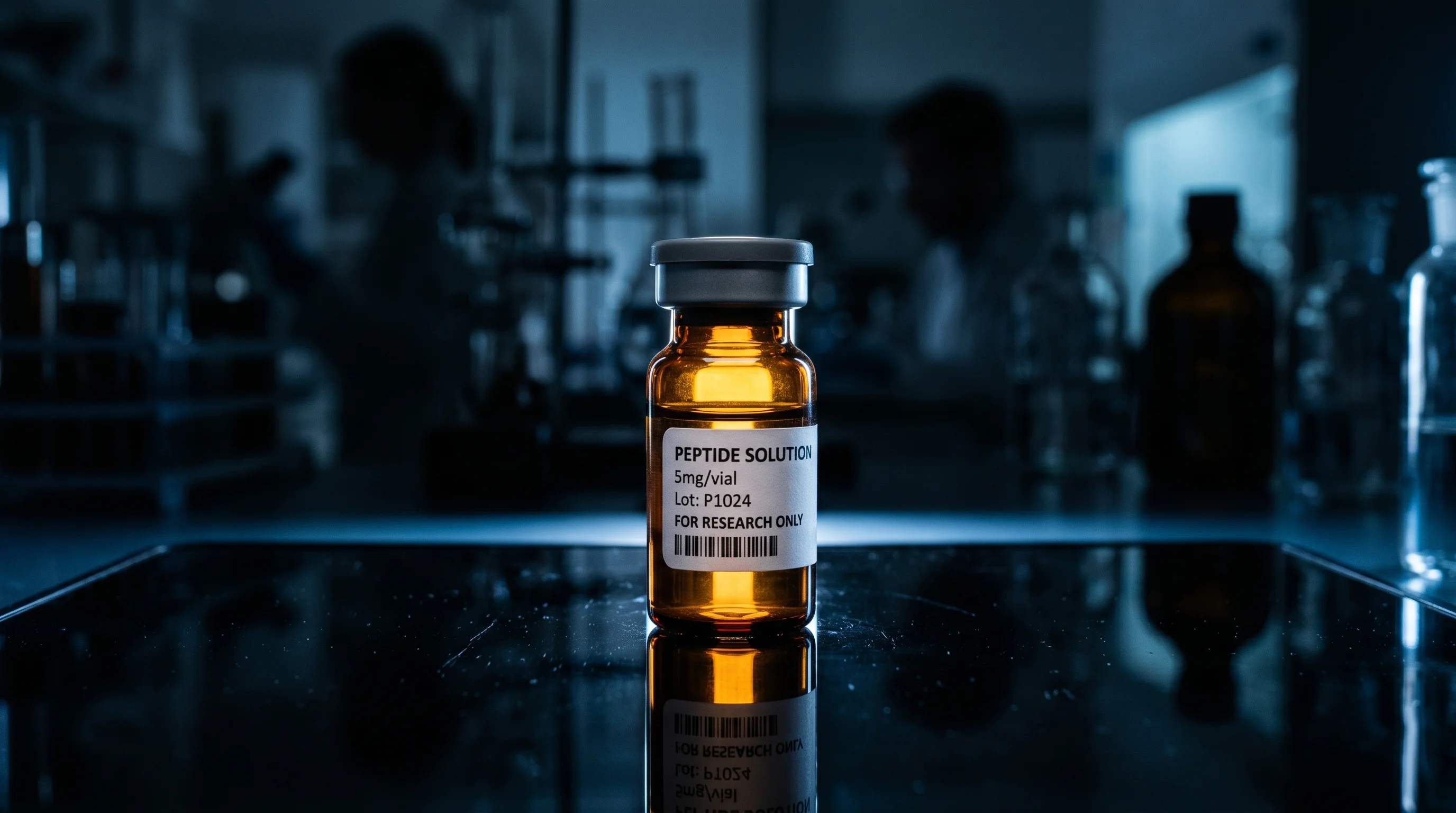
Table of Contents
- 01What is TB-500 and how does it differ from Thymosin Beta-4?
- 02How does the actin mechanism of TB-500 work?
- 03What does preclinical research show on wound healing and angiogenesis?
- 04What role does TB-500 play in tendon, ligament and cardiac models?
- 05What dosage ranges are cited in the research literature?
- 06How long is the half-life of TB-500 really?
- 07How is TB-500 stored and stabilised in research?
- 08What is known about safety and tolerability from studies?
- 09What legal and research status does TB-500 have?
- 10How do TB-500 and BPC-157 differ?
- 11Frequently asked questions
- Is TB-500 the same as Thymosin Beta-4?
- Why are two different numbers given for the half-life?
- How should TB-500 be stored in the laboratory?
- May TB-500 be used in humans?
TB-500 is a synthetic peptide fragment closely related to the naturally occurring protein Thymosin Beta-4. It comprises 43 amino acids, has the molecular formula C212H350N56O78S and a molecular mass of approximately 4963 Da. In preclinical research it is studied primarily for its role in actin regulation and in tissue-repair models. All information is for research purposes only.
What is TB-500 and how does it differ from Thymosin Beta-4?
Thymosin Beta-4 (Tβ4) is an endogenous 43-amino-acid peptide found in nearly all tissues and body fluids, particularly concentrated in platelets. In the laboratory literature, the term TB-500 is often used synonymously with synthetically produced Thymosin Beta-4. Strictly speaking, some sources use TB-500 to denote a truncated fragment containing the central actin-binding domain, whereas research preparations sold under this trade name usually supply the full 43-amino-acid molecule.
The chemical parameters are clearly defined: molecular formula C212H350N56O78S, molecular mass around 4963 Da, a hydrophilic, highly charged molecule with no disulfide bridges. The native peptide is N-terminally acetylated, which influences its stability. Characteristic is the central LKKTETQ sequence, the so-called actin-binding motif, regarded in structural biology as the functional core (Xue et al., 2014).
The distinction matters for research: anyone seeking reproducibility should document purity (HPLC), exact sequence length and acetylation status, since these parameters noticeably alter in-vitro behaviour. A full understanding of Tβ4 as a G-actin-sequestering peptide forms the basis for every later section of this guide. Researchers who wish to source the compound itself can find it at order TB-500.
How does the actin mechanism of TB-500 work?
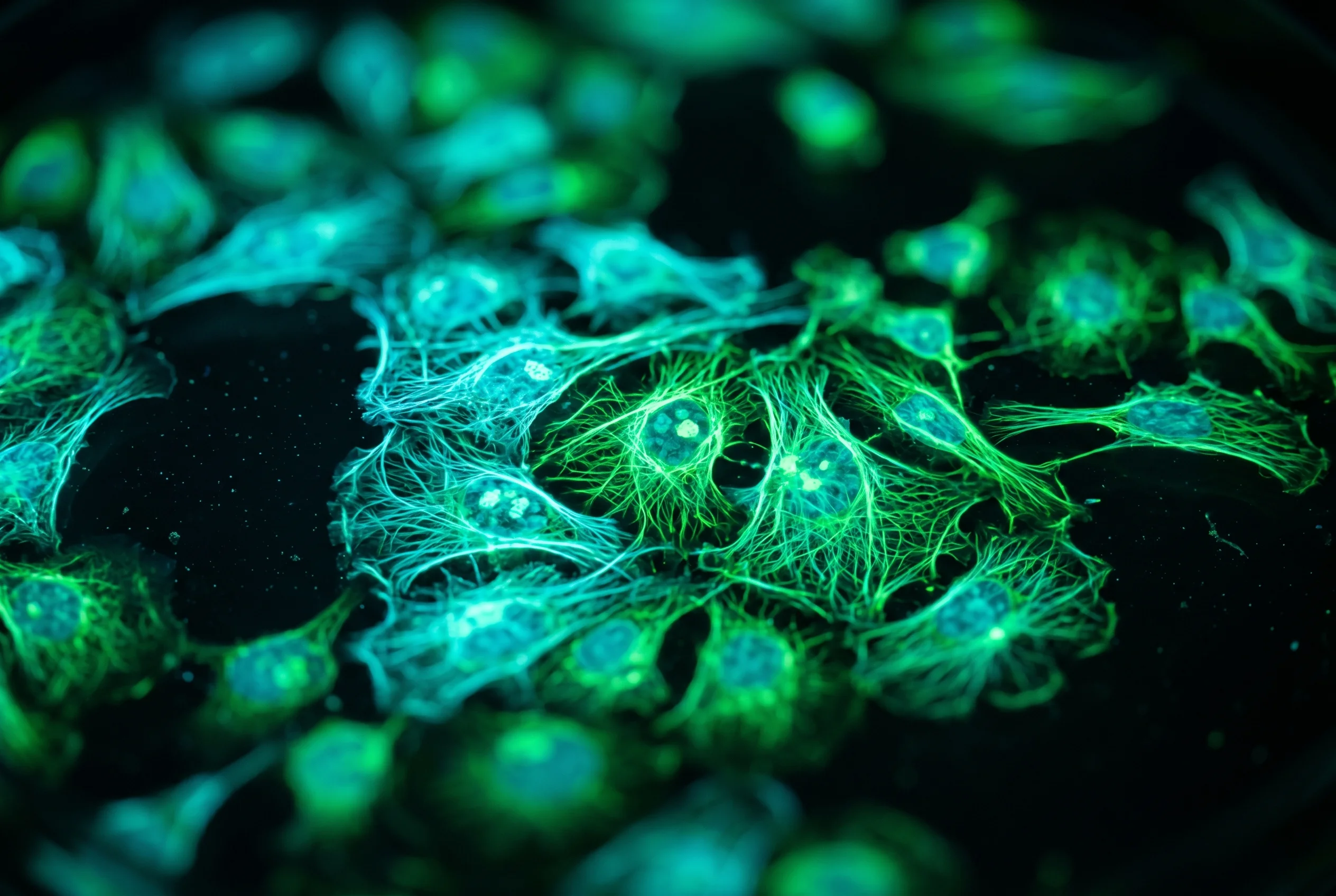
The best-characterised molecular mechanism of Thymosin Beta-4 is the sequestration of globular actin (G-actin). G-actin is the monomeric building-block form of the cytoskeleton; through polymerisation it forms the filamentous actin fibres (F-actin) that enable cell movement, migration and structural stability. Tβ4 is regarded as the principal intracellular G-actin-sequestering peptide and binds monomers in a 1:1 complex.
Structural analyses show that Tβ4 engages G-actin with two helical segments at the barbed and pointed faces, thereby preventing the bound monomer from being incorporated into a filament (Xue et al., 2014). The C-terminal helix stabilises a closed conformation of the actin nucleotide-binding cleft. In this way the peptide maintains a pool of polymerisation-competent yet unpolymerised monomers.
Release occurs in a controlled manner via exchange with profilin: in a ternary complex of profilin, actin and Tβ4, the monomer is converted into a polymerisation-competent form. This switching mechanism allows cells to fine-tune actin dynamics according to the signalling context. In preclinical models, this regulation is associated with improved cell migration and tissue remodelling, which motivates the study of Tβ4 in repair models.
What does preclinical research show on wound healing and angiogenesis?
In animal models, Thymosin Beta-4 has repeatedly been associated with accelerated tissue regeneration. In a widely cited study using rat and mouse models of skin wounds, it was observed that animals treated with topically or intraperitoneally administered Tβ4 showed 42 percent greater re-epithelialisation than the saline controls at four days, and as much as 61 percent greater at seven days; increased collagen deposition and angiogenesis were also reported (Malinda et al., 1999). These percentages describe the findings of this animal model only and cannot be generalised.
Angiogenesis, the formation of new blood vessels, is a central research focus. In preclinical studies in normal and aged rodents, and in in-vitro systems with endothelial cells, Tβ4 was observed to act as a chemoattractant factor for endothelial cells and to be associated in vivo with increased vessel formation as well as accelerated wound healing; in the same models an effect on hair-follicle development was also reported (Philp et al., 2004). These findings derive exclusively from animal models and in-vitro systems and describe the behaviour in those experimental populations.
A mechanistically interesting aspect is connective-tissue organisation: in granulation tissue from treated animals, myofibroblasts were largely absent and collagen fibres were more uniformly arranged. In preclinical models this points to orderly repair with a reduced scarring tendency. Importantly, all effects described here pertain to experimental systems. No claims are made about human use, and the findings are not to be understood as a therapeutic recommendation.
What role does TB-500 play in tendon, ligament and cardiac models?
Beyond the skin, Thymosin Beta-4 has been studied in musculoskeletal repair models. In a rat model of medial collateral ligament injury, it was observed that animals treated with locally administered Tβ4 exhibited more uniformly arranged fibre bundles, larger collagen fibril diameters and significantly better biomechanical properties of the healing ligament after four weeks than the control group (Xu et al., 2013). Such findings motivate the study of the peptide in tendon and ligament repair models, but pertain to this animal model only.
The cardiac track is particularly intensively researched. In a landmark study, Tβ4 was shown in mouse and cell models to form a functional complex with PINCH and integrin-linked kinase (ILK), thereby activating the survival kinase Akt; in the same mouse models the peptide was observed to be associated with increased migration and improved survival of cardiac cells as well as with repair processes after injury (Bock-Marquette et al., 2004). In a subsequent infarct model, it was observed that animals treated with Tβ4 after coronary artery ligation showed increased ILK and Akt activity, improved early myocyte survival and better cardiac function than untreated controls (Srivastava et al., 2007).
These cardiac and musculoskeletal data derive without exception from animal models. They provide the mechanistic background for why Tβ4 serves as a model peptide in tissue-regeneration research, but they do not permit any extrapolation to humans.

What dosage ranges are cited in the research literature?
Dosage figures in the literature refer to experimental protocols and never to human use. In clinical Phase 1 pharmacokinetics, intravenous synthetic Tβ4 was tested in single doses of 42, 140, 420 and 1260 mg, as well as daily for 14 days (Ruff et al., 2010). A separate first-in-human study with recombinant human Tβ4 used markedly lower doses of 0.05 to 25 µg/kg as a single dose and 0.5 to 5.0 µg/kg over ten days (Xue et al., 2021).
In preclinical animal models, doses vary considerably depending on species, route of administration (intraperitoneal, local, intravenous) and endpoint. This range makes clear that there is no single research dose, and that comparisons between studies are meaningful only when model, route and measurement timepoint are taken into account.
For reproducible in-vitro or animal-model work, the concentration of the stock solution is more critical than the absolute amount. Researchers typically document purity, concentration (mg/mL), solvent and storage conditions to control for batch variation. Because the plasma half-life is short (see the next section), administration frequency and the timing of measurement play a larger role than with longer-lived peptides. All figures serve to describe published protocols, not as a guide to action.
How long is the half-life of TB-500 really?
With the half-life of TB-500, two fundamentally different quantities must be cleanly separated, as they are frequently confused. The first is the plasma elimination half-life, that is, how quickly the intact peptide is cleared from the blood. In human Phase 1 pharmacokinetics with recombinant Tβ4, the terminal plasma half-life after intravenous administration was only 0.5 to 2.08 hours across the single-dose cohorts, and 0.568 to 1.413 hours in the multiple-dose part (Xue et al., 2021). That is a range of roughly half an hour to a little over two hours.
The second, frequently cited quantity is the functional or tissue-related half-life of around 168 hours, that is, about seven days. This figure does NOT describe how long the peptide is detectable in plasma. It refers to the duration of biological effects in the tissue, such as the sustained modulation of actin dynamics and repair processes, long after the circulating peptide has already been eliminated.
This distinction is research-relevant: the short plasma half-life explains why pharmacokinetic models show rapid declines in levels, whereas the long-term tissue effects are observed over days. Anyone interpreting the 7-day figure as a plasma statement draws false conclusions about concentration profiles. A deeper treatment of these relationships is provided in the guide understanding half-life.
How is TB-500 stored and stabilised in research?
Thymosin Beta-4 is supplied as a lyophilised (freeze-dried) powder and is most stable in this state. Storage is typically at minus 20 degrees Celsius, protected from light and from moisture. Brief temperature excursions during transport are generally tolerated by the sealed lyophilisate, whereas repeated thawing and prolonged heat exposure can impair integrity.
After reconstitution, usually with sterile or bacteriostatic water, the stability profile changes markedly. Dissolved peptide is kept refrigerated at around 4 degrees Celsius and used within a limited period. Repeated freeze-thaw cycles are to be avoided, since they can lead to aggregation and loss of activity. Because Tβ4 has no disulfide bridges, it is not at risk from reduction, but it is susceptible to deamidation of asparagine and glutamine residues at physiological pH.
For reproducible research, aliquoting the stock solution to minimise freeze-thaw stress is advisable, as is logging concentration, solvent and date. Glass vials are preferred over adsorption-prone surfaces, especially at low concentrations. Clean stability management is the prerequisite for ensuring that observed effects are actually attributable to the peptide and not to degradation products. All information refers to handling in the research laboratory.
What is known about safety and tolerability from studies?
Tolerability data derive from early clinical studies that examined safety and pharmacokinetic endpoints only, and do not support conclusions beyond research use in healthy volunteers. In the Phase 1 study with intravenous synthetic Tβ4 across a dose range of 42 to 1260 mg, adverse events were infrequent and of mild to moderate intensity; there were no dose-limiting toxicities and no serious adverse events (Ruff et al., 2010).
The first-in-human study with recombinant human Tβ4 confirmed this picture: at single doses of 0.05 to 25 µg/kg and multiple doses of 0.5 to 5.0 µg/kg over ten days, no serious adverse events and no dose-limiting toxicities were observed; all adverse events were mild to moderate and resolved spontaneously or with minimal intervention (Xue et al., 2021). No accumulation after continuous administration was detected.
These data describe controlled study conditions and not uncontrolled use. Because TB-500, as a research chemical, is not subject to approval as a medicinal product, no validated safety profiles exist for use outside such studies. Researchers therefore handle the material with standard laboratory protective measures. No claims whatsoever are made about safety in human use.
What legal and research status does TB-500 have?
TB-500, or Thymosin Beta-4, is not approved as a medicinal product in the European Union or in most jurisdictions. It is traded exclusively as a research chemical for in-vitro and preclinical laboratory work and is not intended for human consumption, injection or any therapeutic use. It is distributed under the clear reservation of research purposes only.
In sport, the status is unambiguous: the World Anti-Doping Agency lists Thymosin Beta-4 and related actin-regulating peptides among prohibited substances, on the grounds of their attributed potential influence on tissue regeneration. For academic and industrial research, however, the peptide remains an established tool for investigating actin dynamics, cell migration and repair mechanisms.
For research procurement, documentation and traceability are decisive: a certificate of analysis (CoA), HPLC purity, mass spectrometry to confirm the molecular mass of around 4963 Da, and correct labelling. Researchers should review the applicable national and institutional regulations, since the regulatory framework for research peptides varies by country. The research-only status is not merely a legal note but reflects the actual state of knowledge: completed, approval-relevant efficacy studies in humans are lacking.
How do TB-500 and BPC-157 differ?
TB-500 and BPC-157 are often mentioned together in research, but they differ fundamentally in origin and mechanism. TB-500 is the 43-amino-acid peptide Thymosin Beta-4 with a molecular mass of about 4963 Da, whose primary mechanism is the sequestration of G-actin and the modulation of actin dynamics (Xue et al., 2014). BPC-157, by contrast, is a markedly smaller synthetic pentadecapeptide of 15 amino acids, derived from an endogenous gastric-protective protein and studied in preclinical models via different pathways, such as angiogenesis-promoting mechanisms.
Functionally, both peptides show effects on tissue repair in animal models, but act at different points: TB-500 primarily regulates the cytoskeleton and cell migration via the actin pool, whereas BPC-157 is more strongly associated in the literature with vascular and wound-healing models as well as gastrointestinal tracks. Their half-life profiles also differ, which is why the respective pharmacokinetic properties must be considered separately.
Which peptide is suitable for a given research model depends on the mechanism under investigation. A detailed side-by-side comparison of both compounds, including mechanisms, evidence base and research applications, can be found in the direct comparison BPC-157 vs TB-500. Those who wish to study the partner peptide in depth will find further information in the BPC-157 guide.
Frequently asked questions
Is TB-500 the same as Thymosin Beta-4?
In research practice the terms are often used synonymously, since TB-500 preparations usually supply the full 43-amino-acid Thymosin Beta-4 molecule. In some sources, however, TB-500 denotes a truncated fragment containing only the central actin-binding domain. For reproducible research, sequence length and purity should be documented via a certificate of analysis.
Why are two different numbers given for the half-life?
Because two different quantities are meant. The plasma elimination half-life is only about 0.5 to 2 hours and describes how quickly the peptide disappears from the blood (Xue et al., 2021). The frequently cited roughly seven days (168 hours) are a functional, tissue-related quantity and not a plasma statement.
How should TB-500 be stored in the laboratory?
Lyophilised powder is stored at minus 20 degrees Celsius, protected from light and dry. After reconstitution it is kept refrigerated at around 4 degrees Celsius, and repeated freeze-thaw cycles are avoided. Aliquoting reduces stress on the stock solution.
May TB-500 be used in humans?
No. TB-500 is not approved as a medicinal product and is traded exclusively as a research chemical for in-vitro and preclinical work. It is not intended for human consumption or any therapeutic use. Moreover, Thymosin Beta-4 appears on the World Anti-Doping Agency prohibited list.
For research purposes only. Not intended for human consumption.
Scientific editor: Dr. Sieglinde Klaus
References
- Philp D., Goldstein A., Kleinman H.. Thymosin β4 promotes angiogenesis, wound healing, and hair follicle development. Mechanisms of Ageing and Development. 2004.DOI
- Wang X., et al. A first‐in‐human, randomized, double‐blind, single‐ and multiple‐dose, phase I study of recombinant human thymosin β4 in healthy Chinese volunteers. Journal of Cellular and Molecular Medicine. 2021.DOI
- Ruff D., et al. A randomized, placebo‐controlled, single and multiple dose study of intravenous thymosin β4 in healthy volunteers. Annals of the New York Academy of Sciences. 2010.DOI
- Bock-Marquette I., et al. Thymosin β4 activates integrin-linked kinase and promotes cardiac cell migration, survival and cardiac repair. Nature. 2004.DOI
- Xu B., et al. Thymosin β4 enhances the healing of medial collateral ligament injury in rat. Regulatory Peptides. 2013.

