
Calculate exact reconstitution volumes, insulin units, and doses per vial for any peptide.
Vial, water and dose are known
Units measure volume, not active substance. 4 IU = 0.04 ml. How many mg are in there depends on the mix. The calculator has worked that out for you.
Almost all insulin syringes are U-100. Only choose U-40 if the syringe is marked U-40.
Sermorelin is a synthetic analog of human growth hormone-releasing hormone (GHRH). It corresponds to the first 29 amino acids of natural GHRH(1-44) and is therefore also referred to as GHRH(1-29) or GRF(1-29). This truncated fragment is notable because the first 29 amino acids already contain the complete biologically active core of the molecule. As a result, Sermorelin exerts essentially the same agonist activity at the GHRH receptor as the full-length natural hormone, while being a shorter and simpler sequence to manufacture. In the pharmaceutical literature, Sermorelin is known by the research designation GRF 1-29 and by the historical trade names Geref and sermorelin acetate.
Sermorelin is considered the classic, in a sense original GHRH peptide and was used in research long before the newer, more heavily stabilized variants. It has been studied in the diagnostic assessment of pituitary function and in research into the age-related decline of growth hormone production. Compared to the more modern GHRH analogs CJC-1295 (no DAC) and Tesamorelin, Sermorelin is chemically unmodified. It carries no protective group against enzymatic degradation, which is why its biological half-life is very short.
An important point for understanding: Sermorelin is not a growth hormone, nor is it a ghrelin-type secretagogue. It does not supply GH from an external source — it prompts the pituitary gland to release more of the body's own growth hormone. Because the stimulus only amplifies the natural releasing signal, the regulating mechanisms of the hypothalamic-pituitary axis, in particular the inhibitory action of somatostatin, remain intact. This mechanism fundamentally distinguishes Sermorelin from direct substitution with recombinant growth hormone and shapes its tolerability profile.
Sermorelin acts exclusively through the GHRH receptor axis and the downstream GH-IGF-1 cascade. Its key mechanisms can be summarized as follows:
Sermorelin is typically administered subcutaneously in research, often in the evening before sleep, to support the natural nocturnal GH pulse. A slow titration ramp is not strictly required, but starting at the lower end of the dose range is a reasonable precaution for observing individual tolerability.
The most common vial size for Sermorelin is 2 mg. Adding 2 mL of bacteriostatic water gives a concentration of 1 mg/mL (1,000 mcg/mL). This concentration makes small volumes much easier to read on an insulin syringe.
At 100 mcg once daily, a 2 mg vial provides 20 days of dosing. A 5 mg vial with 2 mL of BAC water yields 2.5 mg/mL, so a 100 mcg dose then corresponds to just 0.04 mL (4 units). Use the Sermorelin calculator above to compute exact volumes for any vial size, reconstitution volume, and target dose.
Sermorelin is administered subcutaneously into the fatty tissue beneath the skin, most commonly into the abdomen in the area around the navel. The outer thigh is also a suitable site. Injection sites should be rotated from day to day to avoid local irritation and hardening of the tissue. The very short half-life of about 10 to 20 minutes means the peptide acts quickly and is cleared just as fast. Consistent, time-aligned administration is therefore more important for a stable research protocol than with longer-acting GHRH analogs.
Sermorelin is supplied as a lyophilized (freeze-dried) powder in sealed vials and must be reconstituted with bacteriostatic water (BAC water) before use. BAC water contains 0.9% benzyl alcohol, which inhibits microbial growth and extends the usable window of the reconstituted solution. Sterile water for injection is not suitable for multi-dose vials because it offers no preservation.
If the solution appears cloudy, discolored, or contains visible particulate matter, discard the vial and do not inject it.
Sermorelin is among the longest-known GHRH peptides and has been used in humans in diagnostic and age-related research, among other settings. Because its effects are mediated through enhanced growth hormone and IGF-1 activity, the effects to watch for are closely tied to the known actions of the GH axis. All use remains in the research domain.
At standard research doses, Sermorelin has been described in the published literature as largely well tolerated. Nonetheless, given its action on the endocrine GH axis, caution is warranted, and consultation with a qualified physician is strongly recommended.
Sermorelin belongs to the family of GHRH analogs and is closely related functionally to CJC-1295 (no DAC) and Tesamorelin. All three stimulate the same GHRH receptor but differ in stability and duration of action. Sermorelin corresponds to the unmodified GHRH(1-29) fragment with a very short half-life, CJC-1295 without DAC is a modified fragment with improved stability, and Tesamorelin is a fully stabilized GHRH(1-44) analog with the most extensive body of clinical data.
A widely used research concept combines a GHRH analog with a GHRP (growth hormone releasing peptide) such as Ipamorelin. The two peptide classes act through distinct, complementary receptors:
Other GHRPs discussed alongside Sermorelin in comparable research contexts include Hexarelin, GHRP-6, and GHRP-2. Because the GH-IGF-1 axis is stressed more heavily by a combined stimulus, conservative doses, careful monitoring of glucose and IGF-1, and planned breaks are sensible in research protocols.
Sermorelin is also used as a standalone compound in research, particularly when the goal is to study a stimulus that is as physiological as possible and closely modeled on natural GHRH. Its very short duration of action makes Sermorelin a well-controlled single peptide whose effects can be tracked through the IGF-1 biomarker. A simple monotherapy protocol is often the first step before more complex combinations are evaluated.
Sermorelin is not a growth hormone but a GHRH analog. It prompts the pituitary to release more of the body's own growth hormone, whereas HGH supplies the hormone directly from an external source. The key difference lies in feedback: with Sermorelin, the inhibitory action of somatostatin is preserved, so GH levels cannot rise without limit. In addition, the natural, pulsatile release pattern is maintained, which is not the case with a constant supply of HGH.
Both are GHRH analogs and stimulate the same receptor. Sermorelin corresponds to the unmodified GHRH(1-29) fragment and is broken down very quickly. CJC-1295 without DAC is a modified fragment with targeted amino acid substitutions that make it more resistant to enzymatic degradation, which is why its duration of action is longer. Sermorelin is therefore the closest to natural GHRH, while CJC-1295 was optimized for extended stability.
The body's largest natural GH release occurs during the first hours of deep sleep. An evening injection of Sermorelin is intended to amplify this physiological pulse rather than create an additional, off-schedule GH surge. The very short half-life of about 10 to 20 minutes suits this concept well, as the signal stays tightly time-limited and coincides with the nocturnal pulse.
Sermorelin is chemically unmodified and structurally closely matches the natural GHRH fragment. It carries no protective group against dipeptidyl peptidase-4 (DPP-4), an enzyme that rapidly cleaves GHRH-type peptides. As a result, Sermorelin is broken down very quickly, with a half-life of only about 10 to 20 minutes. This short duration of action is intentional, as it produces a sharply defined, physiologically natural signal.
Because growth hormone and insulin partly act against each other, a high insulin level following a carbohydrate-rich meal dampens the GH response. Research protocols therefore often recommend timing the injection with a gap after the last substantial meal. With evening administration before sleep, this gap often arises naturally.
Sermorelin does not act on the hypothalamic-pituitary-gonadal axis and does not suppress the body's own testosterone production. A classic PCT, of the kind common after androgenic substances, is therefore not required. Because Sermorelin only amplifies the natural GHRH signal, the pituitary generally recovers after discontinuation without any further measures.
Yes. Sermorelin falls under the WADA prohibited list as a growth hormone-releasing factor and GH secretagogue and is banned in sport both in and out of competition. Athletes subject to WADA-compliant testing should treat Sermorelin as a prohibited substance and verify the anti-doping rules applicable to their sport before any use.
Some research protocols combine a GHRH analog and a GHRP in a single syringe immediately before injection. In general, however, it is safer to reconstitute each peptide individually and inject them separately, since their combined stability in solution is not well characterized. Separate injections at adjacent sites add minimal inconvenience while eliminating the risk of dosing errors.
Medical Disclaimer: The information on this page is provided for educational and research purposes only. Sermorelin is not an approved drug or medical treatment within the scope of this offering and is provided strictly for research use. Nothing on this page constitutes medical advice, diagnosis, or a recommendation to use any specific compound. Always consult a qualified healthcare professional before beginning any peptide protocol. BergdorfBio assumes no liability for the use or misuse of the information presented here.
From powder to a ready syringe in five steps. The calculator above gives you the amounts automatically.
Bring vial and water to room temperature. Wipe both rubber stoppers with an alcohol swab.
Draw up the amount of BAC water recommended by the calculator using a larger syringe.
Let the water run down the inside wall of the peptide vial, do not spray it directly onto the powder.
Roll the vial gently, do not shake. The powder dissolves clear within 1-2 minutes.
Draw up to exactly the calculated mark with the insulin syringe. Done.
Typical starting values for orientation. Each row opens the calculator for that peptide.
| Peptide | Category | Typical dose | Vial sizes | BAC (start) | Available | Calculate |
|---|---|---|---|---|---|---|
| VIP | Neuropeptide Research | - | 10 mg | 2 ml | Calculator only | Calculate |
| Retatrutide | GLP-1/GIP/GCG | 0,5-12 mg | 2 / 5 / 10 / 15 mg | 2 ml | Calculator only | Calculate |
| Cagrilintide | Amylin Analogue | - | 5 mg | 2 ml | Calculator only | Calculate |
| Semaglutide | GLP-1 | 0,25-2,4 mg | 2 / 5 / 10 mg | 2 ml | Calculator only | Calculate |
| Tirzepatide | GLP-1/GIP | 2,5-15 mg | 10 / 15 / 20 / 30 / 60 / 90 mg | 2 ml | Calculator only | Calculate |
| GHK-Cu | Copper Peptide | 1-4 mg | 10 / 20 / 50 mg | 5 ml | Calculator only | Calculate |
| AHK-Cu | Copper Peptide | - | 100 mg | 5 ml | Calculator only | Calculate |
| BPC-157 | Tissue Repair | 0,2-0,5 mg | 2 / 5 / 10 mg | 2 ml | Calculator only | Calculate |
| TB-500 | Thymosin Beta-4 | 2-5 mg | 2 / 5 / 10 mg | 2 ml | Calculator only | Calculate |
| CJC-1295 (no DAC) | GHRH Analog | 100-200 mcg | 2 / 5 / 10 mg | 2 ml | Calculator only | Calculate |
| Ipamorelin | GHRP | 200-300 mcg | 2 / 5 mg | 2 ml | Calculator only | Calculate |
| AOD-9604 | Fat Loss | 250-500 mcg | 2 / 5 mg | 2 ml | Calculator only | Calculate |
| PT-141 | Bremelanotide | - | 2 / 5 / 10 mg | 2 ml | Calculator only | Calculate |
| MOTS-c | Mitochondrial | 5-10 mg | 5 / 10 mg | 2 ml | Calculator only | Calculate |
| Selank | Anxiolytic | 150-500 mcg | 2 / 5 / 10 mg | 2 ml | Calculator only | Calculate |
| SS-31 | Elamipretide | 0,1-1 mg | 5 / 10 mg | 2 ml | Calculator only | Calculate |
| Glow Stack | Stack | 0,5-2 mg | 70 mg | 3 ml | Calculator only | Calculate |
| Klow Stack | Stack | 0,5-2 mg | 55 mg | 3 ml | Calculator only | Calculate |
| Melanotan II | Melanocortin | 100-1000 mcg | 5 / 10 mg | 2 ml | Calculator only | Calculate |
| Melanotan I | Melanocortin | - | 5 / 10 mg | 2 ml | Calculator only | Calculate |
| Sermorelin | GHRH Analog | 50-300 mcg | 5 mg | 2 ml | Calculator only | Calculate |
| Tesamorelin | GHRH Analog | 1-2 mg | 10 / 20 mg | 2 ml | Calculator only | Calculate |
| Thymosin Alpha-1 | Thymic Peptide | 0,8-3,2 mg | 1.6 / 5 / 10 mg | 1 ml | Calculator only | Calculate |
| Epithalon | Longevity | 2-10 mg | 10 / 20 / 50 mg | 2 ml | Calculator only | Calculate |
| KPV | Immune / Barrier | 100-1000 mcg | 5 / 10 mg | 2 ml | Calculator only | Calculate |
| HGH Fragment 176-191 | Metabolic Fragment | 100-500 mcg | 2 / 5 / 10 mg | 2 ml | Calculator only | Calculate |
| Semax | Cognitive | 100-1000 mcg | 10 / 30 mg | 2 ml | Calculator only | Calculate |
| N-Acetyl Semax | Cognitive | 100-1000 mcg | 5 / 10 mg | 2 ml | Calculator only | Calculate |
| Hexarelin | GHRP | 50-200 mcg | 2 / 5 mg | 2 ml | Calculator only | Calculate |
| GHRP-6 | GHRP | 50-300 mcg | 2 / 5 mg | 2 ml | Calculator only | Calculate |
| GHRP-2 | GHRP | 50-250 mcg | 2 / 5 mg | 2 ml | Calculator only | Calculate |
| DSIP | Sleep | 50-500 mcg | 10 mg | 2 ml | Calculator only | Calculate |
| 5-Amino-1MQ | Metabolic | 2,5-10 mg | 10 mg | 2 ml | Calculator only | Calculate |
| Pinealon | Research peptide | - | 10 mg | 2 ml | Calculator only | Calculate |
| Survodutide | GLP-1/Glucagon | - | 10 mg | 2 ml | Calculator only | Calculate |
| Kisspeptin-10 | KISS1R / GPR54 | - | 10 mg | 2 ml | Calculator only | Calculate |
| HGH 191AA | Growth Hormone | 1-5 mg | 10 mg | 1 ml | Calculator only | Calculate |
| NAD+ | Longevity / Cofactor | 100-500 mg | 1000 mg | 10 ml | Calculator only | Calculate |
Values are for orientation in a research context and do not replace professional advice.
Calculating concentration and injection volume correctly seems trivial, but it is the most common source of error. Even a 10 % miscalculation during reconstitution means you either get too little active substance or unintentionally overdose.
Lyophilized peptides are supplied in milligrams and dissolved in bacteriostatic water (BAC water). The ratio of peptide to water determines the concentration, and from that follows how many units you draw up on the insulin syringe. Insulin syringes are scaled in units, not milligrams. The calculator handles this conversion, including the plausibility check against the most dangerous error: confusing mg and mcg.
Milligrams (mg) is the unit lyophilized peptides are sold in, for example “5 mg BPC-157”. Micrograms (mcg) measure the single dose, for example “250 mcg per injection”. 1 mg = 1,000 mcg. The calculator converts automatically and warns when an entry looks like a mix-up.
U-100 means the syringe is calibrated for 100 units per milliliter. 100 IU = 1 ml, so 10 IU = 0.10 ml, regardless of what is in the syringe. The IU calculation is based on exactly this relationship.
With a lot of peptide and little water the solution becomes very concentrated, so the volume per dose is tiny and hard to read. Use the mixing helper: it finds the water volume that produces a clean, easily readable mark.
In the fridge at 2-8 °C usually 21-30 days. Label the vial with the reconstitution date. Cloudy solutions or particles are a no-go.
Blends contain several active substances in one vial. Just select the blend as your peptide: the calculator additionally shows how much of each component is in your injection. For combinations of several separate vials, use the Stack Builder.
No. Your last settings are stored locally in the browser and restored on your next visit. You can also recall calculations from the history, save them as a protocol or share them as a link.
Choose a peptide to open its dedicated calculator page with pre-filled values.
Calculate exact reconstitution volumes, insulin units, and doses per vial for any peptide.
Vial, water and dose are known
Units measure volume, not active substance. 4 IU = 0.04 ml. How many mg are in there depends on the mix. The calculator has worked that out for you.
Almost all insulin syringes are U-100. Only choose U-40 if the syringe is marked U-40.
Sermorelin is a synthetic analog of human growth hormone-releasing hormone (GHRH). It corresponds to the first 29 amino acids of natural GHRH(1-44) and is therefore also referred to as GHRH(1-29) or GRF(1-29). This truncated fragment is notable because the first 29 amino acids already contain the complete biologically active core of the molecule. As a result, Sermorelin exerts essentially the same agonist activity at the GHRH receptor as the full-length natural hormone, while being a shorter and simpler sequence to manufacture. In the pharmaceutical literature, Sermorelin is known by the research designation GRF 1-29 and by the historical trade names Geref and sermorelin acetate.
Sermorelin is considered the classic, in a sense original GHRH peptide and was used in research long before the newer, more heavily stabilized variants. It has been studied in the diagnostic assessment of pituitary function and in research into the age-related decline of growth hormone production. Compared to the more modern GHRH analogs CJC-1295 (no DAC) and Tesamorelin, Sermorelin is chemically unmodified. It carries no protective group against enzymatic degradation, which is why its biological half-life is very short.
An important point for understanding: Sermorelin is not a growth hormone, nor is it a ghrelin-type secretagogue. It does not supply GH from an external source — it prompts the pituitary gland to release more of the body's own growth hormone. Because the stimulus only amplifies the natural releasing signal, the regulating mechanisms of the hypothalamic-pituitary axis, in particular the inhibitory action of somatostatin, remain intact. This mechanism fundamentally distinguishes Sermorelin from direct substitution with recombinant growth hormone and shapes its tolerability profile.
Sermorelin acts exclusively through the GHRH receptor axis and the downstream GH-IGF-1 cascade. Its key mechanisms can be summarized as follows:
Sermorelin is typically administered subcutaneously in research, often in the evening before sleep, to support the natural nocturnal GH pulse. A slow titration ramp is not strictly required, but starting at the lower end of the dose range is a reasonable precaution for observing individual tolerability.
The most common vial size for Sermorelin is 2 mg. Adding 2 mL of bacteriostatic water gives a concentration of 1 mg/mL (1,000 mcg/mL). This concentration makes small volumes much easier to read on an insulin syringe.
At 100 mcg once daily, a 2 mg vial provides 20 days of dosing. A 5 mg vial with 2 mL of BAC water yields 2.5 mg/mL, so a 100 mcg dose then corresponds to just 0.04 mL (4 units). Use the Sermorelin calculator above to compute exact volumes for any vial size, reconstitution volume, and target dose.
Sermorelin is administered subcutaneously into the fatty tissue beneath the skin, most commonly into the abdomen in the area around the navel. The outer thigh is also a suitable site. Injection sites should be rotated from day to day to avoid local irritation and hardening of the tissue. The very short half-life of about 10 to 20 minutes means the peptide acts quickly and is cleared just as fast. Consistent, time-aligned administration is therefore more important for a stable research protocol than with longer-acting GHRH analogs.
Sermorelin is supplied as a lyophilized (freeze-dried) powder in sealed vials and must be reconstituted with bacteriostatic water (BAC water) before use. BAC water contains 0.9% benzyl alcohol, which inhibits microbial growth and extends the usable window of the reconstituted solution. Sterile water for injection is not suitable for multi-dose vials because it offers no preservation.
If the solution appears cloudy, discolored, or contains visible particulate matter, discard the vial and do not inject it.
Sermorelin is among the longest-known GHRH peptides and has been used in humans in diagnostic and age-related research, among other settings. Because its effects are mediated through enhanced growth hormone and IGF-1 activity, the effects to watch for are closely tied to the known actions of the GH axis. All use remains in the research domain.
At standard research doses, Sermorelin has been described in the published literature as largely well tolerated. Nonetheless, given its action on the endocrine GH axis, caution is warranted, and consultation with a qualified physician is strongly recommended.
Sermorelin belongs to the family of GHRH analogs and is closely related functionally to CJC-1295 (no DAC) and Tesamorelin. All three stimulate the same GHRH receptor but differ in stability and duration of action. Sermorelin corresponds to the unmodified GHRH(1-29) fragment with a very short half-life, CJC-1295 without DAC is a modified fragment with improved stability, and Tesamorelin is a fully stabilized GHRH(1-44) analog with the most extensive body of clinical data.
A widely used research concept combines a GHRH analog with a GHRP (growth hormone releasing peptide) such as Ipamorelin. The two peptide classes act through distinct, complementary receptors:
Other GHRPs discussed alongside Sermorelin in comparable research contexts include Hexarelin, GHRP-6, and GHRP-2. Because the GH-IGF-1 axis is stressed more heavily by a combined stimulus, conservative doses, careful monitoring of glucose and IGF-1, and planned breaks are sensible in research protocols.
Sermorelin is also used as a standalone compound in research, particularly when the goal is to study a stimulus that is as physiological as possible and closely modeled on natural GHRH. Its very short duration of action makes Sermorelin a well-controlled single peptide whose effects can be tracked through the IGF-1 biomarker. A simple monotherapy protocol is often the first step before more complex combinations are evaluated.
Sermorelin is not a growth hormone but a GHRH analog. It prompts the pituitary to release more of the body's own growth hormone, whereas HGH supplies the hormone directly from an external source. The key difference lies in feedback: with Sermorelin, the inhibitory action of somatostatin is preserved, so GH levels cannot rise without limit. In addition, the natural, pulsatile release pattern is maintained, which is not the case with a constant supply of HGH.
Both are GHRH analogs and stimulate the same receptor. Sermorelin corresponds to the unmodified GHRH(1-29) fragment and is broken down very quickly. CJC-1295 without DAC is a modified fragment with targeted amino acid substitutions that make it more resistant to enzymatic degradation, which is why its duration of action is longer. Sermorelin is therefore the closest to natural GHRH, while CJC-1295 was optimized for extended stability.
The body's largest natural GH release occurs during the first hours of deep sleep. An evening injection of Sermorelin is intended to amplify this physiological pulse rather than create an additional, off-schedule GH surge. The very short half-life of about 10 to 20 minutes suits this concept well, as the signal stays tightly time-limited and coincides with the nocturnal pulse.
Sermorelin is chemically unmodified and structurally closely matches the natural GHRH fragment. It carries no protective group against dipeptidyl peptidase-4 (DPP-4), an enzyme that rapidly cleaves GHRH-type peptides. As a result, Sermorelin is broken down very quickly, with a half-life of only about 10 to 20 minutes. This short duration of action is intentional, as it produces a sharply defined, physiologically natural signal.
Because growth hormone and insulin partly act against each other, a high insulin level following a carbohydrate-rich meal dampens the GH response. Research protocols therefore often recommend timing the injection with a gap after the last substantial meal. With evening administration before sleep, this gap often arises naturally.
Sermorelin does not act on the hypothalamic-pituitary-gonadal axis and does not suppress the body's own testosterone production. A classic PCT, of the kind common after androgenic substances, is therefore not required. Because Sermorelin only amplifies the natural GHRH signal, the pituitary generally recovers after discontinuation without any further measures.
Yes. Sermorelin falls under the WADA prohibited list as a growth hormone-releasing factor and GH secretagogue and is banned in sport both in and out of competition. Athletes subject to WADA-compliant testing should treat Sermorelin as a prohibited substance and verify the anti-doping rules applicable to their sport before any use.
Some research protocols combine a GHRH analog and a GHRP in a single syringe immediately before injection. In general, however, it is safer to reconstitute each peptide individually and inject them separately, since their combined stability in solution is not well characterized. Separate injections at adjacent sites add minimal inconvenience while eliminating the risk of dosing errors.
Medical Disclaimer: The information on this page is provided for educational and research purposes only. Sermorelin is not an approved drug or medical treatment within the scope of this offering and is provided strictly for research use. Nothing on this page constitutes medical advice, diagnosis, or a recommendation to use any specific compound. Always consult a qualified healthcare professional before beginning any peptide protocol. BergdorfBio assumes no liability for the use or misuse of the information presented here.
From powder to a ready syringe in five steps. The calculator above gives you the amounts automatically.
Bring vial and water to room temperature. Wipe both rubber stoppers with an alcohol swab.
Draw up the amount of BAC water recommended by the calculator using a larger syringe.
Let the water run down the inside wall of the peptide vial, do not spray it directly onto the powder.
Roll the vial gently, do not shake. The powder dissolves clear within 1-2 minutes.
Draw up to exactly the calculated mark with the insulin syringe. Done.
Typical starting values for orientation. Each row opens the calculator for that peptide.
| Peptide | Category | Typical dose | Vial sizes | BAC (start) | Available | Calculate |
|---|---|---|---|---|---|---|
| VIP | Neuropeptide Research | - | 10 mg | 2 ml | Calculator only | Calculate |
| Retatrutide | GLP-1/GIP/GCG | 0,5-12 mg | 2 / 5 / 10 / 15 mg | 2 ml | Calculator only | Calculate |
| Cagrilintide | Amylin Analogue | - | 5 mg | 2 ml | Calculator only | Calculate |
| Semaglutide | GLP-1 | 0,25-2,4 mg | 2 / 5 / 10 mg | 2 ml | Calculator only | Calculate |
| Tirzepatide | GLP-1/GIP | 2,5-15 mg | 10 / 15 / 20 / 30 / 60 / 90 mg | 2 ml | Calculator only | Calculate |
| GHK-Cu | Copper Peptide | 1-4 mg | 10 / 20 / 50 mg | 5 ml | Calculator only | Calculate |
| AHK-Cu | Copper Peptide | - | 100 mg | 5 ml | Calculator only | Calculate |
| BPC-157 | Tissue Repair | 0,2-0,5 mg | 2 / 5 / 10 mg | 2 ml | Calculator only | Calculate |
| TB-500 | Thymosin Beta-4 | 2-5 mg | 2 / 5 / 10 mg | 2 ml | Calculator only | Calculate |
| CJC-1295 (no DAC) | GHRH Analog | 100-200 mcg | 2 / 5 / 10 mg | 2 ml | Calculator only | Calculate |
| Ipamorelin | GHRP | 200-300 mcg | 2 / 5 mg | 2 ml | Calculator only | Calculate |
| AOD-9604 | Fat Loss | 250-500 mcg | 2 / 5 mg | 2 ml | Calculator only | Calculate |
| PT-141 | Bremelanotide | - | 2 / 5 / 10 mg | 2 ml | Calculator only | Calculate |
| MOTS-c | Mitochondrial | 5-10 mg | 5 / 10 mg | 2 ml | Calculator only | Calculate |
| Selank | Anxiolytic | 150-500 mcg | 2 / 5 / 10 mg | 2 ml | Calculator only | Calculate |
| SS-31 | Elamipretide | 0,1-1 mg | 5 / 10 mg | 2 ml | Calculator only | Calculate |
| Glow Stack | Stack | 0,5-2 mg | 70 mg | 3 ml | Calculator only | Calculate |
| Klow Stack | Stack | 0,5-2 mg | 55 mg | 3 ml | Calculator only | Calculate |
| Melanotan II | Melanocortin | 100-1000 mcg | 5 / 10 mg | 2 ml | Calculator only | Calculate |
| Melanotan I | Melanocortin | - | 5 / 10 mg | 2 ml | Calculator only | Calculate |
| Sermorelin | GHRH Analog | 50-300 mcg | 5 mg | 2 ml | Calculator only | Calculate |
| Tesamorelin | GHRH Analog | 1-2 mg | 10 / 20 mg | 2 ml | Calculator only | Calculate |
| Thymosin Alpha-1 | Thymic Peptide | 0,8-3,2 mg | 1.6 / 5 / 10 mg | 1 ml | Calculator only | Calculate |
| Epithalon | Longevity | 2-10 mg | 10 / 20 / 50 mg | 2 ml | Calculator only | Calculate |
| KPV | Immune / Barrier | 100-1000 mcg | 5 / 10 mg | 2 ml | Calculator only | Calculate |
| HGH Fragment 176-191 | Metabolic Fragment | 100-500 mcg | 2 / 5 / 10 mg | 2 ml | Calculator only | Calculate |
| Semax | Cognitive | 100-1000 mcg | 10 / 30 mg | 2 ml | Calculator only | Calculate |
| N-Acetyl Semax | Cognitive | 100-1000 mcg | 5 / 10 mg | 2 ml | Calculator only | Calculate |
| Hexarelin | GHRP | 50-200 mcg | 2 / 5 mg | 2 ml | Calculator only | Calculate |
| GHRP-6 | GHRP | 50-300 mcg | 2 / 5 mg | 2 ml | Calculator only | Calculate |
| GHRP-2 | GHRP | 50-250 mcg | 2 / 5 mg | 2 ml | Calculator only | Calculate |
| DSIP | Sleep | 50-500 mcg | 10 mg | 2 ml | Calculator only | Calculate |
| 5-Amino-1MQ | Metabolic | 2,5-10 mg | 10 mg | 2 ml | Calculator only | Calculate |
| Pinealon | Research peptide | - | 10 mg | 2 ml | Calculator only | Calculate |
| Survodutide | GLP-1/Glucagon | - | 10 mg | 2 ml | Calculator only | Calculate |
| Kisspeptin-10 | KISS1R / GPR54 | - | 10 mg | 2 ml | Calculator only | Calculate |
| HGH 191AA | Growth Hormone | 1-5 mg | 10 mg | 1 ml | Calculator only | Calculate |
| NAD+ | Longevity / Cofactor | 100-500 mg | 1000 mg | 10 ml | Calculator only | Calculate |
Values are for orientation in a research context and do not replace professional advice.
Calculating concentration and injection volume correctly seems trivial, but it is the most common source of error. Even a 10 % miscalculation during reconstitution means you either get too little active substance or unintentionally overdose.
Lyophilized peptides are supplied in milligrams and dissolved in bacteriostatic water (BAC water). The ratio of peptide to water determines the concentration, and from that follows how many units you draw up on the insulin syringe. Insulin syringes are scaled in units, not milligrams. The calculator handles this conversion, including the plausibility check against the most dangerous error: confusing mg and mcg.
Milligrams (mg) is the unit lyophilized peptides are sold in, for example “5 mg BPC-157”. Micrograms (mcg) measure the single dose, for example “250 mcg per injection”. 1 mg = 1,000 mcg. The calculator converts automatically and warns when an entry looks like a mix-up.
U-100 means the syringe is calibrated for 100 units per milliliter. 100 IU = 1 ml, so 10 IU = 0.10 ml, regardless of what is in the syringe. The IU calculation is based on exactly this relationship.
With a lot of peptide and little water the solution becomes very concentrated, so the volume per dose is tiny and hard to read. Use the mixing helper: it finds the water volume that produces a clean, easily readable mark.
In the fridge at 2-8 °C usually 21-30 days. Label the vial with the reconstitution date. Cloudy solutions or particles are a no-go.
Blends contain several active substances in one vial. Just select the blend as your peptide: the calculator additionally shows how much of each component is in your injection. For combinations of several separate vials, use the Stack Builder.
No. Your last settings are stored locally in the browser and restored on your next visit. You can also recall calculations from the history, save them as a protocol or share them as a link.
Choose a peptide to open its dedicated calculator page with pre-filled values.
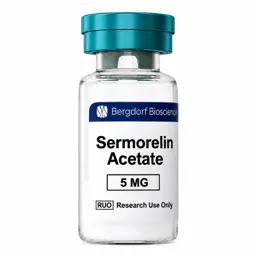
In stock
In stock
View Product
SermorelinView Product
SermorelinTypical starting values for orientation. Each row opens the calculator for that peptide.
| Peptide | Category | Typical dose | Vial sizes | BAC (start) | Available | Calculate |
|---|---|---|---|---|---|---|
| VIP | Neuropeptide Research | - | 10 mg | 2 ml | In stock | Calculate |
| Retatrutide | GLP-1/GIP/GCG | 0,5-12 mg | 2 / 5 / 10 / 15 mg | 2 ml | In stock | Calculate |
| Cagrilintide | Amylin Analogue | - | 5 mg | 2 ml | In stock | Calculate |
| Tirzepatide | GLP-1/GIP | 2,5-15 mg | 10 / 15 / 20 / 30 / 60 / 90 mg | 2 ml | In stock | Calculate |
| GHK-Cu | Copper Peptide | 1-4 mg | 10 / 20 / 50 mg | 5 ml | In stock | Calculate |
| AHK-Cu | Copper Peptide | - | 100 mg | 5 ml | In stock | Calculate |
| BPC-157 | Tissue Repair | 0,2-0,5 mg | 2 / 5 / 10 mg | 2 ml | In stock | Calculate |
| TB-500 | Thymosin Beta-4 | 2-5 mg | 2 / 5 / 10 mg | 2 ml | In stock | Calculate |
| CJC-1295 (no DAC) | GHRH Analog | 100-200 mcg | 2 / 5 / 10 mg | 2 ml | In stock | Calculate |
| Ipamorelin | GHRP | 200-300 mcg | 2 / 5 mg | 2 ml | In stock | Calculate |
| PT-141 | Bremelanotide | - | 2 / 5 / 10 mg | 2 ml | In stock | Calculate |
| MOTS-c | Mitochondrial | 5-10 mg | 5 / 10 mg | 2 ml | In stock | Calculate |
| Selank | Anxiolytic | 150-500 mcg | 2 / 5 / 10 mg | 2 ml | In stock | Calculate |
| SS-31 | Elamipretide | 0,1-1 mg | 5 / 10 mg | 2 ml | In stock | Calculate |
| Glow Stack | Stack | 0,5-2 mg | 70 mg | 3 ml | In stock | Calculate |
| Klow Stack | Stack | 0,5-2 mg | 55 mg | 3 ml | In stock | Calculate |
| Melanotan II | Melanocortin | 100-1000 mcg | 5 / 10 mg | 2 ml | In stock | Calculate |
| Melanotan I | Melanocortin | - | 5 / 10 mg | 2 ml | In stock | Calculate |
| Sermorelin | GHRH Analog | 50-300 mcg | 5 mg | 2 ml | In stock | Calculate |
| Tesamorelin | GHRH Analog | 1-2 mg | 10 / 20 mg | 2 ml | In stock | Calculate |
| Thymosin Alpha-1 | Thymic Peptide | 0,8-3,2 mg | 1.6 / 5 / 10 mg | 1 ml | In stock | Calculate |
| Epithalon | Longevity | 2-10 mg | 10 / 20 / 50 mg | 2 ml | In stock | Calculate |
| KPV | Immune / Barrier | 100-1000 mcg | 5 / 10 mg | 2 ml | In stock | Calculate |
| Semax | Cognitive | 100-1000 mcg | 10 / 30 mg | 2 ml | In stock | Calculate |
| DSIP | Sleep | 50-500 mcg | 10 mg | 2 ml | In stock | Calculate |
| 5-Amino-1MQ | Metabolic | 2,5-10 mg | 10 mg | 2 ml | In stock | Calculate |
| Pinealon | Research peptide | - | 10 mg | 2 ml | In stock | Calculate |
| Survodutide | GLP-1/Glucagon | - | 10 mg | 2 ml | In stock | Calculate |
| Kisspeptin-10 | KISS1R / GPR54 | - | 10 mg | 2 ml | In stock | Calculate |
| NAD+ | Longevity / Cofactor | 100-500 mg | 1000 mg | 10 ml | In stock | Calculate |
| Semaglutide | GLP-1 | 0,25-2,4 mg | 2 / 5 / 10 mg | 2 ml | Calculator only | Calculate |
| AOD-9604 | Fat Loss | 250-500 mcg | 2 / 5 mg | 2 ml | Calculator only | Calculate |
| HGH Fragment 176-191 | Metabolic Fragment | 100-500 mcg | 2 / 5 / 10 mg | 2 ml | Calculator only | Calculate |
| N-Acetyl Semax | Cognitive | 100-1000 mcg | 5 / 10 mg | 2 ml | Calculator only | Calculate |
| Hexarelin | GHRP | 50-200 mcg | 2 / 5 mg | 2 ml | Calculator only | Calculate |
| GHRP-6 | GHRP | 50-300 mcg | 2 / 5 mg | 2 ml | Calculator only | Calculate |
| GHRP-2 | GHRP | 50-250 mcg | 2 / 5 mg | 2 ml | Calculator only | Calculate |
| HGH 191AA | Growth Hormone | 1-5 mg | 10 mg | 1 ml | Calculator only | Calculate |
Values are for orientation in a research context and do not replace professional advice.
Typical starting values for orientation. Each row opens the calculator for that peptide.
| Peptide | Category | Typical dose | Vial sizes | BAC (start) | Available | Calculate |
|---|---|---|---|---|---|---|
| VIP | Neuropeptide Research | - | 10 mg | 2 ml | In stock | Calculate |
| Retatrutide | GLP-1/GIP/GCG | 0,5-12 mg | 2 / 5 / 10 / 15 mg | 2 ml | In stock | Calculate |
| Cagrilintide | Amylin Analogue | - | 5 mg | 2 ml | In stock | Calculate |
| Tirzepatide | GLP-1/GIP | 2,5-15 mg | 10 / 15 / 20 / 30 / 60 / 90 mg | 2 ml | In stock | Calculate |
| GHK-Cu | Copper Peptide | 1-4 mg | 10 / 20 / 50 mg | 5 ml | In stock | Calculate |
| AHK-Cu | Copper Peptide | - | 100 mg | 5 ml | In stock | Calculate |
| BPC-157 | Tissue Repair | 0,2-0,5 mg | 2 / 5 / 10 mg | 2 ml | In stock | Calculate |
| TB-500 | Thymosin Beta-4 | 2-5 mg | 2 / 5 / 10 mg | 2 ml | In stock | Calculate |
| CJC-1295 (no DAC) | GHRH Analog | 100-200 mcg | 2 / 5 / 10 mg | 2 ml | In stock | Calculate |
| Ipamorelin | GHRP | 200-300 mcg | 2 / 5 mg | 2 ml | In stock | Calculate |
| PT-141 | Bremelanotide | - | 2 / 5 / 10 mg | 2 ml | In stock | Calculate |
| MOTS-c | Mitochondrial | 5-10 mg | 5 / 10 mg | 2 ml | In stock | Calculate |
| Selank | Anxiolytic | 150-500 mcg | 2 / 5 / 10 mg | 2 ml | In stock | Calculate |
| SS-31 | Elamipretide | 0,1-1 mg | 5 / 10 mg | 2 ml | In stock | Calculate |
| Glow Stack | Stack | 0,5-2 mg | 70 mg | 3 ml | In stock | Calculate |
| Klow Stack | Stack | 0,5-2 mg | 55 mg | 3 ml | In stock | Calculate |
| Melanotan II | Melanocortin | 100-1000 mcg | 5 / 10 mg | 2 ml | In stock | Calculate |
| Melanotan I | Melanocortin | - | 5 / 10 mg | 2 ml | In stock | Calculate |
| Sermorelin | GHRH Analog | 50-300 mcg | 5 mg | 2 ml | In stock | Calculate |
| Tesamorelin | GHRH Analog | 1-2 mg | 10 / 20 mg | 2 ml | In stock | Calculate |
| Thymosin Alpha-1 | Thymic Peptide | 0,8-3,2 mg | 1.6 / 5 / 10 mg | 1 ml | In stock | Calculate |
| Epithalon | Longevity | 2-10 mg | 10 / 20 / 50 mg | 2 ml | In stock | Calculate |
| KPV | Immune / Barrier | 100-1000 mcg | 5 / 10 mg | 2 ml | In stock | Calculate |
| Semax | Cognitive | 100-1000 mcg | 10 / 30 mg | 2 ml | In stock | Calculate |
| DSIP | Sleep | 50-500 mcg | 10 mg | 2 ml | In stock | Calculate |
| 5-Amino-1MQ | Metabolic | 2,5-10 mg | 10 mg | 2 ml | In stock | Calculate |
| Pinealon | Research peptide | - | 10 mg | 2 ml | In stock | Calculate |
| Survodutide | GLP-1/Glucagon | - | 10 mg | 2 ml | In stock | Calculate |
| Kisspeptin-10 | KISS1R / GPR54 | - | 10 mg | 2 ml | In stock | Calculate |
| NAD+ | Longevity / Cofactor | 100-500 mg | 1000 mg | 10 ml | In stock | Calculate |
| Semaglutide | GLP-1 | 0,25-2,4 mg | 2 / 5 / 10 mg | 2 ml | Calculator only | Calculate |
| AOD-9604 | Fat Loss | 250-500 mcg | 2 / 5 mg | 2 ml | Calculator only | Calculate |
| HGH Fragment 176-191 | Metabolic Fragment | 100-500 mcg | 2 / 5 / 10 mg | 2 ml | Calculator only | Calculate |
| N-Acetyl Semax | Cognitive | 100-1000 mcg | 5 / 10 mg | 2 ml | Calculator only | Calculate |
| Hexarelin | GHRP | 50-200 mcg | 2 / 5 mg | 2 ml | Calculator only | Calculate |
| GHRP-6 | GHRP | 50-300 mcg | 2 / 5 mg | 2 ml | Calculator only | Calculate |
| GHRP-2 | GHRP | 50-250 mcg | 2 / 5 mg | 2 ml | Calculator only | Calculate |
| HGH 191AA | Growth Hormone | 1-5 mg | 10 mg | 1 ml | Calculator only | Calculate |
Values are for orientation in a research context and do not replace professional advice.
Choose a peptide to open its dedicated calculator page with pre-filled values.
Choose a peptide to open its dedicated calculator page with pre-filled values.