Research peptide · Copper tripeptide-1
GHK-Cu
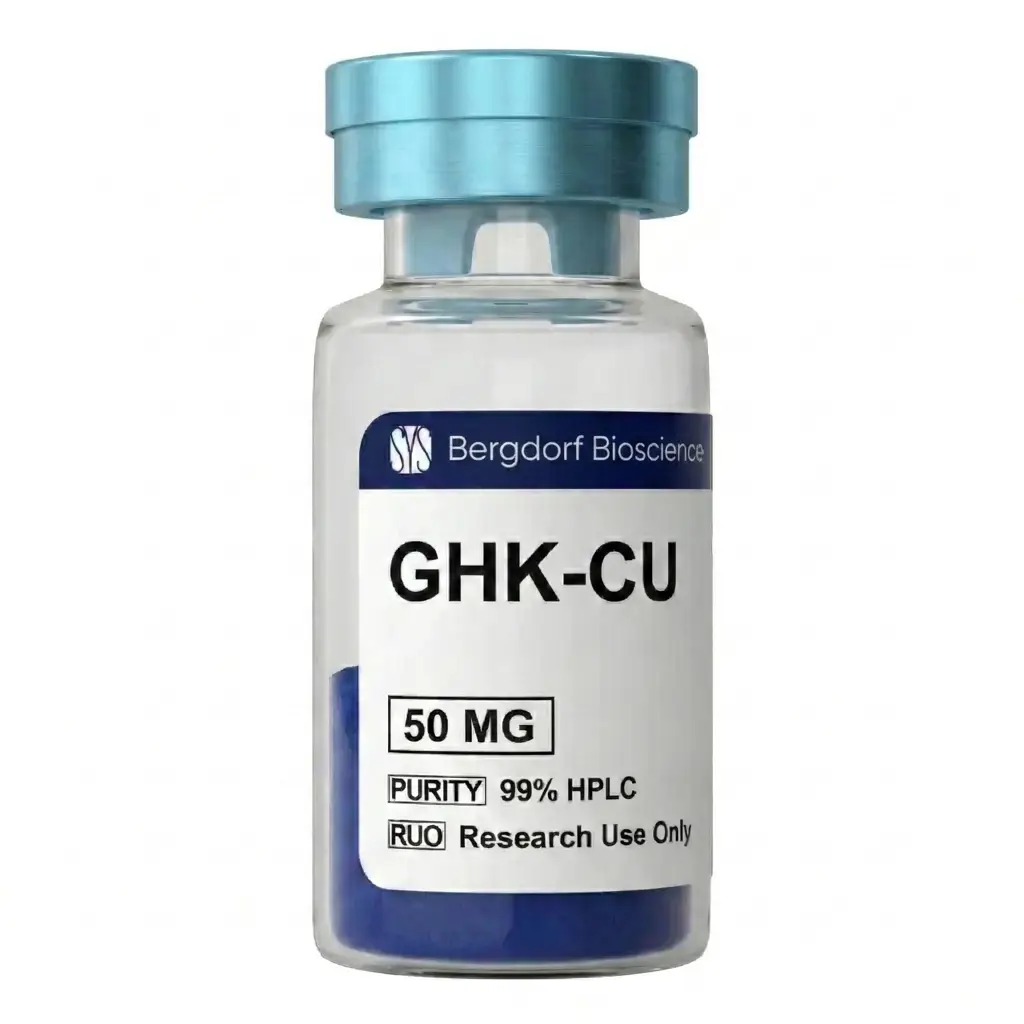
GHK-Cu copper peptide, available in 50mg and 100mg vials. Investigated in collagen synthesis and skin research. ≥99% HPLC, lyophilized, CoA. Fast EU shipping.

Research peptide · Copper tripeptide-1
GHK-Cu copper peptide, available in 50mg and 100mg vials. Investigated in collagen synthesis and skin research. ≥99% HPLC, lyophilized, CoA. Fast EU shipping.
Research peptide · Copper tripeptide-1
GHK-Cu copper peptide, available in 50mg and 100mg vials. Investigated in collagen synthesis and skin research. ≥99% HPLC, lyophilized, CoA. Fast EU shipping.
No reviews yet. Be the first to share your experience.
No reviews yet. Be the first to share your experience.
/ vial
Order today → Delivery Mon, Sep 28 – Tue, Oct 06 to United States
Payment Methods






/ vial
Order today → Delivery Mon, Sep 28 – Tue, Oct 06 to United States
Payment Methods
Independently verified quality
3,000+
satisfied researchers
99.43%
Avg. purity 2026
4.8 ★
ProvenExpert
99.43%
Avg. purity 2026
4.8 ★
ProvenExpert
3,000+ satisfied researchers
GHK-Cu 50mg - 1 Pack vial + 2 ml BAC water → concentration:
Per unit (10 IU)
2.50 mg
Scientific references
Research details
GHK-Cu (glycyl-L-histidyl-L-lysine copper complex) is a naturally occurring tripeptide-copper chelate first isolated from human plasma by Dr. Loren Pickart in 1973. This small molecule, with a molecular weight of approximately 403.9 Da for the free peptide (or ~467 Da as the copper complex), is found at concentrations of approximately 200 ng/mL in young adults, declining significantly with age. Research spanning over five decades has revealed GHK-Cu's remarkable ability to modulate gene expression related to tissue remodeling, with studies identifying over 4,000 genes influenced by this peptide. Its primary mechanisms involve copper(II) ion delivery to tissues, activation of tissue remodeling pathways, promotion of collagen and elastin synthesis, and upregulation of decorin and glycosaminoglycan production. This makes GHK-Cu one of the most extensively studied peptides in regenerative and dermatological research.
The scientific significance of GHK-Cu is supported by decades of peer-reviewed research. Dr. Pickart's pioneering work, along with subsequent studies published in journals including the Journal of Biological Chemistry and Dermatologic Surgery, has established GHK-Cu as a peptide with broad regenerative potential:
At Bergdorf Bioscience, GHK-Cu is supplied as a high-purity, lyophilized (freeze-dried) powder. This manufacturing process ensures maximum chemical stability and a long shelf life when stored properly.
When you buy GHK-Cu for your laboratory, you need absolute reliability. GHK-Cu is available at Bergdorf Bioscience in the following vial sizes:
Each vial is filled under the strictest laboratory conditions and individually sealed. All batches are analyzed using High-Performance Liquid Chromatography (HPLC) and feature a guaranteed purity of at least 99%. Our quality assurance also includes detailed mass spectrometry to confirm the exact molecular weight, as well as rigorous endotoxin testing.
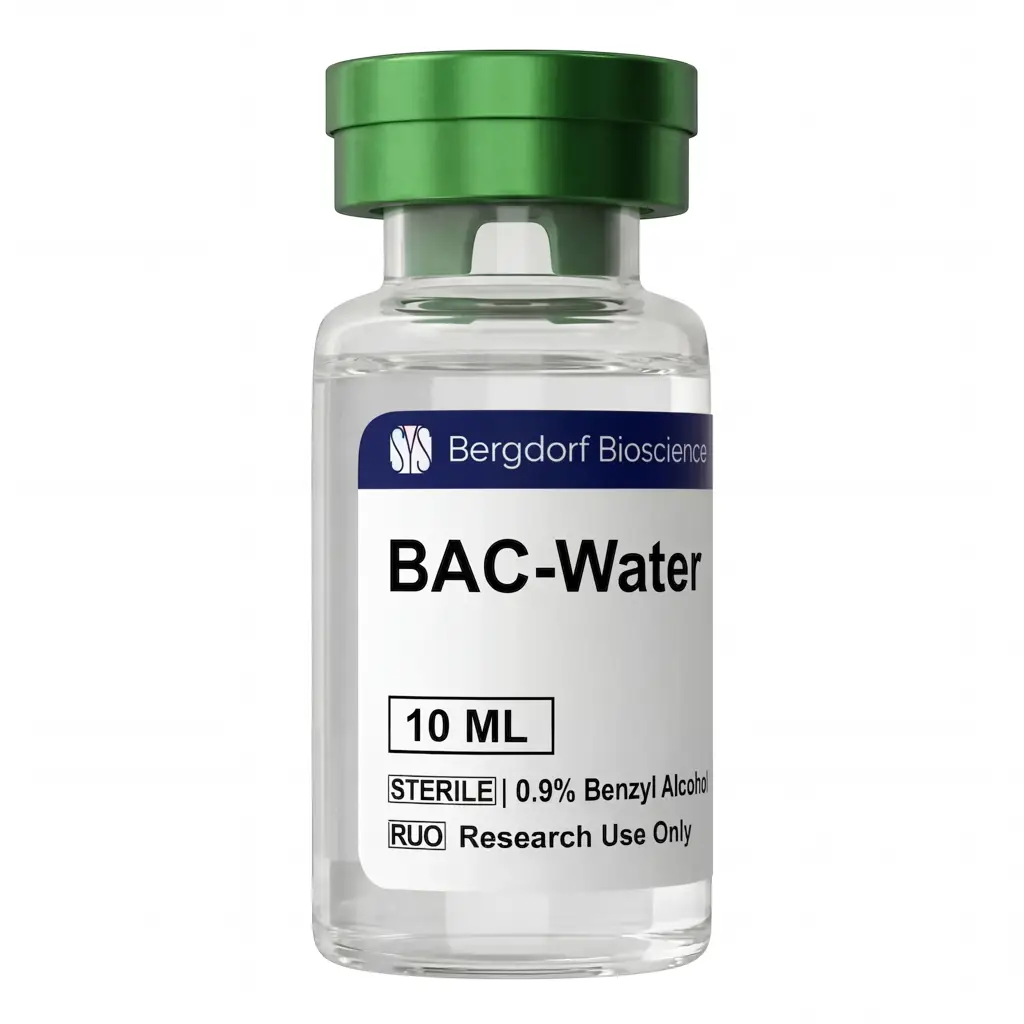
We offer reliable worldwide shipping for all our research peptides. Thanks to professional lyophilization, the GHK-Cu powder is highly temperature-stable in its unmixed state. The molecular integrity and high biological activity of the peptide are fully preserved at normal ambient temperatures throughout global transit. However, after reconstitution (mixing with bacteriostatic water), we highly recommend proper storage in a refrigerator.
Binds copper(II) ions; activates tissue remodeling genes; promotes collagen, elastin, and glycosaminoglycan synthesis.
Advanced protocol
1-2 mg daily, subcutaneously or topically (cream/serum)
Note: The dosages listed correspond to typical ranges from published research literature. They do not replace advice from a qualified researcher or physician.
Every batch is analyzed by an independent laboratory via HPLC before shipment. We document purity (avg. 99.43% in 2026), mass spectrometry identity, and sterility. Production follows GMP standards in ISO-certified laboratories.
GHK-Cu (copper peptide) is a naturally occurring tripeptide bound to a copper ion that supports collagen synthesis, wound healing, and skin regeneration.
Independently verified quality
3,000+
satisfied researchers
99.43%
Avg. purity 2026
4.8 ★
ProvenExpert
99.43%
Avg. purity 2026
4.8 ★
ProvenExpert
3,000+ satisfied researchers
GHK-Cu 50mg - 1 Pack vial + 2 ml BAC water → concentration:
Per unit (10 IU)
2.50 mg
Scientific references
Research details
GHK-Cu (glycyl-L-histidyl-L-lysine copper complex) is a naturally occurring tripeptide-copper chelate first isolated from human plasma by Dr. Loren Pickart in 1973. This small molecule, with a molecular weight of approximately 403.9 Da for the free peptide (or ~467 Da as the copper complex), is found at concentrations of approximately 200 ng/mL in young adults, declining significantly with age. Research spanning over five decades has revealed GHK-Cu's remarkable ability to modulate gene expression related to tissue remodeling, with studies identifying over 4,000 genes influenced by this peptide. Its primary mechanisms involve copper(II) ion delivery to tissues, activation of tissue remodeling pathways, promotion of collagen and elastin synthesis, and upregulation of decorin and glycosaminoglycan production. This makes GHK-Cu one of the most extensively studied peptides in regenerative and dermatological research.
The scientific significance of GHK-Cu is supported by decades of peer-reviewed research. Dr. Pickart's pioneering work, along with subsequent studies published in journals including the Journal of Biological Chemistry and Dermatologic Surgery, has established GHK-Cu as a peptide with broad regenerative potential:
At Bergdorf Bioscience, GHK-Cu is supplied as a high-purity, lyophilized (freeze-dried) powder. This manufacturing process ensures maximum chemical stability and a long shelf life when stored properly.
When you buy GHK-Cu for your laboratory, you need absolute reliability. GHK-Cu is available at Bergdorf Bioscience in the following vial sizes:
Each vial is filled under the strictest laboratory conditions and individually sealed. All batches are analyzed using High-Performance Liquid Chromatography (HPLC) and feature a guaranteed purity of at least 99%. Our quality assurance also includes detailed mass spectrometry to confirm the exact molecular weight, as well as rigorous endotoxin testing.
We offer reliable worldwide shipping for all our research peptides. Thanks to professional lyophilization, the GHK-Cu powder is highly temperature-stable in its unmixed state. The molecular integrity and high biological activity of the peptide are fully preserved at normal ambient temperatures throughout global transit. However, after reconstitution (mixing with bacteriostatic water), we highly recommend proper storage in a refrigerator.
Binds copper(II) ions; activates tissue remodeling genes; promotes collagen, elastin, and glycosaminoglycan synthesis.
Advanced protocol
1-2 mg daily, subcutaneously or topically (cream/serum)
Note: The dosages listed correspond to typical ranges from published research literature. They do not replace advice from a qualified researcher or physician.
Every batch is analyzed by an independent laboratory via HPLC before shipment. We document purity (avg. 99.43% in 2026), mass spectrometry identity, and sterility. Production follows GMP standards in ISO-certified laboratories.
GHK-Cu (copper peptide) is a naturally occurring tripeptide bound to a copper ion that supports collagen synthesis, wound healing, and skin regeneration.

Better together
Glow Stack (GHK-Cu 50mg, TB-500 10mg, BPC-157 10mg)The complete stack, often bought together
Better together
Glow Stack (GHK-Cu 50mg, TB-500 10mg, BPC-157 10mg)The complete stack, often bought together

GHK-Cu guide: mechanism of action, dosage, skin and hair research. 3,000+ words with PubMed references.
Kupferpeptide Haut in der Forschung: GHK-Cu und AHK-Cu zu Kollagen, Elastin und Haarfollikeln. Studienlage neutral erklärt.
Longevity-Peptide in der Forschung: NAD+, MOTS-c, Epithalon und GHK-Cu, präklinisch gerahmt, ohne Anti-Aging-Versprechen.
GHK-Cu guide: mechanism of action, dosage, skin and hair research. 3,000+ words with PubMed references.
Kupferpeptide Haut in der Forschung: GHK-Cu und AHK-Cu zu Kollagen, Elastin und Haarfollikeln. Studienlage neutral erklärt.
Longevity-Peptide in der Forschung: NAD+, MOTS-c, Epithalon und GHK-Cu, präklinisch gerahmt, ohne Anti-Aging-Versprechen.