
Arvuta iga peptiidi jaoks täpsed lahuse mahud, insuliiniühikud ja annuste arv viaali kohta.
Viaal, vesi ja annus on teada
Ühikud mõõdavad mahtu, mitte toimeainet. 100 IU = 1,00 ml. Mitu mg selles on, sõltub segust. Kalkulaator on selle sinu eest välja arvutanud.
Peaaegu kõik insuliinisüstlad on U-100. Vali U-40 ainult siis, kui süstal on tähistatud U-40.
Lingitud allikad viivad PubMedisse ja avanevad uuel vahelehel.
Epithalon, also spelled Epitalon or Epithalone, is a synthetic tetrapeptide composed of four amino acids in the sequence alanine-glutamic acid-aspartic acid-glycine (Ala-Glu-Asp-Gly). It was developed as a synthetic analog of epithalamin, a polypeptide extract derived from the pineal gland. Research into this compound is largely associated with the Russian gerontologist Vladimir Khavinson and his team at the St. Petersburg Institute of Bioregulation and Gerontology, who from the 1980s and 1990s onward studied the role of pineal-derived peptides in the aging process.
The pineal gland is considered a central regulator of circadian rhythm and governs the sleep-wake cycle through the secretion of melatonin. With advancing age, pineal gland activity declines, which the research literature links to deterioration of circadian regulation, a reduction in nocturnal melatonin peaks, and a general decline in neuroendocrine function. Epithalon was conceived in this context as a short peptide intended to interact specifically with pineal-associated signaling pathways.
Epithalon is not a hormone and not a steroid. It does not bind to classical hormone receptors and does not suppress any endocrine axis. In preclinical models and a limited number of Russian studies, it has been investigated primarily in connection with telomerase activity, gene expression, and longevity. The available evidence comes predominantly from animal models and smaller investigations conducted by a single research group. Independent, large-scale human clinical trials are largely absent. For this reason, Epithalon is intended strictly for research purposes and is not offered as a medicine.
The mechanisms of action described for Epithalon in the research literature center on three closely interrelated areas: telomerase activation, pineal gland regulation, and effects on gene expression. These mechanisms are discussed in the context of aging research and should not be understood as established therapeutic effects.
Epithalon is typically administered in cycles in research rather than continuously. A typical protocol involves daily dosing over a limited period followed by an extended break. A slow titration is generally not required, since Epithalon does not exhibit a pronounced dose-dependent acute profile.
A common vial size is 10 mg. Adding 2 mL of bacteriostatic water gives a concentration of 5 mg/mL (5,000 mcg/mL).
At 5 mg once daily, a 10 mg vial provides two days of dosing. For longer cycles, a larger vial (20 mg or 50 mg) or a higher reconstitution volume is therefore advisable. Use the Epithalon calculator above to compute exact volumes for any vial size, reconstitution volume, and target dose.
Epithalon is generally administered subcutaneously into the abdominal fat tissue in research settings, since it aims for a systemic effect and does not require localized application. Subcutaneous administration is easy to perform and well tolerated. Some protocols use intramuscular injection as an alternative. Because of the short half-life, the daily dose is usually given as a single injection, occasionally split into two smaller doses.
Epithalon is supplied as a lyophilized (freeze-dried) powder in sealed vials. It must be reconstituted with bacteriostatic water (BAC water) before use. Do not use sterile water for injection for multi-dose vials. BAC water contains 0.9% benzyl alcohol, which inhibits microbial growth and extends the usable window of the reconstituted solution.
If the solution appears cloudy, discolored, or contains visible particulate matter, discard the vial and do not inject it.
Epithalon shows a favorable tolerability profile in the available research literature. The animal studies and smaller investigations conducted to date have not described serious toxic effects. However, the data is limited and originates predominantly from a single research group. Large-scale, independent human safety studies are absent, so all statements remain subject to the caveat of incomplete evidence.
No serious adverse events have been reported for Epithalon in the published literature at the doses commonly used in research. Given the absence of large-scale human clinical trials, caution is warranted, and consultation with a qualified healthcare professional is strongly recommended.
Epithalon is frequently studied as a standalone compound in research, because its central research focus, telomerase activation and pineal regulation, does not readily combine with other mechanisms. A typical research approach uses a time-limited Epithalon cycle without additional peptides, so that observed effects can be cleanly attributed.
Because Epithalon is discussed in the context of melatonin regulation and the sleep-wake cycle, it is occasionally grouped in research alongside DSIP (Delta Sleep-Inducing Peptide). Both compounds are associated with sleep architecture and circadian regulation, but they act through different mechanisms.
In the broader field of longevity research, Epithalon is often considered together with mitochondrial and cytoprotective peptides such as MOTS-c and SS-31. While Epithalon focuses on telomeres and the pineal gland, these peptides address mitochondrial function and protection against oxidative stress. For mood- and stress-related research, Selank is also discussed within the same peptide class. Each of these compounds should be reconstituted, dosed, and monitored separately.
Epithalon, Epitalon, and Epithalone all refer to the same compound. The differing spellings arose from transliteration of the originally Russian name. It is the same tetrapeptide with the sequence Ala-Glu-Asp-Gly. Differences in spelling do not indicate a different substance or a different quality.
In research protocols, Epithalon is usually used cyclically. A common approach involves daily dosing of approximately 5 mg over a period of 10 to 20 days, followed by a multi-month break. One to two cycles per year are frequently described. Continuous daily use is uncommon in the literature.
Epithalon is linked in research to the regulation of the pineal gland and melatonin secretion. In preclinical models, a restoration of nocturnal melatonin peaks has been described. Some users report more vivid dreams or changes in sleep patterns at the start of a cycle. However, robust clinical data on sleep quality in humans is limited.
Epithalon is a peptide and is largely broken down by digestive enzymes in the gastrointestinal tract. Oral bioavailability is therefore low. In research, Epithalon is administered almost exclusively subcutaneously or intramuscularly. Oral or intranasal formulations are not the standard route and are poorly characterized in terms of efficacy.
Epithalon is not used for immediately noticeable acute effects. The mechanisms discussed in research, such as telomerase activation and pineal-related effects, relate to slow cellular and neuroendocrine processes. Changes in sleep patterns may occur within the first days of a cycle, while other described effects appear only over longer time frames and in preclinical models.
No. Epithalon is a short peptide and not a hormone. It does not bind to classical hormone receptors and does not suppress any endocrine axis. No post-cycle therapy (PCT) is required. Through the pineal axis, it may indirectly influence neuroendocrine markers, but its mode of action differs fundamentally from that of hormones or steroids.
The cyclical approach is derived directly from the original research protocols, which combined short, intensive administration phases with long breaks. The rationale rests on the assumption that the described effects on telomeres and the pineal gland are triggered through a limited impulse and do not require continuous use. Cyclical administration also reduces cumulative exposure given the limited long-term evidence.
Epithalon is not currently available in the BergdorfBio product range. This page serves as a research and dosing reference. For available research peptides in related categories, it is worth looking at MOTS-c and Selank.
Medical Disclaimer: The information on this page is provided for educational and research purposes only. Epithalon is not an approved drug or medical treatment and is provided strictly for research use. Nothing on this page constitutes medical advice, diagnosis, or a recommendation to use any specific compound. Always consult a qualified healthcare professional before beginning any peptide protocol. BergdorfBio assumes no liability for the use or misuse of the information presented here.
Pulbrist valmis süstlani viie sammuga. Ülalolev kalkulaator annab kogused automaatselt.
Lase viaalil ja veel jõuda toatemperatuurini. Pühi mõlemad kummikorgid alkoholilapiga.
Tõmba kalkulaatori soovitatud BAC-vee kogus suurema süstlaga.
Lase veel voolata mööda peptiidiviaali siseseina, ära pihusta seda otse pulbrile.
Keeruta viaali õrnalt, ära raputa. Pulber lahustub selgeks 1-2 minuti jooksul.
Tõmba insuliinisüstlaga täpselt arvutatud kriipsuni. Valmis.
Tavalised algväärtused orienteerumiseks. Iga rida avab selle peptiidi kalkulaatori.
| Peptiid | Kategooria | Tavaline annus | Viaalisuurused | BAC (algus) | Saadaval | Arvuta |
|---|---|---|---|---|---|---|
| VIP | Neuropeptiidide uurimine | - | 10 mg | 2 ml | Ainult kalkulaator | Arvuta |
| Retatrutide | GLP-1/GIP/GCG | 0,5-12 mg | 2 / 5 / 10 / 15 mg | 2 ml | Ainult kalkulaator | Arvuta |
| Cagrilintide | Amüliini analoog | - | 5 mg | 2 ml | Ainult kalkulaator | Arvuta |
| Semaglutide | GLP-1 | 0,25-2,4 mg | 2 / 5 / 10 mg | 2 ml | Ainult kalkulaator | Arvuta |
| Tirzepatide | GLP-1/GIP | 2,5-15 mg | 10 / 15 / 20 / 30 / 60 / 90 mg | 2 ml | Ainult kalkulaator | Arvuta |
| GHK-Cu | Vaskepeptiid | 1-4 mg | 10 / 20 / 50 mg | 5 ml | Ainult kalkulaator | Arvuta |
| AHK-Cu | Vaskepeptiid | - | 100 mg | 5 ml | Ainult kalkulaator | Arvuta |
| BPC-157 | Kudede taastamine | 0,2-0,5 mg | 2 / 5 / 10 mg | 2 ml | Ainult kalkulaator | Arvuta |
| TB-500 | Thymosin Beta-4 | 2-5 mg | 2 / 5 / 10 mg | 2 ml | Ainult kalkulaator | Arvuta |
| CJC-1295 (ilma DAC-ta) | GHRH analoog | 100-200 mcg | 2 / 5 / 10 mg | 2 ml | Ainult kalkulaator | Arvuta |
| Ipamorelin | GHRP | 200-300 mcg | 2 / 5 mg | 2 ml | Ainult kalkulaator | Arvuta |
| AOD-9604 | Rasvade ainevahetus | 250-500 mcg | 2 / 5 mg | 2 ml | Ainult kalkulaator | Arvuta |
| PT-141 | Bremelanotide | - | 2 / 5 / 10 mg | 2 ml | Ainult kalkulaator | Arvuta |
| MOTS-c | Mitokondriaalne | 5-10 mg | 5 / 10 mg | 2 ml | Ainult kalkulaator | Arvuta |
| Selank | Anksiolüütiline | 150-500 mcg | 2 / 5 / 10 mg | 2 ml | Ainult kalkulaator | Arvuta |
| SS-31 | Elamipretide | 0,1-1 mg | 5 / 10 mg | 2 ml | Ainult kalkulaator | Arvuta |
| Glow Stack | Stack | 0,5-2 mg | 70 mg | 3 ml | Ainult kalkulaator | Arvuta |
| Klow Stack | Stack | 0,5-2 mg | 55 mg | 3 ml | Ainult kalkulaator | Arvuta |
| Melanotan II | Melanokortiin | 100-1000 mcg | 5 / 10 mg | 2 ml | Ainult kalkulaator | Arvuta |
| Melanotan I | Melanokortiin | - | 5 / 10 mg | 2 ml | Ainult kalkulaator | Arvuta |
| Sermorelin | GHRH analoog | 50-300 mcg | 5 mg | 2 ml | Ainult kalkulaator | Arvuta |
| Tesamorelin | GHRH analoog | 1-2 mg | 10 / 20 mg | 2 ml | Ainult kalkulaator | Arvuta |
| Thymosin Alpha-1 | Tüümusepetiid | 0,8-3,2 mg | 1.6 / 5 / 10 mg | 1 ml | Ainult kalkulaator | Arvuta |
| Epithalon | Pikaajalisus | 2-10 mg | 10 / 20 / 50 mg | 2 ml | Ainult kalkulaator | Arvuta |
| KPV | Immuunsüsteem / barjäär | 100-1000 mcg | 5 / 10 mg | 2 ml | Ainult kalkulaator | Arvuta |
| HGH Fragment 176-191 | Metaboolne fragment | 100-500 mcg | 2 / 5 / 10 mg | 2 ml | Ainult kalkulaator | Arvuta |
| Semax | Kognitiivne | 100-1000 mcg | 10 / 30 mg | 2 ml | Ainult kalkulaator | Arvuta |
| N-Acetyl Semax | Kognitiivne | 100-1000 mcg | 5 / 10 mg | 2 ml | Ainult kalkulaator | Arvuta |
| Hexarelin | GHRP | 50-200 mcg | 2 / 5 mg | 2 ml | Ainult kalkulaator | Arvuta |
| GHRP-6 | GHRP | 50-300 mcg | 2 / 5 mg | 2 ml | Ainult kalkulaator | Arvuta |
| GHRP-2 | GHRP | 50-250 mcg | 2 / 5 mg | 2 ml | Ainult kalkulaator | Arvuta |
| DSIP | Uni | 50-500 mcg | 10 mg | 2 ml | Ainult kalkulaator | Arvuta |
| 5-Amino-1MQ | Metaboolne | 2,5-10 mg | 10 mg | 2 ml | Ainult kalkulaator | Arvuta |
| Pinealon | Uurimispeptiid | - | 10 mg | 2 ml | Ainult kalkulaator | Arvuta |
| Survodutide | GLP-1/glükagoon | - | 10 mg | 2 ml | Ainult kalkulaator | Arvuta |
| Kisspeptin-10 | KISS1R / GPR54 | - | 10 mg | 2 ml | Ainult kalkulaator | Arvuta |
| HGH 191AA | Kasvuhormoon | 1-5 mg | 10 mg | 1 ml | Ainult kalkulaator | Arvuta |
| NAD+ | Pikaajalisus / kofaktor | 100-500 mg | 1000 mg | 10 ml | Ainult kalkulaator | Arvuta |
Väärtused on mõeldud orienteerumiseks uurimiskontekstis ega asenda professionaalset nõuannet.
Kontsentratsiooni ja süstemahu õige arvutamine tundub tühine, kuid on kõige sagedasem veaallikas. Isegi 10 % suurune arvutusviga lahuse valmistamisel tähendab, et saad kas liiga vähe toimeainet või manustad kogemata üleannuse.
Lüofiliseeritud peptiide müüakse milligrammides ja need lahustatakse bakteriostaatilises vees (BAC-vesi). Peptiidi ja vee suhe määrab kontsentratsiooni ja sellest tuleneb, mitu ühikut insuliinisüstlale tõmbad. Insuliinisüstlaid gradueeritakse ühikutes, mitte milligrammides. Kalkulaator teeb selle ümberarvutuse ära, sealhulgas mõistlikkuse kontrolli kõige ohtlikuma vea vastu: mg ja mcg segiajamine.
Milligramm (mg) on ühik, milles lüofiliseeritud peptiide müüakse, näiteks „5 mg BPC-157". Mikrogramm (mcg) mõõdab üksikannust, näiteks „250 mcg süsti kohta". 1 mg = 1000 mcg. Kalkulaator teeb ümberarvutuse automaatselt ja hoiatab, kui sisestus tundub segiaetud olevat.
U-100 tähendab, et süstal on kalibreeritud 100 ühikule milliliitri kohta. 100 IU = 1 ml, seega 10 IU = 0,10 ml, sõltumata sellest, mis süstlas on. IU arvutus põhineb täpselt sellel seosel.
Palju peptiidi ja vähe vett teeb lahuse väga kontsentreerituks, mistõttu maht annuse kohta on tilluke ja raskesti loetav. Kasuta segamise abivahendit: see leiab veekoguse, millega tekib puhas ja hästi loetav kriips.
Külmkapis 2-8 °C juures tavaliselt 21-30 päeva. Märgista viaalile lahuse valmistamise kuupäev. Hägused lahused või osakesed ei kõlba.
Segud sisaldavad ühes viaalis mitut toimeainet. Vali peptiidiks lihtsalt segu: kalkulaator näitab lisaks, kui palju igat komponenti sinu süstis on. Mitme eraldi viaali kombinatsiooni jaoks kasuta Stack Builderit.
Ei. Sinu viimased seaded salvestatakse lokaalselt brauserisse ja taastatakse järgmisel külastusel. Arvutusi saad ka ajaloost tagasi kutsuda, protokollina salvestada või lingina jagada.
Vali peptiid, et avada selle kalkulaatorileht eeltäidetud väärtustega.
Vaata toodet
EpithalonVaata toodet
Epithalon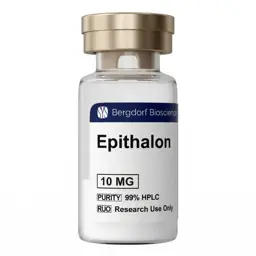
Laos
Laos
Tavalised algväärtused orienteerumiseks. Iga rida avab selle peptiidi kalkulaatori.
| Peptiid | Kategooria | Tavaline annus | Viaalisuurused | BAC (algus) | Saadaval | Arvuta |
|---|---|---|---|---|---|---|
| VIP | Neuropeptiidide uurimine | - | 10 mg | 2 ml | Laos | Arvuta |
| Retatrutide | GLP-1/GIP/GCG | 0,5-12 mg | 2 / 5 / 10 / 15 mg | 2 ml | Laos | Arvuta |
| Cagrilintide | Amüliini analoog | - | 5 mg | 2 ml | Laos | Arvuta |
| Tirzepatide | GLP-1/GIP | 2,5-15 mg | 10 / 15 / 20 / 30 / 60 / 90 mg | 2 ml | Laos | Arvuta |
| GHK-Cu | Vaskepeptiid | 1-4 mg | 10 / 20 / 50 mg | 5 ml | Laos | Arvuta |
| AHK-Cu | Vaskepeptiid | - | 100 mg | 5 ml | Laos | Arvuta |
| BPC-157 | Kudede taastamine | 0,2-0,5 mg | 2 / 5 / 10 mg | 2 ml | Laos | Arvuta |
| TB-500 | Thymosin Beta-4 | 2-5 mg | 2 / 5 / 10 mg | 2 ml | Laos | Arvuta |
| CJC-1295 (ilma DAC-ta) | GHRH analoog | 100-200 mcg | 2 / 5 / 10 mg | 2 ml | Laos | Arvuta |
| Ipamorelin | GHRP | 200-300 mcg | 2 / 5 mg | 2 ml | Laos | Arvuta |
| PT-141 | Bremelanotide | - | 2 / 5 / 10 mg | 2 ml | Laos | Arvuta |
| MOTS-c | Mitokondriaalne | 5-10 mg | 5 / 10 mg | 2 ml | Laos | Arvuta |
| Selank | Anksiolüütiline | 150-500 mcg | 2 / 5 / 10 mg | 2 ml | Laos | Arvuta |
| SS-31 | Elamipretide | 0,1-1 mg | 5 / 10 mg | 2 ml | Laos | Arvuta |
| Glow Stack | Stack | 0,5-2 mg | 70 mg | 3 ml | Laos | Arvuta |
| Klow Stack | Stack | 0,5-2 mg | 55 mg | 3 ml | Laos | Arvuta |
| Melanotan II | Melanokortiin | 100-1000 mcg | 5 / 10 mg | 2 ml | Laos | Arvuta |
| Melanotan I | Melanokortiin | - | 5 / 10 mg | 2 ml | Laos | Arvuta |
| Sermorelin | GHRH analoog | 50-300 mcg | 5 mg | 2 ml | Laos | Arvuta |
| Tesamorelin | GHRH analoog | 1-2 mg | 10 / 20 mg | 2 ml | Laos | Arvuta |
| Thymosin Alpha-1 | Tüümusepetiid | 0,8-3,2 mg | 1.6 / 5 / 10 mg | 1 ml | Laos | Arvuta |
| Epithalon | Pikaajalisus | 2-10 mg | 10 / 20 / 50 mg | 2 ml | Laos | Arvuta |
| KPV | Immuunsüsteem / barjäär | 100-1000 mcg | 5 / 10 mg | 2 ml | Laos | Arvuta |
| Semax | Kognitiivne | 100-1000 mcg | 10 / 30 mg | 2 ml | Laos | Arvuta |
| DSIP | Uni | 50-500 mcg | 10 mg | 2 ml | Laos | Arvuta |
| 5-Amino-1MQ | Metaboolne | 2,5-10 mg | 10 mg | 2 ml | Laos | Arvuta |
| Pinealon | Uurimispeptiid | - | 10 mg | 2 ml | Laos | Arvuta |
| Survodutide | GLP-1/glükagoon | - | 10 mg | 2 ml | Laos | Arvuta |
| Kisspeptin-10 | KISS1R / GPR54 | - | 10 mg | 2 ml | Laos | Arvuta |
| NAD+ | Pikaajalisus / kofaktor | 100-500 mg | 1000 mg | 10 ml | Laos | Arvuta |
| Semaglutide | GLP-1 | 0,25-2,4 mg | 2 / 5 / 10 mg | 2 ml | Ainult kalkulaator | Arvuta |
| AOD-9604 | Rasvade ainevahetus | 250-500 mcg | 2 / 5 mg | 2 ml | Ainult kalkulaator | Arvuta |
| HGH Fragment 176-191 | Metaboolne fragment | 100-500 mcg | 2 / 5 / 10 mg | 2 ml | Ainult kalkulaator | Arvuta |
| N-Acetyl Semax | Kognitiivne | 100-1000 mcg | 5 / 10 mg | 2 ml | Ainult kalkulaator | Arvuta |
| Hexarelin | GHRP | 50-200 mcg | 2 / 5 mg | 2 ml | Ainult kalkulaator | Arvuta |
| GHRP-6 | GHRP | 50-300 mcg | 2 / 5 mg | 2 ml | Ainult kalkulaator | Arvuta |
| GHRP-2 | GHRP | 50-250 mcg | 2 / 5 mg | 2 ml | Ainult kalkulaator | Arvuta |
| HGH 191AA | Kasvuhormoon | 1-5 mg | 10 mg | 1 ml | Ainult kalkulaator | Arvuta |
Väärtused on mõeldud orienteerumiseks uurimiskontekstis ega asenda professionaalset nõuannet.
Vali peptiid, et avada selle kalkulaatorileht eeltäidetud väärtustega.
Vali peptiid, et avada selle kalkulaatorileht eeltäidetud väärtustega.