
Izračunajte natančne volumne rekonstitucije, inzulinske enote in odmerke na stekleničko za vsak peptid.
Steklenička, voda in odmerek so znani
Enote merijo volumen, ne učinkovino. 4 IU = 0,04 ml. Koliko mg je v tem, je odvisno od mešanice. Kalkulator je to izračunal namesto Vas.
Skoraj vse inzulinske brizge so U-100. U-40 izberite le, če je na brizgi oznaka U-40.
DSIP (Delta Sleep-Inducing Peptide) is an endogenous neuropeptide composed of nine amino acids, with the sequence Trp-Ala-Gly-Gly-Asp-Ala-Ser-Gly-Glu. It was discovered in 1977 by the research group of Marcel Monnier and Guido Schoenenberger at the University of Basel. The team isolated the compound from the cerebral venous blood of rabbits in which a deep-sleep state had been induced by electrical stimulation of the thalamus. The name reflects the original observation that the substance could promote delta-wave-dominant sleep — that is, slow-wave deep sleep — in experimental animals.
DSIP occurs naturally in several tissues, including the brain, plasma, cerebrospinal fluid, and the digestive tract. Notably, it is able to cross the blood-brain barrier, which has made it a subject of ongoing neuroendocrine research. Despite its name, DSIP is not a classical sleep medication in the pharmacological sense. The scientific literature tends to describe it as a modulatory peptide that nudges homeostatic processes rather than forcing sedation the way a benzodiazepine or a Z-drug hypnotic does. For this reason, DSIP is most often studied in the context of sleep architecture, stress regulation, and neuroendocrine balance rather than as a pure sleep-onset agent.
The experimental evidence base for DSIP is heterogeneous. Some early studies from the 1980s and 1990s reported effects on sleep patterns, pain perception, stress hormones, and circadian rhythm, while other investigations failed to find consistent results. To date, no approved DSIP drug exists for a defined sleep indication, and large-scale controlled human trials are lacking. DSIP is therefore traded strictly for research purposes. This page outlines the properties of the peptide and the math of reconstituting lyophilized powder, but it does not substitute for scientific or medical advice of any kind.
Unlike many other peptides, DSIP has no single, clearly defined receptor. Research instead describes a cluster of modulatory effects across several neuroendocrine systems. The following directions of activity are discussed in the preclinical literature:
An important caveat: the mechanisms of DSIP are not fully resolved, and the body of evidence is inconsistent. DSIP should therefore not be regarded as a reliable sleep aid, but as a research molecule whose neuroendocrine effects continue to be investigated.
In the research literature and in usage reports, DSIP is employed in comparatively low microgram quantities. Because there is no approved preparation and no official dosing guideline, the values below are based on published experimental protocols and serve purely to illustrate the arithmetic.
DSIP has a short and variable plasma half-life. Because of its rapid clearance and context-dependent activity, many protocols time the dose close to the desired observation window, such as the evening.
The common vial size is 5 mg. Adding 2 mL of bacteriostatic water gives a concentration of 2.5 mg/mL (2,500 mcg/mL). The volume to draw is calculated with the formula: target dose divided by concentration.
At a 200 mcg dose, a 5 mg vial provides 25 administrations. Since DSIP is often used situationally rather than daily, a vial may last considerably longer. Use the DSIP calculator above to determine exact volumes for any vial size, reconstitution volume, and target dose. Because the microgram quantities are so small, precise calculation is especially important: even small misreadings of the syringe correspond to proportionally large dose differences.
DSIP is supplied as a lyophilized — that is, freeze-dried — powder in sealed vials. Before any use in a research context, it must be reconstituted with bacteriostatic water (BAC water). BAC water contains 0.9% benzyl alcohol, which inhibits microbial growth and extends the usable window of the ready-to-use solution. Sterile water without a preservative is unsuitable for multi-dose vials.
If the solution appears cloudy, discolored, or contains visible particulate matter, the vial should be discarded. Because DSIP doses are very small, a correctly calculated concentration is the prerequisite for a reproducible draw-up volume.
The safety profile of DSIP rests largely on older animal studies and a limited number of small human studies. In those investigations DSIP was generally well tolerated, and severe toxicity was not consistently reported. However, robust long-term human data — for example on continuous use or drug interactions — is entirely absent. Any use therefore remains explicitly within the research domain.
At the low research doses described in the literature, no serious adverse events have been systematically documented. Given the thin evidence base and the absence of large controlled trials, caution is warranted, and consultation with a qualified physician is strongly recommended.
DSIP is sometimes considered alongside other neuropeptides in usage reports because it falls thematically into the domain of stress, recovery, and neuroendocrine balance. The combinations below describe only how research themes complement one another and are not a recommendation for combined use. Mechanisms and evidence bases are not interchangeable.
Selank is an anxiolytic-researched neuropeptide associated in the literature with the modulation of anxiety, stress reactivity, and GABAergic signaling. While Selank is discussed in a daytime context around stress, DSIP falls more into the domain of sleep architecture and nighttime recovery. In research, the two are sometimes viewed as complementary components of a broader theme of stress regulation. Their combined effect, however, has not been clinically studied.
Semax is an ACTH-derived neuropeptide studied primarily in the context of cognition, attention, and neuroprotection. It thus covers the alert, performance-oriented pole, whereas DSIP sits in the domain of recovery and sleep. Anyone interested in the full spectrum of neuroactive peptides will find the corresponding reconstitution math in the Semax calculator.
Epithalon is associated in research with the pineal gland, melatonin regulation, and circadian rhythms. Because DSIP has also been discussed in some studies in connection with the internal clock and thermoregulation, the two overlap thematically in the field of chronobiological research. Combined use has not been studied; the comparison is limited to the shared research theme.
An overview of all available calculators can be found on the peptide calculator hub.
Not in the classical sense. Despite the name Delta Sleep-Inducing Peptide, DSIP does not act like a sedating hypnotic. Research describes it instead as a modulatory peptide that can influence neuroendocrine processes without forcing sedation. The study results regarding its sleep effects are also inconsistent and considered preliminary.
Because of its short and variable half-life and its context-dependent activity profile, many published protocols time the dose close to the desired observation window, often in the evening. There is, however, no binding schedule, since there is no approved indication and no official dosing guideline.
Melatonin is a circadian hormone that primarily times the sleep-wake rhythm. DSIP is a neuropeptide with a broader, less clearly defined activity profile that, in research, is linked not only to sleep but also to stress and cortisol regulation. The two substances belong to different compound classes and are not interchangeable.
Several experimental works reported a dampening effect of DSIP on elevated cortisol values and a modulation of the stress axis. These findings come predominantly from preclinical or small human studies and have not been confirmed by large-scale controlled investigations. A reliable statement about the effect in humans is therefore not possible.
The plasma half-life of DSIP reported in the literature is short and variable. The peptide is cleared rapidly, which is one explanation for why its effects appear difficult to reproduce and why protocols tie dosing closely to the observation window.
The literature describes various routes of administration for DSIP, including intranasal formulations. This page, however, covers only the reconstitution math of the lyophilized powder for subcutaneous-style research workflows. Anyone investigating a different route must adjust concentration and dose accordingly; the underlying formula remains the same.
In the refrigerator at 2–8°C, reconstituted DSIP is typically stable for around 28 days. Lyophilized powder lasts more than 24 months at −20°C. Reconstituted peptide must not be frozen, as freeze-thaw cycles damage the molecule.
Yes. DSIP is available from BergdorfBio as a research peptide. You can find the available quantities and variants on the DSIP product page. Use the DSIP calculator on this page to determine the reconstitution and injection volumes for your research protocols.
Medical Disclaimer: The information on this page is provided for educational and research purposes only. DSIP is not an approved drug or medical treatment and is traded strictly for research use. Nothing on this page constitutes medical advice, a diagnosis, or a recommendation to use any specific compound. The scientific evidence base for DSIP is inconsistent, and no large-scale controlled human trials exist. Always consult a qualified healthcare provider before considering any peptide protocol. BergdorfBio assumes no liability for the use or misuse of the information presented here.
Od praška do pripravljene brizge v petih korakih. Kalkulator zgoraj Vam količine izračuna samodejno.
Stekleničko in vodo segrejte na sobno temperaturo. Oba gumijasta zamaška obrišite z alkoholno blazinico.
Z večjo brizgo nategnite količino BAC vode, ki jo priporoča kalkulator.
Vodo spustite po notranji steni stekleničke s peptidom, ne pršite je neposredno na prašek.
Stekleničko nežno vrtite, ne stresajte. Prašek se raztopi v bistro raztopino v 1-2 minutah.
Z inzulinsko brizgo nategnite točno do izračunane oznake. Končano.
Običajne začetne vrednosti za orientacijo. Vsaka vrstica odpre kalkulator za ta peptid.
| Peptid | Kategorija | Običajen odmerek | Velikosti stekleničk | BAC (začetek) | Na voljo | Izračun |
|---|---|---|---|---|---|---|
| VIP | Raziskovanje nevropeptidov | - | 10 mg | 2 ml | Samo kalkulator | Izračunaj |
| Retatrutide | GLP-1/GIP/GCG | 0,5-12 mg | 2 / 5 / 10 / 15 mg | 2 ml | Samo kalkulator | Izračunaj |
| Cagrilintide | Analog amilina | - | 5 mg | 2 ml | Samo kalkulator | Izračunaj |
| Semaglutide | GLP-1 | 0,25-2,4 mg | 2 / 5 / 10 mg | 2 ml | Samo kalkulator | Izračunaj |
| Tirzepatide | GLP-1/GIP | 2,5-15 mg | 10 / 15 / 20 / 30 / 60 / 90 mg | 2 ml | Samo kalkulator | Izračunaj |
| GHK-Cu | Bakrov peptid | 1-4 mg | 10 / 20 / 50 mg | 5 ml | Samo kalkulator | Izračunaj |
| AHK-Cu | Bakrov peptid | - | 100 mg | 5 ml | Samo kalkulator | Izračunaj |
| BPC-157 | Obnova tkiva | 0,2-0,5 mg | 2 / 5 / 10 mg | 2 ml | Samo kalkulator | Izračunaj |
| TB-500 | Thymosin Beta-4 | 2-5 mg | 2 / 5 / 10 mg | 2 ml | Samo kalkulator | Izračunaj |
| CJC-1295 (brez DAC) | GHRH analog | 100-200 mcg | 2 / 5 / 10 mg | 2 ml | Samo kalkulator | Izračunaj |
| Ipamorelin | GHRP | 200-300 mcg | 2 / 5 mg | 2 ml | Samo kalkulator | Izračunaj |
| AOD-9604 | Izguba maščobe | 250-500 mcg | 2 / 5 mg | 2 ml | Samo kalkulator | Izračunaj |
| PT-141 | Bremelanotide | - | 2 / 5 / 10 mg | 2 ml | Samo kalkulator | Izračunaj |
| MOTS-c | Mitohondrijski | 5-10 mg | 5 / 10 mg | 2 ml | Samo kalkulator | Izračunaj |
| Selank | Anksiolitik | 150-500 mcg | 2 / 5 / 10 mg | 2 ml | Samo kalkulator | Izračunaj |
| SS-31 | Elamipretide | 0,1-1 mg | 5 / 10 mg | 2 ml | Samo kalkulator | Izračunaj |
| Glow Stack | Stack | 0,5-2 mg | 70 mg | 3 ml | Samo kalkulator | Izračunaj |
| Klow Stack | Stack | 0,5-2 mg | 55 mg | 3 ml | Samo kalkulator | Izračunaj |
| Melanotan II | Melanokortin | 100-1000 mcg | 5 / 10 mg | 2 ml | Samo kalkulator | Izračunaj |
| Melanotan I | Melanokortin | - | 5 / 10 mg | 2 ml | Samo kalkulator | Izračunaj |
| Sermorelin | GHRH analog | 50-300 mcg | 5 mg | 2 ml | Samo kalkulator | Izračunaj |
| Tesamorelin | GHRH analog | 1-2 mg | 10 / 20 mg | 2 ml | Samo kalkulator | Izračunaj |
| Thymosin Alpha-1 | Timusni peptid | 0,8-3,2 mg | 1.6 / 5 / 10 mg | 1 ml | Samo kalkulator | Izračunaj |
| Epithalon | Dolgoživost | 2-10 mg | 10 / 20 / 50 mg | 2 ml | Samo kalkulator | Izračunaj |
| KPV | Imunski sistem / pregrada | 100-1000 mcg | 5 / 10 mg | 2 ml | Samo kalkulator | Izračunaj |
| HGH Fragment 176-191 | Presnovni fragment | 100-500 mcg | 2 / 5 / 10 mg | 2 ml | Samo kalkulator | Izračunaj |
| Semax | Kognitivno | 100-1000 mcg | 10 / 30 mg | 2 ml | Samo kalkulator | Izračunaj |
| N-Acetyl Semax | Kognitivno | 100-1000 mcg | 5 / 10 mg | 2 ml | Samo kalkulator | Izračunaj |
| Hexarelin | GHRP | 50-200 mcg | 2 / 5 mg | 2 ml | Samo kalkulator | Izračunaj |
| GHRP-6 | GHRP | 50-300 mcg | 2 / 5 mg | 2 ml | Samo kalkulator | Izračunaj |
| GHRP-2 | GHRP | 50-250 mcg | 2 / 5 mg | 2 ml | Samo kalkulator | Izračunaj |
| DSIP | Spanje | 50-500 mcg | 10 mg | 2 ml | Samo kalkulator | Izračunaj |
| 5-Amino-1MQ | Presnovno | 2,5-10 mg | 10 mg | 2 ml | Samo kalkulator | Izračunaj |
| Pinealon | Raziskovalni peptid | - | 10 mg | 2 ml | Samo kalkulator | Izračunaj |
| Survodutide | GLP-1/glukagon | - | 10 mg | 2 ml | Samo kalkulator | Izračunaj |
| Kisspeptin-10 | KISS1R / GPR54 | - | 10 mg | 2 ml | Samo kalkulator | Izračunaj |
| HGH 191AA | Rastni hormon | 1-5 mg | 10 mg | 1 ml | Samo kalkulator | Izračunaj |
| NAD+ | Dolgoživost / kofaktor | 100-500 mg | 1000 mg | 10 ml | Samo kalkulator | Izračunaj |
Vrednosti so za orientacijo v raziskovalnem kontekstu in ne nadomeščajo strokovnega nasveta.
Pravilen izračun koncentracije in volumna injekcije se zdi samoumeven, a je najpogostejši vir napak. Že 10 % napačen izračun pri rekonstituciji pomeni, da dobite premalo učinkovine ali pa nenamerno prevelik odmerek.
Liofilizirani peptidi so dobavljeni v miligramih in raztopljeni v bakteriostatični vodi (BAC voda). Razmerje med peptidom in vodo določa koncentracijo, iz nje pa izhaja, koliko enot nategnete na inzulinski brizgi. Inzulinske brizge so graduirane v enotah, ne v miligramih. Kalkulator to pretvorbo opravi namesto Vas, vključno s preverjanjem smiselnosti proti najnevarnejši napaki: zamenjavi mg in mcg.
Miligrami (mg) so enota, v kateri se prodajajo liofilizirani peptidi, na primer »5 mg BPC-157«. Mikrogrami (mcg) merijo posamezni odmerek, na primer »250 mcg na injekcijo«. 1 mg = 1.000 mcg. Kalkulator pretvarja samodejno in opozori, kadar je vnos videti kot zamenjava.
U-100 pomeni, da je brizga umerjena na 100 enot na mililiter. 100 IU = 1 ml, torej 10 IU = 0,10 ml, ne glede na to, kaj je v brizgi. Izračun IU temelji točno na tem razmerju.
Ob veliko peptida in malo vode postane raztopina zelo koncentrirana, zato je volumen na odmerek majhen in težko odčitljiv. Uporabite pomoč pri mešanju: poišče volumen vode, ki da čisto, lahko berljivo oznako.
V hladilniku pri 2-8 °C običajno 21-30 dni. Stekleničko označite z datumom rekonstitucije. Motne raztopine ali delci niso sprejemljivi.
Mešanice vsebujejo več učinkovin v eni steklenički. Kot peptid preprosto izberite mešanico: kalkulator dodatno pokaže, koliko posamezne sestavine je v Vaši injekciji. Za kombinacije več ločenih stekleničk uporabite sestavljalnik kombinacij.
Ne. Vaše zadnje nastavitve se shranijo lokalno v brskalniku in obnovijo ob naslednjem obisku. Izračune lahko tudi prikličete iz zgodovine, jih shranite kot protokol ali delite s povezavo.
Izberite peptid in odprla se bo njegova stran kalkulatorja z že izpolnjenimi vrednostmi.
Poglejte izdelek
DSIPPoglejte izdelek
DSIP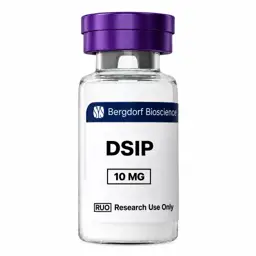
Na zalogi
Na zalogi
Običajne začetne vrednosti za orientacijo. Vsaka vrstica odpre kalkulator za ta peptid.
| Peptid | Kategorija | Običajen odmerek | Velikosti stekleničk | BAC (začetek) | Na voljo | Izračun |
|---|---|---|---|---|---|---|
| VIP | Raziskovanje nevropeptidov | - | 10 mg | 2 ml | Na zalogi | Izračunaj |
| Retatrutide | GLP-1/GIP/GCG | 0,5-12 mg | 2 / 5 / 10 / 15 mg | 2 ml | Na zalogi | Izračunaj |
| Cagrilintide | Analog amilina | - | 5 mg | 2 ml | Na zalogi | Izračunaj |
| Tirzepatide | GLP-1/GIP | 2,5-15 mg | 10 / 15 / 20 / 30 / 60 / 90 mg | 2 ml | Na zalogi | Izračunaj |
| GHK-Cu | Bakrov peptid | 1-4 mg | 10 / 20 / 50 mg | 5 ml | Na zalogi | Izračunaj |
| AHK-Cu | Bakrov peptid | - | 100 mg | 5 ml | Na zalogi | Izračunaj |
| BPC-157 | Obnova tkiva | 0,2-0,5 mg | 2 / 5 / 10 mg | 2 ml | Na zalogi | Izračunaj |
| TB-500 | Thymosin Beta-4 | 2-5 mg | 2 / 5 / 10 mg | 2 ml | Na zalogi | Izračunaj |
| CJC-1295 (brez DAC) | GHRH analog | 100-200 mcg | 2 / 5 / 10 mg | 2 ml | Na zalogi | Izračunaj |
| Ipamorelin | GHRP | 200-300 mcg | 2 / 5 mg | 2 ml | Na zalogi | Izračunaj |
| PT-141 | Bremelanotide | - | 2 / 5 / 10 mg | 2 ml | Na zalogi | Izračunaj |
| MOTS-c | Mitohondrijski | 5-10 mg | 5 / 10 mg | 2 ml | Na zalogi | Izračunaj |
| Selank | Anksiolitik | 150-500 mcg | 2 / 5 / 10 mg | 2 ml | Na zalogi | Izračunaj |
| SS-31 | Elamipretide | 0,1-1 mg | 5 / 10 mg | 2 ml | Na zalogi | Izračunaj |
| Glow Stack | Stack | 0,5-2 mg | 70 mg | 3 ml | Na zalogi | Izračunaj |
| Klow Stack | Stack | 0,5-2 mg | 55 mg | 3 ml | Na zalogi | Izračunaj |
| Melanotan II | Melanokortin | 100-1000 mcg | 5 / 10 mg | 2 ml | Na zalogi | Izračunaj |
| Melanotan I | Melanokortin | - | 5 / 10 mg | 2 ml | Na zalogi | Izračunaj |
| Sermorelin | GHRH analog | 50-300 mcg | 5 mg | 2 ml | Na zalogi | Izračunaj |
| Tesamorelin | GHRH analog | 1-2 mg | 10 / 20 mg | 2 ml | Na zalogi | Izračunaj |
| Thymosin Alpha-1 | Timusni peptid | 0,8-3,2 mg | 1.6 / 5 / 10 mg | 1 ml | Na zalogi | Izračunaj |
| Epithalon | Dolgoživost | 2-10 mg | 10 / 20 / 50 mg | 2 ml | Na zalogi | Izračunaj |
| KPV | Imunski sistem / pregrada | 100-1000 mcg | 5 / 10 mg | 2 ml | Na zalogi | Izračunaj |
| Semax | Kognitivno | 100-1000 mcg | 10 / 30 mg | 2 ml | Na zalogi | Izračunaj |
| DSIP | Spanje | 50-500 mcg | 10 mg | 2 ml | Na zalogi | Izračunaj |
| 5-Amino-1MQ | Presnovno | 2,5-10 mg | 10 mg | 2 ml | Na zalogi | Izračunaj |
| Pinealon | Raziskovalni peptid | - | 10 mg | 2 ml | Na zalogi | Izračunaj |
| Survodutide | GLP-1/glukagon | - | 10 mg | 2 ml | Na zalogi | Izračunaj |
| Kisspeptin-10 | KISS1R / GPR54 | - | 10 mg | 2 ml | Na zalogi | Izračunaj |
| NAD+ | Dolgoživost / kofaktor | 100-500 mg | 1000 mg | 10 ml | Na zalogi | Izračunaj |
| Semaglutide | GLP-1 | 0,25-2,4 mg | 2 / 5 / 10 mg | 2 ml | Samo kalkulator | Izračunaj |
| AOD-9604 | Izguba maščobe | 250-500 mcg | 2 / 5 mg | 2 ml | Samo kalkulator | Izračunaj |
| HGH Fragment 176-191 | Presnovni fragment | 100-500 mcg | 2 / 5 / 10 mg | 2 ml | Samo kalkulator | Izračunaj |
| N-Acetyl Semax | Kognitivno | 100-1000 mcg | 5 / 10 mg | 2 ml | Samo kalkulator | Izračunaj |
| Hexarelin | GHRP | 50-200 mcg | 2 / 5 mg | 2 ml | Samo kalkulator | Izračunaj |
| GHRP-6 | GHRP | 50-300 mcg | 2 / 5 mg | 2 ml | Samo kalkulator | Izračunaj |
| GHRP-2 | GHRP | 50-250 mcg | 2 / 5 mg | 2 ml | Samo kalkulator | Izračunaj |
| HGH 191AA | Rastni hormon | 1-5 mg | 10 mg | 1 ml | Samo kalkulator | Izračunaj |
Vrednosti so za orientacijo v raziskovalnem kontekstu in ne nadomeščajo strokovnega nasveta.
Izberite peptid in odprla se bo njegova stran kalkulatorja z že izpolnjenimi vrednostmi.
Izberite peptid in odprla se bo njegova stran kalkulatorja z že izpolnjenimi vrednostmi.