
Izračunajte natančne volumne rekonstitucije, inzulinske enote in odmerke na stekleničko za vsak peptid.
Steklenička, voda in odmerek so znani
Ta odmerek zahteva 2,50 ml. Največja inzulinska brizga drži 1 ml, zato večje ni na voljo.
Uporabite manj bakteriostatične vode: največ 4,0 ml ohrani en odvzem pod 1 ml.
Odmerek razdelite na 3 ločenih injekcij.
Enote merijo volumen, ne učinkovino. 250 IU = 2,50 ml. Koliko mg je v tem, je odvisno od mešanice. Kalkulator je to izračunal namesto Vas.
Skoraj vse inzulinske brizge so U-100. U-40 izberite le, če je na brizgi oznaka U-40.
Povezani viri vodijo na PubMed in se odprejo v novem zavihku.
NAD+ (nicotinamide adenine dinucleotide) is an essential coenzyme present in every nucleated cell of the body. Strictly speaking, NAD+ is not a peptide but a dinucleotide, built from two linked nucleotides: one carrying nicotinamide (derived from vitamin B3) and one carrying adenine. It is handled in the same research context as injectable peptides because it ships as a lyophilized powder, is reconstituted with bacteriostatic water, and is administered subcutaneously for research purposes. Within this calculator, NAD+ is therefore presented as a research compound that follows the same dosing and reconstitution rules as a peptide.
The central biological role of NAD+ is that of an electron carrier. In metabolism, the molecule shuttles back and forth between its oxidized form (NAD+) and its reduced form (NADH), transporting reducing equivalents between the reactions that break down nutrients and those that build ATP, the universal energy currency of the cell. Without sufficient NAD+, glycolysis, the citric acid cycle, and oxidative phosphorylation cannot run efficiently. Beyond its role as a cofactor, NAD+ is also a consumed substrate: enzymes such as the sirtuins, PARPs, and CD38 cleave NAD+ and use its building blocks, which means the intracellular pool must be continuously replenished.
The interest of longevity research in NAD+ rests on the repeatedly reported observation that NAD+ levels decline in many tissues with advancing age. This decline has been linked to diminished mitochondrial performance, reduced sirtuin activity, and a constrained capacity for DNA repair. Strategies to restore the NAD+ pool, whether through precursors such as NMN and NR or through NAD+ itself, are therefore among the most intensively studied approaches in aging research. NAD+ is not a hormone, does not bind to hormone receptors, and does not act on the hypothalamic-pituitary axis.
NAD+ does not act through a single receptor but functions as a hub connecting numerous cellular pathways. The following mechanisms explain why it occupies such a prominent place in research on energy metabolism and aging:
NAD+ is used in research in the milligram range, not the microgram range that applies to many classic peptides. Subcutaneous administration is considered sensitive to injection speed, which is why many protocols ramp in gradually from the lower end of the range and increase the dose over several days until tolerability can be assessed.
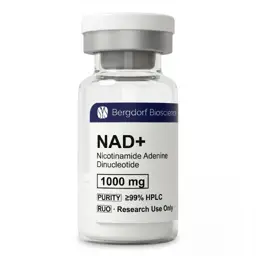
The common vial size is 1000 mg. Adding 10 mL of bacteriostatic water gives a concentration of 100 mg/mL.
At a dose of 250 mg, a 1000 mg vial provides 4 administrations. Because the required volumes are relatively large, some research protocols split a single dose or use a smaller reconstitution volume to raise the concentration. Use the NAD+ calculator above to compute exact volumes for any vial size, reconstitution volume, and target dose.
NAD+ is well known for producing intense but short-lived sensations when administered too quickly. Research protocols therefore consistently recommend a slow injection. The large half-life discrepancy between NAD+ and its precursors is also relevant: with a systemic half-life of only about 1 to 2 hours, NAD+ is metabolized rapidly, which is why administration frequency is a deliberate part of protocol design.
NAD+ is supplied as a lyophilized (freeze-dried) powder in sealed vials. It must be reconstituted with bacteriostatic water (BAC water) before use. Do not use sterile water for injection for multi-dose vials. BAC water contains 0.9% benzyl alcohol, which inhibits microbial growth and extends the usable window of the reconstituted solution. Note that NAD+ requires larger reconstitution volumes than most peptides because of its milligram-scale dosing.
A slight yellow tint is not unusual for NAD+ solutions. However, if the solution appears cloudy, strongly discolored, or contains visible particulate matter, discard the vial and do not inject it.
NAD+ is an endogenous compound, and its safety profile in the research context is generally regarded as favorable. The most common observations relate less to the molecule itself than to the speed of administration. Because controlled clinical data on subcutaneous NAD+ are limited, all use explicitly remains in the research domain.
With slow administration and standard research doses, NAD+ is generally regarded as well tolerated. Given the absence of large-scale clinical trials on injectable use, caution is warranted, and consultation with a qualified healthcare provider is strongly recommended.
NAD+ is frequently considered alongside MOTS-c in longevity research, a mitochondrially encoded peptide that acts on metabolic stress. NAD+ provides the coenzyme that drives the respiratory chain, while MOTS-c acts as a signaling peptide that modulates metabolic adaptation. From a research perspective, both address the mitochondrion from different angles, which is why they are often studied together in protocols focused on mitochondrial function.
A conceptually interesting combination is NAD+ with 5-Amino-1MQ. 5-Amino-1MQ is an inhibitor of nicotinamide N-methyltransferase (NNMT), an enzyme that breaks down nicotinamide. By inhibiting this degradation pathway, it can theoretically keep more nicotinamide available for the NAD+ salvage pathway. Research therefore examines how supplying NAD+ and preserving its precursors complement one another.
NAD+ can also be considered alongside SS-31, a peptide that binds to cardiolipin in the inner mitochondrial membrane and supports the efficiency of the electron transport chain. While NAD+ supplies the fuel for the respiratory chain, SS-31 targets the structural integrity of the membrane on which those reactions take place. This combination is a common theme in research on mitochondrial bioenergetics.
Research-grade NAD+ is available directly from BergdorfBio: NAD+ at BergdorfBio.
No. NAD+ is a dinucleotide, not a peptide. It is not made of amino acids but of two linked nucleotides. It is listed in this calculator because it is handled like an injectable peptide in research: it ships as a lyophilized powder, is reconstituted with bacteriostatic water, and follows the same dosing and storage principles.
NMN (nicotinamide mononucleotide) and NR (nicotinamide riboside) are precursors that the cell must convert into NAD+. NAD+ is the finished coenzyme itself. Precursors are frequently studied orally and pass through several metabolic steps, whereas NAD+ is directly the active molecule. Research compares both approaches to understand how the cellular NAD+ pool can be maintained most effectively.
NAD+ is known for producing intense but short-lived sensations such as warmth, chest pressure, or nausea when administered too quickly. A markedly slower injection substantially reduces these reactions. For this reason, research protocols consistently recommend slow administration.
NAD+ has a half-life of only about 1 to 2 hours in the systemic circulation because it is rapidly metabolized by NAD+-consuming enzymes such as CD38 and through salvage pathways. This short half-life is the reason why administration frequency is a deliberately chosen element of protocol design in the research context.
No. NAD+ is a metabolic coenzyme, not a hormone. It does not bind to hormone receptors and has no direct effect on the hypothalamic-pituitary-gonadal axis, the thyroid, or the adrenal glands. No post-cycle therapy is required.
In research, NAD+ is frequently considered alongside mitochondrially oriented compounds such as MOTS-c or SS-31, as well as the NNMT inhibitor 5-Amino-1MQ. Each compound should, however, be reconstituted separately and administered in its own syringe, as their combined stability in solution is not sufficiently characterized.
Because NAD+ is dosed in the milligram range, the required volumes are considerably larger than for microgram-dosed peptides. At a concentration of 100 mg/mL, a 250 mg dose already requires 2.5 mL. A 1 mL insulin syringe is therefore standard, and larger doses are split as needed.
BergdorfBio offers research-grade NAD+ with verified purity and concentration. View the product page: Buy NAD+ at BergdorfBio. All products are sold strictly for research purposes.
Medical Disclaimer: The information on this page is provided for educational and research purposes only. NAD+ is not an approved drug or medical treatment and is sold strictly for research use. Nothing on this page constitutes medical advice, diagnosis, or a recommendation to use any specific compound. Always consult a qualified healthcare professional before beginning any research protocol. BergdorfBio assumes no liability for the use or misuse of the information presented here.
Od praška do pripravljene brizge v petih korakih. Kalkulator zgoraj Vam količine izračuna samodejno.
Stekleničko in vodo segrejte na sobno temperaturo. Oba gumijasta zamaška obrišite z alkoholno blazinico.
Z večjo brizgo nategnite količino BAC vode, ki jo priporoča kalkulator.
Vodo spustite po notranji steni stekleničke s peptidom, ne pršite je neposredno na prašek.
Stekleničko nežno vrtite, ne stresajte. Prašek se raztopi v bistro raztopino v 1-2 minutah.
Z inzulinsko brizgo nategnite točno do izračunane oznake. Končano.
Običajne začetne vrednosti za orientacijo. Vsaka vrstica odpre kalkulator za ta peptid.
| Peptid | Kategorija | Običajen odmerek | Velikosti stekleničk | BAC (začetek) | Na voljo | Izračun |
|---|---|---|---|---|---|---|
| VIP | Raziskovanje nevropeptidov | - | 10 mg | 2 ml | Samo kalkulator | Izračunaj |
| Retatrutide | GLP-1/GIP/GCG | 0,5-12 mg | 2 / 5 / 10 / 15 mg | 2 ml | Samo kalkulator | Izračunaj |
| Cagrilintide | Analog amilina | - | 5 mg | 2 ml | Samo kalkulator | Izračunaj |
| Semaglutide | GLP-1 | 0,25-2,4 mg | 2 / 5 / 10 mg | 2 ml | Samo kalkulator | Izračunaj |
| Tirzepatide | GLP-1/GIP | 2,5-15 mg | 10 / 15 / 20 / 30 / 60 / 90 mg | 2 ml | Samo kalkulator | Izračunaj |
| GHK-Cu | Bakrov peptid | 1-4 mg | 10 / 20 / 50 mg | 5 ml | Samo kalkulator | Izračunaj |
| AHK-Cu | Bakrov peptid | - | 100 mg | 5 ml | Samo kalkulator | Izračunaj |
| BPC-157 | Obnova tkiva | 0,2-0,5 mg | 2 / 5 / 10 mg | 2 ml | Samo kalkulator | Izračunaj |
| TB-500 | Thymosin Beta-4 | 2-5 mg | 2 / 5 / 10 mg | 2 ml | Samo kalkulator | Izračunaj |
| CJC-1295 (brez DAC) | GHRH analog | 100-200 mcg | 2 / 5 / 10 mg | 2 ml | Samo kalkulator | Izračunaj |
| Ipamorelin | GHRP | 200-300 mcg | 2 / 5 mg | 2 ml | Samo kalkulator | Izračunaj |
| AOD-9604 | Izguba maščobe | 250-500 mcg | 2 / 5 mg | 2 ml | Samo kalkulator | Izračunaj |
| PT-141 | Bremelanotide | - | 2 / 5 / 10 mg | 2 ml | Samo kalkulator | Izračunaj |
| MOTS-c | Mitohondrijski | 5-10 mg | 5 / 10 mg | 2 ml | Samo kalkulator | Izračunaj |
| Selank | Anksiolitik | 150-500 mcg | 2 / 5 / 10 mg | 2 ml | Samo kalkulator | Izračunaj |
| SS-31 | Elamipretide | 0,1-1 mg | 5 / 10 mg | 2 ml | Samo kalkulator | Izračunaj |
| Glow Stack | Stack | 0,5-2 mg | 70 mg | 3 ml | Samo kalkulator | Izračunaj |
| Klow Stack | Stack | 0,5-2 mg | 55 mg | 3 ml | Samo kalkulator | Izračunaj |
| Melanotan II | Melanokortin | 100-1000 mcg | 5 / 10 mg | 2 ml | Samo kalkulator | Izračunaj |
| Melanotan I | Melanokortin | - | 5 / 10 mg | 2 ml | Samo kalkulator | Izračunaj |
| Sermorelin | GHRH analog | 50-300 mcg | 5 mg | 2 ml | Samo kalkulator | Izračunaj |
| Tesamorelin | GHRH analog | 1-2 mg | 10 / 20 mg | 2 ml | Samo kalkulator | Izračunaj |
| Thymosin Alpha-1 | Timusni peptid | 0,8-3,2 mg | 1.6 / 5 / 10 mg | 1 ml | Samo kalkulator | Izračunaj |
| Epithalon | Dolgoživost | 2-10 mg | 10 / 20 / 50 mg | 2 ml | Samo kalkulator | Izračunaj |
| KPV | Imunski sistem / pregrada | 100-1000 mcg | 5 / 10 mg | 2 ml | Samo kalkulator | Izračunaj |
| HGH Fragment 176-191 | Presnovni fragment | 100-500 mcg | 2 / 5 / 10 mg | 2 ml | Samo kalkulator | Izračunaj |
| Semax | Kognitivno | 100-1000 mcg | 10 / 30 mg | 2 ml | Samo kalkulator | Izračunaj |
| N-Acetyl Semax | Kognitivno | 100-1000 mcg | 5 / 10 mg | 2 ml | Samo kalkulator | Izračunaj |
| Hexarelin | GHRP | 50-200 mcg | 2 / 5 mg | 2 ml | Samo kalkulator | Izračunaj |
| GHRP-6 | GHRP | 50-300 mcg | 2 / 5 mg | 2 ml | Samo kalkulator | Izračunaj |
| GHRP-2 | GHRP | 50-250 mcg | 2 / 5 mg | 2 ml | Samo kalkulator | Izračunaj |
| DSIP | Spanje | 50-500 mcg | 10 mg | 2 ml | Samo kalkulator | Izračunaj |
| 5-Amino-1MQ | Presnovno | 2,5-10 mg | 10 mg | 2 ml | Samo kalkulator | Izračunaj |
| Pinealon | Raziskovalni peptid | - | 10 mg | 2 ml | Samo kalkulator | Izračunaj |
| Survodutide | GLP-1/glukagon | - | 10 mg | 2 ml | Samo kalkulator | Izračunaj |
| Kisspeptin-10 | KISS1R / GPR54 | - | 10 mg | 2 ml | Samo kalkulator | Izračunaj |
| HGH 191AA | Rastni hormon | 1-5 mg | 10 mg | 1 ml | Samo kalkulator | Izračunaj |
| NAD+ | Dolgoživost / kofaktor | 100-500 mg | 1000 mg | 10 ml | Samo kalkulator | Izračunaj |
Vrednosti so za orientacijo v raziskovalnem kontekstu in ne nadomeščajo strokovnega nasveta.
Pravilen izračun koncentracije in volumna injekcije se zdi samoumeven, a je najpogostejši vir napak. Že 10 % napačen izračun pri rekonstituciji pomeni, da dobite premalo učinkovine ali pa nenamerno prevelik odmerek.
Liofilizirani peptidi so dobavljeni v miligramih in raztopljeni v bakteriostatični vodi (BAC voda). Razmerje med peptidom in vodo določa koncentracijo, iz nje pa izhaja, koliko enot nategnete na inzulinski brizgi. Inzulinske brizge so graduirane v enotah, ne v miligramih. Kalkulator to pretvorbo opravi namesto Vas, vključno s preverjanjem smiselnosti proti najnevarnejši napaki: zamenjavi mg in mcg.
Miligrami (mg) so enota, v kateri se prodajajo liofilizirani peptidi, na primer »5 mg BPC-157«. Mikrogrami (mcg) merijo posamezni odmerek, na primer »250 mcg na injekcijo«. 1 mg = 1.000 mcg. Kalkulator pretvarja samodejno in opozori, kadar je vnos videti kot zamenjava.
U-100 pomeni, da je brizga umerjena na 100 enot na mililiter. 100 IU = 1 ml, torej 10 IU = 0,10 ml, ne glede na to, kaj je v brizgi. Izračun IU temelji točno na tem razmerju.
Ob veliko peptida in malo vode postane raztopina zelo koncentrirana, zato je volumen na odmerek majhen in težko odčitljiv. Uporabite pomoč pri mešanju: poišče volumen vode, ki da čisto, lahko berljivo oznako.
V hladilniku pri 2-8 °C običajno 21-30 dni. Stekleničko označite z datumom rekonstitucije. Motne raztopine ali delci niso sprejemljivi.
Mešanice vsebujejo več učinkovin v eni steklenički. Kot peptid preprosto izberite mešanico: kalkulator dodatno pokaže, koliko posamezne sestavine je v Vaši injekciji. Za kombinacije več ločenih stekleničk uporabite sestavljalnik kombinacij.
Ne. Vaše zadnje nastavitve se shranijo lokalno v brskalniku in obnovijo ob naslednjem obisku. Izračune lahko tudi prikličete iz zgodovine, jih shranite kot protokol ali delite s povezavo.
Izberite peptid in odprla se bo njegova stran kalkulatorja z že izpolnjenimi vrednostmi.
Na zalogi
Na zalogi
Poglejte izdelek
NAD+Poglejte izdelek
NAD+Običajne začetne vrednosti za orientacijo. Vsaka vrstica odpre kalkulator za ta peptid.
| Peptid | Kategorija | Običajen odmerek | Velikosti stekleničk | BAC (začetek) | Na voljo | Izračun |
|---|---|---|---|---|---|---|
| VIP | Raziskovanje nevropeptidov | - | 10 mg | 2 ml | Na zalogi | Izračunaj |
| Retatrutide | GLP-1/GIP/GCG | 0,5-12 mg | 2 / 5 / 10 / 15 mg | 2 ml | Na zalogi | Izračunaj |
| Cagrilintide | Analog amilina | - | 5 mg | 2 ml | Na zalogi | Izračunaj |
| Tirzepatide | GLP-1/GIP | 2,5-15 mg | 10 / 15 / 20 / 30 / 60 / 90 mg | 2 ml | Na zalogi | Izračunaj |
| GHK-Cu | Bakrov peptid | 1-4 mg | 10 / 20 / 50 mg | 5 ml | Na zalogi | Izračunaj |
| AHK-Cu | Bakrov peptid | - | 100 mg | 5 ml | Na zalogi | Izračunaj |
| BPC-157 | Obnova tkiva | 0,2-0,5 mg | 2 / 5 / 10 mg | 2 ml | Na zalogi | Izračunaj |
| TB-500 | Thymosin Beta-4 | 2-5 mg | 2 / 5 / 10 mg | 2 ml | Na zalogi | Izračunaj |
| CJC-1295 (brez DAC) | GHRH analog | 100-200 mcg | 2 / 5 / 10 mg | 2 ml | Na zalogi | Izračunaj |
| Ipamorelin | GHRP | 200-300 mcg | 2 / 5 mg | 2 ml | Na zalogi | Izračunaj |
| PT-141 | Bremelanotide | - | 2 / 5 / 10 mg | 2 ml | Na zalogi | Izračunaj |
| MOTS-c | Mitohondrijski | 5-10 mg | 5 / 10 mg | 2 ml | Na zalogi | Izračunaj |
| Selank | Anksiolitik | 150-500 mcg | 2 / 5 / 10 mg | 2 ml | Na zalogi | Izračunaj |
| SS-31 | Elamipretide | 0,1-1 mg | 5 / 10 mg | 2 ml | Na zalogi | Izračunaj |
| Glow Stack | Stack | 0,5-2 mg | 70 mg | 3 ml | Na zalogi | Izračunaj |
| Klow Stack | Stack | 0,5-2 mg | 55 mg | 3 ml | Na zalogi | Izračunaj |
| Melanotan II | Melanokortin | 100-1000 mcg | 5 / 10 mg | 2 ml | Na zalogi | Izračunaj |
| Melanotan I | Melanokortin | - | 5 / 10 mg | 2 ml | Na zalogi | Izračunaj |
| Sermorelin | GHRH analog | 50-300 mcg | 5 mg | 2 ml | Na zalogi | Izračunaj |
| Tesamorelin | GHRH analog | 1-2 mg | 10 / 20 mg | 2 ml | Na zalogi | Izračunaj |
| Thymosin Alpha-1 | Timusni peptid | 0,8-3,2 mg | 1.6 / 5 / 10 mg | 1 ml | Na zalogi | Izračunaj |
| Epithalon | Dolgoživost | 2-10 mg | 10 / 20 / 50 mg | 2 ml | Na zalogi | Izračunaj |
| KPV | Imunski sistem / pregrada | 100-1000 mcg | 5 / 10 mg | 2 ml | Na zalogi | Izračunaj |
| Semax | Kognitivno | 100-1000 mcg | 10 / 30 mg | 2 ml | Na zalogi | Izračunaj |
| DSIP | Spanje | 50-500 mcg | 10 mg | 2 ml | Na zalogi | Izračunaj |
| 5-Amino-1MQ | Presnovno | 2,5-10 mg | 10 mg | 2 ml | Na zalogi | Izračunaj |
| Pinealon | Raziskovalni peptid | - | 10 mg | 2 ml | Na zalogi | Izračunaj |
| Survodutide | GLP-1/glukagon | - | 10 mg | 2 ml | Na zalogi | Izračunaj |
| Kisspeptin-10 | KISS1R / GPR54 | - | 10 mg | 2 ml | Na zalogi | Izračunaj |
| NAD+ | Dolgoživost / kofaktor | 100-500 mg | 1000 mg | 10 ml | Na zalogi | Izračunaj |
| Semaglutide | GLP-1 | 0,25-2,4 mg | 2 / 5 / 10 mg | 2 ml | Samo kalkulator | Izračunaj |
| AOD-9604 | Izguba maščobe | 250-500 mcg | 2 / 5 mg | 2 ml | Samo kalkulator | Izračunaj |
| HGH Fragment 176-191 | Presnovni fragment | 100-500 mcg | 2 / 5 / 10 mg | 2 ml | Samo kalkulator | Izračunaj |
| N-Acetyl Semax | Kognitivno | 100-1000 mcg | 5 / 10 mg | 2 ml | Samo kalkulator | Izračunaj |
| Hexarelin | GHRP | 50-200 mcg | 2 / 5 mg | 2 ml | Samo kalkulator | Izračunaj |
| GHRP-6 | GHRP | 50-300 mcg | 2 / 5 mg | 2 ml | Samo kalkulator | Izračunaj |
| GHRP-2 | GHRP | 50-250 mcg | 2 / 5 mg | 2 ml | Samo kalkulator | Izračunaj |
| HGH 191AA | Rastni hormon | 1-5 mg | 10 mg | 1 ml | Samo kalkulator | Izračunaj |
Vrednosti so za orientacijo v raziskovalnem kontekstu in ne nadomeščajo strokovnega nasveta.
Običajne začetne vrednosti za orientacijo. Vsaka vrstica odpre kalkulator za ta peptid.
| Peptid | Kategorija | Običajen odmerek | Velikosti stekleničk | BAC (začetek) | Na voljo | Izračun |
|---|---|---|---|---|---|---|
| VIP | Raziskovanje nevropeptidov | - | 10 mg | 2 ml | Na zalogi | Izračunaj |
| Retatrutide | GLP-1/GIP/GCG | 0,5-12 mg | 2 / 5 / 10 / 15 mg | 2 ml | Na zalogi | Izračunaj |
| Cagrilintide | Analog amilina | - | 5 mg | 2 ml | Na zalogi | Izračunaj |
| Tirzepatide | GLP-1/GIP | 2,5-15 mg | 10 / 15 / 20 / 30 / 60 / 90 mg | 2 ml | Na zalogi | Izračunaj |
| GHK-Cu | Bakrov peptid | 1-4 mg | 10 / 20 / 50 mg | 5 ml | Na zalogi | Izračunaj |
| AHK-Cu | Bakrov peptid | - | 100 mg | 5 ml | Na zalogi | Izračunaj |
| BPC-157 | Obnova tkiva | 0,2-0,5 mg | 2 / 5 / 10 mg | 2 ml | Na zalogi | Izračunaj |
| TB-500 | Thymosin Beta-4 | 2-5 mg | 2 / 5 / 10 mg | 2 ml | Na zalogi | Izračunaj |
| CJC-1295 (brez DAC) | GHRH analog | 100-200 mcg | 2 / 5 / 10 mg | 2 ml | Na zalogi | Izračunaj |
| Ipamorelin | GHRP | 200-300 mcg | 2 / 5 mg | 2 ml | Na zalogi | Izračunaj |
| PT-141 | Bremelanotide | - | 2 / 5 / 10 mg | 2 ml | Na zalogi | Izračunaj |
| MOTS-c | Mitohondrijski | 5-10 mg | 5 / 10 mg | 2 ml | Na zalogi | Izračunaj |
| Selank | Anksiolitik | 150-500 mcg | 2 / 5 / 10 mg | 2 ml | Na zalogi | Izračunaj |
| SS-31 | Elamipretide | 0,1-1 mg | 5 / 10 mg | 2 ml | Na zalogi | Izračunaj |
| Glow Stack | Stack | 0,5-2 mg | 70 mg | 3 ml | Na zalogi | Izračunaj |
| Klow Stack | Stack | 0,5-2 mg | 55 mg | 3 ml | Na zalogi | Izračunaj |
| Melanotan II | Melanokortin | 100-1000 mcg | 5 / 10 mg | 2 ml | Na zalogi | Izračunaj |
| Melanotan I | Melanokortin | - | 5 / 10 mg | 2 ml | Na zalogi | Izračunaj |
| Sermorelin | GHRH analog | 50-300 mcg | 5 mg | 2 ml | Na zalogi | Izračunaj |
| Tesamorelin | GHRH analog | 1-2 mg | 10 / 20 mg | 2 ml | Na zalogi | Izračunaj |
| Thymosin Alpha-1 | Timusni peptid | 0,8-3,2 mg | 1.6 / 5 / 10 mg | 1 ml | Na zalogi | Izračunaj |
| Epithalon | Dolgoživost | 2-10 mg | 10 / 20 / 50 mg | 2 ml | Na zalogi | Izračunaj |
| KPV | Imunski sistem / pregrada | 100-1000 mcg | 5 / 10 mg | 2 ml | Na zalogi | Izračunaj |
| Semax | Kognitivno | 100-1000 mcg | 10 / 30 mg | 2 ml | Na zalogi | Izračunaj |
| DSIP | Spanje | 50-500 mcg | 10 mg | 2 ml | Na zalogi | Izračunaj |
| 5-Amino-1MQ | Presnovno | 2,5-10 mg | 10 mg | 2 ml | Na zalogi | Izračunaj |
| Pinealon | Raziskovalni peptid | - | 10 mg | 2 ml | Na zalogi | Izračunaj |
| Survodutide | GLP-1/glukagon | - | 10 mg | 2 ml | Na zalogi | Izračunaj |
| Kisspeptin-10 | KISS1R / GPR54 | - | 10 mg | 2 ml | Na zalogi | Izračunaj |
| NAD+ | Dolgoživost / kofaktor | 100-500 mg | 1000 mg | 10 ml | Na zalogi | Izračunaj |
| Semaglutide | GLP-1 | 0,25-2,4 mg | 2 / 5 / 10 mg | 2 ml | Samo kalkulator | Izračunaj |
| AOD-9604 | Izguba maščobe | 250-500 mcg | 2 / 5 mg | 2 ml | Samo kalkulator | Izračunaj |
| HGH Fragment 176-191 | Presnovni fragment | 100-500 mcg | 2 / 5 / 10 mg | 2 ml | Samo kalkulator | Izračunaj |
| N-Acetyl Semax | Kognitivno | 100-1000 mcg | 5 / 10 mg | 2 ml | Samo kalkulator | Izračunaj |
| Hexarelin | GHRP | 50-200 mcg | 2 / 5 mg | 2 ml | Samo kalkulator | Izračunaj |
| GHRP-6 | GHRP | 50-300 mcg | 2 / 5 mg | 2 ml | Samo kalkulator | Izračunaj |
| GHRP-2 | GHRP | 50-250 mcg | 2 / 5 mg | 2 ml | Samo kalkulator | Izračunaj |
| HGH 191AA | Rastni hormon | 1-5 mg | 10 mg | 1 ml | Samo kalkulator | Izračunaj |
Vrednosti so za orientacijo v raziskovalnem kontekstu in ne nadomeščajo strokovnega nasveta.
Izberite peptid in odprla se bo njegova stran kalkulatorja z že izpolnjenimi vrednostmi.
Izberite peptid in odprla se bo njegova stran kalkulatorja z že izpolnjenimi vrednostmi.