
Изчислете точни обеми за реконституция, инсулинови единици и дози на флакон за всеки пептид.
Флаконът, водата и дозата са известни
Деленията измерват обем, не активно вещество. 8 IU = 0,08 ml. Колко mg има в тях зависи от разтварянето. Калкулаторът го е изчислил вместо Вас.
Почти всички инсулинови спринцовки са U-100. Изберете U-40 само ако на спринцовката пише U-40.
Свързаните източници водят към PubMed и се отварят в нов раздел.
Научен профил
Ipamorelin в Пептидния лексикон: механизъм на действие, ниво на доказателства и източници
Допълнителен инструмент
Вижте колко дълго Ipamorelin остава в организма Ви
Ipamorelin is a synthetic pentapeptide growth hormone-releasing peptide (GHRP) widely regarded as the most selective GH secretagogue available in research. Unlike older GHRPs, it stimulates growth hormone release without significantly raising cortisol or prolactin. This guide covers everything you need: mechanism of action, dosage calculation, reconstitution protocol, storage, safety profile, and how to effectively combine Ipamorelin with CJC-1295 No DAC and other peptides.
Medical Disclaimer: The content on this page is for informational and educational purposes only. It does not constitute medical advice, diagnosis, or treatment. Peptides are not approved drugs for human use. Always consult a qualified healthcare provider before using peptides.
Ipamorelin is a synthetic pentapeptide with the sequence Aib-His-D-2-Nal-D-Phe-Lys-NH₂. Originally developed at Novo Nordisk in the 1990s, it underwent Phase II clinical trials for postoperative ileus and growth hormone deficiency. Though it never reached pharmaceutical approval, Ipamorelin became one of the most extensively studied GHRPs in biomedical research and remains a benchmark compound in its class.
Structurally, Ipamorelin belongs to the family of ghrelin mimetics. It binds to the growth hormone secretagogue receptor type 1a (GHS-R1a), expressed in both the anterior pituitary and the hypothalamus. What distinguishes Ipamorelin from earlier compounds such as GHRP-2 and GHRP-6 is its receptor selectivity: at research doses, it produces robust GH release without meaningful stimulation of cortisol, ACTH, or prolactin — a profile that makes it uniquely well-tolerated and suitable for combination protocols.
Ipamorelin activates GHS-R1a receptors on somatotroph cells in the anterior pituitary. This triggers intracellular calcium mobilization via the phospholipase C/IP₃ pathway, stimulating the pulsatile secretion of growth hormone. Concurrently, Ipamorelin suppresses somatostatin — the hypothalamic inhibitor of GH release — amplifying the net GH pulse.
The resulting GH elevation drives hepatic IGF-1 (Insulin-like Growth Factor 1) production, which mediates the downstream anabolic and lipolytic effects associated with GH axis activation. Potential effects include:
The defining feature of Ipamorelin is its selectivity for somatotroph GH release over other neuroendocrine axes. GHRP-2 produces significant cortisol and prolactin elevations alongside GH — complicating protocols that require stress-hormone neutrality. GHRP-6 powerfully stimulates appetite via central ghrelin receptors. Ipamorelin shows neither effect at clinically relevant doses. This selectivity is not incidental but results from its specific structural affinity for the GHS-R1a subtype expressed in the pituitary, without meaningful cross-reactivity at other receptor populations. For researchers designing multi-peptide protocols, this clean pharmacological profile simplifies interpretation of outcomes and reduces confounding variables.
Accurate dosage calculation is critical for both efficacy and safety. Standard dosing parameters for Ipamorelin are:
Ipamorelin does not require a titration phase. The standard dose can be used from the first injection, though some practitioners prefer starting at the lower end of the range (200 mcg) for the first week to assess individual response.
The standard BergdorfBio Ipamorelin vial contains 5 mg of lyophilized peptide. Adding 2 ml of bacteriostatic water (BAC water) yields a concentration of:
5 mg ÷ 2 ml = 2.5 mg/ml = 2,500 mcg/ml
Using a U100 insulin syringe (0.3 ml capacity, 100 units = 1 ml):
At 200 mcg three times daily (600 mcg/day), one 5 mg vial lasts approximately 8 days. At 200 mcg twice daily (400 mcg/day), the same vial lasts approximately 12 days.
With 2 mg peptide and 2 ml BAC water, the concentration is 1 mg/ml (1,000 mcg/ml):
For instant volume calculations based on your exact vial size, reconstitution volume, and target dose, use the BergdorfBio Peptide Calculator. Enter your parameters to get the precise draw volume in both milliliters and insulin units.
Ipamorelin is supplied as a lyophilized (freeze-dried) powder and must be reconstituted before injection. You will need:
Use only bacteriostatic water or water for injection (WFI). Do not use tap water, commercially available distilled water, or saline solutions not specifically intended for injection use. Incorrect solvents can degrade the peptide or introduce contaminants.
Ipamorelin has one of the most favorable tolerability profiles among peptide GH secretagogues. Clinical studies and research protocols consistently report low rates of adverse events at standard doses.
Unlike GHRP-2, Ipamorelin does not produce clinically meaningful cortisol or prolactin elevation at research doses. Unlike GHRP-6, it does not induce significant appetite stimulation via central ghrelin receptor activation. This selectivity is a core safety advantage that distinguishes Ipamorelin from earlier-generation GHRPs.
Stop immediately and consult a physician if you experience persistent swelling, severe or worsening headache, visual disturbances, joint pain beyond normal soreness, or any other unusual or concerning symptoms.
The combination of Ipamorelin with CJC-1295 No DAC is the most studied and most widely used growth hormone peptide protocol. The rationale is mechanistic synergy: CJC-1295 No DAC activates the GHRH receptor on pituitary somatotrophs, while Ipamorelin simultaneously activates GHS-R1a. These two pathways converge to produce a substantially larger GH pulse than either peptide achieves alone — an effect consistent across preclinical models and observational research.
The pairing is particularly well-suited because Ipamorelin's selectivity (no cortisol, no prolactin elevation) maintains a clean hormonal backdrop that complements CJC-1295's GHRH-mediated stimulation. The two peptides are chemically compatible and can be drawn into the same insulin syringe for a single injection.
For research focused on fat metabolism and body recomposition, AOD-9604 (a modified fragment of GH, residues 176–191) can be added. AOD-9604 acts directly on adipocytes to stimulate lipolysis and inhibit lipogenesis without activating the full GH axis or elevating IGF-1. When combined with Ipamorelin, the protocol covers both the central GH pulsatility (via GHS-R1a activation) and the peripheral lipolytic pathway (via the AOD-9604 fragment).
This three-peptide protocol combines GHRH receptor stimulation (CJC-1295 No DAC), ghrelin receptor activation (Ipamorelin), and direct lipolysis (AOD-9604). It addresses GH pulsatility, IGF-1 elevation, and fat-cell metabolism through independent but complementary mechanisms. Experienced researchers may find this stack produces synergistic outcomes for body composition, recovery, and sleep quality — but it demands careful protocol design and physician-supervised monitoring.
Ipamorelin is available at BergdorfBio in 2 mg and 5 mg research-grade vials with verified purity and identity testing.
All three bind to GHS-R1a but differ critically in receptor selectivity. GHRP-2 produces significant elevations in both cortisol and prolactin alongside GH — an undesirable profile for most research applications. GHRP-6 is a potent appetite stimulant via central ghrelin receptor activation in the hypothalamus. Ipamorelin does neither at research doses. Its selectivity for pituitary somatotrophs over other GHS-R1a-expressing tissues makes it the cleanest available GHRP for combination protocols.
Yes. Both peptides are chemically compatible. Draw the first peptide into the insulin syringe, then add the second. Inject subcutaneously immediately after mixing. Do not store pre-mixed peptide solutions — mix fresh for each injection.
The two most effective windows are: (1) immediately upon waking, before any food intake or carbohydrate consumption; and (2) 30–60 minutes before sleep. Both windows align with naturally low insulin levels — insulin strongly suppresses pituitary GH responsiveness, so minimizing post-meal insulin is critical for maximizing GH pulse amplitude. Avoid injecting within 2 hours of a carbohydrate-heavy meal.
Improved sleep quality and faster exercise recovery are typically the earliest reported effects, often within 2–3 weeks. Measurable changes in body composition — increased muscle definition, reduced subcutaneous fat — generally emerge after 8–12 weeks. This timeline reflects the gradual accumulation and sustained elevation of IGF-1 required for tissue-level remodeling. Baseline and follow-up IGF-1 blood tests at 4–6 weeks provide objective confirmation of response.
No. Ipamorelin works by amplifying the pituitary's own capacity to secrete GH in response to physiological stimuli — it does not introduce exogenous GH. Unlike synthetic GH administration, there is no established mechanism for Ipamorelin to suppress the hypothalamic-pituitary axis. That said, prolonged continuous use may theoretically cause some degree of GHS-R1a desensitization. Standard protocol practice of cycling 8–12 weeks on with 4-week breaks is considered a reasonable precaution.
Strongly recommended. Establishing baseline IGF-1 levels allows monitoring of treatment response and ensures IGF-1 does not exceed the upper limit of normal — chronically elevated IGF-1 carries health risks including association with certain malignancies. A physician can also screen for contraindications (pituitary disorders, diabetes, active cancer) that would make Ipamorelin use inappropriate.
Ipamorelin is administered subcutaneously (SC) — injected into the subcutaneous fat layer just beneath the skin. Common injection sites include the lateral abdomen (flanks, away from the navel), the anterior thigh, and the triceps region. Insert the syringe at a 45°–90° angle depending on subcutaneous fat depth. Rotate sites with each injection to prevent local tissue reactions.
BergdorfBio offers Ipamorelin in verified research quality in both 2 mg and 5 mg vials. Each batch is tested for identity and purity. Visit the product page for current availability and pricing.
Legal status varies by jurisdiction. In most countries Ipamorelin is not approved as a pharmaceutical drug for human therapeutic use and is classified as a research chemical. It is prohibited in competitive sports under WADA regulations. Verify the applicable regulations in your country before purchasing or using this compound.
Disclaimer: This content is for informational and research purposes only. Ipamorelin is not an approved drug for human therapeutic use. The applications described have not been evaluated or approved by the FDA, EMA, or any other regulatory authority. Do not use peptides without the supervision of a qualified medical professional.
От прах до готова спринцовка в пет стъпки. Количествата Ви предоставя калкулаторът по-горе автоматично.
Доведете флакона и водата до стайна температура. Избършете и двете гумени запушалки с тампон със спирт.
Изтеглете препоръчаното от калкулатора количество BAC вода с по-голяма спринцовка.
Оставете водата да се стича по стъклената стена във флакона с пептида, не я впръсквайте директно върху праха.
Завъртете флакона внимателно, не разклащайте. Прахът се разтваря до бистро за 1-2 минути.
С инсулиновата спринцовка изтеглете точно до изчисленото деление. Готово.
Типични начални стойности за ориентир. Всеки ред отваря калкулатора за съответния пептид.
| Пептид | Категория | Обичайна доза | Размери на флакони | BAC (начало) | Наличност | Изчисли |
|---|---|---|---|---|---|---|
| VIP | Изследване на невропептиди | - | 10 mg | 2 ml | Само калкулатор | Изчисли |
| Retatrutide | GLP-1/GIP/GCG | 0,5-12 mg | 2 / 5 / 10 / 15 mg | 2 ml | Само калкулатор | Изчисли |
| Cagrilintide | Аналог на амилин | - | 5 mg | 2 ml | Само калкулатор | Изчисли |
| Semaglutide | GLP-1 | 0,25-2,4 mg | 2 / 5 / 10 mg | 2 ml | Само калкулатор | Изчисли |
| Tirzepatide | GLP-1/GIP | 2,5-15 mg | 10 / 15 / 20 / 30 / 60 / 90 mg | 2 ml | Само калкулатор | Изчисли |
| GHK-Cu | Меден пептид | 1-4 mg | 10 / 20 / 50 mg | 5 ml | Само калкулатор | Изчисли |
| AHK-Cu | Меден пептид | - | 100 mg | 5 ml | Само калкулатор | Изчисли |
| BPC-157 | Възстановяване на тъкани | 0,2-0,5 mg | 2 / 5 / 10 mg | 2 ml | Само калкулатор | Изчисли |
| TB-500 | Тимозин β4 | 2-5 mg | 2 / 5 / 10 mg | 2 ml | Само калкулатор | Изчисли |
| CJC-1295 (без DAC) | GHRH аналог | 100-200 mcg | 2 / 5 / 10 mg | 2 ml | Само калкулатор | Изчисли |
| Ipamorelin | GHRP | 200-300 mcg | 2 / 5 mg | 2 ml | Само калкулатор | Изчисли |
| AOD-9604 | Изгаряне на мазнини | 250-500 mcg | 2 / 5 mg | 2 ml | Само калкулатор | Изчисли |
| PT-141 | Бремеланотид | - | 2 / 5 / 10 mg | 2 ml | Само калкулатор | Изчисли |
| MOTS-c | Митохондриален | 5-10 mg | 5 / 10 mg | 2 ml | Само калкулатор | Изчисли |
| Селанк (Selank) | Анксиолитик | 150-500 mcg | 2 / 5 / 10 mg | 2 ml | Само калкулатор | Изчисли |
| SS-31 | Еламипретид | 0,1-1 mg | 5 / 10 mg | 2 ml | Само калкулатор | Изчисли |
| Glow Stack | Stack | 0,5-2 mg | 70 mg | 3 ml | Само калкулатор | Изчисли |
| Klow Stack | Stack | 0,5-2 mg | 55 mg | 3 ml | Само калкулатор | Изчисли |
| Melanotan II | Меланокортин | 100-1000 mcg | 5 / 10 mg | 2 ml | Само калкулатор | Изчисли |
| Melanotan I | Меланокортин | - | 5 / 10 mg | 2 ml | Само калкулатор | Изчисли |
| Серморелин (Sermorelin) | Аналог на GHRH | 50-300 mcg | 5 mg | 2 ml | Само калкулатор | Изчисли |
| Tesamorelin | GHRH аналог | 1-2 mg | 10 / 20 mg | 2 ml | Само калкулатор | Изчисли |
| Thymosin Alpha-1 | Тимусен пептид | 0,8-3,2 mg | 1.6 / 5 / 10 mg | 1 ml | Само калкулатор | Изчисли |
| Epithalon | Дълголетие | 2-10 mg | 10 / 20 / 50 mg | 2 ml | Само калкулатор | Изчисли |
| KPV | Имунна / Бариера | 100-1000 mcg | 5 / 10 mg | 2 ml | Само калкулатор | Изчисли |
| HGH Fragment 176-191 | Метаболитен фрагмент | 100-500 mcg | 2 / 5 / 10 mg | 2 ml | Само калкулатор | Изчисли |
| Semax | Когнитивен | 100-1000 mcg | 10 / 30 mg | 2 ml | Само калкулатор | Изчисли |
| N-Acetyl Semax | Когнитивен | 100-1000 mcg | 5 / 10 mg | 2 ml | Само калкулатор | Изчисли |
| Hexarelin | GHRP | 50-200 mcg | 2 / 5 mg | 2 ml | Само калкулатор | Изчисли |
| GHRP-6 | GHRP | 50-300 mcg | 2 / 5 mg | 2 ml | Само калкулатор | Изчисли |
| GHRP-2 | GHRP | 50-250 mcg | 2 / 5 mg | 2 ml | Само калкулатор | Изчисли |
| DSIP | Сън | 50-500 mcg | 10 mg | 2 ml | Само калкулатор | Изчисли |
| 5-Amino-1MQ | Метаболитен | 2,5-10 mg | 10 mg | 2 ml | Само калкулатор | Изчисли |
| Пинеалон (Pinealon) | Изследователски пептид | - | 10 mg | 2 ml | Само калкулатор | Изчисли |
| Сурводутид (Survodutide) | GLP-1/глюкагон | - | 10 mg | 2 ml | Само калкулатор | Изчисли |
| Киспептин-10 (Kisspeptin-10) | KISS1R / GPR54 | - | 10 mg | 2 ml | Само калкулатор | Изчисли |
| HGH 191AA | Хормон на растежа | 1-5 mg | 10 mg | 1 ml | Само калкулатор | Изчисли |
| NAD+ | Дълголетие / Кофактор | 100-500 mg | 1000 mg | 10 ml | Само калкулатор | Изчисли |
Стойностите служат за ориентир в изследователски контекст и не заместват професионална консултация.
Правилното изчисляване на концентрацията и обема на инжекцията изглежда тривиално, но е най-честият източник на грешки. Дори грешка от 10 % при разтварянето означава, че получавате или твърде малко активно вещество, или непреднамерено предозирате.
Лиофилизираните пептиди се доставят в милиграми и се разтварят в бактериостатична вода (BAC вода). Съотношението на пептида към водата определя концентрацията, а от нея следва колко деления изтегляте на инсулиновата спринцовка. Инсулиновите спринцовки са скалирани в единици, не в милиграми. Това преобразуване извършва калкулаторът, включително проверката за достоверност срещу най-опасната грешка: бъркането на mg и mcg.
Милиграмът (mg) е единицата, в която се продават лиофилизираните пептиди, например „5 mg BPC-157“. Микрограмът (mcg) измерва единичната доза, например „250 mcg на инжекция“. 1 mg = 1000 mcg. Калкулаторът преобразува автоматично и предупреждава, когато въведена стойност изглежда като объркване.
U-100 означава, че спринцовката е калибрирана за 100 единици на милилитър. 100 IU = 1 ml, тоест 10 IU = 0,10 ml, независимо от това какво има в спринцовката. Именно на тази зависимост се основава изчислението на IU.
При много пептид и малко вода разтворът става много концентриран, тоест обемът на доза е минимален и труден за отчитане. Използвайте помощника за разтваряне: той намира количеството вода, което дава чисто, лесно за отчитане деление.
В хладилник при 2-8 °C обикновено 21-30 дни. Обозначете флакона с датата на разтваряне. Мътни разтвори или частици са причина за изхвърляне.
Смесите съдържат няколко активни вещества в един флакон. Просто изберете сместа като пептид: калкулаторът показва допълнително колко от всеки компонент се съдържа във Вашата инжекция. За комбинации от няколко отделни флакона използвайте Stack Builder.
Не. Последните Ви настройки се запазват локално в браузъра и се възстановяват при следващото посещение. Освен това можете да извиквате изчисления от историята, да ги запазвате като протокол или да ги споделяте като връзка.
Изберете пептид, за да отворите страницата му на калкулатора с предварително попълнени стойности.
Изчислете точни обеми за реконституция, инсулинови единици и дози на флакон за всеки пептид.
Флаконът, водата и дозата са известни
Деленията измерват обем, не активно вещество. 8 IU = 0,08 ml. Колко mg има в тях зависи от разтварянето. Калкулаторът го е изчислил вместо Вас.
Почти всички инсулинови спринцовки са U-100. Изберете U-40 само ако на спринцовката пише U-40.
Свързаните източници водят към PubMed и се отварят в нов раздел.
Научен профил
Ipamorelin в Пептидния лексикон: механизъм на действие, ниво на доказателства и източници
Допълнителен инструмент
Вижте колко дълго Ipamorelin остава в организма Ви
Ipamorelin is a synthetic pentapeptide growth hormone-releasing peptide (GHRP) widely regarded as the most selective GH secretagogue available in research. Unlike older GHRPs, it stimulates growth hormone release without significantly raising cortisol or prolactin. This guide covers everything you need: mechanism of action, dosage calculation, reconstitution protocol, storage, safety profile, and how to effectively combine Ipamorelin with CJC-1295 No DAC and other peptides.
Medical Disclaimer: The content on this page is for informational and educational purposes only. It does not constitute medical advice, diagnosis, or treatment. Peptides are not approved drugs for human use. Always consult a qualified healthcare provider before using peptides.
Ipamorelin is a synthetic pentapeptide with the sequence Aib-His-D-2-Nal-D-Phe-Lys-NH₂. Originally developed at Novo Nordisk in the 1990s, it underwent Phase II clinical trials for postoperative ileus and growth hormone deficiency. Though it never reached pharmaceutical approval, Ipamorelin became one of the most extensively studied GHRPs in biomedical research and remains a benchmark compound in its class.
Structurally, Ipamorelin belongs to the family of ghrelin mimetics. It binds to the growth hormone secretagogue receptor type 1a (GHS-R1a), expressed in both the anterior pituitary and the hypothalamus. What distinguishes Ipamorelin from earlier compounds such as GHRP-2 and GHRP-6 is its receptor selectivity: at research doses, it produces robust GH release without meaningful stimulation of cortisol, ACTH, or prolactin — a profile that makes it uniquely well-tolerated and suitable for combination protocols.
Ipamorelin activates GHS-R1a receptors on somatotroph cells in the anterior pituitary. This triggers intracellular calcium mobilization via the phospholipase C/IP₃ pathway, stimulating the pulsatile secretion of growth hormone. Concurrently, Ipamorelin suppresses somatostatin — the hypothalamic inhibitor of GH release — amplifying the net GH pulse.
The resulting GH elevation drives hepatic IGF-1 (Insulin-like Growth Factor 1) production, which mediates the downstream anabolic and lipolytic effects associated with GH axis activation. Potential effects include:
The defining feature of Ipamorelin is its selectivity for somatotroph GH release over other neuroendocrine axes. GHRP-2 produces significant cortisol and prolactin elevations alongside GH — complicating protocols that require stress-hormone neutrality. GHRP-6 powerfully stimulates appetite via central ghrelin receptors. Ipamorelin shows neither effect at clinically relevant doses. This selectivity is not incidental but results from its specific structural affinity for the GHS-R1a subtype expressed in the pituitary, without meaningful cross-reactivity at other receptor populations. For researchers designing multi-peptide protocols, this clean pharmacological profile simplifies interpretation of outcomes and reduces confounding variables.
Accurate dosage calculation is critical for both efficacy and safety. Standard dosing parameters for Ipamorelin are:
Ipamorelin does not require a titration phase. The standard dose can be used from the first injection, though some practitioners prefer starting at the lower end of the range (200 mcg) for the first week to assess individual response.
The standard BergdorfBio Ipamorelin vial contains 5 mg of lyophilized peptide. Adding 2 ml of bacteriostatic water (BAC water) yields a concentration of:
5 mg ÷ 2 ml = 2.5 mg/ml = 2,500 mcg/ml
Using a U100 insulin syringe (0.3 ml capacity, 100 units = 1 ml):
At 200 mcg three times daily (600 mcg/day), one 5 mg vial lasts approximately 8 days. At 200 mcg twice daily (400 mcg/day), the same vial lasts approximately 12 days.
With 2 mg peptide and 2 ml BAC water, the concentration is 1 mg/ml (1,000 mcg/ml):
For instant volume calculations based on your exact vial size, reconstitution volume, and target dose, use the BergdorfBio Peptide Calculator. Enter your parameters to get the precise draw volume in both milliliters and insulin units.
Ipamorelin is supplied as a lyophilized (freeze-dried) powder and must be reconstituted before injection. You will need:
Use only bacteriostatic water or water for injection (WFI). Do not use tap water, commercially available distilled water, or saline solutions not specifically intended for injection use. Incorrect solvents can degrade the peptide or introduce contaminants.
Ipamorelin has one of the most favorable tolerability profiles among peptide GH secretagogues. Clinical studies and research protocols consistently report low rates of adverse events at standard doses.
Unlike GHRP-2, Ipamorelin does not produce clinically meaningful cortisol or prolactin elevation at research doses. Unlike GHRP-6, it does not induce significant appetite stimulation via central ghrelin receptor activation. This selectivity is a core safety advantage that distinguishes Ipamorelin from earlier-generation GHRPs.
Stop immediately and consult a physician if you experience persistent swelling, severe or worsening headache, visual disturbances, joint pain beyond normal soreness, or any other unusual or concerning symptoms.
The combination of Ipamorelin with CJC-1295 No DAC is the most studied and most widely used growth hormone peptide protocol. The rationale is mechanistic synergy: CJC-1295 No DAC activates the GHRH receptor on pituitary somatotrophs, while Ipamorelin simultaneously activates GHS-R1a. These two pathways converge to produce a substantially larger GH pulse than either peptide achieves alone — an effect consistent across preclinical models and observational research.
The pairing is particularly well-suited because Ipamorelin's selectivity (no cortisol, no prolactin elevation) maintains a clean hormonal backdrop that complements CJC-1295's GHRH-mediated stimulation. The two peptides are chemically compatible and can be drawn into the same insulin syringe for a single injection.
For research focused on fat metabolism and body recomposition, AOD-9604 (a modified fragment of GH, residues 176–191) can be added. AOD-9604 acts directly on adipocytes to stimulate lipolysis and inhibit lipogenesis without activating the full GH axis or elevating IGF-1. When combined with Ipamorelin, the protocol covers both the central GH pulsatility (via GHS-R1a activation) and the peripheral lipolytic pathway (via the AOD-9604 fragment).
This three-peptide protocol combines GHRH receptor stimulation (CJC-1295 No DAC), ghrelin receptor activation (Ipamorelin), and direct lipolysis (AOD-9604). It addresses GH pulsatility, IGF-1 elevation, and fat-cell metabolism through independent but complementary mechanisms. Experienced researchers may find this stack produces synergistic outcomes for body composition, recovery, and sleep quality — but it demands careful protocol design and physician-supervised monitoring.
Ipamorelin is available at BergdorfBio in 2 mg and 5 mg research-grade vials with verified purity and identity testing.
All three bind to GHS-R1a but differ critically in receptor selectivity. GHRP-2 produces significant elevations in both cortisol and prolactin alongside GH — an undesirable profile for most research applications. GHRP-6 is a potent appetite stimulant via central ghrelin receptor activation in the hypothalamus. Ipamorelin does neither at research doses. Its selectivity for pituitary somatotrophs over other GHS-R1a-expressing tissues makes it the cleanest available GHRP for combination protocols.
Yes. Both peptides are chemically compatible. Draw the first peptide into the insulin syringe, then add the second. Inject subcutaneously immediately after mixing. Do not store pre-mixed peptide solutions — mix fresh for each injection.
The two most effective windows are: (1) immediately upon waking, before any food intake or carbohydrate consumption; and (2) 30–60 minutes before sleep. Both windows align with naturally low insulin levels — insulin strongly suppresses pituitary GH responsiveness, so minimizing post-meal insulin is critical for maximizing GH pulse amplitude. Avoid injecting within 2 hours of a carbohydrate-heavy meal.
Improved sleep quality and faster exercise recovery are typically the earliest reported effects, often within 2–3 weeks. Measurable changes in body composition — increased muscle definition, reduced subcutaneous fat — generally emerge after 8–12 weeks. This timeline reflects the gradual accumulation and sustained elevation of IGF-1 required for tissue-level remodeling. Baseline and follow-up IGF-1 blood tests at 4–6 weeks provide objective confirmation of response.
No. Ipamorelin works by amplifying the pituitary's own capacity to secrete GH in response to physiological stimuli — it does not introduce exogenous GH. Unlike synthetic GH administration, there is no established mechanism for Ipamorelin to suppress the hypothalamic-pituitary axis. That said, prolonged continuous use may theoretically cause some degree of GHS-R1a desensitization. Standard protocol practice of cycling 8–12 weeks on with 4-week breaks is considered a reasonable precaution.
Strongly recommended. Establishing baseline IGF-1 levels allows monitoring of treatment response and ensures IGF-1 does not exceed the upper limit of normal — chronically elevated IGF-1 carries health risks including association with certain malignancies. A physician can also screen for contraindications (pituitary disorders, diabetes, active cancer) that would make Ipamorelin use inappropriate.
Ipamorelin is administered subcutaneously (SC) — injected into the subcutaneous fat layer just beneath the skin. Common injection sites include the lateral abdomen (flanks, away from the navel), the anterior thigh, and the triceps region. Insert the syringe at a 45°–90° angle depending on subcutaneous fat depth. Rotate sites with each injection to prevent local tissue reactions.
BergdorfBio offers Ipamorelin in verified research quality in both 2 mg and 5 mg vials. Each batch is tested for identity and purity. Visit the product page for current availability and pricing.
Legal status varies by jurisdiction. In most countries Ipamorelin is not approved as a pharmaceutical drug for human therapeutic use and is classified as a research chemical. It is prohibited in competitive sports under WADA regulations. Verify the applicable regulations in your country before purchasing or using this compound.
Disclaimer: This content is for informational and research purposes only. Ipamorelin is not an approved drug for human therapeutic use. The applications described have not been evaluated or approved by the FDA, EMA, or any other regulatory authority. Do not use peptides without the supervision of a qualified medical professional.
От прах до готова спринцовка в пет стъпки. Количествата Ви предоставя калкулаторът по-горе автоматично.
Доведете флакона и водата до стайна температура. Избършете и двете гумени запушалки с тампон със спирт.
Изтеглете препоръчаното от калкулатора количество BAC вода с по-голяма спринцовка.
Оставете водата да се стича по стъклената стена във флакона с пептида, не я впръсквайте директно върху праха.
Завъртете флакона внимателно, не разклащайте. Прахът се разтваря до бистро за 1-2 минути.
С инсулиновата спринцовка изтеглете точно до изчисленото деление. Готово.
Типични начални стойности за ориентир. Всеки ред отваря калкулатора за съответния пептид.
| Пептид | Категория | Обичайна доза | Размери на флакони | BAC (начало) | Наличност | Изчисли |
|---|---|---|---|---|---|---|
| VIP | Изследване на невропептиди | - | 10 mg | 2 ml | Само калкулатор | Изчисли |
| Retatrutide | GLP-1/GIP/GCG | 0,5-12 mg | 2 / 5 / 10 / 15 mg | 2 ml | Само калкулатор | Изчисли |
| Cagrilintide | Аналог на амилин | - | 5 mg | 2 ml | Само калкулатор | Изчисли |
| Semaglutide | GLP-1 | 0,25-2,4 mg | 2 / 5 / 10 mg | 2 ml | Само калкулатор | Изчисли |
| Tirzepatide | GLP-1/GIP | 2,5-15 mg | 10 / 15 / 20 / 30 / 60 / 90 mg | 2 ml | Само калкулатор | Изчисли |
| GHK-Cu | Меден пептид | 1-4 mg | 10 / 20 / 50 mg | 5 ml | Само калкулатор | Изчисли |
| AHK-Cu | Меден пептид | - | 100 mg | 5 ml | Само калкулатор | Изчисли |
| BPC-157 | Възстановяване на тъкани | 0,2-0,5 mg | 2 / 5 / 10 mg | 2 ml | Само калкулатор | Изчисли |
| TB-500 | Тимозин β4 | 2-5 mg | 2 / 5 / 10 mg | 2 ml | Само калкулатор | Изчисли |
| CJC-1295 (без DAC) | GHRH аналог | 100-200 mcg | 2 / 5 / 10 mg | 2 ml | Само калкулатор | Изчисли |
| Ipamorelin | GHRP | 200-300 mcg | 2 / 5 mg | 2 ml | Само калкулатор | Изчисли |
| AOD-9604 | Изгаряне на мазнини | 250-500 mcg | 2 / 5 mg | 2 ml | Само калкулатор | Изчисли |
| PT-141 | Бремеланотид | - | 2 / 5 / 10 mg | 2 ml | Само калкулатор | Изчисли |
| MOTS-c | Митохондриален | 5-10 mg | 5 / 10 mg | 2 ml | Само калкулатор | Изчисли |
| Селанк (Selank) | Анксиолитик | 150-500 mcg | 2 / 5 / 10 mg | 2 ml | Само калкулатор | Изчисли |
| SS-31 | Еламипретид | 0,1-1 mg | 5 / 10 mg | 2 ml | Само калкулатор | Изчисли |
| Glow Stack | Stack | 0,5-2 mg | 70 mg | 3 ml | Само калкулатор | Изчисли |
| Klow Stack | Stack | 0,5-2 mg | 55 mg | 3 ml | Само калкулатор | Изчисли |
| Melanotan II | Меланокортин | 100-1000 mcg | 5 / 10 mg | 2 ml | Само калкулатор | Изчисли |
| Melanotan I | Меланокортин | - | 5 / 10 mg | 2 ml | Само калкулатор | Изчисли |
| Серморелин (Sermorelin) | Аналог на GHRH | 50-300 mcg | 5 mg | 2 ml | Само калкулатор | Изчисли |
| Tesamorelin | GHRH аналог | 1-2 mg | 10 / 20 mg | 2 ml | Само калкулатор | Изчисли |
| Thymosin Alpha-1 | Тимусен пептид | 0,8-3,2 mg | 1.6 / 5 / 10 mg | 1 ml | Само калкулатор | Изчисли |
| Epithalon | Дълголетие | 2-10 mg | 10 / 20 / 50 mg | 2 ml | Само калкулатор | Изчисли |
| KPV | Имунна / Бариера | 100-1000 mcg | 5 / 10 mg | 2 ml | Само калкулатор | Изчисли |
| HGH Fragment 176-191 | Метаболитен фрагмент | 100-500 mcg | 2 / 5 / 10 mg | 2 ml | Само калкулатор | Изчисли |
| Semax | Когнитивен | 100-1000 mcg | 10 / 30 mg | 2 ml | Само калкулатор | Изчисли |
| N-Acetyl Semax | Когнитивен | 100-1000 mcg | 5 / 10 mg | 2 ml | Само калкулатор | Изчисли |
| Hexarelin | GHRP | 50-200 mcg | 2 / 5 mg | 2 ml | Само калкулатор | Изчисли |
| GHRP-6 | GHRP | 50-300 mcg | 2 / 5 mg | 2 ml | Само калкулатор | Изчисли |
| GHRP-2 | GHRP | 50-250 mcg | 2 / 5 mg | 2 ml | Само калкулатор | Изчисли |
| DSIP | Сън | 50-500 mcg | 10 mg | 2 ml | Само калкулатор | Изчисли |
| 5-Amino-1MQ | Метаболитен | 2,5-10 mg | 10 mg | 2 ml | Само калкулатор | Изчисли |
| Пинеалон (Pinealon) | Изследователски пептид | - | 10 mg | 2 ml | Само калкулатор | Изчисли |
| Сурводутид (Survodutide) | GLP-1/глюкагон | - | 10 mg | 2 ml | Само калкулатор | Изчисли |
| Киспептин-10 (Kisspeptin-10) | KISS1R / GPR54 | - | 10 mg | 2 ml | Само калкулатор | Изчисли |
| HGH 191AA | Хормон на растежа | 1-5 mg | 10 mg | 1 ml | Само калкулатор | Изчисли |
| NAD+ | Дълголетие / Кофактор | 100-500 mg | 1000 mg | 10 ml | Само калкулатор | Изчисли |
Стойностите служат за ориентир в изследователски контекст и не заместват професионална консултация.
Правилното изчисляване на концентрацията и обема на инжекцията изглежда тривиално, но е най-честият източник на грешки. Дори грешка от 10 % при разтварянето означава, че получавате или твърде малко активно вещество, или непреднамерено предозирате.
Лиофилизираните пептиди се доставят в милиграми и се разтварят в бактериостатична вода (BAC вода). Съотношението на пептида към водата определя концентрацията, а от нея следва колко деления изтегляте на инсулиновата спринцовка. Инсулиновите спринцовки са скалирани в единици, не в милиграми. Това преобразуване извършва калкулаторът, включително проверката за достоверност срещу най-опасната грешка: бъркането на mg и mcg.
Милиграмът (mg) е единицата, в която се продават лиофилизираните пептиди, например „5 mg BPC-157“. Микрограмът (mcg) измерва единичната доза, например „250 mcg на инжекция“. 1 mg = 1000 mcg. Калкулаторът преобразува автоматично и предупреждава, когато въведена стойност изглежда като объркване.
U-100 означава, че спринцовката е калибрирана за 100 единици на милилитър. 100 IU = 1 ml, тоест 10 IU = 0,10 ml, независимо от това какво има в спринцовката. Именно на тази зависимост се основава изчислението на IU.
При много пептид и малко вода разтворът става много концентриран, тоест обемът на доза е минимален и труден за отчитане. Използвайте помощника за разтваряне: той намира количеството вода, което дава чисто, лесно за отчитане деление.
В хладилник при 2-8 °C обикновено 21-30 дни. Обозначете флакона с датата на разтваряне. Мътни разтвори или частици са причина за изхвърляне.
Смесите съдържат няколко активни вещества в един флакон. Просто изберете сместа като пептид: калкулаторът показва допълнително колко от всеки компонент се съдържа във Вашата инжекция. За комбинации от няколко отделни флакона използвайте Stack Builder.
Не. Последните Ви настройки се запазват локално в браузъра и се възстановяват при следващото посещение. Освен това можете да извиквате изчисления от историята, да ги запазвате като протокол или да ги споделяте като връзка.
Изберете пептид, за да отворите страницата му на калкулатора с предварително попълнени стойности.
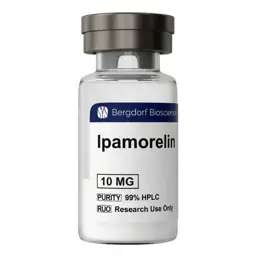
В наличност
В наличност
Вижте продукта
IpamorelinВижте продукта
IpamorelinТипични начални стойности за ориентир. Всеки ред отваря калкулатора за съответния пептид.
| Пептид | Категория | Обичайна доза | Размери на флакони | BAC (начало) | Наличност | Изчисли |
|---|---|---|---|---|---|---|
| VIP | Изследване на невропептиди | - | 10 mg | 2 ml | В наличност | Изчисли |
| Retatrutide | GLP-1/GIP/GCG | 0,5-12 mg | 2 / 5 / 10 / 15 mg | 2 ml | В наличност | Изчисли |
| Cagrilintide | Аналог на амилин | - | 5 mg | 2 ml | В наличност | Изчисли |
| Tirzepatide | GLP-1/GIP | 2,5-15 mg | 10 / 15 / 20 / 30 / 60 / 90 mg | 2 ml | В наличност | Изчисли |
| GHK-Cu | Меден пептид | 1-4 mg | 10 / 20 / 50 mg | 5 ml | В наличност | Изчисли |
| AHK-Cu | Меден пептид | - | 100 mg | 5 ml | В наличност | Изчисли |
| BPC-157 | Възстановяване на тъкани | 0,2-0,5 mg | 2 / 5 / 10 mg | 2 ml | В наличност | Изчисли |
| TB-500 | Тимозин β4 | 2-5 mg | 2 / 5 / 10 mg | 2 ml | В наличност | Изчисли |
| CJC-1295 (без DAC) | GHRH аналог | 100-200 mcg | 2 / 5 / 10 mg | 2 ml | В наличност | Изчисли |
| Ipamorelin | GHRP | 200-300 mcg | 2 / 5 mg | 2 ml | В наличност | Изчисли |
| PT-141 | Бремеланотид | - | 2 / 5 / 10 mg | 2 ml | В наличност | Изчисли |
| MOTS-c | Митохондриален | 5-10 mg | 5 / 10 mg | 2 ml | В наличност | Изчисли |
| Селанк (Selank) | Анксиолитик | 150-500 mcg | 2 / 5 / 10 mg | 2 ml | В наличност | Изчисли |
| SS-31 | Еламипретид | 0,1-1 mg | 5 / 10 mg | 2 ml | В наличност | Изчисли |
| Glow Stack | Stack | 0,5-2 mg | 70 mg | 3 ml | В наличност | Изчисли |
| Klow Stack | Stack | 0,5-2 mg | 55 mg | 3 ml | В наличност | Изчисли |
| Melanotan II | Меланокортин | 100-1000 mcg | 5 / 10 mg | 2 ml | В наличност | Изчисли |
| Melanotan I | Меланокортин | - | 5 / 10 mg | 2 ml | В наличност | Изчисли |
| Серморелин (Sermorelin) | Аналог на GHRH | 50-300 mcg | 5 mg | 2 ml | В наличност | Изчисли |
| Tesamorelin | GHRH аналог | 1-2 mg | 10 / 20 mg | 2 ml | В наличност | Изчисли |
| Thymosin Alpha-1 | Тимусен пептид | 0,8-3,2 mg | 1.6 / 5 / 10 mg | 1 ml | В наличност | Изчисли |
| Epithalon | Дълголетие | 2-10 mg | 10 / 20 / 50 mg | 2 ml | В наличност | Изчисли |
| KPV | Имунна / Бариера | 100-1000 mcg | 5 / 10 mg | 2 ml | В наличност | Изчисли |
| Semax | Когнитивен | 100-1000 mcg | 10 / 30 mg | 2 ml | В наличност | Изчисли |
| DSIP | Сън | 50-500 mcg | 10 mg | 2 ml | В наличност | Изчисли |
| 5-Amino-1MQ | Метаболитен | 2,5-10 mg | 10 mg | 2 ml | В наличност | Изчисли |
| Пинеалон (Pinealon) | Изследователски пептид | - | 10 mg | 2 ml | В наличност | Изчисли |
| Сурводутид (Survodutide) | GLP-1/глюкагон | - | 10 mg | 2 ml | В наличност | Изчисли |
| Киспептин-10 (Kisspeptin-10) | KISS1R / GPR54 | - | 10 mg | 2 ml | В наличност | Изчисли |
| NAD+ | Дълголетие / Кофактор | 100-500 mg | 1000 mg | 10 ml | В наличност | Изчисли |
| Semaglutide | GLP-1 | 0,25-2,4 mg | 2 / 5 / 10 mg | 2 ml | Само калкулатор | Изчисли |
| AOD-9604 | Изгаряне на мазнини | 250-500 mcg | 2 / 5 mg | 2 ml | Само калкулатор | Изчисли |
| HGH Fragment 176-191 | Метаболитен фрагмент | 100-500 mcg | 2 / 5 / 10 mg | 2 ml | Само калкулатор | Изчисли |
| N-Acetyl Semax | Когнитивен | 100-1000 mcg | 5 / 10 mg | 2 ml | Само калкулатор | Изчисли |
| Hexarelin | GHRP | 50-200 mcg | 2 / 5 mg | 2 ml | Само калкулатор | Изчисли |
| GHRP-6 | GHRP | 50-300 mcg | 2 / 5 mg | 2 ml | Само калкулатор | Изчисли |
| GHRP-2 | GHRP | 50-250 mcg | 2 / 5 mg | 2 ml | Само калкулатор | Изчисли |
| HGH 191AA | Хормон на растежа | 1-5 mg | 10 mg | 1 ml | Само калкулатор | Изчисли |
Стойностите служат за ориентир в изследователски контекст и не заместват професионална консултация.
Типични начални стойности за ориентир. Всеки ред отваря калкулатора за съответния пептид.
| Пептид | Категория | Обичайна доза | Размери на флакони | BAC (начало) | Наличност | Изчисли |
|---|---|---|---|---|---|---|
| VIP | Изследване на невропептиди | - | 10 mg | 2 ml | В наличност | Изчисли |
| Retatrutide | GLP-1/GIP/GCG | 0,5-12 mg | 2 / 5 / 10 / 15 mg | 2 ml | В наличност | Изчисли |
| Cagrilintide | Аналог на амилин | - | 5 mg | 2 ml | В наличност | Изчисли |
| Tirzepatide | GLP-1/GIP | 2,5-15 mg | 10 / 15 / 20 / 30 / 60 / 90 mg | 2 ml | В наличност | Изчисли |
| GHK-Cu | Меден пептид | 1-4 mg | 10 / 20 / 50 mg | 5 ml | В наличност | Изчисли |
| AHK-Cu | Меден пептид | - | 100 mg | 5 ml | В наличност | Изчисли |
| BPC-157 | Възстановяване на тъкани | 0,2-0,5 mg | 2 / 5 / 10 mg | 2 ml | В наличност | Изчисли |
| TB-500 | Тимозин β4 | 2-5 mg | 2 / 5 / 10 mg | 2 ml | В наличност | Изчисли |
| CJC-1295 (без DAC) | GHRH аналог | 100-200 mcg | 2 / 5 / 10 mg | 2 ml | В наличност | Изчисли |
| Ipamorelin | GHRP | 200-300 mcg | 2 / 5 mg | 2 ml | В наличност | Изчисли |
| PT-141 | Бремеланотид | - | 2 / 5 / 10 mg | 2 ml | В наличност | Изчисли |
| MOTS-c | Митохондриален | 5-10 mg | 5 / 10 mg | 2 ml | В наличност | Изчисли |
| Селанк (Selank) | Анксиолитик | 150-500 mcg | 2 / 5 / 10 mg | 2 ml | В наличност | Изчисли |
| SS-31 | Еламипретид | 0,1-1 mg | 5 / 10 mg | 2 ml | В наличност | Изчисли |
| Glow Stack | Stack | 0,5-2 mg | 70 mg | 3 ml | В наличност | Изчисли |
| Klow Stack | Stack | 0,5-2 mg | 55 mg | 3 ml | В наличност | Изчисли |
| Melanotan II | Меланокортин | 100-1000 mcg | 5 / 10 mg | 2 ml | В наличност | Изчисли |
| Melanotan I | Меланокортин | - | 5 / 10 mg | 2 ml | В наличност | Изчисли |
| Серморелин (Sermorelin) | Аналог на GHRH | 50-300 mcg | 5 mg | 2 ml | В наличност | Изчисли |
| Tesamorelin | GHRH аналог | 1-2 mg | 10 / 20 mg | 2 ml | В наличност | Изчисли |
| Thymosin Alpha-1 | Тимусен пептид | 0,8-3,2 mg | 1.6 / 5 / 10 mg | 1 ml | В наличност | Изчисли |
| Epithalon | Дълголетие | 2-10 mg | 10 / 20 / 50 mg | 2 ml | В наличност | Изчисли |
| KPV | Имунна / Бариера | 100-1000 mcg | 5 / 10 mg | 2 ml | В наличност | Изчисли |
| Semax | Когнитивен | 100-1000 mcg | 10 / 30 mg | 2 ml | В наличност | Изчисли |
| DSIP | Сън | 50-500 mcg | 10 mg | 2 ml | В наличност | Изчисли |
| 5-Amino-1MQ | Метаболитен | 2,5-10 mg | 10 mg | 2 ml | В наличност | Изчисли |
| Пинеалон (Pinealon) | Изследователски пептид | - | 10 mg | 2 ml | В наличност | Изчисли |
| Сурводутид (Survodutide) | GLP-1/глюкагон | - | 10 mg | 2 ml | В наличност | Изчисли |
| Киспептин-10 (Kisspeptin-10) | KISS1R / GPR54 | - | 10 mg | 2 ml | В наличност | Изчисли |
| NAD+ | Дълголетие / Кофактор | 100-500 mg | 1000 mg | 10 ml | В наличност | Изчисли |
| Semaglutide | GLP-1 | 0,25-2,4 mg | 2 / 5 / 10 mg | 2 ml | Само калкулатор | Изчисли |
| AOD-9604 | Изгаряне на мазнини | 250-500 mcg | 2 / 5 mg | 2 ml | Само калкулатор | Изчисли |
| HGH Fragment 176-191 | Метаболитен фрагмент | 100-500 mcg | 2 / 5 / 10 mg | 2 ml | Само калкулатор | Изчисли |
| N-Acetyl Semax | Когнитивен | 100-1000 mcg | 5 / 10 mg | 2 ml | Само калкулатор | Изчисли |
| Hexarelin | GHRP | 50-200 mcg | 2 / 5 mg | 2 ml | Само калкулатор | Изчисли |
| GHRP-6 | GHRP | 50-300 mcg | 2 / 5 mg | 2 ml | Само калкулатор | Изчисли |
| GHRP-2 | GHRP | 50-250 mcg | 2 / 5 mg | 2 ml | Само калкулатор | Изчисли |
| HGH 191AA | Хормон на растежа | 1-5 mg | 10 mg | 1 ml | Само калкулатор | Изчисли |
Стойностите служат за ориентир в изследователски контекст и не заместват професионална консултация.
Изберете пептид, за да отворите страницата му на калкулатора с предварително попълнени стойности.
Изберете пептид, за да отворите страницата му на калкулатора с предварително попълнени стойности.