Peptyd badawczy · Copper tripeptide-1
GHK-Cu
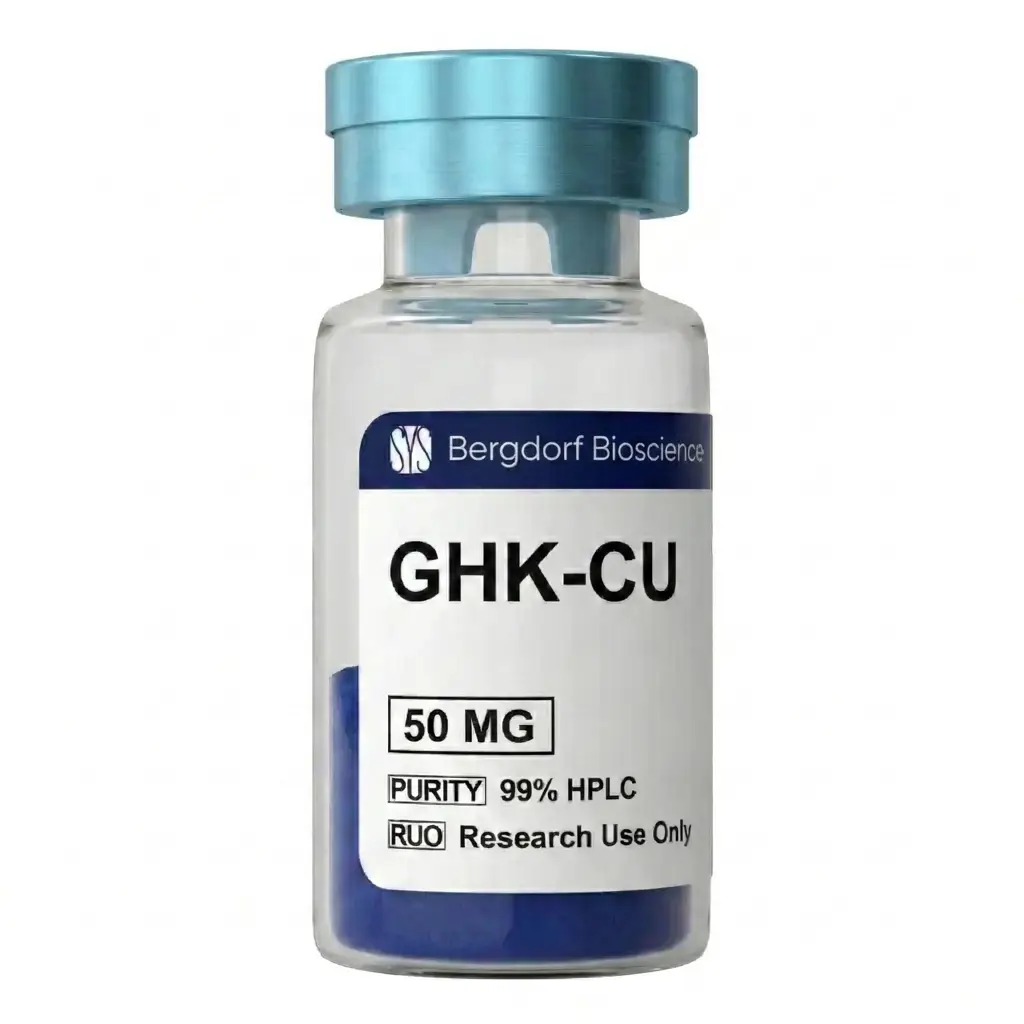
GHK-Cu, peptyd miedziowy do badań nad syntezą kolagenu in vitro. Fiolki 50mg i 100mg, czystość >=99% HPLC, liofilizowany, z CoA. Szybka wysyłka UE.

Peptyd badawczy · Copper tripeptide-1
GHK-Cu, peptyd miedziowy do badań nad syntezą kolagenu in vitro. Fiolki 50mg i 100mg, czystość >=99% HPLC, liofilizowany, z CoA. Szybka wysyłka UE.
Peptyd badawczy · Copper tripeptide-1
GHK-Cu, peptyd miedziowy do badań nad syntezą kolagenu in vitro. Fiolki 50mg i 100mg, czystość >=99% HPLC, liofilizowany, z CoA. Szybka wysyłka UE.
/ fiolka
Zamów dziś → Dostawa pon., 28 wrz – wt., 06 paź do Stany Zjednoczone
Metody płatności







/ fiolka
Zamów dziś → Dostawa pon., 28 wrz – wt., 06 paź do Stany Zjednoczone
Metody płatności
Brak opinii. Bądź pierwszy, który podzieli się swoim doświadczeniem.
Brak opinii. Bądź pierwszy, który podzieli się swoim doświadczeniem.
Jakość niezależnie potwierdzona
3000+
zadowolonych badaczy
99,43%
Śr. czystość 2026
4,8 ★
ProvenExpert
99,43%
Śr. czystość 2026
4,8 ★
ProvenExpert
3000+ zadowolonych badaczy
Fiolka GHK-Cu 50mg - 1 Pack + 2 ml wody BAC - stężenie:
Na jednostkę (10 IU)
2.50 mg
Referencje naukowe
Szczegóły badawcze
Na tej stronie
GHK-Cu (kompleks miedzi z glicylo-L-histydylo-L-lizyną) to naturalnie występujący chelat tripeptyd-miedź, po raz pierwszy wyizolowany z ludzkiego osocza przez dr. Lorena Pickarta w 1973 roku. Ta niewielka cząsteczka, o masie cząsteczkowej około 403,9 Da dla wolnego peptydu (lub około 467 Da jako kompleks miedzi), występuje u młodych dorosłych w stężeniach około 200 ng/ml i wyraźnie spada wraz z wiekiem. Badania prowadzone od ponad pięciu dekad ujawniły niezwykłą zdolność GHK-Cu do modulowania ekspresji genów związanych z przebudową tkanek, a badania zidentyfikowały ponad 4000 genów, na które wpływa ten peptyd. Jego główne mechanizmy działania obejmują dostarczanie jonów miedzi(II) do tkanek, aktywację szlaków przebudowy tkanek, stymulację syntezy kolagenu i elastyny oraz zwiększenie produkcji dekoryny i glikozaminoglikanów. To sprawia, że GHK-Cu jest jednym z najdokładniej zbadanych peptydów w badaniach regeneracyjnych i dermatologicznych.
Naukowe znaczenie GHK-Cu potwierdzają dekady badań recenzowanych przez ekspertów. Pionierska praca dr. Pickarta oraz kolejne badania opublikowane w czasopismach, w tym Journal of Biological Chemistry i Dermatologic Surgery, ugruntowały pozycję GHK-Cu jako peptydu o szerokim potencjale regeneracyjnym:
W Bergdorf Bioscience GHK-Cu dostarczany jest w postaci liofilizowanego (suszonego sublimacyjnie) proszku o wysokiej czystości. Ten proces produkcji zapewnia maksymalną stabilność chemiczną oraz długi okres przydatności przy prawidłowym przechowywaniu.
Kupując GHK-Cu do swojego laboratorium, potrzebujesz absolutnej niezawodności. GHK-Cu jest dostępny w Bergdorf Bioscience w następujących wielkościach fiolek:
Każda fiolka jest napełniana w najbardziej rygorystycznych warunkach laboratoryjnych i indywidualnie zamykana. Wszystkie partie są analizowane metodą wysokosprawnej chromatografii cieczowej (HPLC) i posiadają gwarantowaną czystość na poziomie co najmniej 99%. Nasza kontrola jakości obejmuje również szczegółową spektrometrię mas w celu potwierdzenia dokładnej masy cząsteczkowej oraz rygorystyczne testy na endotoksyny.
Oferujemy niezawodną wysyłkę na cały świat dla wszystkich naszych peptydów badawczych. Dzięki profesjonalnej liofilizacji proszek GHK-Cu jest wysoce stabilny termicznie w stanie niezmieszanym. Integralność cząsteczkowa i wysoka aktywność biologiczna peptydu pozostają w pełni zachowane w normalnych temperaturach otoczenia przez cały czas transportu międzynarodowego. Po rekonstytucji (zmieszaniu z wodą bakteriostatyczną) zdecydowanie zalecamy jednak odpowiednie przechowywanie w lodówce.
Binds copper(II) ions; activates tissue remodeling genes; promotes collagen, elastin, and glycosaminoglycan synthesis.
Protokół zaawansowany
1-2 mg daily, subcutaneously or topically (cream/serum)
Uwaga: podane dawkowania odpowiadają typowym zakresom z opublikowanej literatury badawczej. Nie zastępują one porady wykwalifikowanego badacza ani lekarza.
Każda partia jest analizowana przez niezależne laboratorium metodą HPLC przed wysyłką. Dokumentujemy czystość (śr. 99,43% w 2026 r.), tożsamość metodą spektrometrii masowej oraz sterylność. Produkcja przebiega zgodnie ze standardami GMP w laboratoriach z certyfikatem ISO.
GHK-Cu (peptyd miedziowy) to naturalnie występujący tripeptyd z jonem miedzi, który wspomaga syntezę kolagenu, gojenie ran i regenerację skóry.
Jakość niezależnie potwierdzona
3000+
zadowolonych badaczy
99,43%
Śr. czystość 2026
4,8 ★
ProvenExpert
99,43%
Śr. czystość 2026
4,8 ★
ProvenExpert
3000+ zadowolonych badaczy
Fiolka GHK-Cu 50mg - 1 Pack + 2 ml wody BAC - stężenie:
Na jednostkę (10 IU)
2.50 mg
Referencje naukowe
Szczegóły badawcze
Na tej stronie
GHK-Cu (kompleks miedzi z glicylo-L-histydylo-L-lizyną) to naturalnie występujący chelat tripeptyd-miedź, po raz pierwszy wyizolowany z ludzkiego osocza przez dr. Lorena Pickarta w 1973 roku. Ta niewielka cząsteczka, o masie cząsteczkowej około 403,9 Da dla wolnego peptydu (lub około 467 Da jako kompleks miedzi), występuje u młodych dorosłych w stężeniach około 200 ng/ml i wyraźnie spada wraz z wiekiem. Badania prowadzone od ponad pięciu dekad ujawniły niezwykłą zdolność GHK-Cu do modulowania ekspresji genów związanych z przebudową tkanek, a badania zidentyfikowały ponad 4000 genów, na które wpływa ten peptyd. Jego główne mechanizmy działania obejmują dostarczanie jonów miedzi(II) do tkanek, aktywację szlaków przebudowy tkanek, stymulację syntezy kolagenu i elastyny oraz zwiększenie produkcji dekoryny i glikozaminoglikanów. To sprawia, że GHK-Cu jest jednym z najdokładniej zbadanych peptydów w badaniach regeneracyjnych i dermatologicznych.
Naukowe znaczenie GHK-Cu potwierdzają dekady badań recenzowanych przez ekspertów. Pionierska praca dr. Pickarta oraz kolejne badania opublikowane w czasopismach, w tym Journal of Biological Chemistry i Dermatologic Surgery, ugruntowały pozycję GHK-Cu jako peptydu o szerokim potencjale regeneracyjnym:
W Bergdorf Bioscience GHK-Cu dostarczany jest w postaci liofilizowanego (suszonego sublimacyjnie) proszku o wysokiej czystości. Ten proces produkcji zapewnia maksymalną stabilność chemiczną oraz długi okres przydatności przy prawidłowym przechowywaniu.
Kupując GHK-Cu do swojego laboratorium, potrzebujesz absolutnej niezawodności. GHK-Cu jest dostępny w Bergdorf Bioscience w następujących wielkościach fiolek:
Każda fiolka jest napełniana w najbardziej rygorystycznych warunkach laboratoryjnych i indywidualnie zamykana. Wszystkie partie są analizowane metodą wysokosprawnej chromatografii cieczowej (HPLC) i posiadają gwarantowaną czystość na poziomie co najmniej 99%. Nasza kontrola jakości obejmuje również szczegółową spektrometrię mas w celu potwierdzenia dokładnej masy cząsteczkowej oraz rygorystyczne testy na endotoksyny.
Oferujemy niezawodną wysyłkę na cały świat dla wszystkich naszych peptydów badawczych. Dzięki profesjonalnej liofilizacji proszek GHK-Cu jest wysoce stabilny termicznie w stanie niezmieszanym. Integralność cząsteczkowa i wysoka aktywność biologiczna peptydu pozostają w pełni zachowane w normalnych temperaturach otoczenia przez cały czas transportu międzynarodowego. Po rekonstytucji (zmieszaniu z wodą bakteriostatyczną) zdecydowanie zalecamy jednak odpowiednie przechowywanie w lodówce.
Binds copper(II) ions; activates tissue remodeling genes; promotes collagen, elastin, and glycosaminoglycan synthesis.
Protokół zaawansowany
1-2 mg daily, subcutaneously or topically (cream/serum)
Uwaga: podane dawkowania odpowiadają typowym zakresom z opublikowanej literatury badawczej. Nie zastępują one porady wykwalifikowanego badacza ani lekarza.
Każda partia jest analizowana przez niezależne laboratorium metodą HPLC przed wysyłką. Dokumentujemy czystość (śr. 99,43% w 2026 r.), tożsamość metodą spektrometrii masowej oraz sterylność. Produkcja przebiega zgodnie ze standardami GMP w laboratoriach z certyfikatem ISO.
GHK-Cu (peptyd miedziowy) to naturalnie występujący tripeptyd z jonem miedzi, który wspomaga syntezę kolagenu, gojenie ran i regenerację skóry.


Przewodnik GHK-Cu: mechanizm działania, dawkowanie, badania nad skórą i włosami. 3000+ słów z referencjami PubMed.
Peptydy miedziowe na skore w badaniach: GHK-Cu i AHK-Cu a kolagen, elastyna i mieszki wlosowe. Stan badan wyjasniony neutralnie.
Naukowy przeglad longevity peptide stack: NAD+, GHK-Cu i Epitalon w badaniach nad starzeniem. Wylacznie do celow badawczych, bez obietnic zdrowotnych.
Przewodnik GHK-Cu: mechanizm działania, dawkowanie, badania nad skórą i włosami. 3000+ słów z referencjami PubMed.
Peptydy miedziowe na skore w badaniach: GHK-Cu i AHK-Cu a kolagen, elastyna i mieszki wlosowe. Stan badan wyjasniony neutralnie.
Naukowy przeglad longevity peptide stack: NAD+, GHK-Cu i Epitalon w badaniach nad starzeniem. Wylacznie do celow badawczych, bez obietnic zdrowotnych.