
Calcule volumes de reconstituição exatos, unidades de insulina e doses por frasco para qualquer peptídeo.
Frasco, água e dose são conhecidos
Os traços medem o volume, não a substância ativa. 10 IU = 0.10 ml. Quantos mg estão contidos depende da mistura. A calculadora já fez essa conta por si.
Quase todas as seringas de insulina são U-100. Escolha U-40 apenas se a seringa indicar U-40.
As fontes vinculadas levam ao PubMed e abrem em uma nova aba.
BPC-157 (Body Protection Compound-157) is a synthetic pentadecapeptide consisting of 15 amino acids. It is derived from a naturally occurring protective protein found in human gastric juice — BPC (Body Protection Compound) — which plays a role in maintaining the integrity of the gastric mucosal lining. The "157" designation refers to its specific sequence, which was isolated and stabilized for research purposes. Unlike many peptides that are fragile in physiological environments, BPC-157 demonstrates remarkable stability in gastric acid and biological fluids, making it uniquely suited for both oral and parenteral administration in research contexts.
First described in research by the group of Predrag Sikiric at the University of Zagreb in the 1990s, BPC-157 has since accumulated an extensive body of preclinical evidence spanning gastrointestinal healing, musculoskeletal repair, neurological protection, and systemic anti-inflammatory activity. It has been studied in models of tendon and ligament injury, inflammatory bowel disease, traumatic brain injury, peripheral nerve damage, corneal healing, and more. While human clinical trials remain limited, the breadth and consistency of its effects across animal models have made it one of the most discussed peptides in regenerative medicine and performance optimization research.
BPC-157 is not a hormone, does not bind to hormone receptors, and does not suppress the hypothalamic-pituitary axis. Its mechanisms are distinct from GH secretagogues and steroid-based interventions, which contributes to its favorable tolerability profile across a wide range of research applications.
BPC-157 exerts its biological effects through several distinct and partially overlapping pathways:
BPC-157 does not typically require a titration ramp. Most protocols begin directly at the therapeutic dose, though starting at the lower end of the range for the first few days is a reasonable precaution.
The most common vial size is 5 mg. Adding 2 mL of bacteriostatic water gives a concentration of 2.5 mg/mL (2,500 mcg/mL).
At 250 mcg once daily, a 5 mg vial provides 20 days of dosing. Use the BPC-157 calculator above to compute exact volumes for any vial size, reconstitution volume, and target dose.
For systemic effects (gut healing, neurological support, systemic anti-inflammation), subcutaneous injection into the abdomen is the most common and convenient approach. For localized musculoskeletal injuries — such as a torn tendon, ligament sprain, or joint injury — some protocols favor subcutaneous or intramuscular injection at or near the affected tissue. Proximity injection has theoretical advantages based on local concentration gradients but is not strictly required given BPC-157's systemic distribution.
BPC-157 is supplied as a lyophilized (freeze-dried) powder in sealed vials. It must be reconstituted with bacteriostatic water (BAC water) before use. Do not use sterile water for injection for multi-dose vials — BAC water contains 0.9% benzyl alcohol, which inhibits microbial growth and extends the usable window of the reconstituted solution.
If the solution appears cloudy, discolored, or contains visible particulate matter, discard the vial and do not inject it.
BPC-157 has a consistently favorable safety profile across a large body of preclinical research. It is derived from a naturally occurring gastric protein and has not produced organ toxicity, mutagenicity, or endocrine disruption in animal models even at high doses. That said, human clinical data is limited, and all use remains in the research domain.
No serious adverse events have been attributed to BPC-157 in the published literature at standard research doses. However, given the absence of large-scale human clinical trials, caution is warranted and consultation with a qualified healthcare provider is strongly recommended.
The combination of BPC-157 and TB-500 (Thymosin Beta-4) is widely regarded as the most potent dual-peptide healing stack available for musculoskeletal and systemic tissue repair. Often called the Healing Stack, this combination covers complementary repair pathways that neither peptide addresses alone:
Typical Healing Stack protocol: BPC-157 250–500 mcg/day + TB-500 2–2.5 mg, 2–3 times per week, both administered subcutaneously, for 4–8 weeks depending on injury severity. View the TB-500 calculator for TB-500 specific dosing guidance.
For skin health, anti-aging, and collagen-focused goals, BPC-157 pairs powerfully with GHK-Cu. BPC-157 provides the angiogenic and anti-inflammatory foundation, while GHK-Cu drives collagen synthesis, elastin production, and gene-level tissue renewal. This stack is known at BergdorfBio as the Glow Stack and is particularly popular for skin rejuvenation and recovery from aesthetic procedures.
BPC-157 is perhaps the most widely researched peptide for gastrointestinal repair. It has demonstrated efficacy in models of NSAID-induced ulceration, inflammatory bowel disease, fistulae, and leaky gut. For gut-specific applications, oral administration may be considered — BPC-157 retains stability in the gastric environment, allowing direct mucosal contact along the GI tract. Research doses for oral use are typically in the 250–500 mcg range, dissolved in water.
You can purchase research-grade BPC-157 directly from BergdorfBio: BPC-157 at BergdorfBio.
Response speed depends heavily on the application. For acute musculoskeletal injuries, many users report reduced pain and improved mobility within 1–2 weeks of daily dosing. For gastrointestinal issues such as NSAID-related discomfort or gastric inflammation, improvement is often noted within 5–10 days. Structural healing — such as tendon or ligament repair — takes longer to manifest clinically (4–8 weeks minimum) because tissue remodeling is a slow biological process regardless of pharmacological support.
Yes. BPC-157 is unusually stable in the gastric environment due to its derivation from a gastric protein. Oral and sublingual administration are used in research for gut-specific applications. However, oral bioavailability for systemic effects — such as tendon healing or neurological support — is lower than subcutaneous injection. For systemic applications, subcutaneous administration is preferred.
Not strictly. Subcutaneous abdominal injection achieves systemic distribution and has demonstrated efficacy for remote injuries in preclinical models. However, some practitioners prefer injecting near the injury site (subcutaneously or intramuscularly) for local concentration advantages, particularly for tendon and ligament injuries. Both approaches appear effective based on available research.
No. BPC-157 does not bind to hormone receptors and has no known interaction with the hypothalamic-pituitary-gonadal axis, thyroid function, or adrenal hormones. It upregulates growth hormone receptors at the tissue level without altering systemic GH or IGF-1 concentrations. No post-cycle therapy (PCT) is required.
BPC-157 is prohibited under the WADA prohibited list as a peptide hormone and related substance. Standard sports drug tests do not routinely screen for it due to its short half-life and the complexity of detection, but athletes subject to WADA-compliant testing should treat it as prohibited. Always verify the anti-doping rules applicable to your sport and jurisdiction.
For acute injury recovery, protocols typically run 4–8 weeks continuously, or until the injury resolves. For chronic conditions or general tissue maintenance, 6-week cycles with 2–4 week breaks are common. There is no strong evidence of receptor desensitization with BPC-157, but cycling is recommended out of general precaution given limited long-term human data.
While some users do combine them in a single syringe immediately before injection, it is generally safer to use separate syringes. Each peptide should be reconstituted individually, and their combined stability in solution is not well characterized. Separate injections at the same site or adjacent sites add minimal inconvenience while eliminating the risk of peptide interaction or concentration errors.
BPC-157 is available in two forms: the free acid form and the arginate salt form (also called BPC-157 stable salt or BPC-157 acetate). The arginate salt has enhanced stability and is better suited for oral administration. Both forms share the same 15-amino-acid core sequence and mechanisms. For subcutaneous injection, both forms are considered equivalent. The acetate/arginate distinction is most relevant when choosing between oral and injectable protocols.
BergdorfBio offers research-grade BPC-157 with verified purity and concentration. View the product page: BPC-157 bei BergdorfBio kaufen. All products are sold strictly for research purposes.
Medical Disclaimer: The information on this page is provided for educational and research purposes only. BPC-157 is not an approved drug or medical treatment and is sold strictly for research use. Nothing on this page constitutes medical advice, diagnosis, or a recommendation to use any specific compound. Always consult a qualified healthcare professional before beginning any peptide protocol. BergdorfBio assumes no liability for the use or misuse of the information presented here.
Do pó à seringa pronta em cinco passos. As quantidades são fornecidas automaticamente pela calculadora acima.
Deixe o frasco e a água atingirem a temperatura ambiente. Limpe ambas as tampas de borracha com uma compressa de álcool.
Aspire a quantidade de água BAC recomendada pela calculadora com uma seringa maior.
Deixe a água escorrer pela parede de vidro até ao frasco do peptídeo, não a injete diretamente sobre o pó.
Rode o frasco suavemente, não o agite. O pó dissolve-se de forma límpida em 1-2 minutos.
Aspire exatamente até ao traço calculado com a seringa de insulina. Pronto.
Valores iniciais típicos para orientação. Cada linha abre a calculadora para o respectivo peptídeo.
| Peptídeo | Categoria | Dose habitual | Tamanhos de frasco | BAC (início) | Disponível | Calcular |
|---|---|---|---|---|---|---|
| Retatrutid | GLP-1/GIP/GCG | 0,5-12 mg | 2 / 5 / 10 / 15 mg | 2 ml | Só calculadora | Calcular |
| Semaglutid | GLP-1 | 0,25-2,4 mg | 2 / 5 / 10 mg | 2 ml | Só calculadora | Calcular |
| Tirzepatid | GLP-1/GIP | 2,5-15 mg | 5 / 10 / 15 mg | 2 ml | Só calculadora | Calcular |
| GHK-Cu | Kupferpeptid | 1-4 mg | 10 / 20 / 50 mg | 5 ml | Só calculadora | Calcular |
| BPC-157 | Gewebereparatur | 200-500 mcg | 2 / 5 / 10 mg | 2 ml | Só calculadora | Calcular |
| TB-500 | Thymosin Beta-4 | 2-5 mg | 2 / 5 / 10 mg | 2 ml | Só calculadora | Calcular |
| CJC-1295 (kein DAC) | GHRH-Analog | 100-200 mcg | 2 / 5 / 10 mg | 2 ml | Só calculadora | Calcular |
| Ipamorelin | GHRP | 200-300 mcg | 2 / 5 mg | 2 ml | Só calculadora | Calcular |
| AOD-9604 | Fettverbrennung | 250-500 mcg | 2 / 5 mg | 2 ml | Só calculadora | Calcular |
| PT-141 | Bremelanotid | 0,5-2 mg | 2 / 5 / 10 mg | 2 ml | Só calculadora | Calcular |
| MOTS-c | Mitochondrial | 5-10 mg | 5 / 10 mg | 2 ml | Só calculadora | Calcular |
| Selank | Anxiolytisch | 150-500 mcg | 2 / 5 mg | 2 ml | Só calculadora | Calcular |
| SS-31 | Elamipretide | 0,1-1 mg | 5 / 10 mg | 2 ml | Só calculadora | Calcular |
| Glow Stack | Stack | 0,5-2 mg | 70 mg | 3 ml | Só calculadora | Calcular |
| Klow Stack | Stack | 0,5-2 mg | 55 mg | 3 ml | Só calculadora | Calcular |
| Melanotan II | Melanocortin | 100-1000 mcg | 5 / 10 mg | 2 ml | Só calculadora | Calcular |
| Melanotan I | Melanocortin | 100-1000 mcg | 5 / 10 mg | 2 ml | Só calculadora | Calcular |
| Sermorelin | GHRH-Analog | 50-300 mcg | 2 / 5 mg | 2 ml | Só calculadora | Calcular |
| Tesamorelin | GHRH-Analog | 1-2 mg | 10 / 20 mg | 2 ml | Só calculadora | Calcular |
| Thymosin Alpha-1 | Thymisches Peptid | 0,8-3,2 mg | 1.6 / 5 / 10 mg | 1 ml | Só calculadora | Calcular |
| Epithalon | Langlebigkeit | 2-10 mg | 10 / 20 / 50 mg | 2 ml | Só calculadora | Calcular |
| KPV | Immun / Barriere | 100-1000 mcg | 5 / 10 mg | 2 ml | Só calculadora | Calcular |
| HGH-Fragment 176-191 | Metabolisches Fragment | 100-500 mcg | 2 / 5 / 10 mg | 2 ml | Só calculadora | Calcular |
| Semax | Kognitiv | 100-1000 mcg | 10 / 30 mg | 2 ml | Só calculadora | Calcular |
| N-Acetyl-Semax | Kognitiv | 100-1000 mcg | 5 / 10 mg | 2 ml | Só calculadora | Calcular |
| Hexarelin | GHRP | 50-200 mcg | 2 / 5 mg | 2 ml | Só calculadora | Calcular |
| GHRP-6 | GHRP | 50-300 mcg | 2 / 5 mg | 2 ml | Só calculadora | Calcular |
| GHRP-2 | GHRP | 50-250 mcg | 2 / 5 mg | 2 ml | Só calculadora | Calcular |
| DSIP | Schlaf | 50-500 mcg | 2 / 5 mg | 2 ml | Só calculadora | Calcular |
| 5-Amino-1MQ | Metabolisch | 2,5-10 mg | 5 / 10 mg | 2 ml | Só calculadora | Calcular |
| HGH 191AA | Wachstumshormon | 1-5 mg | 10 mg | 1 ml | Só calculadora | Calcular |
| NAD+ | Longevity / Cofaktor | 100-500 mg | 1000 mg | 10 ml | Só calculadora | Calcular |
Os valores servem de orientação no contexto de pesquisa e não substituem aconselhamento especializado.
Calcular corretamente a concentração e o volume de injeção parece trivial, mas é a fonte de erro mais comum. Mesmo um erro de cálculo de 10 % durante a reconstituição significa que recebe substância ativa a menos ou que faz uma sobredosagem involuntária.
Os peptídeos liofilizados são fornecidos em miligramas e dissolvidos em água bacteriostática (água BAC). A proporção entre peptídeo e água determina a concentração e, a partir daí, define-se quantos traços aspira na seringa de insulina. As seringas de insulina são graduadas em unidades, não em miligramas. A calculadora trata desta conversão, incluindo a verificação de plausibilidade contra o erro mais perigoso: confundir mg e mcg.
Miligrama (mg) é a unidade em que os peptídeos liofilizados são vendidos, por exemplo «5 mg BPC-157». Micrograma (mcg) mede a dose individual, por exemplo «250 mcg por injeção». 1 mg = 1000 mcg. A calculadora converte automaticamente e avisa quando uma entrada parece ser uma confusão.
U-100 significa que a seringa está calibrada para 100 unidades por mililitro. 100 IU = 1 ml, ou seja, 10 IU = 0,10 ml, independentemente do que está na seringa. O cálculo das IU baseia-se exatamente nesta relação.
Com muito peptídeo e pouca água, a solução fica muito concentrada, pelo que o volume por dose é minúsculo e difícil de ler. Use a ajuda à mistura: ela encontra o volume de água que produz um traço limpo e fácil de ler.
No frigorífico, a 2-8 °C, normalmente 21-30 dias. Identifique o frasco com a data da reconstituição. Soluções turvas ou com partículas são motivo de exclusão.
Os blends contêm várias substâncias ativas num só frasco. Basta selecionar o blend como peptídeo: a calculadora mostra adicionalmente quanto de cada componente está contido na sua injeção. Para combinações de vários frascos separados, use o Stack Builder.
Não. As suas últimas configurações são salvas localmente no navegador e restauradas na próxima visita. Além disso, você pode recuperar cálculos do histórico, salvá-los como protocolo ou compartilhá-los por link.
Escolha um peptídeo para abrir sua página de calculadora dedicada com valores pré-preenchidos.
Ver Produto
BPC-157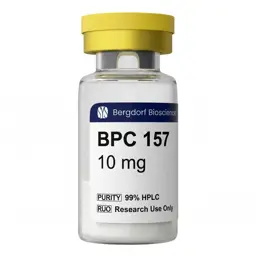
Valores iniciais típicos para orientação. Cada linha abre a calculadora para o respectivo peptídeo.
Escolha um peptídeo para abrir sua página de calculadora dedicada com valores pré-preenchidos.
| 1-4 mg |
| 10 / 20 / 50 mg |
| 5 ml |
| Em estoque |
| Calcular |
| BPC-157 | Gewebereparatur | 200-500 mcg | 2 / 5 / 10 mg | 2 ml | Em estoque | Calcular |
| TB-500 | Thymosin Beta-4 | 2-5 mg | 2 / 5 / 10 mg | 2 ml | Em estoque | Calcular |
| CJC-1295 (kein DAC) | GHRH-Analog | 100-200 mcg | 2 / 5 / 10 mg | 2 ml | Em estoque | Calcular |
| MOTS-c | Mitochondrial | 5-10 mg | 5 / 10 mg | 2 ml | Em estoque | Calcular |
| Glow Stack | Stack | 0,5-2 mg | 70 mg | 3 ml | Em estoque | Calcular |
| Klow Stack | Stack | 0,5-2 mg | 55 mg | 3 ml | Em estoque | Calcular |
| Melanotan II | Melanocortin | 100-1000 mcg | 5 / 10 mg | 2 ml | Em estoque | Calcular |
| Tesamorelin | GHRH-Analog | 1-2 mg | 10 / 20 mg | 2 ml | Em estoque | Calcular |
| Thymosin Alpha-1 | Thymisches Peptid | 0,8-3,2 mg | 1.6 / 5 / 10 mg | 1 ml | Em estoque | Calcular |
| KPV | Immun / Barriere | 100-1000 mcg | 5 / 10 mg | 2 ml | Em estoque | Calcular |
| Semax | Kognitiv | 100-1000 mcg | 10 / 30 mg | 2 ml | Em estoque | Calcular |
| NAD+ | Longevity / Cofaktor | 100-500 mg | 1000 mg | 10 ml | Em estoque | Calcular |
| Semaglutid | GLP-1 | 0,25-2,4 mg | 2 / 5 / 10 mg | 2 ml | Só calculadora | Calcular |
| Ipamorelin | GHRP | 200-300 mcg | 2 / 5 mg | 2 ml | Só calculadora | Calcular |
| AOD-9604 | Fettverbrennung | 250-500 mcg | 2 / 5 mg | 2 ml | Só calculadora | Calcular |
| PT-141 | Bremelanotid | 0,5-2 mg | 2 / 5 / 10 mg | 2 ml | Só calculadora | Calcular |
| Selank | Anxiolytisch | 150-500 mcg | 2 / 5 mg | 2 ml | Só calculadora | Calcular |
| SS-31 | Elamipretide | 0,1-1 mg | 5 / 10 mg | 2 ml | Só calculadora | Calcular |
| Melanotan I | Melanocortin | 100-1000 mcg | 5 / 10 mg | 2 ml | Só calculadora | Calcular |
| Sermorelin | GHRH-Analog | 50-300 mcg | 2 / 5 mg | 2 ml | Só calculadora | Calcular |
| Epithalon | Langlebigkeit | 2-10 mg | 10 / 20 / 50 mg | 2 ml | Só calculadora | Calcular |
| HGH-Fragment 176-191 | Metabolisches Fragment | 100-500 mcg | 2 / 5 / 10 mg | 2 ml | Só calculadora | Calcular |
| N-Acetyl-Semax | Kognitiv | 100-1000 mcg | 5 / 10 mg | 2 ml | Só calculadora | Calcular |
| Hexarelin | GHRP | 50-200 mcg | 2 / 5 mg | 2 ml | Só calculadora | Calcular |
| GHRP-6 | GHRP | 50-300 mcg | 2 / 5 mg | 2 ml | Só calculadora | Calcular |
| GHRP-2 | GHRP | 50-250 mcg | 2 / 5 mg | 2 ml | Só calculadora | Calcular |
| DSIP | Schlaf | 50-500 mcg | 2 / 5 mg | 2 ml | Só calculadora | Calcular |
| 5-Amino-1MQ | Metabolisch | 2,5-10 mg | 5 / 10 mg | 2 ml | Só calculadora | Calcular |
| HGH 191AA | Wachstumshormon | 1-5 mg | 10 mg | 1 ml | Só calculadora | Calcular |
Os valores servem de orientação no contexto de pesquisa e não substituem aconselhamento especializado.