
Calcule volumes de reconstituição exatos, unidades de insulina e doses por frasco para qualquer peptídeo.
Frasco, água e dose são conhecidos
Os traços medem o volume, não a substância ativa. 20 IU = 0,20 ml. Quantos mg estão contidos depende da mistura. A calculadora já fez essa conta por si.
Quase todas as seringas de insulina são U-100. Escolha U-40 apenas se a seringa indicar U-40.
As fontes vinculadas levam ao PubMed e abrem em uma nova aba.
GHK-Cu (Glycyl-L-Histidyl-L-Lysine Copper) is a naturally occurring copper-binding tripeptide first isolated from human plasma in 1973 by Loren Pickart. The peptide consists of three amino acids — glycine, histidine, and lysine — chelated to a copper(II) ion. It is found in plasma, saliva, and urine and plays a central role in tissue remodeling, wound healing, and the regulation of gene expression.
Plasma concentrations of GHK-Cu are highest in youth (approximately 200 ng/mL at age 20) and decline steadily with age, dropping to around 80 ng/mL by age 60. This age-related decline correlates with slower wound healing, reduced skin elasticity, and diminished regenerative capacity across tissues. Supplementing with exogenous GHK-Cu is therefore aimed at restoring youthful signaling pathways that govern repair and antioxidant defense.
GHK-Cu has been studied extensively in dermatology, oncology, and regenerative medicine. Its mechanisms include stimulation of collagen, elastin, and glycosaminoglycan synthesis; upregulation of antioxidant enzymes; modulation of transforming growth factor beta (TGF-β); and broad anti-inflammatory activity via suppression of NF-κB signaling. In vitro and animal studies also suggest neuroprotective properties and positive effects on hair follicle proliferation.
The biological activity of GHK-Cu operates on several interconnected levels:
GHK-Cu does not follow a traditional titration ramp like some research peptides. Instead, users typically begin at a therapeutic dose and maintain it throughout the protocol.
Most protocols run for 4–8 weeks continuously. A common approach is:
Injection timing is flexible. Most users administer once daily, either in the morning or at night. There is no strong evidence favoring a specific time of day for GHK-Cu.
GHK-Cu is supplied as a lyophilized (freeze-dried) powder, typically in 50 mg vials. Before use it must be reconstituted with bacteriostatic water (BAC water). Standard reconstitution for a 50 mg vial:
At 10 mg/mL, a standard 2 mg dose equals 0.20 mL (200 µL) drawn into an insulin syringe. Use the BergdorfBio GHK-Cu Calculator to compute exact volumes for any dose and concentration.
Proper storage is critical to preserve GHK-Cu activity:
GHK-Cu has a well-established safety profile in both topical and subcutaneous use. It is endogenous to the human body, which reduces the likelihood of immune responses.
No serious adverse events have been attributed to GHK-Cu in the published literature at standard research doses. However, clinical safety data in humans is limited, and all use is considered research-only.
The combination of GHK-Cu and BPC-157 is one of the most popular repair-focused stacks — referred to at BergdorfBio as the Glow Stack. The two peptides complement each other through distinct and additive mechanisms:
Typical Glow Stack protocol: GHK-Cu 2 mg/day + BPC-157 250–500 mcg/day, both subcutaneous, for 6–8 weeks. View the GHK-Cu product page to purchase from BergdorfBio.
Adding TB-500 (Thymosin Beta-4) to GHK-Cu enhances systemic tissue repair and cell migration, making this stack a strong choice after surgery, injury, or intense training. TB-500 contributes actin-binding and anti-apoptotic effects that widen the therapeutic scope beyond what GHK-Cu alone provides.
GHK-Cu can also be used topically in serum form, often alongside retinoids or vitamin C. Topical GHK-Cu penetrates the dermis and has demonstrated clinically meaningful improvements in skin laxity, wrinkle depth, and overall photodamage scores in randomized trials. Subcutaneous injection delivers a higher systemic dose, but topical application is a complementary option for skin-specific goals.
Most users notice improved skin texture and hydration within 2–3 weeks of daily subcutaneous dosing. More structural changes — collagen density, fine lines, wound healing speed — typically manifest at the 4–6 week mark. Hair benefits, if any, often require a full 8-week cycle to assess.
While some users do combine them in one injection, it is generally not recommended. Each peptide is reconstituted separately and their stability in a combined solution is not well characterized. Use separate syringes injected at the same site or at adjacent sites.
No. GHK-Cu has no known interaction with the hypothalamic-pituitary-testicular axis, thyroid function, or other endocrine systems. It does not suppress endogenous hormone production and does not require post-cycle therapy (PCT).
Yes. GHK-Cu is equally suitable for men and women. Its mechanisms are not sex-hormone dependent, and it is one of the most commonly used peptides in female anti-aging and skin health protocols.
For systemic effects (collagen, inflammation, oxidative stress), abdominal subcutaneous injections are the most practical. For localized skin goals, some practitioners inject small amounts intradermally or subcutaneously close to the target area (e.g., scalp for hair, face perimeter for skin). This approach is more technique-sensitive and should be learned under proper guidance.
Yes, and this is one of its most clinically supported use cases. The combination of GHK-Cu's collagen-promoting and anti-inflammatory effects with structured physical rehabilitation has been used in athletic recovery protocols. It does not interact with NSAIDs, corticosteroids (though these may blunt its collagen effects), or physical therapy modalities.
Yes. GHK-Cu is available in cream and serum formulations. While topical delivery is less bioavailable than subcutaneous injection for systemic effects, it is effective for local skin applications and suitable for users who prefer to avoid injections.
Reconstituted GHK-Cu stored in a refrigerator (2–8°C) is stable for approximately 28–30 days. After this period, activity may decline even if the solution appears clear. Always note the reconstitution date on the vial.
Medical Disclaimer: The information on this page is provided for educational and research purposes only. GHK-Cu is not an approved drug or medical treatment. It is sold strictly for research use. Nothing on this page constitutes medical advice, diagnosis, or a recommendation to use any specific compound. Always consult a qualified healthcare professional before beginning any peptide protocol. BergdorfBio assumes no liability for the use or misuse of the information presented here.
Do pó à seringa pronta em cinco passos. As quantidades são fornecidas automaticamente pela calculadora acima.
Deixe o frasco e a água atingirem a temperatura ambiente. Limpe ambas as tampas de borracha com uma compressa de álcool.
Aspire a quantidade de água BAC recomendada pela calculadora com uma seringa maior.
Deixe a água escorrer pela parede de vidro até ao frasco do peptídeo, não a injete diretamente sobre o pó.
Rode o frasco suavemente, não o agite. O pó dissolve-se de forma límpida em 1-2 minutos.
Aspire exatamente até ao traço calculado com a seringa de insulina. Pronto.
Valores iniciais típicos para orientação. Cada linha abre a calculadora para o respectivo peptídeo.
| Peptídeo | Categoria | Dose habitual | Tamanhos de frasco | BAC (início) | Disponível | Calcular |
|---|---|---|---|---|---|---|
| VIP | Pesquisa de neuropeptídeos | - | 10 mg | 2 ml | Só calculadora | Calcular |
| Retatrutide | GLP-1/GIP/GCG | 0,5-12 mg | 2 / 5 / 10 / 15 mg | 2 ml | Só calculadora | Calcular |
| Cagrilintide | Análogo da amilina | - | 5 mg | 2 ml | Só calculadora | Calcular |
| Semaglutid | GLP-1 | 0,25-2,4 mg | 2 / 5 / 10 mg | 2 ml | Só calculadora | Calcular |
| Tirzepatid | GLP-1/GIP | 2,5-15 mg | 5 / 10 / 15 / 20 / 30 / 60 mg | 2 ml | Só calculadora | Calcular |
| GHK-Cu | Kupferpeptid | 1-4 mg | 10 / 20 / 50 mg | 5 ml | Só calculadora | Calcular |
| AHK-Cu | Peptídeo de cobre | - | 100 mg | 5 ml | Só calculadora | Calcular |
| BPC-157 | Gewebereparatur | 0,2-0,5 mg | 2 / 5 / 10 mg | 2 ml | Só calculadora | Calcular |
| TB-500 | Thymosin Beta-4 | 2-5 mg | 2 / 5 / 10 mg | 2 ml | Só calculadora | Calcular |
| CJC-1295 (kein DAC) | GHRH-Analog | 100-200 mcg | 2 / 5 / 10 mg | 2 ml | Só calculadora | Calcular |
| Ipamorelin | GHRP | 200-300 mcg | 2 / 5 mg | 2 ml | Só calculadora | Calcular |
| AOD-9604 | Fettverbrennung | 250-500 mcg | 2 / 5 mg | 2 ml | Só calculadora | Calcular |
| PT-141 | Bremelanotide | - | 2 / 5 / 10 mg | 2 ml | Só calculadora | Calcular |
| MOTS-c | Mitochondrial | 5-10 mg | 5 / 10 mg | 2 ml | Só calculadora | Calcular |
| Selank | Anxiolytisch | 150-500 mcg | 2 / 5 / 10 mg | 2 ml | Só calculadora | Calcular |
| SS-31 | Elamipretide | 0,1-1 mg | 5 / 10 mg | 2 ml | Só calculadora | Calcular |
| Glow Stack | Stack | 0,5-2 mg | 70 mg | 3 ml | Só calculadora | Calcular |
| Klow Stack | Stack | 0,5-2 mg | 55 mg | 3 ml | Só calculadora | Calcular |
| Melanotan II | Melanocortin | 100-1000 mcg | 5 / 10 mg | 2 ml | Só calculadora | Calcular |
| Melanotan I | Melanocortina | - | 5 / 10 mg | 2 ml | Só calculadora | Calcular |
| Sermorelin | GHRH-Analog | 50-300 mcg | 2 / 5 mg | 2 ml | Só calculadora | Calcular |
| Tesamorelin | GHRH-Analog | 1-2 mg | 10 / 20 mg | 2 ml | Só calculadora | Calcular |
| Thymosin Alpha-1 | Thymisches Peptid | 0,8-3,2 mg | 1.6 / 5 / 10 mg | 1 ml | Só calculadora | Calcular |
| Epithalon | Langlebigkeit | 2-10 mg | 10 / 20 / 50 mg | 2 ml | Só calculadora | Calcular |
| KPV | Immun / Barriere | 100-1000 mcg | 5 / 10 mg | 2 ml | Só calculadora | Calcular |
| HGH-Fragment 176-191 | Metabolisches Fragment | 100-500 mcg | 2 / 5 / 10 mg | 2 ml | Só calculadora | Calcular |
| Semax | Kognitiv | 100-1000 mcg | 10 / 30 mg | 2 ml | Só calculadora | Calcular |
| N-Acetyl-Semax | Kognitiv | 100-1000 mcg | 5 / 10 mg | 2 ml | Só calculadora | Calcular |
| Hexarelin | GHRP | 50-200 mcg | 2 / 5 mg | 2 ml | Só calculadora | Calcular |
| GHRP-6 | GHRP | 50-300 mcg | 2 / 5 mg | 2 ml | Só calculadora | Calcular |
| GHRP-2 | GHRP | 50-250 mcg | 2 / 5 mg | 2 ml | Só calculadora | Calcular |
| DSIP | Schlaf | 50-500 mcg | 2 / 5 mg | 2 ml | Só calculadora | Calcular |
| 5-Amino-1MQ | Metabolisch | 2,5-10 mg | 5 / 10 mg | 2 ml | Só calculadora | Calcular |
| HGH 191AA | Wachstumshormon | 1-5 mg | 10 mg | 1 ml | Só calculadora | Calcular |
| NAD+ | Longevity / Cofaktor | 100-500 mg | 1000 mg | 10 ml | Só calculadora | Calcular |
Os valores servem de orientação no contexto de pesquisa e não substituem aconselhamento especializado.
Calcular corretamente a concentração e o volume de injeção parece trivial, mas é a fonte de erro mais comum. Mesmo um erro de cálculo de 10 % durante a reconstituição significa que recebe substância ativa a menos ou que faz uma sobredosagem involuntária.
Os peptídeos liofilizados são fornecidos em miligramas e dissolvidos em água bacteriostática (água BAC). A proporção entre peptídeo e água determina a concentração e, a partir daí, define-se quantos traços aspira na seringa de insulina. As seringas de insulina são graduadas em unidades, não em miligramas. A calculadora trata desta conversão, incluindo a verificação de plausibilidade contra o erro mais perigoso: confundir mg e mcg.
Miligrama (mg) é a unidade em que os peptídeos liofilizados são vendidos, por exemplo «5 mg BPC-157». Micrograma (mcg) mede a dose individual, por exemplo «250 mcg por injeção». 1 mg = 1000 mcg. A calculadora converte automaticamente e avisa quando uma entrada parece ser uma confusão.
U-100 significa que a seringa está calibrada para 100 unidades por mililitro. 100 IU = 1 ml, ou seja, 10 IU = 0,10 ml, independentemente do que está na seringa. O cálculo das IU baseia-se exatamente nesta relação.
Com muito peptídeo e pouca água, a solução fica muito concentrada, pelo que o volume por dose é minúsculo e difícil de ler. Use a ajuda à mistura: ela encontra o volume de água que produz um traço limpo e fácil de ler.
No frigorífico, a 2-8 °C, normalmente 21-30 dias. Identifique o frasco com a data da reconstituição. Soluções turvas ou com partículas são motivo de exclusão.
Os blends contêm várias substâncias ativas num só frasco. Basta selecionar o blend como peptídeo: a calculadora mostra adicionalmente quanto de cada componente está contido na sua injeção. Para combinações de vários frascos separados, use o Stack Builder.
Não. As suas últimas configurações são salvas localmente no navegador e restauradas na próxima visita. Além disso, você pode recuperar cálculos do histórico, salvá-los como protocolo ou compartilhá-los por link.
Escolha um peptídeo para abrir sua página de calculadora dedicada com valores pré-preenchidos.
Calcule volumes de reconstituição exatos, unidades de insulina e doses por frasco para qualquer peptídeo.
Frasco, água e dose são conhecidos
Os traços medem o volume, não a substância ativa. 20 IU = 0,20 ml. Quantos mg estão contidos depende da mistura. A calculadora já fez essa conta por si.
Quase todas as seringas de insulina são U-100. Escolha U-40 apenas se a seringa indicar U-40.
As fontes vinculadas levam ao PubMed e abrem em uma nova aba.
GHK-Cu (Glycyl-L-Histidyl-L-Lysine Copper) is a naturally occurring copper-binding tripeptide first isolated from human plasma in 1973 by Loren Pickart. The peptide consists of three amino acids — glycine, histidine, and lysine — chelated to a copper(II) ion. It is found in plasma, saliva, and urine and plays a central role in tissue remodeling, wound healing, and the regulation of gene expression.
Plasma concentrations of GHK-Cu are highest in youth (approximately 200 ng/mL at age 20) and decline steadily with age, dropping to around 80 ng/mL by age 60. This age-related decline correlates with slower wound healing, reduced skin elasticity, and diminished regenerative capacity across tissues. Supplementing with exogenous GHK-Cu is therefore aimed at restoring youthful signaling pathways that govern repair and antioxidant defense.
GHK-Cu has been studied extensively in dermatology, oncology, and regenerative medicine. Its mechanisms include stimulation of collagen, elastin, and glycosaminoglycan synthesis; upregulation of antioxidant enzymes; modulation of transforming growth factor beta (TGF-β); and broad anti-inflammatory activity via suppression of NF-κB signaling. In vitro and animal studies also suggest neuroprotective properties and positive effects on hair follicle proliferation.
The biological activity of GHK-Cu operates on several interconnected levels:
GHK-Cu does not follow a traditional titration ramp like some research peptides. Instead, users typically begin at a therapeutic dose and maintain it throughout the protocol.
Most protocols run for 4–8 weeks continuously. A common approach is:
Injection timing is flexible. Most users administer once daily, either in the morning or at night. There is no strong evidence favoring a specific time of day for GHK-Cu.
GHK-Cu is supplied as a lyophilized (freeze-dried) powder, typically in 50 mg vials. Before use it must be reconstituted with bacteriostatic water (BAC water). Standard reconstitution for a 50 mg vial:
At 10 mg/mL, a standard 2 mg dose equals 0.20 mL (200 µL) drawn into an insulin syringe. Use the BergdorfBio GHK-Cu Calculator to compute exact volumes for any dose and concentration.
Proper storage is critical to preserve GHK-Cu activity:
GHK-Cu has a well-established safety profile in both topical and subcutaneous use. It is endogenous to the human body, which reduces the likelihood of immune responses.
No serious adverse events have been attributed to GHK-Cu in the published literature at standard research doses. However, clinical safety data in humans is limited, and all use is considered research-only.
The combination of GHK-Cu and BPC-157 is one of the most popular repair-focused stacks — referred to at BergdorfBio as the Glow Stack. The two peptides complement each other through distinct and additive mechanisms:
Typical Glow Stack protocol: GHK-Cu 2 mg/day + BPC-157 250–500 mcg/day, both subcutaneous, for 6–8 weeks. View the GHK-Cu product page to purchase from BergdorfBio.
Adding TB-500 (Thymosin Beta-4) to GHK-Cu enhances systemic tissue repair and cell migration, making this stack a strong choice after surgery, injury, or intense training. TB-500 contributes actin-binding and anti-apoptotic effects that widen the therapeutic scope beyond what GHK-Cu alone provides.
GHK-Cu can also be used topically in serum form, often alongside retinoids or vitamin C. Topical GHK-Cu penetrates the dermis and has demonstrated clinically meaningful improvements in skin laxity, wrinkle depth, and overall photodamage scores in randomized trials. Subcutaneous injection delivers a higher systemic dose, but topical application is a complementary option for skin-specific goals.
Most users notice improved skin texture and hydration within 2–3 weeks of daily subcutaneous dosing. More structural changes — collagen density, fine lines, wound healing speed — typically manifest at the 4–6 week mark. Hair benefits, if any, often require a full 8-week cycle to assess.
While some users do combine them in one injection, it is generally not recommended. Each peptide is reconstituted separately and their stability in a combined solution is not well characterized. Use separate syringes injected at the same site or at adjacent sites.
No. GHK-Cu has no known interaction with the hypothalamic-pituitary-testicular axis, thyroid function, or other endocrine systems. It does not suppress endogenous hormone production and does not require post-cycle therapy (PCT).
Yes. GHK-Cu is equally suitable for men and women. Its mechanisms are not sex-hormone dependent, and it is one of the most commonly used peptides in female anti-aging and skin health protocols.
For systemic effects (collagen, inflammation, oxidative stress), abdominal subcutaneous injections are the most practical. For localized skin goals, some practitioners inject small amounts intradermally or subcutaneously close to the target area (e.g., scalp for hair, face perimeter for skin). This approach is more technique-sensitive and should be learned under proper guidance.
Yes, and this is one of its most clinically supported use cases. The combination of GHK-Cu's collagen-promoting and anti-inflammatory effects with structured physical rehabilitation has been used in athletic recovery protocols. It does not interact with NSAIDs, corticosteroids (though these may blunt its collagen effects), or physical therapy modalities.
Yes. GHK-Cu is available in cream and serum formulations. While topical delivery is less bioavailable than subcutaneous injection for systemic effects, it is effective for local skin applications and suitable for users who prefer to avoid injections.
Reconstituted GHK-Cu stored in a refrigerator (2–8°C) is stable for approximately 28–30 days. After this period, activity may decline even if the solution appears clear. Always note the reconstitution date on the vial.
Medical Disclaimer: The information on this page is provided for educational and research purposes only. GHK-Cu is not an approved drug or medical treatment. It is sold strictly for research use. Nothing on this page constitutes medical advice, diagnosis, or a recommendation to use any specific compound. Always consult a qualified healthcare professional before beginning any peptide protocol. BergdorfBio assumes no liability for the use or misuse of the information presented here.
Do pó à seringa pronta em cinco passos. As quantidades são fornecidas automaticamente pela calculadora acima.
Deixe o frasco e a água atingirem a temperatura ambiente. Limpe ambas as tampas de borracha com uma compressa de álcool.
Aspire a quantidade de água BAC recomendada pela calculadora com uma seringa maior.
Deixe a água escorrer pela parede de vidro até ao frasco do peptídeo, não a injete diretamente sobre o pó.
Rode o frasco suavemente, não o agite. O pó dissolve-se de forma límpida em 1-2 minutos.
Aspire exatamente até ao traço calculado com a seringa de insulina. Pronto.
Valores iniciais típicos para orientação. Cada linha abre a calculadora para o respectivo peptídeo.
| Peptídeo | Categoria | Dose habitual | Tamanhos de frasco | BAC (início) | Disponível | Calcular |
|---|---|---|---|---|---|---|
| VIP | Pesquisa de neuropeptídeos | - | 10 mg | 2 ml | Só calculadora | Calcular |
| Retatrutide | GLP-1/GIP/GCG | 0,5-12 mg | 2 / 5 / 10 / 15 mg | 2 ml | Só calculadora | Calcular |
| Cagrilintide | Análogo da amilina | - | 5 mg | 2 ml | Só calculadora | Calcular |
| Semaglutid | GLP-1 | 0,25-2,4 mg | 2 / 5 / 10 mg | 2 ml | Só calculadora | Calcular |
| Tirzepatid | GLP-1/GIP | 2,5-15 mg | 5 / 10 / 15 / 20 / 30 / 60 mg | 2 ml | Só calculadora | Calcular |
| GHK-Cu | Kupferpeptid | 1-4 mg | 10 / 20 / 50 mg | 5 ml | Só calculadora | Calcular |
| AHK-Cu | Peptídeo de cobre | - | 100 mg | 5 ml | Só calculadora | Calcular |
| BPC-157 | Gewebereparatur | 0,2-0,5 mg | 2 / 5 / 10 mg | 2 ml | Só calculadora | Calcular |
| TB-500 | Thymosin Beta-4 | 2-5 mg | 2 / 5 / 10 mg | 2 ml | Só calculadora | Calcular |
| CJC-1295 (kein DAC) | GHRH-Analog | 100-200 mcg | 2 / 5 / 10 mg | 2 ml | Só calculadora | Calcular |
| Ipamorelin | GHRP | 200-300 mcg | 2 / 5 mg | 2 ml | Só calculadora | Calcular |
| AOD-9604 | Fettverbrennung | 250-500 mcg | 2 / 5 mg | 2 ml | Só calculadora | Calcular |
| PT-141 | Bremelanotide | - | 2 / 5 / 10 mg | 2 ml | Só calculadora | Calcular |
| MOTS-c | Mitochondrial | 5-10 mg | 5 / 10 mg | 2 ml | Só calculadora | Calcular |
| Selank | Anxiolytisch | 150-500 mcg | 2 / 5 / 10 mg | 2 ml | Só calculadora | Calcular |
| SS-31 | Elamipretide | 0,1-1 mg | 5 / 10 mg | 2 ml | Só calculadora | Calcular |
| Glow Stack | Stack | 0,5-2 mg | 70 mg | 3 ml | Só calculadora | Calcular |
| Klow Stack | Stack | 0,5-2 mg | 55 mg | 3 ml | Só calculadora | Calcular |
| Melanotan II | Melanocortin | 100-1000 mcg | 5 / 10 mg | 2 ml | Só calculadora | Calcular |
| Melanotan I | Melanocortina | - | 5 / 10 mg | 2 ml | Só calculadora | Calcular |
| Sermorelin | GHRH-Analog | 50-300 mcg | 2 / 5 mg | 2 ml | Só calculadora | Calcular |
| Tesamorelin | GHRH-Analog | 1-2 mg | 10 / 20 mg | 2 ml | Só calculadora | Calcular |
| Thymosin Alpha-1 | Thymisches Peptid | 0,8-3,2 mg | 1.6 / 5 / 10 mg | 1 ml | Só calculadora | Calcular |
| Epithalon | Langlebigkeit | 2-10 mg | 10 / 20 / 50 mg | 2 ml | Só calculadora | Calcular |
| KPV | Immun / Barriere | 100-1000 mcg | 5 / 10 mg | 2 ml | Só calculadora | Calcular |
| HGH-Fragment 176-191 | Metabolisches Fragment | 100-500 mcg | 2 / 5 / 10 mg | 2 ml | Só calculadora | Calcular |
| Semax | Kognitiv | 100-1000 mcg | 10 / 30 mg | 2 ml | Só calculadora | Calcular |
| N-Acetyl-Semax | Kognitiv | 100-1000 mcg | 5 / 10 mg | 2 ml | Só calculadora | Calcular |
| Hexarelin | GHRP | 50-200 mcg | 2 / 5 mg | 2 ml | Só calculadora | Calcular |
| GHRP-6 | GHRP | 50-300 mcg | 2 / 5 mg | 2 ml | Só calculadora | Calcular |
| GHRP-2 | GHRP | 50-250 mcg | 2 / 5 mg | 2 ml | Só calculadora | Calcular |
| DSIP | Schlaf | 50-500 mcg | 2 / 5 mg | 2 ml | Só calculadora | Calcular |
| 5-Amino-1MQ | Metabolisch | 2,5-10 mg | 5 / 10 mg | 2 ml | Só calculadora | Calcular |
| HGH 191AA | Wachstumshormon | 1-5 mg | 10 mg | 1 ml | Só calculadora | Calcular |
| NAD+ | Longevity / Cofaktor | 100-500 mg | 1000 mg | 10 ml | Só calculadora | Calcular |
Os valores servem de orientação no contexto de pesquisa e não substituem aconselhamento especializado.
Calcular corretamente a concentração e o volume de injeção parece trivial, mas é a fonte de erro mais comum. Mesmo um erro de cálculo de 10 % durante a reconstituição significa que recebe substância ativa a menos ou que faz uma sobredosagem involuntária.
Os peptídeos liofilizados são fornecidos em miligramas e dissolvidos em água bacteriostática (água BAC). A proporção entre peptídeo e água determina a concentração e, a partir daí, define-se quantos traços aspira na seringa de insulina. As seringas de insulina são graduadas em unidades, não em miligramas. A calculadora trata desta conversão, incluindo a verificação de plausibilidade contra o erro mais perigoso: confundir mg e mcg.
Miligrama (mg) é a unidade em que os peptídeos liofilizados são vendidos, por exemplo «5 mg BPC-157». Micrograma (mcg) mede a dose individual, por exemplo «250 mcg por injeção». 1 mg = 1000 mcg. A calculadora converte automaticamente e avisa quando uma entrada parece ser uma confusão.
U-100 significa que a seringa está calibrada para 100 unidades por mililitro. 100 IU = 1 ml, ou seja, 10 IU = 0,10 ml, independentemente do que está na seringa. O cálculo das IU baseia-se exatamente nesta relação.
Com muito peptídeo e pouca água, a solução fica muito concentrada, pelo que o volume por dose é minúsculo e difícil de ler. Use a ajuda à mistura: ela encontra o volume de água que produz um traço limpo e fácil de ler.
No frigorífico, a 2-8 °C, normalmente 21-30 dias. Identifique o frasco com a data da reconstituição. Soluções turvas ou com partículas são motivo de exclusão.
Os blends contêm várias substâncias ativas num só frasco. Basta selecionar o blend como peptídeo: a calculadora mostra adicionalmente quanto de cada componente está contido na sua injeção. Para combinações de vários frascos separados, use o Stack Builder.
Não. As suas últimas configurações são salvas localmente no navegador e restauradas na próxima visita. Além disso, você pode recuperar cálculos do histórico, salvá-los como protocolo ou compartilhá-los por link.
Escolha um peptídeo para abrir sua página de calculadora dedicada com valores pré-preenchidos.
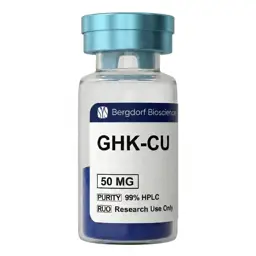
Em estoque
Em estoque
Ver Produto
GHK-CuVer Produto
GHK-CuValores iniciais típicos para orientação. Cada linha abre a calculadora para o respectivo peptídeo.
| Peptídeo | Categoria | Dose habitual | Tamanhos de frasco | BAC (início) | Disponível | Calcular |
|---|---|---|---|---|---|---|
| VIP | Pesquisa de neuropeptídeos | - | 10 mg | 2 ml | Em estoque | Calcular |
| Retatrutide | GLP-1/GIP/GCG | 0,5-12 mg | 2 / 5 / 10 / 15 mg | 2 ml | Em estoque | Calcular |
| Cagrilintide | Análogo da amilina | - | 5 mg | 2 ml | Em estoque | Calcular |
| Tirzepatid | GLP-1/GIP | 2,5-15 mg | 5 / 10 / 15 / 20 / 30 / 60 mg | 2 ml | Em estoque | Calcular |
| GHK-Cu | Kupferpeptid | 1-4 mg | 10 / 20 / 50 mg | 5 ml | Em estoque | Calcular |
| AHK-Cu | Peptídeo de cobre | - | 100 mg | 5 ml | Em estoque | Calcular |
| BPC-157 | Gewebereparatur | 0,2-0,5 mg | 2 / 5 / 10 mg | 2 ml | Em estoque | Calcular |
| TB-500 | Thymosin Beta-4 | 2-5 mg | 2 / 5 / 10 mg | 2 ml | Em estoque | Calcular |
| CJC-1295 (kein DAC) | GHRH-Analog | 100-200 mcg | 2 / 5 / 10 mg | 2 ml | Em estoque | Calcular |
| Ipamorelin | GHRP | 200-300 mcg | 2 / 5 mg | 2 ml | Em estoque | Calcular |
| PT-141 | Bremelanotide | - | 2 / 5 / 10 mg | 2 ml | Em estoque | Calcular |
| MOTS-c | Mitochondrial | 5-10 mg | 5 / 10 mg | 2 ml | Em estoque | Calcular |
| Selank | Anxiolytisch | 150-500 mcg | 2 / 5 / 10 mg | 2 ml | Em estoque | Calcular |
| SS-31 | Elamipretide | 0,1-1 mg | 5 / 10 mg | 2 ml | Em estoque | Calcular |
| Glow Stack | Stack | 0,5-2 mg | 70 mg | 3 ml | Em estoque | Calcular |
| Klow Stack | Stack | 0,5-2 mg | 55 mg | 3 ml | Em estoque | Calcular |
| Melanotan II | Melanocortin | 100-1000 mcg | 5 / 10 mg | 2 ml | Em estoque | Calcular |
| Melanotan I | Melanocortina | - | 5 / 10 mg | 2 ml | Em estoque | Calcular |
| Tesamorelin | GHRH-Analog | 1-2 mg | 10 / 20 mg | 2 ml | Em estoque | Calcular |
| Thymosin Alpha-1 | Thymisches Peptid | 0,8-3,2 mg | 1.6 / 5 / 10 mg | 1 ml | Em estoque | Calcular |
| Epithalon | Langlebigkeit | 2-10 mg | 10 / 20 / 50 mg | 2 ml | Em estoque | Calcular |
| KPV | Immun / Barriere | 100-1000 mcg | 5 / 10 mg | 2 ml | Em estoque | Calcular |
| Semax | Kognitiv | 100-1000 mcg | 10 / 30 mg | 2 ml | Em estoque | Calcular |
| NAD+ | Longevity / Cofaktor | 100-500 mg | 1000 mg | 10 ml | Em estoque | Calcular |
| Semaglutid | GLP-1 | 0,25-2,4 mg | 2 / 5 / 10 mg | 2 ml | Só calculadora | Calcular |
| AOD-9604 | Fettverbrennung | 250-500 mcg | 2 / 5 mg | 2 ml | Só calculadora | Calcular |
| Sermorelin | GHRH-Analog | 50-300 mcg | 2 / 5 mg | 2 ml | Só calculadora | Calcular |
| HGH-Fragment 176-191 | Metabolisches Fragment | 100-500 mcg | 2 / 5 / 10 mg | 2 ml | Só calculadora | Calcular |
| N-Acetyl-Semax | Kognitiv | 100-1000 mcg | 5 / 10 mg | 2 ml | Só calculadora | Calcular |
| Hexarelin | GHRP | 50-200 mcg | 2 / 5 mg | 2 ml | Só calculadora | Calcular |
| GHRP-6 | GHRP | 50-300 mcg | 2 / 5 mg | 2 ml | Só calculadora | Calcular |
| GHRP-2 | GHRP | 50-250 mcg | 2 / 5 mg | 2 ml | Só calculadora | Calcular |
| DSIP | Schlaf | 50-500 mcg | 2 / 5 mg | 2 ml | Só calculadora | Calcular |
| 5-Amino-1MQ | Metabolisch | 2,5-10 mg | 5 / 10 mg | 2 ml | Só calculadora | Calcular |
| HGH 191AA | Wachstumshormon | 1-5 mg | 10 mg | 1 ml | Só calculadora | Calcular |
Os valores servem de orientação no contexto de pesquisa e não substituem aconselhamento especializado.
Valores iniciais típicos para orientação. Cada linha abre a calculadora para o respectivo peptídeo.
| Peptídeo | Categoria | Dose habitual | Tamanhos de frasco | BAC (início) | Disponível | Calcular |
|---|---|---|---|---|---|---|
| VIP | Pesquisa de neuropeptídeos | - | 10 mg | 2 ml | Em estoque | Calcular |
| Retatrutide | GLP-1/GIP/GCG | 0,5-12 mg | 2 / 5 / 10 / 15 mg | 2 ml | Em estoque | Calcular |
| Cagrilintide | Análogo da amilina | - | 5 mg | 2 ml | Em estoque | Calcular |
| Tirzepatid | GLP-1/GIP | 2,5-15 mg | 5 / 10 / 15 / 20 / 30 / 60 mg | 2 ml | Em estoque | Calcular |
| GHK-Cu | Kupferpeptid | 1-4 mg | 10 / 20 / 50 mg | 5 ml | Em estoque | Calcular |
| AHK-Cu | Peptídeo de cobre | - | 100 mg | 5 ml | Em estoque | Calcular |
| BPC-157 | Gewebereparatur | 0,2-0,5 mg | 2 / 5 / 10 mg | 2 ml | Em estoque | Calcular |
| TB-500 | Thymosin Beta-4 | 2-5 mg | 2 / 5 / 10 mg | 2 ml | Em estoque | Calcular |
| CJC-1295 (kein DAC) | GHRH-Analog | 100-200 mcg | 2 / 5 / 10 mg | 2 ml | Em estoque | Calcular |
| Ipamorelin | GHRP | 200-300 mcg | 2 / 5 mg | 2 ml | Em estoque | Calcular |
| PT-141 | Bremelanotide | - | 2 / 5 / 10 mg | 2 ml | Em estoque | Calcular |
| MOTS-c | Mitochondrial | 5-10 mg | 5 / 10 mg | 2 ml | Em estoque | Calcular |
| Selank | Anxiolytisch | 150-500 mcg | 2 / 5 / 10 mg | 2 ml | Em estoque | Calcular |
| SS-31 | Elamipretide | 0,1-1 mg | 5 / 10 mg | 2 ml | Em estoque | Calcular |
| Glow Stack | Stack | 0,5-2 mg | 70 mg | 3 ml | Em estoque | Calcular |
| Klow Stack | Stack | 0,5-2 mg | 55 mg | 3 ml | Em estoque | Calcular |
| Melanotan II | Melanocortin | 100-1000 mcg | 5 / 10 mg | 2 ml | Em estoque | Calcular |
| Melanotan I | Melanocortina | - | 5 / 10 mg | 2 ml | Em estoque | Calcular |
| Tesamorelin | GHRH-Analog | 1-2 mg | 10 / 20 mg | 2 ml | Em estoque | Calcular |
| Thymosin Alpha-1 | Thymisches Peptid | 0,8-3,2 mg | 1.6 / 5 / 10 mg | 1 ml | Em estoque | Calcular |
| Epithalon | Langlebigkeit | 2-10 mg | 10 / 20 / 50 mg | 2 ml | Em estoque | Calcular |
| KPV | Immun / Barriere | 100-1000 mcg | 5 / 10 mg | 2 ml | Em estoque | Calcular |
| Semax | Kognitiv | 100-1000 mcg | 10 / 30 mg | 2 ml | Em estoque | Calcular |
| NAD+ | Longevity / Cofaktor | 100-500 mg | 1000 mg | 10 ml | Em estoque | Calcular |
| Semaglutid | GLP-1 | 0,25-2,4 mg | 2 / 5 / 10 mg | 2 ml | Só calculadora | Calcular |
| AOD-9604 | Fettverbrennung | 250-500 mcg | 2 / 5 mg | 2 ml | Só calculadora | Calcular |
| Sermorelin | GHRH-Analog | 50-300 mcg | 2 / 5 mg | 2 ml | Só calculadora | Calcular |
| HGH-Fragment 176-191 | Metabolisches Fragment | 100-500 mcg | 2 / 5 / 10 mg | 2 ml | Só calculadora | Calcular |
| N-Acetyl-Semax | Kognitiv | 100-1000 mcg | 5 / 10 mg | 2 ml | Só calculadora | Calcular |
| Hexarelin | GHRP | 50-200 mcg | 2 / 5 mg | 2 ml | Só calculadora | Calcular |
| GHRP-6 | GHRP | 50-300 mcg | 2 / 5 mg | 2 ml | Só calculadora | Calcular |
| GHRP-2 | GHRP | 50-250 mcg | 2 / 5 mg | 2 ml | Só calculadora | Calcular |
| DSIP | Schlaf | 50-500 mcg | 2 / 5 mg | 2 ml | Só calculadora | Calcular |
| 5-Amino-1MQ | Metabolisch | 2,5-10 mg | 5 / 10 mg | 2 ml | Só calculadora | Calcular |
| HGH 191AA | Wachstumshormon | 1-5 mg | 10 mg | 1 ml | Só calculadora | Calcular |
Os valores servem de orientação no contexto de pesquisa e não substituem aconselhamento especializado.
Escolha um peptídeo para abrir sua página de calculadora dedicada com valores pré-preenchidos.
Escolha um peptídeo para abrir sua página de calculadora dedicada com valores pré-preenchidos.