
Dr. Sieglinde Klaus
Scientific Editorial Team · Bergdorf Bioscience

Peptides are short chains of amino acids linked together by peptide bonds. With 2 to 50 amino acids, they are smaller than proteins and fulfill a wide range of biological functions, from hormone regulation and immune modulation to tissue regeneration. Since insulin was first synthesized in 1921, more than 80 peptide drugs have been approved worldwide (Wang et al., 2022). This guide explains the scientific fundamentals, manufacturing processes, and quality criteria of research peptides.
Peptides consist of 2 to 50 amino acids joined by covalent peptide bonds. This bond forms through a condensation reaction between the carboxyl group of one amino acid and the amino group of the next. Proteins, by contrast, comprise more than 50 amino acids and fold into complex three-dimensional structures. Peptides typically have a molecular weight of 500 to 5,000 Dalton, whereas proteins often exceed 10,000 Dalton. Well-known therapeutic peptides include insulin (51 AA), oxytocin (9 AA), and BPC-157 (15 AA). According to Wang et al. (2022), more than 80 peptide-based drugs have been approved since 1921. The class encompasses hormones, neuropeptides, antimicrobial peptides, and growth factors with a broad range of applications in diagnostics and therapy.
The standard method is solid-phase peptide synthesis (SPPS), developed by Robert Bruce Merrifield (Nobel Prize 1984). In the Fmoc/tBu strategy, amino acids are coupled step by step onto a solid support resin (Coin et al., 2007). The process runs in cycles: deprotection of the Fmoc group, activation, and coupling of the next amino acid. Once complete, the peptide is cleaved from the resin. Modern techniques such as microwave-assisted SPPS and DNA-encoded libraries have markedly improved efficiency and speed (Muttenthaler et al., 2023). Subsequent purification is performed by reversed-phase HPLC, which enables purity grades of ≥99%, the gold standard for research peptides.
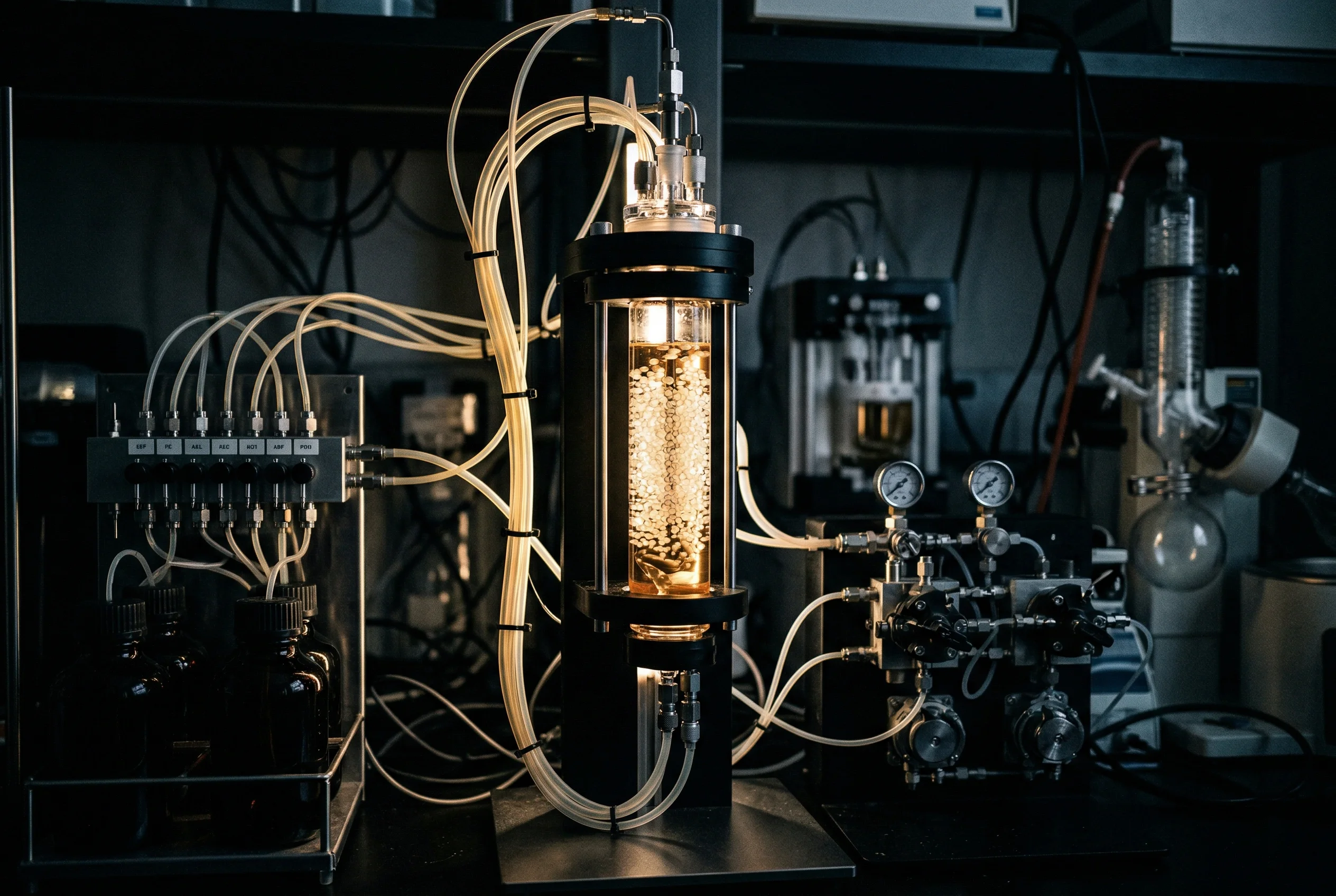
Purity is determined by analytical HPLC: the peptide is passed through a column in the liquid phase, and UV absorption is measured at 214–220 nm. The area share of the main peak in the chromatogram yields the purity grade (Aguilar, 2007). A Certificate of Analysis (CoA) documents: HPLC purity (≥99% for research grade), mass spectrometry results (observed vs. theoretical molecular mass), amino acid sequence, batch number, and manufacturing date. For BPC-157 from Bergdorf Bioscience, the theoretical mass is 1419 Da, and the CoA confirms the match. In addition, endotoxin tests and residual solvent analyses are frequently performed.
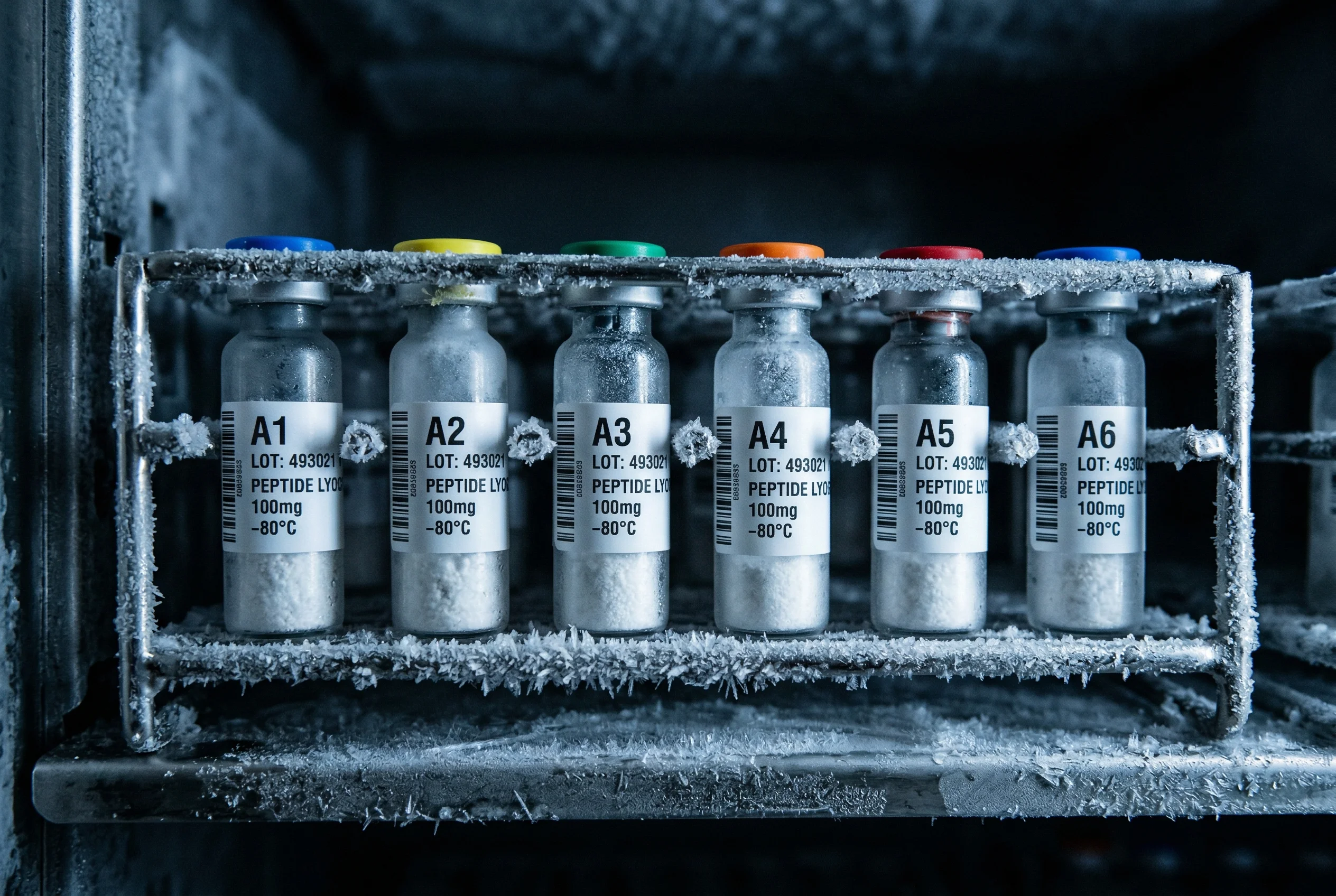
Lyophilization (freeze-drying) stabilizes peptides for storage and transport. The process involves three phases: freezing, primary drying (sublimation of the ice under vacuum), and secondary drying (removal of bound residual water). The result is a dry, porous powder (Remmele et al., 2012). Lyophilized peptides are stable for over 2 years at -20°C and for several months at 2–8°C. Avoiding moisture and repeated freeze-thaw cycles after reconstitution is critical (Butreddy et al., 2021). Sugars such as trehalose or sucrose serve as cryo- and lyoprotectants, preserving the native peptide structure throughout the drying process. All peptides from Bergdorf Bioscience are supplied as a lyophilized powder.
The global peptide therapeutics market reached a volume of USD 41.44 billion in 2023, with a 10.2% annual growth rate. The majority of FDA approvals for peptide drugs were granted between 2020 and 2023 (Xiao et al., 2025). Intensively researched peptides include:
No. Peptides are short amino acid chains with specific biological signaling effects. Steroids are lipid-based molecules with a four-ring core scaffold. They differ fundamentally in structure, mechanism of action, and application profile.
Store lyophilized peptides at -20°C for maximum stability, or at 2–8°C for regular access. Protect the vials from moisture and light. After reconstitution, keep refrigerated and use within 4 weeks.
An HPLC purity of ≥99% means that at least 99% of the material is the desired peptide. For research purposes, this is the gold standard. The CoA documents the purity, identity, and batch number of each product.
Requirements vary by country. In the EU, research peptides are available for academic and scientific purposes. Familiarize yourself with the applicable regulations in your country.
For research purposes only. Not intended for human consumption.
Scientific editorial review: Dr. Sieglinde Klaus – Bergdorf Bioscience
Dr. Sieglinde Klaus
Scientific Editorial Team · Bergdorf Bioscience
Peptides are short chains of amino acids linked together by peptide bonds. With 2 to 50 amino acids, they are smaller than proteins and fulfill a wide range of biological functions, from hormone regulation and immune modulation to tissue regeneration. Since insulin was first synthesized in 1921, more than 80 peptide drugs have been approved worldwide (Wang et al., 2022). This guide explains the scientific fundamentals, manufacturing processes, and quality criteria of research peptides.
Peptides consist of 2 to 50 amino acids joined by covalent peptide bonds. This bond forms through a condensation reaction between the carboxyl group of one amino acid and the amino group of the next. Proteins, by contrast, comprise more than 50 amino acids and fold into complex three-dimensional structures. Peptides typically have a molecular weight of 500 to 5,000 Dalton, whereas proteins often exceed 10,000 Dalton. Well-known therapeutic peptides include insulin (51 AA), oxytocin (9 AA), and BPC-157 (15 AA). According to Wang et al. (2022), more than 80 peptide-based drugs have been approved since 1921. The class encompasses hormones, neuropeptides, antimicrobial peptides, and growth factors with a broad range of applications in diagnostics and therapy.
The standard method is solid-phase peptide synthesis (SPPS), developed by Robert Bruce Merrifield (Nobel Prize 1984). In the Fmoc/tBu strategy, amino acids are coupled step by step onto a solid support resin (Coin et al., 2007). The process runs in cycles: deprotection of the Fmoc group, activation, and coupling of the next amino acid. Once complete, the peptide is cleaved from the resin. Modern techniques such as microwave-assisted SPPS and DNA-encoded libraries have markedly improved efficiency and speed (Muttenthaler et al., 2023). Subsequent purification is performed by reversed-phase HPLC, which enables purity grades of ≥99%, the gold standard for research peptides.
Purity is determined by analytical HPLC: the peptide is passed through a column in the liquid phase, and UV absorption is measured at 214–220 nm. The area share of the main peak in the chromatogram yields the purity grade (Aguilar, 2007). A Certificate of Analysis (CoA) documents: HPLC purity (≥99% for research grade), mass spectrometry results (observed vs. theoretical molecular mass), amino acid sequence, batch number, and manufacturing date. For BPC-157 from Bergdorf Bioscience, the theoretical mass is 1419 Da, and the CoA confirms the match. In addition, endotoxin tests and residual solvent analyses are frequently performed.
Lyophilization (freeze-drying) stabilizes peptides for storage and transport. The process involves three phases: freezing, primary drying (sublimation of the ice under vacuum), and secondary drying (removal of bound residual water). The result is a dry, porous powder (Remmele et al., 2012). Lyophilized peptides are stable for over 2 years at -20°C and for several months at 2–8°C. Avoiding moisture and repeated freeze-thaw cycles after reconstitution is critical (Butreddy et al., 2021). Sugars such as trehalose or sucrose serve as cryo- and lyoprotectants, preserving the native peptide structure throughout the drying process. All peptides from Bergdorf Bioscience are supplied as a lyophilized powder.
The global peptide therapeutics market reached a volume of USD 41.44 billion in 2023, with a 10.2% annual growth rate. The majority of FDA approvals for peptide drugs were granted between 2020 and 2023 (Xiao et al., 2025). Intensively researched peptides include:
No. Peptides are short amino acid chains with specific biological signaling effects. Steroids are lipid-based molecules with a four-ring core scaffold. They differ fundamentally in structure, mechanism of action, and application profile.
Store lyophilized peptides at -20°C for maximum stability, or at 2–8°C for regular access. Protect the vials from moisture and light. After reconstitution, keep refrigerated and use within 4 weeks.
An HPLC purity of ≥99% means that at least 99% of the material is the desired peptide. For research purposes, this is the gold standard. The CoA documents the purity, identity, and batch number of each product.
Requirements vary by country. In the EU, research peptides are available for academic and scientific purposes. Familiarize yourself with the applicable regulations in your country.
For research purposes only. Not intended for human consumption.
Scientific editorial review: Dr. Sieglinde Klaus – Bergdorf Bioscience