Research peptide · NNC 26-0161
Ipamorelin
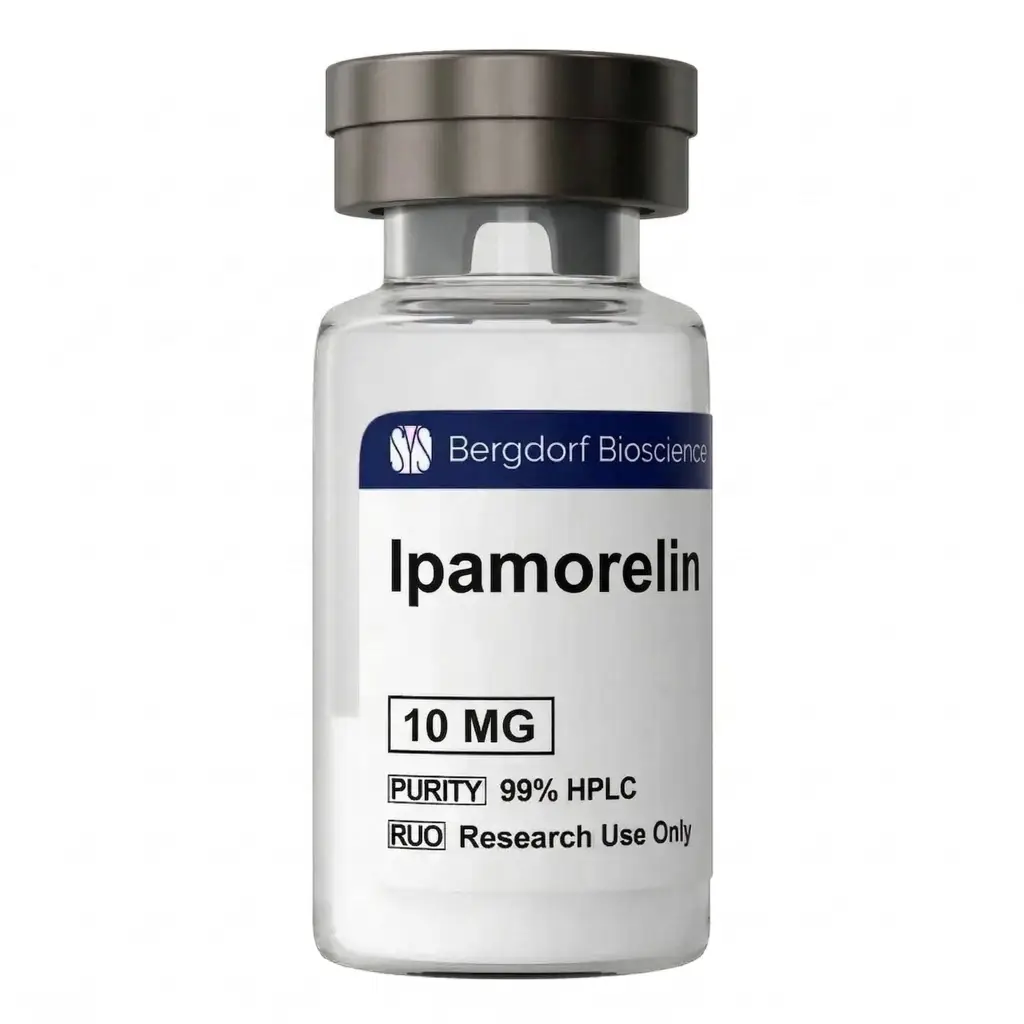
Ipamorelin (10mg) research peptide, ≥99% purity verified by HPLC and MS. Selective GHS-R1a agonist, published certificate of analysis. Research use only.

Research peptide · NNC 26-0161
Ipamorelin (10mg) research peptide, ≥99% purity verified by HPLC and MS. Selective GHS-R1a agonist, published certificate of analysis. Research use only.
Research peptide · NNC 26-0161
Ipamorelin (10mg) research peptide, ≥99% purity verified by HPLC and MS. Selective GHS-R1a agonist, published certificate of analysis. Research use only.
/ vial
Order today → Delivery Fri, Oct 02 – Mon, Oct 12 to United States
Payment Methods







/ vial
Order today → Delivery Fri, Oct 02 – Mon, Oct 12 to United States
Payment Methods
No reviews yet. Be the first to share your experience.
No reviews yet. Be the first to share your experience.
Independently verified quality
3,000+
satisfied researchers
99.43%
Avg. purity 2026
4.8 ★
ProvenExpert
99.43%
Avg. purity 2026
4.8 ★
ProvenExpert
3,000+ satisfied researchers
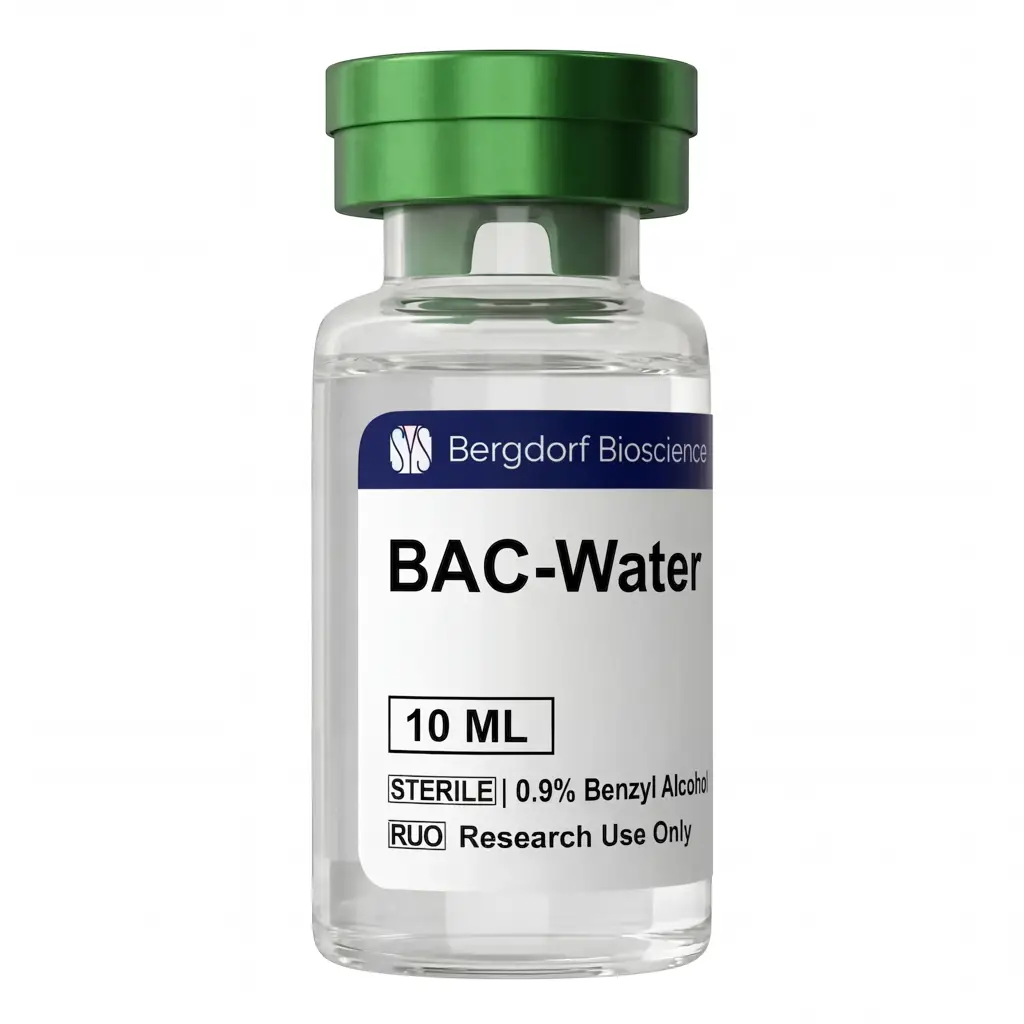
Ipamorelin 10mg - 1 Pack vial + 2 ml BAC water → concentration:
Per unit (10 IU)
0.25 mg
Steady-state plasma level after ~ 4 weeks with weekly administration.
Scientific references
Research details
Ipamorelin is a synthetic pentapeptide and one of the most selective growth hormone secretagogues identified to date. First described by Raun and colleagues in 1998 as 'the first selective growth hormone secretagogue,' it is studied in laboratory settings as a selective agonist of the ghrelin / growth hormone secretagogue receptor (GHS-R1a). Bergdorf Bioscience supplies ipamorelin at >=99% purity strictly for in-vitro and laboratory research.
Ipamorelin was originally developed by Novo Nordisk under the code NNC 26-0161. In the foundational study (Raun et al., European Journal of Endocrinology, 1998) it released growth hormone in anaesthetised rats with potency and efficacy comparable to GHRP-6, yet without the off-target hormone release that characterises earlier secretagogues. Subsequent human pharmacokinetic work (Gobburu et al., 1999) characterised its dose-proportional disposition and short terminal half-life.
Ipamorelin is a five-residue peptide amide built from D-amino acids and non-proteinogenic residues, which confer resistance to enzymatic degradation and contribute to its receptor selectivity. The lyophilised powder is stable at -20 C and is reconstituted with sterile or bacteriostatic water immediately before research use.
Each vial contains 10 mg of ipamorelin, supplied as a lyophilised powder for laboratory use. Every batch is HPLC-verified to >=99% purity and mass-confirmed by MS; the certificate of analysis for the batch is published on our website.
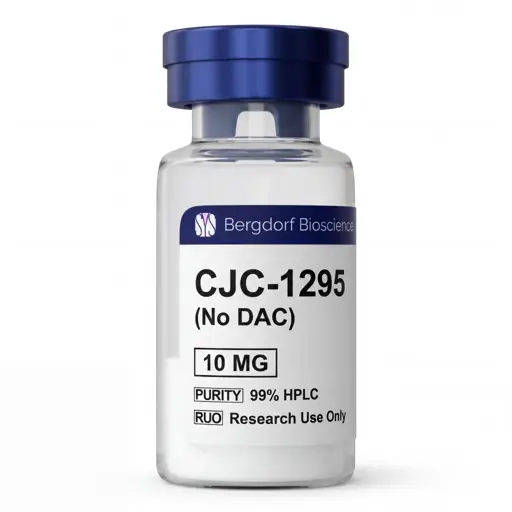
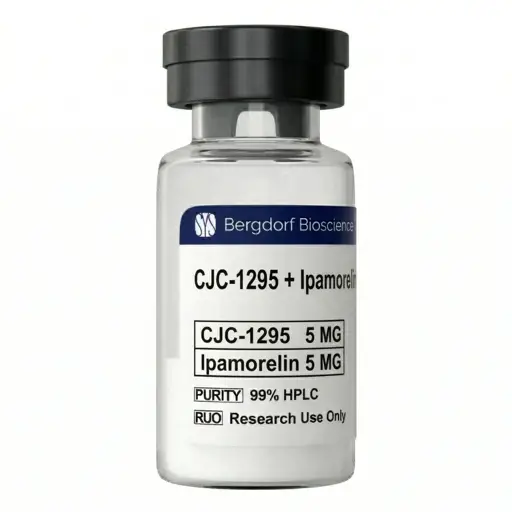
Ipamorelin is frequently studied alongside GHRH analogues such as CJC-1295 in growth-hormone-axis research models, where the two mechanisms are reported to act in a complementary manner (research context).
Bergdorf Bioscience ships ipamorelin worldwide in discreet, tracked parcels. The lyophilised powder tolerates ordinary transit at ambient temperature; on arrival it is stored at -20 C. Deliveries to research institutions and laboratories are subject to the applicable import and research-use regulations in the destination country.
Selective GHS-R1a (ghrelin receptor) agonist on pituitary somatotrophs; activates Gq/PLC calcium signaling to drive pulsatile GH release without raising cortisol or prolactin.
Advanced protocol
In published laboratory and animal research, ipamorelin has been administered parenterally in reconstituted form, with study doses reported in the low-microgram-per-kilogram to low-hundred-microgram range per dosing event (research context). Bergdorf Bioscience supplies this peptide strictly for in-vitro and laboratory research; it is not intended for human or veterinary use and no human dosing is implied.
Note: The dosages listed correspond to typical ranges from published research literature. They do not replace advice from a qualified researcher or physician.
Every batch is analyzed by an independent laboratory via HPLC before shipment. We document purity (avg. 99.43% in 2026), mass spectrometry identity, and sterility. Production follows GMP standards in ISO-certified laboratories.
Ipamorelin is a synthetic pentapeptide (Aib-His-D-2-Nal-D-Phe-Lys-NH2) and a selective agonist of the growth hormone secretagogue receptor, GHS-R1a, also known as the ghrelin receptor. It is studied in laboratories as one of the most selective growth hormone secretagogues described so far and is supplied strictly for research use.
Independently verified quality
3,000+
satisfied researchers
99.43%
Avg. purity 2026
4.8 ★
ProvenExpert
99.43%
Avg. purity 2026
4.8 ★
ProvenExpert
3,000+ satisfied researchers
Ipamorelin 10mg - 1 Pack vial + 2 ml BAC water → concentration:
Per unit (10 IU)
0.25 mg
Steady-state plasma level after ~ 4 weeks with weekly administration.
Scientific references
Research details
Ipamorelin is a synthetic pentapeptide and one of the most selective growth hormone secretagogues identified to date. First described by Raun and colleagues in 1998 as 'the first selective growth hormone secretagogue,' it is studied in laboratory settings as a selective agonist of the ghrelin / growth hormone secretagogue receptor (GHS-R1a). Bergdorf Bioscience supplies ipamorelin at >=99% purity strictly for in-vitro and laboratory research.
Ipamorelin was originally developed by Novo Nordisk under the code NNC 26-0161. In the foundational study (Raun et al., European Journal of Endocrinology, 1998) it released growth hormone in anaesthetised rats with potency and efficacy comparable to GHRP-6, yet without the off-target hormone release that characterises earlier secretagogues. Subsequent human pharmacokinetic work (Gobburu et al., 1999) characterised its dose-proportional disposition and short terminal half-life.
Ipamorelin is a five-residue peptide amide built from D-amino acids and non-proteinogenic residues, which confer resistance to enzymatic degradation and contribute to its receptor selectivity. The lyophilised powder is stable at -20 C and is reconstituted with sterile or bacteriostatic water immediately before research use.
Each vial contains 10 mg of ipamorelin, supplied as a lyophilised powder for laboratory use. Every batch is HPLC-verified to >=99% purity and mass-confirmed by MS; the certificate of analysis for the batch is published on our website.
Ipamorelin is frequently studied alongside GHRH analogues such as CJC-1295 in growth-hormone-axis research models, where the two mechanisms are reported to act in a complementary manner (research context).
Bergdorf Bioscience ships ipamorelin worldwide in discreet, tracked parcels. The lyophilised powder tolerates ordinary transit at ambient temperature; on arrival it is stored at -20 C. Deliveries to research institutions and laboratories are subject to the applicable import and research-use regulations in the destination country.
Selective GHS-R1a (ghrelin receptor) agonist on pituitary somatotrophs; activates Gq/PLC calcium signaling to drive pulsatile GH release without raising cortisol or prolactin.
Advanced protocol
In published laboratory and animal research, ipamorelin has been administered parenterally in reconstituted form, with study doses reported in the low-microgram-per-kilogram to low-hundred-microgram range per dosing event (research context). Bergdorf Bioscience supplies this peptide strictly for in-vitro and laboratory research; it is not intended for human or veterinary use and no human dosing is implied.
Note: The dosages listed correspond to typical ranges from published research literature. They do not replace advice from a qualified researcher or physician.
Every batch is analyzed by an independent laboratory via HPLC before shipment. We document purity (avg. 99.43% in 2026), mass spectrometry identity, and sterility. Production follows GMP standards in ISO-certified laboratories.
Ipamorelin is a synthetic pentapeptide (Aib-His-D-2-Nal-D-Phe-Lys-NH2) and a selective agonist of the growth hormone secretagogue receptor, GHS-R1a, also known as the ghrelin receptor. It is studied in laboratories as one of the most selective growth hormone secretagogues described so far and is supplied strictly for research use.