






About Retatrutide (LY3437943)
Retatrutide (research code LY3437943) is a cutting-edge research peptide and a novel next-generation triple agonist. It is the first molecule of its class to highly selectively and simultaneously bind to three crucial metabolic receptors: the GIP receptor (glucose-dependent insulinotropic polypeptide), the GLP-1 receptor (glucagon-like peptide-1), and the Glucagon receptor (GCG-R).
This unique triple mechanism of action sets Retatrutide fundamentally apart from previous dual agonists like Tirzepatide or mono-agonists like Semaglutide. While GIP and GLP-1 primarily modulate insulin secretion and control satiety via the central nervous system, the additional activation of the glucagon receptor opens up an entirely new metabolic pathway. This pathway directly targets the increase of basal energy expenditure and promotes hepatic lipid oxidation (fat burning in the liver). This synergistic effect makes Retatrutide one of the most promising and intensely studied peptides in global metabolic research.
Groundbreaking Study Results: The Scientific Foundation
The scientific and clinical relevance of Retatrutide is supported, among other data, by the highly acclaimed Phase 2 study by Jastreboff et al., published in 2023 in the prestigious New England Journal of Medicine (NEJM) (PubMed ID: 37385275). In this randomized, double-blind, and placebo-controlled trial, the peptide demonstrated unprecedented results over a 48-week period:
- Significant Weight Reduction: In the highest dosage group evaluated, a dose-dependent reduction in body weight of up to 24.2% was achieved—a figure that significantly surpasses previously published results for comparable substances in obesity and metabolic research.
- Improvement of Cardiometabolic Parameters: Alongside massive weight loss, significant improvements were observed in essential biomarkers, including optimized HbA1c levels, lowered fasting glucose, and a marked enhancement of the lipid profile.
- Liver Health: Particularly noteworthy were the positive effects on the reduction of liver fat, making Retatrutide a highly interesting candidate for research models focusing on NAFLD (non-alcoholic fatty liver disease) and NASH.
Biochemical Properties and Stability
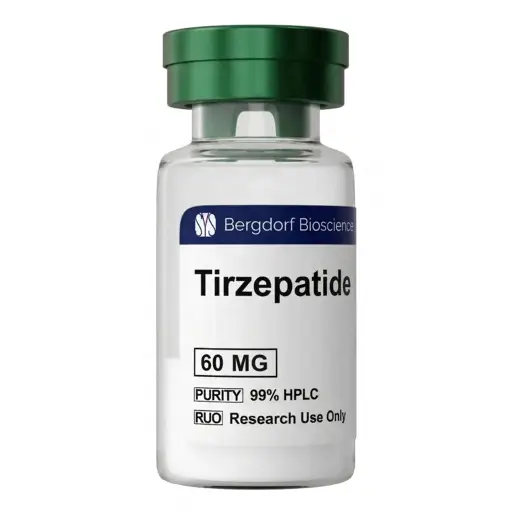
At Bergdorf Bioscience, Retatrutide is supplied as a high-purity, lyophilized (freeze-dried) powder. This complex manufacturing process extracts moisture from the peptide, ensuring maximum chemical stability and an exceptionally long shelf life, even at room temperature.
- Amino Acid Sequence: His-Geranylgeranyl-Glu-Gly-Thr-Phe-Thr-Ser-Asp-Val-Ser-Ser-Tyr-Leu-Glu-Glu-Gln-Ala-Ala-Lys-Glu-Phe-Ile-Ala-Trp-Leu-Val-Lys-Gly-Arg-NH2
- Biological Half-Life: The half-life of Retatrutide is approximately six days. For researchers working with in vivo models, this allows for extended administration intervals and more stable plasma levels.
Buy Retatrutide at Bergdorf Bioscience: Quality for the Highest Demands
When you buy Retatrutide for your laboratory, you need absolute reliability. To guarantee maximum flexibility for a wide variety of research protocols and dose-finding studies, Retatrutide is available at Bergdorf Bioscience in five precisely graduated dosages:
- 10 mg
- 15 mg
- 20 mg
- 30 mg
- 50 mg
Each vial is filled under the strictest laboratory conditions and individually sealed. All batches are analyzed using High-Performance Liquid Chromatography (HPLC) and feature a guaranteed purity of at least 99%. Our uncompromising quality assurance also includes detailed mass spectrometry to confirm the exact molecular weight, as well as rigorous endotoxin testing.
Worldwide Shipping – Safe and Hassle-Free
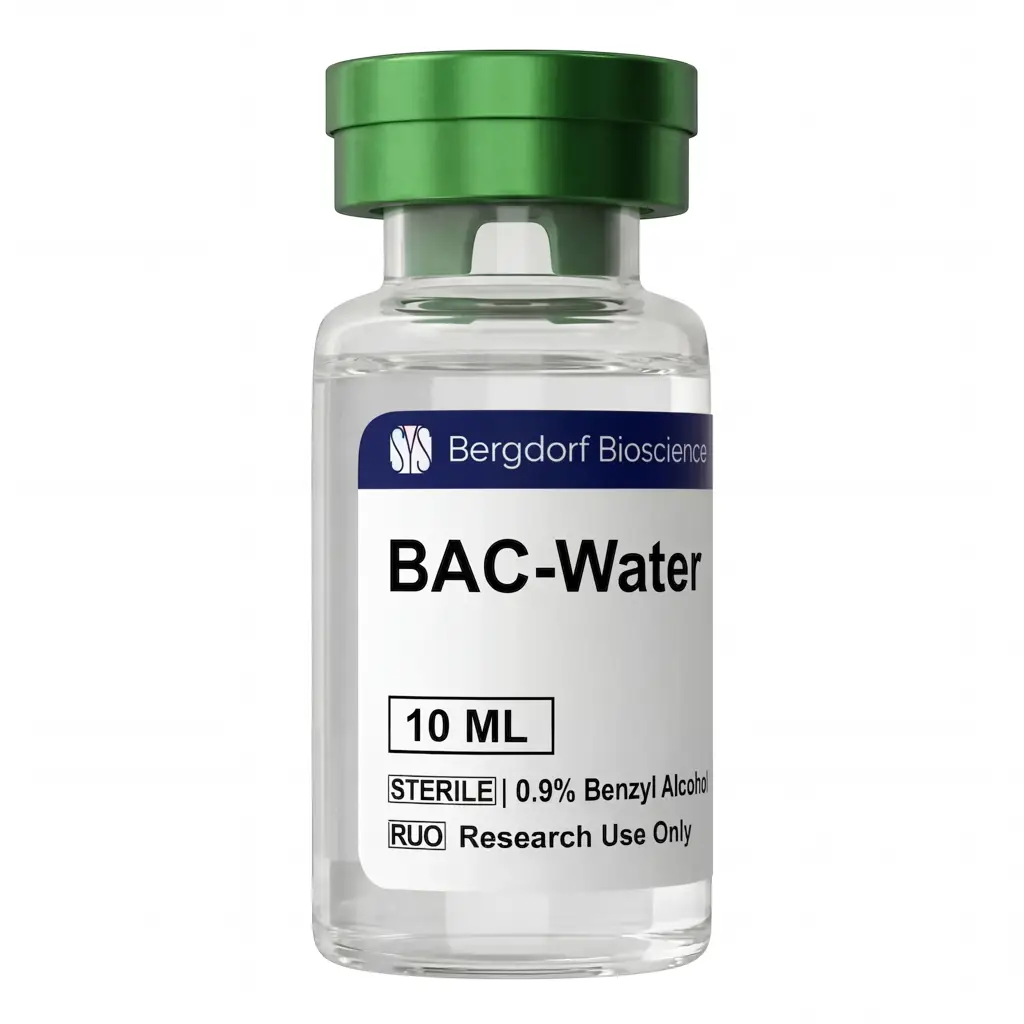
We offer reliable worldwide shipping for all our research peptides. Thanks to professional lyophilization, the Retatrutide powder is highly temperature-stable in its unmixed state. The molecular integrity and high biological activity of the peptide are fully preserved at normal ambient temperatures throughout the global transit. However, after reconstitution (mixing with bacteriostatic water), we highly recommend proper storage in a refrigerator.
Mechanism of action
Simultaneous GLP-1R, GIPR, and GCGR agonism: GLP-1R enhances insulin secretion and reduces appetite; GIPR potentiates insulin and attenuates nausea; GCGR stimulates hepatic lipolysis, thermogenesis, and energy expenditure
Typical research dosage
Beginner protocol
0.5 mg per week
Advanced protocol
2–12 mg/week (research context)
Note: The dosages listed correspond to typical ranges from published research literature. They do not replace advice from a qualified researcher or physician.
Quality, purity & batch documentation
Each batch is analyzed by an independent lab via HPLC before shipping. We document purity (Ø 99.43 % in 2026), mass-spectrometry identity, and sterility. Production follows GMP standards in ISO-certified labs.
Current finding: Sample 1 of our running Retatrutide 10 mg batch was analyzed by the independent Czech lab Janoshik Analytical via HPLC on May 11, 2026 (Task #147356). Confirmed purity: 99.588 %, active content 10.92 mg/vial. The report's authenticity can be checked with the verify key S15GPICWV71H directly on janoshik.com.
Frequently asked questions
Yes, Bergdorf Bioscience offers retatrutide as a research reference substance. Available strengths: 10, 15, 20, 30, and 50 mg per vial with HPLC-verified purity of at least 99 percent.