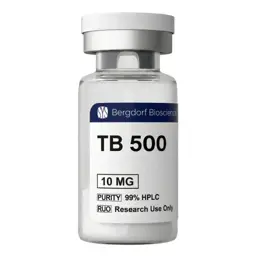
Two peptides share the name “Thymosin” but have fundamentally different biology. Thymosin Alpha-1 is an immunomodulatory peptide with TLR signaling activity; TB-500 is a fragment of Thymosin Beta-4 that regulates actin dynamics and tissue repair in preclinical models. A fact-based research comparison.
 Medically reviewed by Dr. Sieglinde Klaus · Last reviewed June 2026

Thymosin Alpha-1 (Talpha1) and TB-500 (Thymosin Beta-4 fragment) share only the name “Thymosin” but belong to different, unrelated peptide families.
Two peptides share the name “Thymosin” but have fundamentally different biology. Thymosin Alpha-1 is an immunomodulatory peptide with TLR signaling activity; TB-500 is a fragment of Thymosin Beta-4 that regulates actin dynamics and tissue repair in preclinical models. A fact-based research comparison.
Medically reviewed by Dr. Sieglinde Klaus · Last reviewed June 2026Thymosin Alpha-1 (Talpha1) and TB-500 (Thymosin Beta-4 fragment) share only the name “Thymosin” but belong to different, unrelated peptide families.
Neither is approved for the research purposes described here. TB-500/Thymosin Beta-4 has been prohibited at all times by WADA (Section S2) since 2011. The choice depends entirely on the research endpoint: immunological questions favor Talpha1, tissue-related regeneration models favor TB-500.
Immunomodulator: TLR2/TLR9 signaling via MyD88, maturation of dendritic cells, Th1 polarization, IFN-gamma/IL-2 stimulation
Actin sequestration via the LKKTETQ motif; regulates polymerization/depolymerization, cell migration, angiogenesis
Immune restoration: chronic hepatitis B, adjunctive oncology research, immunodeficiency models
Tissue repair: wound healing, cardiac repair, angiogenesis, tendon/muscle injury (predominantly preclinical)
1.6 mg (approx. 900 µg/m2) subcutaneously twice weekly, 6-12 months (clinical regimen)
No standardized human dose; clinically IV 42-1260 mg (Tbeta4); community regimens in the mg range, s.c. weekly, not validated
Subcutaneous (established route, high bioavailability, Tmax 1-2 h)
Clinical (Tbeta4): IV, topical (gel), ophthalmic (drops); research context: s.c.
Terminal plasma half-life approx. 2 hours; no accumulation, return to baseline within 24 h
Short, approx. 1-2 hours (low mg doses); increases dose-dependently; rapid distribution phase
Approved drug product (thymalfasin/Zadaxin) in several countries; over 2,000 treated patients documented
Tbeta4 up to Phase 3 (ophthalmology only); the fragment TB-500 itself has practically no dedicated human data
Very well tolerated; mostly mild reactions (injection site, polyarthralgia)
Well tolerated in studies; theoretical risk of promoting tumor growth or angiogenesis has not been adequately studied
Lyophilizate refrigerated 2-8 °C; use promptly after reconstitution
Lyophilizate -20 °C (long-term), 2-8 °C briefly; reconstituted 2-8 °C, approx. 2-4 weeks
28 amino acids, N-acetylated, approx. 3109 Da, highly acidic, heat-stable
Active region of Thymosin Beta-4 (43 aa, approx. 4.96 kDa); central actin-binding motif LKKTETQ
Approved as thymalfasin (immunomodulatory drug product); not generally prohibited by WADA
Prohibited by WADA since 2011 (Section S2: peptide hormones, growth factors), prohibited at all times

Thymosin Alpha-1 is a pleiotropic immunomodulator that acts primarily at the interface between innate and adaptive immunity. Its main molecular targets are:
Talpha1 is not a tissue repair or angiogenesis peptide. N-terminal acetylation is structurally important for full biological activity and improves stability against aminopeptidases 1.
TB-500 comprises the central active region of Thymosin Beta-4 (Tbeta4), a naturally occurring 43-amino-acid polypeptide (approx. 4.96 kDa) and the most abundant intracellular G-actin-binding protein in mammalian tissue. The core mechanism is:
Evidence note: The actin-sequestering and angiogenic mechanisms are well documented in vitro and in animal models; the evidence for systemic tissue repair effects specifically of the TB-500 fragment remains predominantly preclinical.
Despite the shared name “Thymosin,” Talpha1 and Tbeta4 are unrelated peptide families with different sequences, sizes, and functions. Talpha1 targets immune receptors (TLR2/TLR9) and coordinates the adaptive immune response; Tbeta4/TB-500 targets the cytoskeleton (G-actin) and controls migration and repair. Their mechanistic axes do not overlap: a “better or worse” comparison therefore makes sense only within a specific research endpoint.
The evidence base is asymmetric and not directly comparable. As an approved drug product (thymalfasin), Thymosin Alpha-1 has a broad clinical and PK dossier with a well-characterized immune mechanism 24. Thymosin Beta-4 reached Phase 3 in the narrow ophthalmic indication, while dermal/cardiac programs remained in Phase 1-2 89. Crucially, the TB-500 fragment itself has practically no human data of its own; its reputation for tissue repair rests on full-length Tbeta4 studies plus preclinical rodent models 7. No direct head-to-head studies exist.
Thymosin Alpha-1 (as thymalfasin) is considered very well tolerated across more than 2,000 treated patients; adverse events are rare and predominantly mild. The short half-life and lack of accumulation contribute to the favorable tolerability profile. All applications described here are discussed exclusively in a research context.
Thymosin Beta-4 was generally safe and well tolerated in completed human studies (IV up to 1260 mg, topical, ophthalmic), without dose-limiting toxicity or treatment-related serious adverse events. For the TB-500 fragment itself, however, dedicated human data are lacking, and the pro-angiogenic properties raise unquantified long-term questions.
This comparison is intended solely for scientific information and does not constitute medical advice, diagnosis, or treatment recommendation. None of the peptides described is approved as a drug for the research purposes named or for the use presented here. All dosage, activity, and safety information comes from the scientific literature and relates to laboratory research. TB-500/Thymosin Beta-4 has been prohibited by WADA since 2011. For research use only. Not for human consumption.
Thymosin Alpha-1 is the only one of the two peptides with documented activity on TLR2/TLR9 and dendritic cells [3]. For questions about Th1 polarization, IFN-gamma/IL-2 stimulation, or immune restoration, TB-500 is mechanistically irrelevant, since it addresses the cytoskeleton and not immune receptors.
TB-500 (Thymosin Beta-4 fragment) has been studied in preclinical models for effects on cell migration, endothelial tubule formation, and wound-healing processes via actin dynamics [6]. For wound healing, angiogenesis, or cardiac repair models, it provides the appropriate mechanistic basis; Talpha1 has no established role here.
TB-500/Tbeta4 has been prohibited at all times by WADA (Section S2) since 2011. Where a sports context or anti-doping compliance is relevant, TB-500 is generally unsuitable. Thymosin Alpha-1 is not subject to this general prohibition and is the less problematic choice in this context.
Thymosin Alpha-1 exists as an approved drug product with a clearly defined regimen (1.6 mg s.c. twice weekly) and a safety dossier covering more than 2,000 patients [4]. For the TB-500 fragment, a validated human dose is entirely lacking, which complicates reproducible study protocols.
Both peptides are lyophilized, short-lived molecules (half-life approx. 1-2 h) with similar handling requirements, but they differ in long-term storage (Talpha1: 2-8 °C; TB-500: -20 °C). For purely methodological stability or reconstitution comparisons, both are suitable; the choice depends on the study design, not on the mechanism.
No. Despite the shared name, they belong to different, unrelated peptide families. Thymosin Alpha-1 is a 28-amino-acid immunomodulator that acts via TLR2/TLR9 and dendritic cells 3. TB-500 comprises the active region of Thymosin Beta-4, a 43-amino-acid actin-binding peptide that regulates cell migration and tissue repair. They differ completely in sequence, size, target, and function.
Thymosin Alpha-1 has the more solid clinical evidence base: it is available as an approved drug product (thymalfasin/Zadaxin), with data on more than 2,000 patients 4. Thymosin Beta-4 reached Phase 3 only in a narrow ophthalmic indication; the actual TB-500 fragment has virtually no human data of its own, and the evidence for it rests on full-length Tbeta4 studies plus preclinical rodent models 7.
TB-500/Thymosin Beta-4 has been prohibited at all times since 2011 under Section S2 of the WADA Prohibited List (peptide hormones, growth factors, and related substances). For researchers working in a sports context or anti-doping compliance, this is a crucial difference. Thymosin Alpha-1 is not subject to this general prohibition.
No, both are short-lived. Thymosin Alpha-1 has a terminal plasma half-life of about 2 hours without accumulation 2. For Thymosin Beta-4, the plasma half-life at low mg doses is likewise reported to be on the order of 1-2 hours, increasing dose-dependently. Neither of the two forms a long-term depot.
No. Their mechanistic axes are orthogonal: Thymosin Alpha-1 addresses immune receptors (TLR/IDO), TB-500 the cytoskeleton (G-actin). An immunological research endpoint cannot be covered by an actin-binding peptide, and vice versa. The choice must be aligned with the specific mechanism of the research question.
Both are handled as lyophilized powder. Thymosin Alpha-1 is stored refrigerated at 2-8 °C and used promptly after reconstitution. TB-500 is recommended for long-term storage at -20 °C (briefly 2-8 °C); once reconstituted, it is kept at 2-8 °C and used within about 2-4 weeks, while repeated freeze-thaw cycles should be avoided.
For the most part, no. The actin-sequestering and angiogenic mechanisms are well documented in vitro and in animal models 67. However, the usual positioning of the TB-500 fragment in sports and regeneration contexts rests predominantly on preclinical rodent models or anecdotal reports, not on controlled human studies with the fragment itself.
No blanket winner can be named, because Thymosin Alpha-1 and TB-500 address fundamentally different biological problems.
Where data maturity, an established dosing regimen, and anti-doping compliance are decisive, Thymosin Alpha-1 has the advantage. Where the research endpoint specifically involves actin dynamics and tissue regeneration, Talpha1 cannot replace TB-500. The decision follows the mechanism, not any general superiority.
The two peptides have orthogonal mechanisms (immune receptor agonism via TLR2/TLR9 vs. G-actin sequestration) and non-overlapping research endpoints. A winner exists only within a specific context: Thymosin Alpha-1 for immunology research, clinical data maturity, and anti-doping compliance; TB-500 for tissue repair and angiogenesis models. Since the evidence bases are asymmetric and not directly comparable and no head-to-head studies exist, a context-dependent verdict (no single overall winner) is the only factually correct one.
Neither is approved for the research purposes described here. TB-500/Thymosin Beta-4 has been prohibited at all times by WADA (Section S2) since 2011. The choice depends entirely on the research endpoint: immunological questions favor Talpha1, tissue-related regeneration models favor TB-500.
Immunomodulator: TLR2/TLR9 signaling via MyD88, maturation of dendritic cells, Th1 polarization, IFN-gamma/IL-2 stimulation
Actin sequestration via the LKKTETQ motif; regulates polymerization/depolymerization, cell migration, angiogenesis
Immune restoration: chronic hepatitis B, adjunctive oncology research, immunodeficiency models
Tissue repair: wound healing, cardiac repair, angiogenesis, tendon/muscle injury (predominantly preclinical)
1.6 mg (approx. 900 µg/m2) subcutaneously twice weekly, 6-12 months (clinical regimen)
No standardized human dose; clinically IV 42-1260 mg (Tbeta4); community regimens in the mg range, s.c. weekly, not validated
Subcutaneous (established route, high bioavailability, Tmax 1-2 h)
Clinical (Tbeta4): IV, topical (gel), ophthalmic (drops); research context: s.c.
Terminal plasma half-life approx. 2 hours; no accumulation, return to baseline within 24 h
Short, approx. 1-2 hours (low mg doses); increases dose-dependently; rapid distribution phase
Approved drug product (thymalfasin/Zadaxin) in several countries; over 2,000 treated patients documented
Tbeta4 up to Phase 3 (ophthalmology only); the fragment TB-500 itself has practically no dedicated human data
Very well tolerated; mostly mild reactions (injection site, polyarthralgia)
Well tolerated in studies; theoretical risk of promoting tumor growth or angiogenesis has not been adequately studied
Lyophilizate refrigerated 2-8 °C; use promptly after reconstitution
Lyophilizate -20 °C (long-term), 2-8 °C briefly; reconstituted 2-8 °C, approx. 2-4 weeks
28 amino acids, N-acetylated, approx. 3109 Da, highly acidic, heat-stable
Active region of Thymosin Beta-4 (43 aa, approx. 4.96 kDa); central actin-binding motif LKKTETQ
Approved as thymalfasin (immunomodulatory drug product); not generally prohibited by WADA
Prohibited by WADA since 2011 (Section S2: peptide hormones, growth factors), prohibited at all times
Thymosin Alpha-1 is a pleiotropic immunomodulator that acts primarily at the interface between innate and adaptive immunity. Its main molecular targets are:
Talpha1 is not a tissue repair or angiogenesis peptide. N-terminal acetylation is structurally important for full biological activity and improves stability against aminopeptidases 1.
TB-500 comprises the central active region of Thymosin Beta-4 (Tbeta4), a naturally occurring 43-amino-acid polypeptide (approx. 4.96 kDa) and the most abundant intracellular G-actin-binding protein in mammalian tissue. The core mechanism is:
Evidence note: The actin-sequestering and angiogenic mechanisms are well documented in vitro and in animal models; the evidence for systemic tissue repair effects specifically of the TB-500 fragment remains predominantly preclinical.
Despite the shared name “Thymosin,” Talpha1 and Tbeta4 are unrelated peptide families with different sequences, sizes, and functions. Talpha1 targets immune receptors (TLR2/TLR9) and coordinates the adaptive immune response; Tbeta4/TB-500 targets the cytoskeleton (G-actin) and controls migration and repair. Their mechanistic axes do not overlap: a “better or worse” comparison therefore makes sense only within a specific research endpoint.
The evidence base is asymmetric and not directly comparable. As an approved drug product (thymalfasin), Thymosin Alpha-1 has a broad clinical and PK dossier with a well-characterized immune mechanism 24. Thymosin Beta-4 reached Phase 3 in the narrow ophthalmic indication, while dermal/cardiac programs remained in Phase 1-2 89. Crucially, the TB-500 fragment itself has practically no human data of its own; its reputation for tissue repair rests on full-length Tbeta4 studies plus preclinical rodent models 7. No direct head-to-head studies exist.
Thymosin Alpha-1 (as thymalfasin) is considered very well tolerated across more than 2,000 treated patients; adverse events are rare and predominantly mild. The short half-life and lack of accumulation contribute to the favorable tolerability profile. All applications described here are discussed exclusively in a research context.
Thymosin Beta-4 was generally safe and well tolerated in completed human studies (IV up to 1260 mg, topical, ophthalmic), without dose-limiting toxicity or treatment-related serious adverse events. For the TB-500 fragment itself, however, dedicated human data are lacking, and the pro-angiogenic properties raise unquantified long-term questions.
This comparison is intended solely for scientific information and does not constitute medical advice, diagnosis, or treatment recommendation. None of the peptides described is approved as a drug for the research purposes named or for the use presented here. All dosage, activity, and safety information comes from the scientific literature and relates to laboratory research. TB-500/Thymosin Beta-4 has been prohibited by WADA since 2011. For research use only. Not for human consumption.
Thymosin Alpha-1 is the only one of the two peptides with documented activity on TLR2/TLR9 and dendritic cells [3]. For questions about Th1 polarization, IFN-gamma/IL-2 stimulation, or immune restoration, TB-500 is mechanistically irrelevant, since it addresses the cytoskeleton and not immune receptors.
TB-500 (Thymosin Beta-4 fragment) has been studied in preclinical models for effects on cell migration, endothelial tubule formation, and wound-healing processes via actin dynamics [6]. For wound healing, angiogenesis, or cardiac repair models, it provides the appropriate mechanistic basis; Talpha1 has no established role here.
TB-500/Tbeta4 has been prohibited at all times by WADA (Section S2) since 2011. Where a sports context or anti-doping compliance is relevant, TB-500 is generally unsuitable. Thymosin Alpha-1 is not subject to this general prohibition and is the less problematic choice in this context.
Thymosin Alpha-1 exists as an approved drug product with a clearly defined regimen (1.6 mg s.c. twice weekly) and a safety dossier covering more than 2,000 patients [4]. For the TB-500 fragment, a validated human dose is entirely lacking, which complicates reproducible study protocols.
Both peptides are lyophilized, short-lived molecules (half-life approx. 1-2 h) with similar handling requirements, but they differ in long-term storage (Talpha1: 2-8 °C; TB-500: -20 °C). For purely methodological stability or reconstitution comparisons, both are suitable; the choice depends on the study design, not on the mechanism.
No. Despite the shared name, they belong to different, unrelated peptide families. Thymosin Alpha-1 is a 28-amino-acid immunomodulator that acts via TLR2/TLR9 and dendritic cells 3. TB-500 comprises the active region of Thymosin Beta-4, a 43-amino-acid actin-binding peptide that regulates cell migration and tissue repair. They differ completely in sequence, size, target, and function.
Thymosin Alpha-1 has the more solid clinical evidence base: it is available as an approved drug product (thymalfasin/Zadaxin), with data on more than 2,000 patients 4. Thymosin Beta-4 reached Phase 3 only in a narrow ophthalmic indication; the actual TB-500 fragment has virtually no human data of its own, and the evidence for it rests on full-length Tbeta4 studies plus preclinical rodent models 7.
TB-500/Thymosin Beta-4 has been prohibited at all times since 2011 under Section S2 of the WADA Prohibited List (peptide hormones, growth factors, and related substances). For researchers working in a sports context or anti-doping compliance, this is a crucial difference. Thymosin Alpha-1 is not subject to this general prohibition.
No, both are short-lived. Thymosin Alpha-1 has a terminal plasma half-life of about 2 hours without accumulation 2. For Thymosin Beta-4, the plasma half-life at low mg doses is likewise reported to be on the order of 1-2 hours, increasing dose-dependently. Neither of the two forms a long-term depot.
No. Their mechanistic axes are orthogonal: Thymosin Alpha-1 addresses immune receptors (TLR/IDO), TB-500 the cytoskeleton (G-actin). An immunological research endpoint cannot be covered by an actin-binding peptide, and vice versa. The choice must be aligned with the specific mechanism of the research question.
Both are handled as lyophilized powder. Thymosin Alpha-1 is stored refrigerated at 2-8 °C and used promptly after reconstitution. TB-500 is recommended for long-term storage at -20 °C (briefly 2-8 °C); once reconstituted, it is kept at 2-8 °C and used within about 2-4 weeks, while repeated freeze-thaw cycles should be avoided.
For the most part, no. The actin-sequestering and angiogenic mechanisms are well documented in vitro and in animal models 67. However, the usual positioning of the TB-500 fragment in sports and regeneration contexts rests predominantly on preclinical rodent models or anecdotal reports, not on controlled human studies with the fragment itself.
No blanket winner can be named, because Thymosin Alpha-1 and TB-500 address fundamentally different biological problems.
Where data maturity, an established dosing regimen, and anti-doping compliance are decisive, Thymosin Alpha-1 has the advantage. Where the research endpoint specifically involves actin dynamics and tissue regeneration, Talpha1 cannot replace TB-500. The decision follows the mechanism, not any general superiority.
The two peptides have orthogonal mechanisms (immune receptor agonism via TLR2/TLR9 vs. G-actin sequestration) and non-overlapping research endpoints. A winner exists only within a specific context: Thymosin Alpha-1 for immunology research, clinical data maturity, and anti-doping compliance; TB-500 for tissue repair and angiogenesis models. Since the evidence bases are asymmetric and not directly comparable and no head-to-head studies exist, a context-dependent verdict (no single overall winner) is the only factually correct one.