
Calculate exact reconstitution volumes, insulin units, and doses per vial for any peptide.
Vial, water and dose are known
Units measure volume, not active substance. 10 IU = 0.10 ml. How many mg are in there depends on the mix. The calculator has worked that out for you.
Almost all insulin syringes are U-100. Only choose U-40 if the syringe is marked U-40.
The linked sources lead to PubMed and open in a new tab.
Scientific profile
Retatrutide in the peptide lexicon: mechanism, evidence and sources
Companion tool
See how long Retatrutide stays in your system
Retatrutide (also known as LY3437943) is a first-in-class triple receptor agonist — one of the most ambitious molecules in modern metabolic peptide research. Unlike pure GLP-1 agonists such as semaglutide or dual agonists like tirzepatide, retatrutide simultaneously activates three distinct receptors: the glucagon-like peptide-1 receptor (GLP-1R), the glucose-dependent insulinotropic polypeptide receptor (GIPR), and the glucagon receptor (GCGR). This tri-receptor activation sets retatrutide apart from every other peptide currently in this class.
The GLP-1 component increases insulin secretion in a glucose-dependent manner and slows gastric emptying — both classical mechanisms that reduce appetite and caloric intake. The GIP component enhances insulin sensitivity and acts additively with GLP-1 to drive weight loss. The glucagon component, the third pillar, raises resting energy expenditure by stimulating hepatic lipolysis and producing thermogenic effects. The convergence of all three pathways produces weight loss results that are, based on current trial data, unprecedented in the pharmacological literature.
Eli Lilly is developing retatrutide through ongoing Phase II and Phase III trials (as of 2026). Phase II data published in the New England Journal of Medicine demonstrated a mean body-weight reduction of up to 24.2% at the highest dose group after 48 weeks — a figure previously achievable only through bariatric surgery. Retatrutide is not an approved medicine and remains strictly in the research phase.
For researchers working with this peptide, the Retatrutide Calculator on this page provides a practical tool for computing injection volumes and reconstitution concentrations. Retatrutide is available as a research peptide from BergdorfBio: Retatrutide at BergdorfBio.
Retatrutide dosing follows a strict titration protocol designed specifically to minimize gastrointestinal side effects. Because of the triple receptor activation, the body is more sensitive to retatrutide than to simple GLP-1 agonists — a particularly gradual up-titration is therefore essential.
The starting dose is 0.5 mg per week, which is low even by the standards of this peptide class. This is not arbitrary: trial data shows that faster dose escalation leads to pronounced nausea, vomiting, and fatigue that occur far less frequently with a slower approach.
The formula for calculating injection volume — which the Retatrutide Calculator applies automatically — is:
Injection volume (mL) = Target dose (mg) ÷ Concentration (mg/mL)
Concentration = Peptide amount in vial (mg) ÷ Bacteriostatic water added (mL)
Example: A 10 mg vial reconstituted with 2 mL bacteriostatic water (BAC water) gives a concentration of 10 ÷ 2 = 5 mg/mL. To inject 0.5 mg, you draw 0.5 ÷ 5 = 0.10 mL (10 units on a U100 insulin syringe).
Injection volumes across the titration schedule (at 5 mg/mL concentration):
At higher doses, splitting the volume across two separate injection sites is advisable to reduce local irritation. Suitable sites include the abdomen, thigh, and upper arm — always subcutaneously (just beneath the skin, not intramuscular).
The titration schedule used in Eli Lilly's Phase II clinical trials calls for dose increases every four weeks. This pacing gives the gastrointestinal tract adequate time to adapt at each level before proceeding higher.
| Weeks | Dose | Volume (at 5 mg/mL) |
|---|---|---|
| Weeks 1–4 | 0.5 mg | 0.10 mL / 10 units |
| Weeks 5–8 | 1 mg | 0.20 mL / 20 units |
| Weeks 9–12 | 2 mg | 0.40 mL / 40 units |
| Weeks 13–16 | 4 mg | 0.80 mL / 80 units |
| Weeks 17–20 | 8 mg | 1.60 mL / 160 units |
| Week 21+ | 12 mg | 2.40 mL / 240 units |
If side effects emerge, hold the current dose for an additional four-week period before escalating further. Not all researchers reach the maximum 12 mg dose — many maintain at 4 or 8 mg once a satisfactory response is achieved.
For comparison, the Semaglutide Calculator and the Tirzepatide Calculator offer analogous titration support for the related GLP-1 peptides.
Reconstituting retatrutide powder requires careful, sterile technique. The lyophilized powder is sensitive to mechanical stress — vigorous shaking can damage the peptide structure and reduce potency.
Materials needed:
Step-by-step procedure:
Retatrutide is significantly more stable as a lyophilized (freeze-dried) powder than as a reconstituted solution. Storage recommendations differ depending on the form:
Lyophilized powder (unopened):
Reconstituted solution (after dissolving):
Important: never expose retatrutide to direct sunlight or heat sources. Always store solution vials in a light-protective container. If the solution becomes cloudy, forms particulates, or changes color, do not use it.
A common storage error is placing vials in the refrigerator door — temperature fluctuations there are greater due to frequent opening. The inner shelf (rear) provides the most stable conditions.
As a triple agonist, retatrutide carries a broader side effect profile than pure GLP-1 agonists. Clinical trials report the following:
Common side effects (observed in >10% of participants in Phase II trials):
Rare but serious risks:
Contraindications based on current research data include: personal or family history of medullary thyroid carcinoma (MTC), Multiple Endocrine Neoplasia Type 2 (MEN 2), active pancreatitis, and severe renal or hepatic impairment.
Retatrutide is not an approved medication and is used exclusively for research purposes. Any human application is at the individual's own risk and should be conducted under medical supervision.
Retatrutide differs from other GLP-1 peptides in another important respect: because it already provides triple receptor activation, it is typically used as a standalone peptide in research contexts. Combining it with other GLP-1, GIP, or glucagon agonists would risk unpredictable overstimulation of the targeted receptors and is inadvisable on safety grounds.
Some researchers combine retatrutide with peptide compounds that have no GLP-1/GIP/GCG activity. In such cases the following considerations apply:
Bottom line: retatrutide should generally be treated as a monotherapy in research contexts. If you are looking for a dual agonist with broader combination potential, the Tirzepatide Calculator and related information pages may be more relevant.
Retatrutide is the only peptide in its class to simultaneously activate GLP-1, GIP, and glucagon receptors (triple agonist). Semaglutide is a pure GLP-1 agonist; tirzepatide activates GLP-1 and GIP (dual agonist). The glucagon component in retatrutide raises basal metabolic rate and increases fat oxidation through an independent mechanism, which may explain the superior weight-reduction outcomes observed in trials.
Appetite-reducing effects are often noticeable after the second or third injection. Measurable changes in body weight typically appear after 4–8 weeks. Maximum effect is expected after 24–48 weeks of continuous use, as the peptide requires slow titration before reaching therapeutic doses.
The terminal half-life is approximately 6 days, enabling a convenient once-weekly injection schedule. Semaglutide has a similar half-life of approximately 7 days; tirzepatide is around 5 days.
No. As of 2026, retatrutide is in Phase III development by Eli Lilly and has not been approved by the FDA or EMA as a medication. It is used exclusively for research purposes.
For the starting dose (0.5 mg) and low doses up to 2 mg, 0.3 mL U100 insulin syringes are well-suited. For doses from 4 mg upward, a 1 mL syringe is more practical. At 8 mg and 12 mg, splitting the volume across two injections is recommended.
The lyophilized powder (unopened) can be stored at -20 °C for up to 36 months. Reconstituted solutions should preferably not be frozen, as repeated freeze-thaw cycles can damage the peptide structure. If freezing is necessary, limit freeze-thaw cycles to one or two.
Mild nausea in the hours following injection is normal and usually subsides within a few hours. Helpful measures include: small frequent meals, a low-fat diet, adequate hydration, and avoiding strong odors. If nausea persists beyond 24 hours or is accompanied by vomiting, maintain the current dose for another week or reduce to the previous dose level.
Pharmaceutical-grade retatrutide (used in clinical trials) is manufactured under Good Manufacturing Practice (GMP) with analytically verified purity profiles and sterile finished preparations. Research peptides can vary in purity and sterility. Choosing a supplier with transparent certificates of analysis (COA, HPLC, MS) is therefore critical.
Medical Disclaimer: All content on this page is provided for informational and research purposes only. Retatrutide is not an approved medication. The information provided here does not constitute medical advice, diagnosis, or treatment recommendation and is not a substitute for consultation with a qualified physician or healthcare professional. Human application of peptides outside clinical trials is the sole responsibility of the individual. BergdorfBio accepts no liability for any harm resulting from the improper use of research peptides.
From powder to a ready syringe in five steps. The calculator above gives you the amounts automatically.
Bring vial and water to room temperature. Wipe both rubber stoppers with an alcohol swab.
Draw up the amount of BAC water recommended by the calculator using a larger syringe.
Let the water run down the inside wall of the peptide vial, do not spray it directly onto the powder.
Roll the vial gently, do not shake. The powder dissolves clear within 1-2 minutes.
Draw up to exactly the calculated mark with the insulin syringe. Done.
Typical starting values for orientation. Each row opens the calculator for that peptide.
| Peptide | Category | Typical dose | Vial sizes | BAC (start) | Available | Calculate |
|---|---|---|---|---|---|---|
| VIP | Neuropeptide Research | - | 10 mg | 2 ml | Calculator only | Calculate |
| Retatrutide | GLP-1/GIP/GCG | 0,5-12 mg | 2 / 5 / 10 / 15 mg | 2 ml | Calculator only | Calculate |
| Cagrilintide | Amylin Analogue | - | 5 mg | 2 ml | Calculator only | Calculate |
| Semaglutide | GLP-1 | 0,25-2,4 mg | 2 / 5 / 10 mg | 2 ml | Calculator only | Calculate |
| Tirzepatide | GLP-1/GIP | 2,5-15 mg | 10 / 15 / 20 / 30 / 60 / 90 mg | 2 ml | Calculator only | Calculate |
| GHK-Cu | Copper Peptide | 1-4 mg | 10 / 20 / 50 mg | 5 ml | Calculator only | Calculate |
| AHK-Cu | Copper Peptide | - | 100 mg | 5 ml | Calculator only | Calculate |
| BPC-157 | Tissue Repair | 0,2-0,5 mg | 2 / 5 / 10 mg | 2 ml | Calculator only | Calculate |
| TB-500 | Thymosin Beta-4 | 2-5 mg | 2 / 5 / 10 mg | 2 ml | Calculator only | Calculate |
| CJC-1295 (no DAC) | GHRH Analog | 100-200 mcg | 2 / 5 / 10 mg | 2 ml | Calculator only | Calculate |
| Ipamorelin | GHRP | 200-300 mcg | 2 / 5 mg | 2 ml | Calculator only | Calculate |
| AOD-9604 | Fat Loss | 250-500 mcg | 2 / 5 mg | 2 ml | Calculator only | Calculate |
| PT-141 | Bremelanotide | - | 2 / 5 / 10 mg | 2 ml | Calculator only | Calculate |
| MOTS-c | Mitochondrial | 5-10 mg | 5 / 10 mg | 2 ml | Calculator only | Calculate |
| Selank | Anxiolytic | 150-500 mcg | 2 / 5 / 10 mg | 2 ml | Calculator only | Calculate |
| SS-31 | Elamipretide | 0,1-1 mg | 5 / 10 mg | 2 ml | Calculator only | Calculate |
| Glow Stack | Stack | 0,5-2 mg | 70 mg | 3 ml | Calculator only | Calculate |
| Klow Stack | Stack | 0,5-2 mg | 55 mg | 3 ml | Calculator only | Calculate |
| Melanotan II | Melanocortin | 100-1000 mcg | 5 / 10 mg | 2 ml | Calculator only | Calculate |
| Melanotan I | Melanocortin | - | 5 / 10 mg | 2 ml | Calculator only | Calculate |
| Sermorelin | GHRH Analog | 50-300 mcg | 5 mg | 2 ml | Calculator only | Calculate |
| Tesamorelin | GHRH Analog | 1-2 mg | 10 / 20 mg | 2 ml | Calculator only | Calculate |
| Thymosin Alpha-1 | Thymic Peptide | 0,8-3,2 mg | 1.6 / 5 / 10 mg | 1 ml | Calculator only | Calculate |
| Epithalon | Longevity | 2-10 mg | 10 / 20 / 50 mg | 2 ml | Calculator only | Calculate |
| KPV | Immune / Barrier | 100-1000 mcg | 5 / 10 mg | 2 ml | Calculator only | Calculate |
| HGH Fragment 176-191 | Metabolic Fragment | 100-500 mcg | 2 / 5 / 10 mg | 2 ml | Calculator only | Calculate |
| Semax | Cognitive | 100-1000 mcg | 10 / 30 mg | 2 ml | Calculator only | Calculate |
| N-Acetyl Semax | Cognitive | 100-1000 mcg | 5 / 10 mg | 2 ml | Calculator only | Calculate |
| Hexarelin | GHRP | 50-200 mcg | 2 / 5 mg | 2 ml | Calculator only | Calculate |
| GHRP-6 | GHRP | 50-300 mcg | 2 / 5 mg | 2 ml | Calculator only | Calculate |
| GHRP-2 | GHRP | 50-250 mcg | 2 / 5 mg | 2 ml | Calculator only | Calculate |
| DSIP | Sleep | 50-500 mcg | 10 mg | 2 ml | Calculator only | Calculate |
| 5-Amino-1MQ | Metabolic | 2,5-10 mg | 10 mg | 2 ml | Calculator only | Calculate |
| Pinealon | Research peptide | - | 10 mg | 2 ml | Calculator only | Calculate |
| Survodutide | GLP-1/Glucagon | - | 10 mg | 2 ml | Calculator only | Calculate |
| Kisspeptin-10 | KISS1R / GPR54 | - | 10 mg | 2 ml | Calculator only | Calculate |
| HGH 191AA | Growth Hormone | 1-5 mg | 10 mg | 1 ml | Calculator only | Calculate |
| NAD+ | Longevity / Cofactor | 100-500 mg | 1000 mg | 10 ml | Calculator only | Calculate |
Values are for orientation in a research context and do not replace professional advice.
Calculating concentration and injection volume correctly seems trivial, but it is the most common source of error. Even a 10 % miscalculation during reconstitution means you either get too little active substance or unintentionally overdose.
Lyophilized peptides are supplied in milligrams and dissolved in bacteriostatic water (BAC water). The ratio of peptide to water determines the concentration, and from that follows how many units you draw up on the insulin syringe. Insulin syringes are scaled in units, not milligrams. The calculator handles this conversion, including the plausibility check against the most dangerous error: confusing mg and mcg.
Milligrams (mg) is the unit lyophilized peptides are sold in, for example “5 mg BPC-157”. Micrograms (mcg) measure the single dose, for example “250 mcg per injection”. 1 mg = 1,000 mcg. The calculator converts automatically and warns when an entry looks like a mix-up.
U-100 means the syringe is calibrated for 100 units per milliliter. 100 IU = 1 ml, so 10 IU = 0.10 ml, regardless of what is in the syringe. The IU calculation is based on exactly this relationship.
With a lot of peptide and little water the solution becomes very concentrated, so the volume per dose is tiny and hard to read. Use the mixing helper: it finds the water volume that produces a clean, easily readable mark.
In the fridge at 2-8 °C usually 21-30 days. Label the vial with the reconstitution date. Cloudy solutions or particles are a no-go.
Blends contain several active substances in one vial. Just select the blend as your peptide: the calculator additionally shows how much of each component is in your injection. For combinations of several separate vials, use the Stack Builder.
No. Your last settings are stored locally in the browser and restored on your next visit. You can also recall calculations from the history, save them as a protocol or share them as a link.
Choose a peptide to open its dedicated calculator page with pre-filled values.
Calculate exact reconstitution volumes, insulin units, and doses per vial for any peptide.
Vial, water and dose are known
Units measure volume, not active substance. 10 IU = 0.10 ml. How many mg are in there depends on the mix. The calculator has worked that out for you.
Almost all insulin syringes are U-100. Only choose U-40 if the syringe is marked U-40.
The linked sources lead to PubMed and open in a new tab.
Scientific profile
Retatrutide in the peptide lexicon: mechanism, evidence and sources
Companion tool
See how long Retatrutide stays in your system
Retatrutide (also known as LY3437943) is a first-in-class triple receptor agonist — one of the most ambitious molecules in modern metabolic peptide research. Unlike pure GLP-1 agonists such as semaglutide or dual agonists like tirzepatide, retatrutide simultaneously activates three distinct receptors: the glucagon-like peptide-1 receptor (GLP-1R), the glucose-dependent insulinotropic polypeptide receptor (GIPR), and the glucagon receptor (GCGR). This tri-receptor activation sets retatrutide apart from every other peptide currently in this class.
The GLP-1 component increases insulin secretion in a glucose-dependent manner and slows gastric emptying — both classical mechanisms that reduce appetite and caloric intake. The GIP component enhances insulin sensitivity and acts additively with GLP-1 to drive weight loss. The glucagon component, the third pillar, raises resting energy expenditure by stimulating hepatic lipolysis and producing thermogenic effects. The convergence of all three pathways produces weight loss results that are, based on current trial data, unprecedented in the pharmacological literature.
Eli Lilly is developing retatrutide through ongoing Phase II and Phase III trials (as of 2026). Phase II data published in the New England Journal of Medicine demonstrated a mean body-weight reduction of up to 24.2% at the highest dose group after 48 weeks — a figure previously achievable only through bariatric surgery. Retatrutide is not an approved medicine and remains strictly in the research phase.
For researchers working with this peptide, the Retatrutide Calculator on this page provides a practical tool for computing injection volumes and reconstitution concentrations. Retatrutide is available as a research peptide from BergdorfBio: Retatrutide at BergdorfBio.
Retatrutide dosing follows a strict titration protocol designed specifically to minimize gastrointestinal side effects. Because of the triple receptor activation, the body is more sensitive to retatrutide than to simple GLP-1 agonists — a particularly gradual up-titration is therefore essential.
The starting dose is 0.5 mg per week, which is low even by the standards of this peptide class. This is not arbitrary: trial data shows that faster dose escalation leads to pronounced nausea, vomiting, and fatigue that occur far less frequently with a slower approach.
The formula for calculating injection volume — which the Retatrutide Calculator applies automatically — is:
Injection volume (mL) = Target dose (mg) ÷ Concentration (mg/mL)
Concentration = Peptide amount in vial (mg) ÷ Bacteriostatic water added (mL)
Example: A 10 mg vial reconstituted with 2 mL bacteriostatic water (BAC water) gives a concentration of 10 ÷ 2 = 5 mg/mL. To inject 0.5 mg, you draw 0.5 ÷ 5 = 0.10 mL (10 units on a U100 insulin syringe).
Injection volumes across the titration schedule (at 5 mg/mL concentration):
At higher doses, splitting the volume across two separate injection sites is advisable to reduce local irritation. Suitable sites include the abdomen, thigh, and upper arm — always subcutaneously (just beneath the skin, not intramuscular).
The titration schedule used in Eli Lilly's Phase II clinical trials calls for dose increases every four weeks. This pacing gives the gastrointestinal tract adequate time to adapt at each level before proceeding higher.
| Weeks | Dose | Volume (at 5 mg/mL) |
|---|---|---|
| Weeks 1–4 | 0.5 mg | 0.10 mL / 10 units |
| Weeks 5–8 | 1 mg | 0.20 mL / 20 units |
| Weeks 9–12 | 2 mg | 0.40 mL / 40 units |
| Weeks 13–16 | 4 mg | 0.80 mL / 80 units |
| Weeks 17–20 | 8 mg | 1.60 mL / 160 units |
| Week 21+ | 12 mg | 2.40 mL / 240 units |
If side effects emerge, hold the current dose for an additional four-week period before escalating further. Not all researchers reach the maximum 12 mg dose — many maintain at 4 or 8 mg once a satisfactory response is achieved.
For comparison, the Semaglutide Calculator and the Tirzepatide Calculator offer analogous titration support for the related GLP-1 peptides.
Reconstituting retatrutide powder requires careful, sterile technique. The lyophilized powder is sensitive to mechanical stress — vigorous shaking can damage the peptide structure and reduce potency.
Materials needed:
Step-by-step procedure:
Retatrutide is significantly more stable as a lyophilized (freeze-dried) powder than as a reconstituted solution. Storage recommendations differ depending on the form:
Lyophilized powder (unopened):
Reconstituted solution (after dissolving):
Important: never expose retatrutide to direct sunlight or heat sources. Always store solution vials in a light-protective container. If the solution becomes cloudy, forms particulates, or changes color, do not use it.
A common storage error is placing vials in the refrigerator door — temperature fluctuations there are greater due to frequent opening. The inner shelf (rear) provides the most stable conditions.
As a triple agonist, retatrutide carries a broader side effect profile than pure GLP-1 agonists. Clinical trials report the following:
Common side effects (observed in >10% of participants in Phase II trials):
Rare but serious risks:
Contraindications based on current research data include: personal or family history of medullary thyroid carcinoma (MTC), Multiple Endocrine Neoplasia Type 2 (MEN 2), active pancreatitis, and severe renal or hepatic impairment.
Retatrutide is not an approved medication and is used exclusively for research purposes. Any human application is at the individual's own risk and should be conducted under medical supervision.
Retatrutide differs from other GLP-1 peptides in another important respect: because it already provides triple receptor activation, it is typically used as a standalone peptide in research contexts. Combining it with other GLP-1, GIP, or glucagon agonists would risk unpredictable overstimulation of the targeted receptors and is inadvisable on safety grounds.
Some researchers combine retatrutide with peptide compounds that have no GLP-1/GIP/GCG activity. In such cases the following considerations apply:
Bottom line: retatrutide should generally be treated as a monotherapy in research contexts. If you are looking for a dual agonist with broader combination potential, the Tirzepatide Calculator and related information pages may be more relevant.
Retatrutide is the only peptide in its class to simultaneously activate GLP-1, GIP, and glucagon receptors (triple agonist). Semaglutide is a pure GLP-1 agonist; tirzepatide activates GLP-1 and GIP (dual agonist). The glucagon component in retatrutide raises basal metabolic rate and increases fat oxidation through an independent mechanism, which may explain the superior weight-reduction outcomes observed in trials.
Appetite-reducing effects are often noticeable after the second or third injection. Measurable changes in body weight typically appear after 4–8 weeks. Maximum effect is expected after 24–48 weeks of continuous use, as the peptide requires slow titration before reaching therapeutic doses.
The terminal half-life is approximately 6 days, enabling a convenient once-weekly injection schedule. Semaglutide has a similar half-life of approximately 7 days; tirzepatide is around 5 days.
No. As of 2026, retatrutide is in Phase III development by Eli Lilly and has not been approved by the FDA or EMA as a medication. It is used exclusively for research purposes.
For the starting dose (0.5 mg) and low doses up to 2 mg, 0.3 mL U100 insulin syringes are well-suited. For doses from 4 mg upward, a 1 mL syringe is more practical. At 8 mg and 12 mg, splitting the volume across two injections is recommended.
The lyophilized powder (unopened) can be stored at -20 °C for up to 36 months. Reconstituted solutions should preferably not be frozen, as repeated freeze-thaw cycles can damage the peptide structure. If freezing is necessary, limit freeze-thaw cycles to one or two.
Mild nausea in the hours following injection is normal and usually subsides within a few hours. Helpful measures include: small frequent meals, a low-fat diet, adequate hydration, and avoiding strong odors. If nausea persists beyond 24 hours or is accompanied by vomiting, maintain the current dose for another week or reduce to the previous dose level.
Pharmaceutical-grade retatrutide (used in clinical trials) is manufactured under Good Manufacturing Practice (GMP) with analytically verified purity profiles and sterile finished preparations. Research peptides can vary in purity and sterility. Choosing a supplier with transparent certificates of analysis (COA, HPLC, MS) is therefore critical.
Medical Disclaimer: All content on this page is provided for informational and research purposes only. Retatrutide is not an approved medication. The information provided here does not constitute medical advice, diagnosis, or treatment recommendation and is not a substitute for consultation with a qualified physician or healthcare professional. Human application of peptides outside clinical trials is the sole responsibility of the individual. BergdorfBio accepts no liability for any harm resulting from the improper use of research peptides.
From powder to a ready syringe in five steps. The calculator above gives you the amounts automatically.
Bring vial and water to room temperature. Wipe both rubber stoppers with an alcohol swab.
Draw up the amount of BAC water recommended by the calculator using a larger syringe.
Let the water run down the inside wall of the peptide vial, do not spray it directly onto the powder.
Roll the vial gently, do not shake. The powder dissolves clear within 1-2 minutes.
Draw up to exactly the calculated mark with the insulin syringe. Done.
Typical starting values for orientation. Each row opens the calculator for that peptide.
| Peptide | Category | Typical dose | Vial sizes | BAC (start) | Available | Calculate |
|---|---|---|---|---|---|---|
| VIP | Neuropeptide Research | - | 10 mg | 2 ml | Calculator only | Calculate |
| Retatrutide | GLP-1/GIP/GCG | 0,5-12 mg | 2 / 5 / 10 / 15 mg | 2 ml | Calculator only | Calculate |
| Cagrilintide | Amylin Analogue | - | 5 mg | 2 ml | Calculator only | Calculate |
| Semaglutide | GLP-1 | 0,25-2,4 mg | 2 / 5 / 10 mg | 2 ml | Calculator only | Calculate |
| Tirzepatide | GLP-1/GIP | 2,5-15 mg | 10 / 15 / 20 / 30 / 60 / 90 mg | 2 ml | Calculator only | Calculate |
| GHK-Cu | Copper Peptide | 1-4 mg | 10 / 20 / 50 mg | 5 ml | Calculator only | Calculate |
| AHK-Cu | Copper Peptide | - | 100 mg | 5 ml | Calculator only | Calculate |
| BPC-157 | Tissue Repair | 0,2-0,5 mg | 2 / 5 / 10 mg | 2 ml | Calculator only | Calculate |
| TB-500 | Thymosin Beta-4 | 2-5 mg | 2 / 5 / 10 mg | 2 ml | Calculator only | Calculate |
| CJC-1295 (no DAC) | GHRH Analog | 100-200 mcg | 2 / 5 / 10 mg | 2 ml | Calculator only | Calculate |
| Ipamorelin | GHRP | 200-300 mcg | 2 / 5 mg | 2 ml | Calculator only | Calculate |
| AOD-9604 | Fat Loss | 250-500 mcg | 2 / 5 mg | 2 ml | Calculator only | Calculate |
| PT-141 | Bremelanotide | - | 2 / 5 / 10 mg | 2 ml | Calculator only | Calculate |
| MOTS-c | Mitochondrial | 5-10 mg | 5 / 10 mg | 2 ml | Calculator only | Calculate |
| Selank | Anxiolytic | 150-500 mcg | 2 / 5 / 10 mg | 2 ml | Calculator only | Calculate |
| SS-31 | Elamipretide | 0,1-1 mg | 5 / 10 mg | 2 ml | Calculator only | Calculate |
| Glow Stack | Stack | 0,5-2 mg | 70 mg | 3 ml | Calculator only | Calculate |
| Klow Stack | Stack | 0,5-2 mg | 55 mg | 3 ml | Calculator only | Calculate |
| Melanotan II | Melanocortin | 100-1000 mcg | 5 / 10 mg | 2 ml | Calculator only | Calculate |
| Melanotan I | Melanocortin | - | 5 / 10 mg | 2 ml | Calculator only | Calculate |
| Sermorelin | GHRH Analog | 50-300 mcg | 5 mg | 2 ml | Calculator only | Calculate |
| Tesamorelin | GHRH Analog | 1-2 mg | 10 / 20 mg | 2 ml | Calculator only | Calculate |
| Thymosin Alpha-1 | Thymic Peptide | 0,8-3,2 mg | 1.6 / 5 / 10 mg | 1 ml | Calculator only | Calculate |
| Epithalon | Longevity | 2-10 mg | 10 / 20 / 50 mg | 2 ml | Calculator only | Calculate |
| KPV | Immune / Barrier | 100-1000 mcg | 5 / 10 mg | 2 ml | Calculator only | Calculate |
| HGH Fragment 176-191 | Metabolic Fragment | 100-500 mcg | 2 / 5 / 10 mg | 2 ml | Calculator only | Calculate |
| Semax | Cognitive | 100-1000 mcg | 10 / 30 mg | 2 ml | Calculator only | Calculate |
| N-Acetyl Semax | Cognitive | 100-1000 mcg | 5 / 10 mg | 2 ml | Calculator only | Calculate |
| Hexarelin | GHRP | 50-200 mcg | 2 / 5 mg | 2 ml | Calculator only | Calculate |
| GHRP-6 | GHRP | 50-300 mcg | 2 / 5 mg | 2 ml | Calculator only | Calculate |
| GHRP-2 | GHRP | 50-250 mcg | 2 / 5 mg | 2 ml | Calculator only | Calculate |
| DSIP | Sleep | 50-500 mcg | 10 mg | 2 ml | Calculator only | Calculate |
| 5-Amino-1MQ | Metabolic | 2,5-10 mg | 10 mg | 2 ml | Calculator only | Calculate |
| Pinealon | Research peptide | - | 10 mg | 2 ml | Calculator only | Calculate |
| Survodutide | GLP-1/Glucagon | - | 10 mg | 2 ml | Calculator only | Calculate |
| Kisspeptin-10 | KISS1R / GPR54 | - | 10 mg | 2 ml | Calculator only | Calculate |
| HGH 191AA | Growth Hormone | 1-5 mg | 10 mg | 1 ml | Calculator only | Calculate |
| NAD+ | Longevity / Cofactor | 100-500 mg | 1000 mg | 10 ml | Calculator only | Calculate |
Values are for orientation in a research context and do not replace professional advice.
Calculating concentration and injection volume correctly seems trivial, but it is the most common source of error. Even a 10 % miscalculation during reconstitution means you either get too little active substance or unintentionally overdose.
Lyophilized peptides are supplied in milligrams and dissolved in bacteriostatic water (BAC water). The ratio of peptide to water determines the concentration, and from that follows how many units you draw up on the insulin syringe. Insulin syringes are scaled in units, not milligrams. The calculator handles this conversion, including the plausibility check against the most dangerous error: confusing mg and mcg.
Milligrams (mg) is the unit lyophilized peptides are sold in, for example “5 mg BPC-157”. Micrograms (mcg) measure the single dose, for example “250 mcg per injection”. 1 mg = 1,000 mcg. The calculator converts automatically and warns when an entry looks like a mix-up.
U-100 means the syringe is calibrated for 100 units per milliliter. 100 IU = 1 ml, so 10 IU = 0.10 ml, regardless of what is in the syringe. The IU calculation is based on exactly this relationship.
With a lot of peptide and little water the solution becomes very concentrated, so the volume per dose is tiny and hard to read. Use the mixing helper: it finds the water volume that produces a clean, easily readable mark.
In the fridge at 2-8 °C usually 21-30 days. Label the vial with the reconstitution date. Cloudy solutions or particles are a no-go.
Blends contain several active substances in one vial. Just select the blend as your peptide: the calculator additionally shows how much of each component is in your injection. For combinations of several separate vials, use the Stack Builder.
No. Your last settings are stored locally in the browser and restored on your next visit. You can also recall calculations from the history, save them as a protocol or share them as a link.
Choose a peptide to open its dedicated calculator page with pre-filled values.
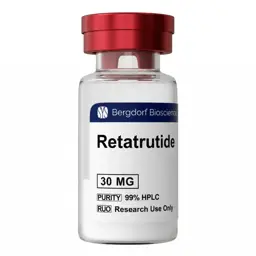
In stock
In stock
View Product
RetatrutideView Product
RetatrutideTypical starting values for orientation. Each row opens the calculator for that peptide.
| Peptide | Category | Typical dose | Vial sizes | BAC (start) | Available | Calculate |
|---|---|---|---|---|---|---|
| VIP | Neuropeptide Research | - | 10 mg | 2 ml | In stock | Calculate |
| Retatrutide | GLP-1/GIP/GCG | 0,5-12 mg | 2 / 5 / 10 / 15 mg | 2 ml | In stock | Calculate |
| Cagrilintide | Amylin Analogue | - | 5 mg | 2 ml | In stock | Calculate |
| Tirzepatide | GLP-1/GIP | 2,5-15 mg | 10 / 15 / 20 / 30 / 60 / 90 mg | 2 ml | In stock | Calculate |
| GHK-Cu | Copper Peptide | 1-4 mg | 10 / 20 / 50 mg | 5 ml | In stock | Calculate |
| AHK-Cu | Copper Peptide | - | 100 mg | 5 ml | In stock | Calculate |
| BPC-157 | Tissue Repair | 0,2-0,5 mg | 2 / 5 / 10 mg | 2 ml | In stock | Calculate |
| TB-500 | Thymosin Beta-4 | 2-5 mg | 2 / 5 / 10 mg | 2 ml | In stock | Calculate |
| CJC-1295 (no DAC) | GHRH Analog | 100-200 mcg | 2 / 5 / 10 mg | 2 ml | In stock | Calculate |
| Ipamorelin | GHRP | 200-300 mcg | 2 / 5 mg | 2 ml | In stock | Calculate |
| PT-141 | Bremelanotide | - | 2 / 5 / 10 mg | 2 ml | In stock | Calculate |
| MOTS-c | Mitochondrial | 5-10 mg | 5 / 10 mg | 2 ml | In stock | Calculate |
| Selank | Anxiolytic | 150-500 mcg | 2 / 5 / 10 mg | 2 ml | In stock | Calculate |
| SS-31 | Elamipretide | 0,1-1 mg | 5 / 10 mg | 2 ml | In stock | Calculate |
| Glow Stack | Stack | 0,5-2 mg | 70 mg | 3 ml | In stock | Calculate |
| Klow Stack | Stack | 0,5-2 mg | 55 mg | 3 ml | In stock | Calculate |
| Melanotan II | Melanocortin | 100-1000 mcg | 5 / 10 mg | 2 ml | In stock | Calculate |
| Melanotan I | Melanocortin | - | 5 / 10 mg | 2 ml | In stock | Calculate |
| Sermorelin | GHRH Analog | 50-300 mcg | 5 mg | 2 ml | In stock | Calculate |
| Tesamorelin | GHRH Analog | 1-2 mg | 10 / 20 mg | 2 ml | In stock | Calculate |
| Thymosin Alpha-1 | Thymic Peptide | 0,8-3,2 mg | 1.6 / 5 / 10 mg | 1 ml | In stock | Calculate |
| Epithalon | Longevity | 2-10 mg | 10 / 20 / 50 mg | 2 ml | In stock | Calculate |
| KPV | Immune / Barrier | 100-1000 mcg | 5 / 10 mg | 2 ml | In stock | Calculate |
| Semax | Cognitive | 100-1000 mcg | 10 / 30 mg | 2 ml | In stock | Calculate |
| DSIP | Sleep | 50-500 mcg | 10 mg | 2 ml | In stock | Calculate |
| 5-Amino-1MQ | Metabolic | 2,5-10 mg | 10 mg | 2 ml | In stock | Calculate |
| Pinealon | Research peptide | - | 10 mg | 2 ml | In stock | Calculate |
| Survodutide | GLP-1/Glucagon | - | 10 mg | 2 ml | In stock | Calculate |
| Kisspeptin-10 | KISS1R / GPR54 | - | 10 mg | 2 ml | In stock | Calculate |
| NAD+ | Longevity / Cofactor | 100-500 mg | 1000 mg | 10 ml | In stock | Calculate |
| Semaglutide | GLP-1 | 0,25-2,4 mg | 2 / 5 / 10 mg | 2 ml | Calculator only | Calculate |
| AOD-9604 | Fat Loss | 250-500 mcg | 2 / 5 mg | 2 ml | Calculator only | Calculate |
| HGH Fragment 176-191 | Metabolic Fragment | 100-500 mcg | 2 / 5 / 10 mg | 2 ml | Calculator only | Calculate |
| N-Acetyl Semax | Cognitive | 100-1000 mcg | 5 / 10 mg | 2 ml | Calculator only | Calculate |
| Hexarelin | GHRP | 50-200 mcg | 2 / 5 mg | 2 ml | Calculator only | Calculate |
| GHRP-6 | GHRP | 50-300 mcg | 2 / 5 mg | 2 ml | Calculator only | Calculate |
| GHRP-2 | GHRP | 50-250 mcg | 2 / 5 mg | 2 ml | Calculator only | Calculate |
| HGH 191AA | Growth Hormone | 1-5 mg | 10 mg | 1 ml | Calculator only | Calculate |
Values are for orientation in a research context and do not replace professional advice.
Typical starting values for orientation. Each row opens the calculator for that peptide.
| Peptide | Category | Typical dose | Vial sizes | BAC (start) | Available | Calculate |
|---|---|---|---|---|---|---|
| VIP | Neuropeptide Research | - | 10 mg | 2 ml | In stock | Calculate |
| Retatrutide | GLP-1/GIP/GCG | 0,5-12 mg | 2 / 5 / 10 / 15 mg | 2 ml | In stock | Calculate |
| Cagrilintide | Amylin Analogue | - | 5 mg | 2 ml | In stock | Calculate |
| Tirzepatide | GLP-1/GIP | 2,5-15 mg | 10 / 15 / 20 / 30 / 60 / 90 mg | 2 ml | In stock | Calculate |
| GHK-Cu | Copper Peptide | 1-4 mg | 10 / 20 / 50 mg | 5 ml | In stock | Calculate |
| AHK-Cu | Copper Peptide | - | 100 mg | 5 ml | In stock | Calculate |
| BPC-157 | Tissue Repair | 0,2-0,5 mg | 2 / 5 / 10 mg | 2 ml | In stock | Calculate |
| TB-500 | Thymosin Beta-4 | 2-5 mg | 2 / 5 / 10 mg | 2 ml | In stock | Calculate |
| CJC-1295 (no DAC) | GHRH Analog | 100-200 mcg | 2 / 5 / 10 mg | 2 ml | In stock | Calculate |
| Ipamorelin | GHRP | 200-300 mcg | 2 / 5 mg | 2 ml | In stock | Calculate |
| PT-141 | Bremelanotide | - | 2 / 5 / 10 mg | 2 ml | In stock | Calculate |
| MOTS-c | Mitochondrial | 5-10 mg | 5 / 10 mg | 2 ml | In stock | Calculate |
| Selank | Anxiolytic | 150-500 mcg | 2 / 5 / 10 mg | 2 ml | In stock | Calculate |
| SS-31 | Elamipretide | 0,1-1 mg | 5 / 10 mg | 2 ml | In stock | Calculate |
| Glow Stack | Stack | 0,5-2 mg | 70 mg | 3 ml | In stock | Calculate |
| Klow Stack | Stack | 0,5-2 mg | 55 mg | 3 ml | In stock | Calculate |
| Melanotan II | Melanocortin | 100-1000 mcg | 5 / 10 mg | 2 ml | In stock | Calculate |
| Melanotan I | Melanocortin | - | 5 / 10 mg | 2 ml | In stock | Calculate |
| Sermorelin | GHRH Analog | 50-300 mcg | 5 mg | 2 ml | In stock | Calculate |
| Tesamorelin | GHRH Analog | 1-2 mg | 10 / 20 mg | 2 ml | In stock | Calculate |
| Thymosin Alpha-1 | Thymic Peptide | 0,8-3,2 mg | 1.6 / 5 / 10 mg | 1 ml | In stock | Calculate |
| Epithalon | Longevity | 2-10 mg | 10 / 20 / 50 mg | 2 ml | In stock | Calculate |
| KPV | Immune / Barrier | 100-1000 mcg | 5 / 10 mg | 2 ml | In stock | Calculate |
| Semax | Cognitive | 100-1000 mcg | 10 / 30 mg | 2 ml | In stock | Calculate |
| DSIP | Sleep | 50-500 mcg | 10 mg | 2 ml | In stock | Calculate |
| 5-Amino-1MQ | Metabolic | 2,5-10 mg | 10 mg | 2 ml | In stock | Calculate |
| Pinealon | Research peptide | - | 10 mg | 2 ml | In stock | Calculate |
| Survodutide | GLP-1/Glucagon | - | 10 mg | 2 ml | In stock | Calculate |
| Kisspeptin-10 | KISS1R / GPR54 | - | 10 mg | 2 ml | In stock | Calculate |
| NAD+ | Longevity / Cofactor | 100-500 mg | 1000 mg | 10 ml | In stock | Calculate |
| Semaglutide | GLP-1 | 0,25-2,4 mg | 2 / 5 / 10 mg | 2 ml | Calculator only | Calculate |
| AOD-9604 | Fat Loss | 250-500 mcg | 2 / 5 mg | 2 ml | Calculator only | Calculate |
| HGH Fragment 176-191 | Metabolic Fragment | 100-500 mcg | 2 / 5 / 10 mg | 2 ml | Calculator only | Calculate |
| N-Acetyl Semax | Cognitive | 100-1000 mcg | 5 / 10 mg | 2 ml | Calculator only | Calculate |
| Hexarelin | GHRP | 50-200 mcg | 2 / 5 mg | 2 ml | Calculator only | Calculate |
| GHRP-6 | GHRP | 50-300 mcg | 2 / 5 mg | 2 ml | Calculator only | Calculate |
| GHRP-2 | GHRP | 50-250 mcg | 2 / 5 mg | 2 ml | Calculator only | Calculate |
| HGH 191AA | Growth Hormone | 1-5 mg | 10 mg | 1 ml | Calculator only | Calculate |
Values are for orientation in a research context and do not replace professional advice.
Choose a peptide to open its dedicated calculator page with pre-filled values.
Choose a peptide to open its dedicated calculator page with pre-filled values.