
Calculate exact reconstitution volumes, insulin units, and doses per vial for any peptide.
Vial, water and dose are known
Units measure volume, not active substance. 100 IU = 1.00 ml. How many mg are in there depends on the mix. The calculator has worked that out for you.
Almost all insulin syringes are U-100. Only choose U-40 if the syringe is marked U-40.
MOTS-c (Mitochondrial Open Reading Frame of the Twelve S rRNA type-c) is a 16-amino-acid peptide encoded not by the nuclear genome but by mitochondrial DNA — specifically within the 12S ribosomal RNA gene. It was first identified in 2015 by researchers at the University of Southern California, led by Pinchas Cohen, marking a paradigm shift in our understanding of mitochondria as endocrine-like signaling organelles rather than passive energy factories.
MOTS-c is produced in mitochondria across multiple tissues, released into circulation, and acts as a systemic metabolic hormone. Plasma concentrations decline with age and are lower in individuals with obesity, type 2 diabetes, and metabolic syndrome — positioning MOTS-c as both a biomarker and a therapeutic target for age-related metabolic dysfunction.
The peptide is sometimes described as an "exercise mimetic" because its administration recapitulates key metabolic adaptations induced by physical exercise: improved insulin sensitivity, enhanced fatty acid oxidation, increased skeletal muscle glucose uptake, and reduced adiposity — without requiring the exercise itself. This has generated significant research interest in applications ranging from metabolic disease to healthy aging and longevity protocols.
MOTS-c operates through several interconnected metabolic pathways:
MOTS-c research is still evolving, and human clinical trials are limited. The dosing parameters below reflect current research protocols and the community consensus among peptide researchers. Use the MOTS-c Calculator to calculate exact injection volumes for your vial concentration.
Unlike peptides dosed daily, MOTS-c is typically administered on a weekly schedule:
A standard 10 mg vial reconstituted with 2 mL bacteriostatic water yields a concentration of 5 mg/mL. A 5 mg dose therefore requires 1.0 mL using a 1.0 mL syringe (a single full draw). View MOTS-c at BergdorfBio for purchasing options.
MOTS-c is supplied as a lyophilized (freeze-dried) powder, typically in 5 mg or 10 mg vials. It must be reconstituted with bacteriostatic water (BAC water) before use.
Use the MOTS-c Peptide Calculator to determine the precise draw volume for any dose and concentration combination.
Human safety data on MOTS-c remains limited, and the peptide is classified strictly as a research compound. Based on available animal studies and self-reported human research experience:
No serious adverse events have been attributed to MOTS-c in published animal research at doses comparable to human research protocols. Long-term human safety data is not yet available.
The combination of MOTS-c and SS-31 (Elamipretide) represents a powerful dual-mechanism approach to mitochondrial optimization. While MOTS-c activates AMPK and drives metabolic reprogramming at the systems level, SS-31 directly targets cardiolipin in the inner mitochondrial membrane, restoring electron transport chain efficiency and reducing reactive oxygen species (ROS). Together, they address both the signaling deficits and the structural damage that characterize mitochondrial aging.
For body composition goals, stacking MOTS-c with AOD-9604 — the lipolytic C-terminal fragment of human growth hormone — combines AMPK-driven metabolic enhancement with direct fat cell signaling. AOD-9604 stimulates lipolysis in adipocytes via beta-3 adrenoreceptors while inhibiting de novo lipogenesis. Combined with MOTS-c's improvement in fatty acid oxidation and insulin sensitivity, this stack addresses fat metabolism through complementary pathways.
Many researchers begin with MOTS-c as a standalone compound, particularly for insulin resistance, weight management, or longevity goals. Its broad metabolic effects and once-weekly dosing make it one of the more practical peptides for long-term research protocols.
MOTS-c is unique in being encoded by mitochondrial DNA rather than nuclear DNA — it is the first mitochondria-derived peptide shown to act as a systemic hormone. This gives it a mechanistic profile distinct from peptides like AOD-9604 or CJC-1295: rather than acting on a single receptor, it reprograms cellular metabolism at the level of energy sensing (AMPK) and gene expression.
In animal models, significant improvements in insulin sensitivity and glucose tolerance appear within 2–4 weeks of weekly administration. Human researchers often report subjective improvements in energy levels and exercise recovery within 3–6 weeks. Body composition changes, if they occur, typically require 8–12 weeks to assess.
No. MOTS-c does not interact with the hypothalamic-pituitary-gonadal (HPG) axis and does not suppress endogenous hormone production. No PCT is required after a MOTS-c cycle.
Yes, and this is one of the most scientifically interesting aspects of MOTS-c research. Because MOTS-c activates the same AMPK pathways as exercise, combining the two may produce additive or synergistic effects on metabolic adaptation. Some researchers inject MOTS-c 30–60 minutes before training sessions for this reason.
MOTS-c is one of the most actively researched peptides in the longevity field. Its decline with age, its role in mitochondrial function, and its ability to recapitulate metabolic youth markers make it a compelling subject. Several longevity researchers include it specifically because it targets the mitochondrial aging axis — a pathway implicated in hallmarks of aging including energy decline, insulin resistance, and chronic inflammation.
Yes. MOTS-c's mechanisms are not sex-hormone dependent. Research has been conducted in both male and female animal models with consistent metabolic improvements observed across sexes. Human protocols are used by both men and women without sex-specific dosing adjustments currently indicated.
Given the typical dose volume of 1.0 mL for a 5 mg dose at 5 mg/mL concentration, a 1.0 mL insulin syringe holds a single full draw. A standard 29–31 gauge, 0.5-inch needle is recommended. For smaller fractional doses, an insulin syringe graduated in units makes measurement easier.
Both MOTS-c and metformin activate AMPK, but through distinct mechanisms. Metformin inhibits mitochondrial complex I, which secondarily elevates AMP:ATP ratio and activates AMPK. MOTS-c works via the MTHFR/AICAR pathway to produce a more upstream and physiologically derived AMPK signal. Unlike metformin, MOTS-c does not impair mitochondrial respiration — it enhances it. The two have not been formally studied in combination in humans.
Medical Disclaimer: The information on this page is provided for educational and research purposes only. MOTS-c is not an approved drug or medical treatment. It is sold strictly for research use. Nothing on this page constitutes medical advice, diagnosis, or a recommendation to use any specific compound. Always consult a qualified healthcare professional before beginning any peptide protocol. BergdorfBio assumes no liability for the use or misuse of the information presented here.
From powder to a ready syringe in five steps. The calculator above gives you the amounts automatically.
Bring vial and water to room temperature. Wipe both rubber stoppers with an alcohol swab.
Draw up the amount of BAC water recommended by the calculator using a larger syringe.
Let the water run down the inside wall of the peptide vial, do not spray it directly onto the powder.
Roll the vial gently, do not shake. The powder dissolves clear within 1-2 minutes.
Draw up to exactly the calculated mark with the insulin syringe. Done.
Typical starting values for orientation. Each row opens the calculator for that peptide.
| Peptide | Category | Typical dose | Vial sizes | BAC (start) | Available | Calculate |
|---|---|---|---|---|---|---|
| VIP | Neuropeptide Research | - | 10 mg | 2 ml | Calculator only | Calculate |
| Retatrutide | GLP-1/GIP/GCG | 0,5-12 mg | 2 / 5 / 10 / 15 mg | 2 ml | Calculator only | Calculate |
| Cagrilintide | Amylin Analogue | - | 5 mg | 2 ml | Calculator only | Calculate |
| Semaglutide | GLP-1 | 0,25-2,4 mg | 2 / 5 / 10 mg | 2 ml | Calculator only | Calculate |
| Tirzepatide | GLP-1/GIP | 2,5-15 mg | 10 / 15 / 20 / 30 / 60 / 90 mg | 2 ml | Calculator only | Calculate |
| GHK-Cu | Copper Peptide | 1-4 mg | 10 / 20 / 50 mg | 5 ml | Calculator only | Calculate |
| AHK-Cu | Copper Peptide | - | 100 mg | 5 ml | Calculator only | Calculate |
| BPC-157 | Tissue Repair | 0,2-0,5 mg | 2 / 5 / 10 mg | 2 ml | Calculator only | Calculate |
| TB-500 | Thymosin Beta-4 | 2-5 mg | 2 / 5 / 10 mg | 2 ml | Calculator only | Calculate |
| CJC-1295 (no DAC) | GHRH Analog | 100-200 mcg | 2 / 5 / 10 mg | 2 ml | Calculator only | Calculate |
| Ipamorelin | GHRP | 200-300 mcg | 2 / 5 mg | 2 ml | Calculator only | Calculate |
| AOD-9604 | Fat Loss | 250-500 mcg | 2 / 5 mg | 2 ml | Calculator only | Calculate |
| PT-141 | Bremelanotide | - | 2 / 5 / 10 mg | 2 ml | Calculator only | Calculate |
| MOTS-c | Mitochondrial | 5-10 mg | 5 / 10 mg | 2 ml | Calculator only | Calculate |
| Selank | Anxiolytic | 150-500 mcg | 2 / 5 / 10 mg | 2 ml | Calculator only | Calculate |
| SS-31 | Elamipretide | 0,1-1 mg | 5 / 10 mg | 2 ml | Calculator only | Calculate |
| Glow Stack | Stack | 0,5-2 mg | 70 mg | 3 ml | Calculator only | Calculate |
| Klow Stack | Stack | 0,5-2 mg | 55 mg | 3 ml | Calculator only | Calculate |
| Melanotan II | Melanocortin | 100-1000 mcg | 5 / 10 mg | 2 ml | Calculator only | Calculate |
| Melanotan I | Melanocortin | - | 5 / 10 mg | 2 ml | Calculator only | Calculate |
| Sermorelin | GHRH Analog | 50-300 mcg | 5 mg | 2 ml | Calculator only | Calculate |
| Tesamorelin | GHRH Analog | 1-2 mg | 10 / 20 mg | 2 ml | Calculator only | Calculate |
| Thymosin Alpha-1 | Thymic Peptide | 0,8-3,2 mg | 1.6 / 5 / 10 mg | 1 ml | Calculator only | Calculate |
| Epithalon | Longevity | 2-10 mg | 10 / 20 / 50 mg | 2 ml | Calculator only | Calculate |
| KPV | Immune / Barrier | 100-1000 mcg | 5 / 10 mg | 2 ml | Calculator only | Calculate |
| HGH Fragment 176-191 | Metabolic Fragment | 100-500 mcg | 2 / 5 / 10 mg | 2 ml | Calculator only | Calculate |
| Semax | Cognitive | 100-1000 mcg | 10 / 30 mg | 2 ml | Calculator only | Calculate |
| N-Acetyl Semax | Cognitive | 100-1000 mcg | 5 / 10 mg | 2 ml | Calculator only | Calculate |
| Hexarelin | GHRP | 50-200 mcg | 2 / 5 mg | 2 ml | Calculator only | Calculate |
| GHRP-6 | GHRP | 50-300 mcg | 2 / 5 mg | 2 ml | Calculator only | Calculate |
| GHRP-2 | GHRP | 50-250 mcg | 2 / 5 mg | 2 ml | Calculator only | Calculate |
| DSIP | Sleep | 50-500 mcg | 10 mg | 2 ml | Calculator only | Calculate |
| 5-Amino-1MQ | Metabolic | 2,5-10 mg | 10 mg | 2 ml | Calculator only | Calculate |
| Pinealon | Research peptide | - | 10 mg | 2 ml | Calculator only | Calculate |
| Survodutide | GLP-1/Glucagon | - | 10 mg | 2 ml | Calculator only | Calculate |
| Kisspeptin-10 | KISS1R / GPR54 | - | 10 mg | 2 ml | Calculator only | Calculate |
| HGH 191AA | Growth Hormone | 1-5 mg | 10 mg | 1 ml | Calculator only | Calculate |
| NAD+ | Longevity / Cofactor | 100-500 mg | 1000 mg | 10 ml | Calculator only | Calculate |
Values are for orientation in a research context and do not replace professional advice.
Calculating concentration and injection volume correctly seems trivial, but it is the most common source of error. Even a 10 % miscalculation during reconstitution means you either get too little active substance or unintentionally overdose.
Lyophilized peptides are supplied in milligrams and dissolved in bacteriostatic water (BAC water). The ratio of peptide to water determines the concentration, and from that follows how many units you draw up on the insulin syringe. Insulin syringes are scaled in units, not milligrams. The calculator handles this conversion, including the plausibility check against the most dangerous error: confusing mg and mcg.
Milligrams (mg) is the unit lyophilized peptides are sold in, for example “5 mg BPC-157”. Micrograms (mcg) measure the single dose, for example “250 mcg per injection”. 1 mg = 1,000 mcg. The calculator converts automatically and warns when an entry looks like a mix-up.
U-100 means the syringe is calibrated for 100 units per milliliter. 100 IU = 1 ml, so 10 IU = 0.10 ml, regardless of what is in the syringe. The IU calculation is based on exactly this relationship.
With a lot of peptide and little water the solution becomes very concentrated, so the volume per dose is tiny and hard to read. Use the mixing helper: it finds the water volume that produces a clean, easily readable mark.
In the fridge at 2-8 °C usually 21-30 days. Label the vial with the reconstitution date. Cloudy solutions or particles are a no-go.
Blends contain several active substances in one vial. Just select the blend as your peptide: the calculator additionally shows how much of each component is in your injection. For combinations of several separate vials, use the Stack Builder.
No. Your last settings are stored locally in the browser and restored on your next visit. You can also recall calculations from the history, save them as a protocol or share them as a link.
Choose a peptide to open its dedicated calculator page with pre-filled values.
Calculate exact reconstitution volumes, insulin units, and doses per vial for any peptide.
Vial, water and dose are known
Units measure volume, not active substance. 100 IU = 1.00 ml. How many mg are in there depends on the mix. The calculator has worked that out for you.
Almost all insulin syringes are U-100. Only choose U-40 if the syringe is marked U-40.
MOTS-c (Mitochondrial Open Reading Frame of the Twelve S rRNA type-c) is a 16-amino-acid peptide encoded not by the nuclear genome but by mitochondrial DNA — specifically within the 12S ribosomal RNA gene. It was first identified in 2015 by researchers at the University of Southern California, led by Pinchas Cohen, marking a paradigm shift in our understanding of mitochondria as endocrine-like signaling organelles rather than passive energy factories.
MOTS-c is produced in mitochondria across multiple tissues, released into circulation, and acts as a systemic metabolic hormone. Plasma concentrations decline with age and are lower in individuals with obesity, type 2 diabetes, and metabolic syndrome — positioning MOTS-c as both a biomarker and a therapeutic target for age-related metabolic dysfunction.
The peptide is sometimes described as an "exercise mimetic" because its administration recapitulates key metabolic adaptations induced by physical exercise: improved insulin sensitivity, enhanced fatty acid oxidation, increased skeletal muscle glucose uptake, and reduced adiposity — without requiring the exercise itself. This has generated significant research interest in applications ranging from metabolic disease to healthy aging and longevity protocols.
MOTS-c operates through several interconnected metabolic pathways:
MOTS-c research is still evolving, and human clinical trials are limited. The dosing parameters below reflect current research protocols and the community consensus among peptide researchers. Use the MOTS-c Calculator to calculate exact injection volumes for your vial concentration.
Unlike peptides dosed daily, MOTS-c is typically administered on a weekly schedule:
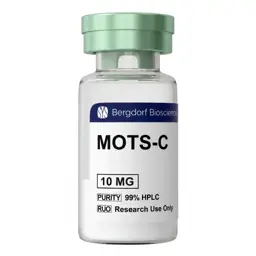
A standard 10 mg vial reconstituted with 2 mL bacteriostatic water yields a concentration of 5 mg/mL. A 5 mg dose therefore requires 1.0 mL using a 1.0 mL syringe (a single full draw). View MOTS-c at BergdorfBio for purchasing options.
MOTS-c is supplied as a lyophilized (freeze-dried) powder, typically in 5 mg or 10 mg vials. It must be reconstituted with bacteriostatic water (BAC water) before use.
Use the MOTS-c Peptide Calculator to determine the precise draw volume for any dose and concentration combination.
Human safety data on MOTS-c remains limited, and the peptide is classified strictly as a research compound. Based on available animal studies and self-reported human research experience:
No serious adverse events have been attributed to MOTS-c in published animal research at doses comparable to human research protocols. Long-term human safety data is not yet available.
The combination of MOTS-c and SS-31 (Elamipretide) represents a powerful dual-mechanism approach to mitochondrial optimization. While MOTS-c activates AMPK and drives metabolic reprogramming at the systems level, SS-31 directly targets cardiolipin in the inner mitochondrial membrane, restoring electron transport chain efficiency and reducing reactive oxygen species (ROS). Together, they address both the signaling deficits and the structural damage that characterize mitochondrial aging.
For body composition goals, stacking MOTS-c with AOD-9604 — the lipolytic C-terminal fragment of human growth hormone — combines AMPK-driven metabolic enhancement with direct fat cell signaling. AOD-9604 stimulates lipolysis in adipocytes via beta-3 adrenoreceptors while inhibiting de novo lipogenesis. Combined with MOTS-c's improvement in fatty acid oxidation and insulin sensitivity, this stack addresses fat metabolism through complementary pathways.
Many researchers begin with MOTS-c as a standalone compound, particularly for insulin resistance, weight management, or longevity goals. Its broad metabolic effects and once-weekly dosing make it one of the more practical peptides for long-term research protocols.
MOTS-c is unique in being encoded by mitochondrial DNA rather than nuclear DNA — it is the first mitochondria-derived peptide shown to act as a systemic hormone. This gives it a mechanistic profile distinct from peptides like AOD-9604 or CJC-1295: rather than acting on a single receptor, it reprograms cellular metabolism at the level of energy sensing (AMPK) and gene expression.
In animal models, significant improvements in insulin sensitivity and glucose tolerance appear within 2–4 weeks of weekly administration. Human researchers often report subjective improvements in energy levels and exercise recovery within 3–6 weeks. Body composition changes, if they occur, typically require 8–12 weeks to assess.
No. MOTS-c does not interact with the hypothalamic-pituitary-gonadal (HPG) axis and does not suppress endogenous hormone production. No PCT is required after a MOTS-c cycle.
Yes, and this is one of the most scientifically interesting aspects of MOTS-c research. Because MOTS-c activates the same AMPK pathways as exercise, combining the two may produce additive or synergistic effects on metabolic adaptation. Some researchers inject MOTS-c 30–60 minutes before training sessions for this reason.
MOTS-c is one of the most actively researched peptides in the longevity field. Its decline with age, its role in mitochondrial function, and its ability to recapitulate metabolic youth markers make it a compelling subject. Several longevity researchers include it specifically because it targets the mitochondrial aging axis — a pathway implicated in hallmarks of aging including energy decline, insulin resistance, and chronic inflammation.
Yes. MOTS-c's mechanisms are not sex-hormone dependent. Research has been conducted in both male and female animal models with consistent metabolic improvements observed across sexes. Human protocols are used by both men and women without sex-specific dosing adjustments currently indicated.
Given the typical dose volume of 1.0 mL for a 5 mg dose at 5 mg/mL concentration, a 1.0 mL insulin syringe holds a single full draw. A standard 29–31 gauge, 0.5-inch needle is recommended. For smaller fractional doses, an insulin syringe graduated in units makes measurement easier.
Both MOTS-c and metformin activate AMPK, but through distinct mechanisms. Metformin inhibits mitochondrial complex I, which secondarily elevates AMP:ATP ratio and activates AMPK. MOTS-c works via the MTHFR/AICAR pathway to produce a more upstream and physiologically derived AMPK signal. Unlike metformin, MOTS-c does not impair mitochondrial respiration — it enhances it. The two have not been formally studied in combination in humans.
Medical Disclaimer: The information on this page is provided for educational and research purposes only. MOTS-c is not an approved drug or medical treatment. It is sold strictly for research use. Nothing on this page constitutes medical advice, diagnosis, or a recommendation to use any specific compound. Always consult a qualified healthcare professional before beginning any peptide protocol. BergdorfBio assumes no liability for the use or misuse of the information presented here.
From powder to a ready syringe in five steps. The calculator above gives you the amounts automatically.
Bring vial and water to room temperature. Wipe both rubber stoppers with an alcohol swab.
Draw up the amount of BAC water recommended by the calculator using a larger syringe.
Let the water run down the inside wall of the peptide vial, do not spray it directly onto the powder.
Roll the vial gently, do not shake. The powder dissolves clear within 1-2 minutes.
Draw up to exactly the calculated mark with the insulin syringe. Done.
Typical starting values for orientation. Each row opens the calculator for that peptide.
| Peptide | Category | Typical dose | Vial sizes | BAC (start) | Available | Calculate |
|---|---|---|---|---|---|---|
| VIP | Neuropeptide Research | - | 10 mg | 2 ml | Calculator only | Calculate |
| Retatrutide | GLP-1/GIP/GCG | 0,5-12 mg | 2 / 5 / 10 / 15 mg | 2 ml | Calculator only | Calculate |
| Cagrilintide | Amylin Analogue | - | 5 mg | 2 ml | Calculator only | Calculate |
| Semaglutide | GLP-1 | 0,25-2,4 mg | 2 / 5 / 10 mg | 2 ml | Calculator only | Calculate |
| Tirzepatide | GLP-1/GIP | 2,5-15 mg | 10 / 15 / 20 / 30 / 60 / 90 mg | 2 ml | Calculator only | Calculate |
| GHK-Cu | Copper Peptide | 1-4 mg | 10 / 20 / 50 mg | 5 ml | Calculator only | Calculate |
| AHK-Cu | Copper Peptide | - | 100 mg | 5 ml | Calculator only | Calculate |
| BPC-157 | Tissue Repair | 0,2-0,5 mg | 2 / 5 / 10 mg | 2 ml | Calculator only | Calculate |
| TB-500 | Thymosin Beta-4 | 2-5 mg | 2 / 5 / 10 mg | 2 ml | Calculator only | Calculate |
| CJC-1295 (no DAC) | GHRH Analog | 100-200 mcg | 2 / 5 / 10 mg | 2 ml | Calculator only | Calculate |
| Ipamorelin | GHRP | 200-300 mcg | 2 / 5 mg | 2 ml | Calculator only | Calculate |
| AOD-9604 | Fat Loss | 250-500 mcg | 2 / 5 mg | 2 ml | Calculator only | Calculate |
| PT-141 | Bremelanotide | - | 2 / 5 / 10 mg | 2 ml | Calculator only | Calculate |
| MOTS-c | Mitochondrial | 5-10 mg | 5 / 10 mg | 2 ml | Calculator only | Calculate |
| Selank | Anxiolytic | 150-500 mcg | 2 / 5 / 10 mg | 2 ml | Calculator only | Calculate |
| SS-31 | Elamipretide | 0,1-1 mg | 5 / 10 mg | 2 ml | Calculator only | Calculate |
| Glow Stack | Stack | 0,5-2 mg | 70 mg | 3 ml | Calculator only | Calculate |
| Klow Stack | Stack | 0,5-2 mg | 55 mg | 3 ml | Calculator only | Calculate |
| Melanotan II | Melanocortin | 100-1000 mcg | 5 / 10 mg | 2 ml | Calculator only | Calculate |
| Melanotan I | Melanocortin | - | 5 / 10 mg | 2 ml | Calculator only | Calculate |
| Sermorelin | GHRH Analog | 50-300 mcg | 5 mg | 2 ml | Calculator only | Calculate |
| Tesamorelin | GHRH Analog | 1-2 mg | 10 / 20 mg | 2 ml | Calculator only | Calculate |
| Thymosin Alpha-1 | Thymic Peptide | 0,8-3,2 mg | 1.6 / 5 / 10 mg | 1 ml | Calculator only | Calculate |
| Epithalon | Longevity | 2-10 mg | 10 / 20 / 50 mg | 2 ml | Calculator only | Calculate |
| KPV | Immune / Barrier | 100-1000 mcg | 5 / 10 mg | 2 ml | Calculator only | Calculate |
| HGH Fragment 176-191 | Metabolic Fragment | 100-500 mcg | 2 / 5 / 10 mg | 2 ml | Calculator only | Calculate |
| Semax | Cognitive | 100-1000 mcg | 10 / 30 mg | 2 ml | Calculator only | Calculate |
| N-Acetyl Semax | Cognitive | 100-1000 mcg | 5 / 10 mg | 2 ml | Calculator only | Calculate |
| Hexarelin | GHRP | 50-200 mcg | 2 / 5 mg | 2 ml | Calculator only | Calculate |
| GHRP-6 | GHRP | 50-300 mcg | 2 / 5 mg | 2 ml | Calculator only | Calculate |
| GHRP-2 | GHRP | 50-250 mcg | 2 / 5 mg | 2 ml | Calculator only | Calculate |
| DSIP | Sleep | 50-500 mcg | 10 mg | 2 ml | Calculator only | Calculate |
| 5-Amino-1MQ | Metabolic | 2,5-10 mg | 10 mg | 2 ml | Calculator only | Calculate |
| Pinealon | Research peptide | - | 10 mg | 2 ml | Calculator only | Calculate |
| Survodutide | GLP-1/Glucagon | - | 10 mg | 2 ml | Calculator only | Calculate |
| Kisspeptin-10 | KISS1R / GPR54 | - | 10 mg | 2 ml | Calculator only | Calculate |
| HGH 191AA | Growth Hormone | 1-5 mg | 10 mg | 1 ml | Calculator only | Calculate |
| NAD+ | Longevity / Cofactor | 100-500 mg | 1000 mg | 10 ml | Calculator only | Calculate |
Values are for orientation in a research context and do not replace professional advice.
Calculating concentration and injection volume correctly seems trivial, but it is the most common source of error. Even a 10 % miscalculation during reconstitution means you either get too little active substance or unintentionally overdose.
Lyophilized peptides are supplied in milligrams and dissolved in bacteriostatic water (BAC water). The ratio of peptide to water determines the concentration, and from that follows how many units you draw up on the insulin syringe. Insulin syringes are scaled in units, not milligrams. The calculator handles this conversion, including the plausibility check against the most dangerous error: confusing mg and mcg.
Milligrams (mg) is the unit lyophilized peptides are sold in, for example “5 mg BPC-157”. Micrograms (mcg) measure the single dose, for example “250 mcg per injection”. 1 mg = 1,000 mcg. The calculator converts automatically and warns when an entry looks like a mix-up.
U-100 means the syringe is calibrated for 100 units per milliliter. 100 IU = 1 ml, so 10 IU = 0.10 ml, regardless of what is in the syringe. The IU calculation is based on exactly this relationship.
With a lot of peptide and little water the solution becomes very concentrated, so the volume per dose is tiny and hard to read. Use the mixing helper: it finds the water volume that produces a clean, easily readable mark.
In the fridge at 2-8 °C usually 21-30 days. Label the vial with the reconstitution date. Cloudy solutions or particles are a no-go.
Blends contain several active substances in one vial. Just select the blend as your peptide: the calculator additionally shows how much of each component is in your injection. For combinations of several separate vials, use the Stack Builder.
No. Your last settings are stored locally in the browser and restored on your next visit. You can also recall calculations from the history, save them as a protocol or share them as a link.
Choose a peptide to open its dedicated calculator page with pre-filled values.
In stock
In stock
View Product
MOTS-cView Product
MOTS-cTypical starting values for orientation. Each row opens the calculator for that peptide.
| Peptide | Category | Typical dose | Vial sizes | BAC (start) | Available | Calculate |
|---|---|---|---|---|---|---|
| VIP | Neuropeptide Research | - | 10 mg | 2 ml | In stock | Calculate |
| Retatrutide | GLP-1/GIP/GCG | 0,5-12 mg | 2 / 5 / 10 / 15 mg | 2 ml | In stock | Calculate |
| Cagrilintide | Amylin Analogue | - | 5 mg | 2 ml | In stock | Calculate |
| Tirzepatide | GLP-1/GIP | 2,5-15 mg | 10 / 15 / 20 / 30 / 60 / 90 mg | 2 ml | In stock | Calculate |
| GHK-Cu | Copper Peptide | 1-4 mg | 10 / 20 / 50 mg | 5 ml | In stock | Calculate |
| AHK-Cu | Copper Peptide | - | 100 mg | 5 ml | In stock | Calculate |
| BPC-157 | Tissue Repair | 0,2-0,5 mg | 2 / 5 / 10 mg | 2 ml | In stock | Calculate |
| TB-500 | Thymosin Beta-4 | 2-5 mg | 2 / 5 / 10 mg | 2 ml | In stock | Calculate |
| CJC-1295 (no DAC) | GHRH Analog | 100-200 mcg | 2 / 5 / 10 mg | 2 ml | In stock | Calculate |
| Ipamorelin | GHRP | 200-300 mcg | 2 / 5 mg | 2 ml | In stock | Calculate |
| PT-141 | Bremelanotide | - | 2 / 5 / 10 mg | 2 ml | In stock | Calculate |
| MOTS-c | Mitochondrial | 5-10 mg | 5 / 10 mg | 2 ml | In stock | Calculate |
| Selank | Anxiolytic | 150-500 mcg | 2 / 5 / 10 mg | 2 ml | In stock | Calculate |
| SS-31 | Elamipretide | 0,1-1 mg | 5 / 10 mg | 2 ml | In stock | Calculate |
| Glow Stack | Stack | 0,5-2 mg | 70 mg | 3 ml | In stock | Calculate |
| Klow Stack | Stack | 0,5-2 mg | 55 mg | 3 ml | In stock | Calculate |
| Melanotan II | Melanocortin | 100-1000 mcg | 5 / 10 mg | 2 ml | In stock | Calculate |
| Melanotan I | Melanocortin | - | 5 / 10 mg | 2 ml | In stock | Calculate |
| Sermorelin | GHRH Analog | 50-300 mcg | 5 mg | 2 ml | In stock | Calculate |
| Tesamorelin | GHRH Analog | 1-2 mg | 10 / 20 mg | 2 ml | In stock | Calculate |
| Thymosin Alpha-1 | Thymic Peptide | 0,8-3,2 mg | 1.6 / 5 / 10 mg | 1 ml | In stock | Calculate |
| Epithalon | Longevity | 2-10 mg | 10 / 20 / 50 mg | 2 ml | In stock | Calculate |
| KPV | Immune / Barrier | 100-1000 mcg | 5 / 10 mg | 2 ml | In stock | Calculate |
| Semax | Cognitive | 100-1000 mcg | 10 / 30 mg | 2 ml | In stock | Calculate |
| DSIP | Sleep | 50-500 mcg | 10 mg | 2 ml | In stock | Calculate |
| 5-Amino-1MQ | Metabolic | 2,5-10 mg | 10 mg | 2 ml | In stock | Calculate |
| Pinealon | Research peptide | - | 10 mg | 2 ml | In stock | Calculate |
| Survodutide | GLP-1/Glucagon | - | 10 mg | 2 ml | In stock | Calculate |
| Kisspeptin-10 | KISS1R / GPR54 | - | 10 mg | 2 ml | In stock | Calculate |
| NAD+ | Longevity / Cofactor | 100-500 mg | 1000 mg | 10 ml | In stock | Calculate |
| Semaglutide | GLP-1 | 0,25-2,4 mg | 2 / 5 / 10 mg | 2 ml | Calculator only | Calculate |
| AOD-9604 | Fat Loss | 250-500 mcg | 2 / 5 mg | 2 ml | Calculator only | Calculate |
| HGH Fragment 176-191 | Metabolic Fragment | 100-500 mcg | 2 / 5 / 10 mg | 2 ml | Calculator only | Calculate |
| N-Acetyl Semax | Cognitive | 100-1000 mcg | 5 / 10 mg | 2 ml | Calculator only | Calculate |
| Hexarelin | GHRP | 50-200 mcg | 2 / 5 mg | 2 ml | Calculator only | Calculate |
| GHRP-6 | GHRP | 50-300 mcg | 2 / 5 mg | 2 ml | Calculator only | Calculate |
| GHRP-2 | GHRP | 50-250 mcg | 2 / 5 mg | 2 ml | Calculator only | Calculate |
| HGH 191AA | Growth Hormone | 1-5 mg | 10 mg | 1 ml | Calculator only | Calculate |
Values are for orientation in a research context and do not replace professional advice.
Typical starting values for orientation. Each row opens the calculator for that peptide.
| Peptide | Category | Typical dose | Vial sizes | BAC (start) | Available | Calculate |
|---|---|---|---|---|---|---|
| VIP | Neuropeptide Research | - | 10 mg | 2 ml | In stock | Calculate |
| Retatrutide | GLP-1/GIP/GCG | 0,5-12 mg | 2 / 5 / 10 / 15 mg | 2 ml | In stock | Calculate |
| Cagrilintide | Amylin Analogue | - | 5 mg | 2 ml | In stock | Calculate |
| Tirzepatide | GLP-1/GIP | 2,5-15 mg | 10 / 15 / 20 / 30 / 60 / 90 mg | 2 ml | In stock | Calculate |
| GHK-Cu | Copper Peptide | 1-4 mg | 10 / 20 / 50 mg | 5 ml | In stock | Calculate |
| AHK-Cu | Copper Peptide | - | 100 mg | 5 ml | In stock | Calculate |
| BPC-157 | Tissue Repair | 0,2-0,5 mg | 2 / 5 / 10 mg | 2 ml | In stock | Calculate |
| TB-500 | Thymosin Beta-4 | 2-5 mg | 2 / 5 / 10 mg | 2 ml | In stock | Calculate |
| CJC-1295 (no DAC) | GHRH Analog | 100-200 mcg | 2 / 5 / 10 mg | 2 ml | In stock | Calculate |
| Ipamorelin | GHRP | 200-300 mcg | 2 / 5 mg | 2 ml | In stock | Calculate |
| PT-141 | Bremelanotide | - | 2 / 5 / 10 mg | 2 ml | In stock | Calculate |
| MOTS-c | Mitochondrial | 5-10 mg | 5 / 10 mg | 2 ml | In stock | Calculate |
| Selank | Anxiolytic | 150-500 mcg | 2 / 5 / 10 mg | 2 ml | In stock | Calculate |
| SS-31 | Elamipretide | 0,1-1 mg | 5 / 10 mg | 2 ml | In stock | Calculate |
| Glow Stack | Stack | 0,5-2 mg | 70 mg | 3 ml | In stock | Calculate |
| Klow Stack | Stack | 0,5-2 mg | 55 mg | 3 ml | In stock | Calculate |
| Melanotan II | Melanocortin | 100-1000 mcg | 5 / 10 mg | 2 ml | In stock | Calculate |
| Melanotan I | Melanocortin | - | 5 / 10 mg | 2 ml | In stock | Calculate |
| Sermorelin | GHRH Analog | 50-300 mcg | 5 mg | 2 ml | In stock | Calculate |
| Tesamorelin | GHRH Analog | 1-2 mg | 10 / 20 mg | 2 ml | In stock | Calculate |
| Thymosin Alpha-1 | Thymic Peptide | 0,8-3,2 mg | 1.6 / 5 / 10 mg | 1 ml | In stock | Calculate |
| Epithalon | Longevity | 2-10 mg | 10 / 20 / 50 mg | 2 ml | In stock | Calculate |
| KPV | Immune / Barrier | 100-1000 mcg | 5 / 10 mg | 2 ml | In stock | Calculate |
| Semax | Cognitive | 100-1000 mcg | 10 / 30 mg | 2 ml | In stock | Calculate |
| DSIP | Sleep | 50-500 mcg | 10 mg | 2 ml | In stock | Calculate |
| 5-Amino-1MQ | Metabolic | 2,5-10 mg | 10 mg | 2 ml | In stock | Calculate |
| Pinealon | Research peptide | - | 10 mg | 2 ml | In stock | Calculate |
| Survodutide | GLP-1/Glucagon | - | 10 mg | 2 ml | In stock | Calculate |
| Kisspeptin-10 | KISS1R / GPR54 | - | 10 mg | 2 ml | In stock | Calculate |
| NAD+ | Longevity / Cofactor | 100-500 mg | 1000 mg | 10 ml | In stock | Calculate |
| Semaglutide | GLP-1 | 0,25-2,4 mg | 2 / 5 / 10 mg | 2 ml | Calculator only | Calculate |
| AOD-9604 | Fat Loss | 250-500 mcg | 2 / 5 mg | 2 ml | Calculator only | Calculate |
| HGH Fragment 176-191 | Metabolic Fragment | 100-500 mcg | 2 / 5 / 10 mg | 2 ml | Calculator only | Calculate |
| N-Acetyl Semax | Cognitive | 100-1000 mcg | 5 / 10 mg | 2 ml | Calculator only | Calculate |
| Hexarelin | GHRP | 50-200 mcg | 2 / 5 mg | 2 ml | Calculator only | Calculate |
| GHRP-6 | GHRP | 50-300 mcg | 2 / 5 mg | 2 ml | Calculator only | Calculate |
| GHRP-2 | GHRP | 50-250 mcg | 2 / 5 mg | 2 ml | Calculator only | Calculate |
| HGH 191AA | Growth Hormone | 1-5 mg | 10 mg | 1 ml | Calculator only | Calculate |
Values are for orientation in a research context and do not replace professional advice.
Choose a peptide to open its dedicated calculator page with pre-filled values.
Choose a peptide to open its dedicated calculator page with pre-filled values.